

You eat a "healthy" breakfast at 7:30, and by 10:15 you are hunting for a snack. If that sounds familiar, the problem usually is not willpower. It is the breakfast. The best weight loss breakfast ideas share a short list of traits: real protein, real fiber, and a calorie count that leaves room for the rest of your day.
This guide gives you seven of them, the research behind why they work, and a simple formula for building your own. Think of it as a conversation around a table with ten people who all have the same complaint: breakfast either leaves them starving or leaves them stuffed and sluggish. Let's fix both.

What Makes Weight Loss Breakfast Ideas Keep You Full: Protein, Fiber, and a Sensible Calorie Range
Fullness is not a mood. It is a mix of how fast food leaves your stomach, how much space it takes up, and how your blood sugar behaves in the hours afterward. Breakfast foods that are mostly refined carbs, such as pastries, sweet cereal, and plain bagels, digest quickly and leave you hungry again fast. Breakfast foods built around protein and fiber slow that curve down. Three ideas do most of the work.
Protein slows the hunger clock
A small study reported by Harvard Health gives a clear picture. In the study, published in the Journal of Dairy Science in 2018, 32 healthy adults ate the same high-carbohydrate cereal. One group had it with regular milk, about 12.4 grams of protein in total. The other group had milk boosted with protein concentrate, bringing the meal to about 28 grams. The higher-protein group had lower blood sugar after the meal and reported less appetite later in the day.
Two honest caveats. The study was small, and it tested milk and whey, so it does not prove that one protein source beats another. The researchers themselves noted that other protein sources might work too. Still, the direction matches what most dietitians tell their clients: protein digests more slowly than carbohydrate, so a breakfast with a solid protein anchor tends to hold you longer.
Fiber adds volume without adding many calories
The Mayo Clinic's fiber guide states that high-fiber foods tend to be more filling than low-fiber foods, so you may eat less and stay satisfied longer. They are also less energy dense, which means more food on the plate for the same number of calories. Good breakfast sources include oats, berries, chia seeds, beans, and whole-grain bread.
Here is the non-obvious part. Breakfast is the easiest meal to fix for fiber, because most people eat the same two or three breakfasts on repeat. If you eat the same two or three breakfasts most weekdays, a small upgrade compounds. Swapping a refined breakfast for a fiber-rich one is the same idea behind the high-fiber approach to weight loss we cover elsewhere on GenZiest, and breakfast is where it is easiest to start.
The table below shows the daily fiber targets the Mayo Clinic lists from the National Academy of Medicine. The last column is our own rounded arithmetic: roughly what one third of the day's fiber looks like if you want breakfast to carry its share.
| Group | Daily fiber target | One-third share for breakfast (rounded) |
|---|---|---|
| Women, age 50 or younger | 25 grams | About 8 grams |
| Women, older than 50 | 21 grams | About 7 grams |
| Men, age 50 or younger | 38 grams | About 13 grams |
| Men, older than 50 | 30 grams | About 10 grams |
Source: Mayo Clinic (National Academy of Medicine targets), 2025. Third column is a GenZiest estimate.
The 300 to 500 calorie anchor
Cleveland Clinic dietitian Julia Zumpano recommends aiming for 300 to 500 calories at breakfast if weight loss is the goal, and she is clear that a balanced, high-quality meal matters more than counting calories. The same Cleveland Clinic piece cites research on young women: those who ate more protein at breakfast were less likely to snack on high-fat foods and reported fewer cravings later in the day.
Read that range as a floor as well as a ceiling. A 150-calorie breakfast of fruit and black coffee looks disciplined, but it is a loan you repay at 10:15 with interest. A breakfast in the 300 to 500 range, built from protein and fiber, is the version that tends to survive a real Tuesday.

7 Weight Loss Breakfast Ideas That Keep You Full Until Lunch
Every idea below follows the same logic: a protein anchor, a fiber source, and a calorie range that sits in or near the 300 to 500 zone. The numbers are rounded estimates. Brands, portions, and add-ons change them, so check your labels and adjust to your appetite.
1. Veggie egg scramble with whole-grain toast
Two or three eggs, a handful of spinach, diced peppers or tomato, and a slice of whole-grain toast. Cleveland Clinic's own examples include two or three whole eggs or egg whites with a quarter cup of feta or low-fat cheese. A large egg carries roughly 6 grams of protein, so three eggs put you near 18 grams before the cheese. Cook with a teaspoon of olive oil or a spritz of cooking spray, and the whole plate usually lands somewhere around 350 to 450 calories.
2. Greek yogurt bowl with berries and chia
Three-quarters of a cup of plain Greek yogurt, a half cup of berries, a tablespoon of chia seeds, and a small handful of walnuts. Choose plain over flavored. Flavored yogurts can carry a lot of added sugar, which defeats the purpose. The chia and berries bring fiber, the yogurt brings protein, and the walnuts add the fat that makes the bowl feel like a meal. Expect roughly 300 to 400 calories.
3. Overnight oats with a protein boost
Half a cup of rolled oats, three-quarters of a cup of milk, a quarter cup of Greek yogurt, a spoonful of chia, and berries. Stir, cover, and leave it in the fridge overnight. Oats are a whole grain with soluble fiber, and the yogurt lifts the protein well above what plain oats and water would give you. This is the best choice for people who say they have no time, because the work happens the night before.
4. Cottage cheese with fruit and nuts
Three-quarters of a cup of cottage cheese, sliced peaches or pineapple, and a tablespoon of chopped almonds. It sounds like a diet cliché, but cottage cheese is one of the easiest high-protein breakfasts to assemble in under two minutes. If the texture bothers you, blend it smooth with fruit first. Sweet or savory both work: try cherry tomatoes, cucumber, and black pepper instead of fruit.
5. Make-ahead egg muffin cups
Whisk eight eggs with chopped vegetables and a little cheese, pour into a greased muffin tin, and bake at 350°F until set, about 20 minutes. Store them in the fridge and reheat two or three at a time, along with a piece of fruit. Eating them within about four days keeps food safety simple. This is the idea for anyone who knows they will not cook at 7 a.m.
Mayo Clinic's kitchen team shows the make-ahead mindset in action in this short video:
6. Protein smoothie with spinach and oats
One scoop of low-sugar protein powder or half a cup of Greek yogurt, a cup of spinach, half a banana, a quarter cup of oats, and unsweetened milk. Cleveland Clinic lists a smoothie built on a scoop of low-sugar protein powder or half a cup of Greek yogurt as a high-protein option. The oats are the detail most smoothie recipes skip, and they are what adds fiber and body so the drink does not vanish from your stomach in an hour. Skip the juice base and the added honey, since those turn it into a sugar delivery system.
7. Savory beans and avocado on whole-grain toast
Mash half a cup of black or white beans with a squeeze of lime, spread on a slice of whole-grain toast, and top with a quarter of an avocado. Add an egg if you want more protein. Beans are one of the most fiber-dense foods you can eat, and the Mayo Clinic lists beans and other legumes among its main fiber sources. If sweet breakfasts make you feel off by mid-morning, this is the one to try first.

Build Your Own Weight Loss Breakfast Ideas With This Four-Part Formula
Recipes run out. A formula does not. Cleveland Clinic's breakfast guidance boils down to four parts, and you can mix them endlessly:
- A protein source: eggs, Greek yogurt, cottage cheese, tofu, lean meat, or a quality protein powder.
- A whole grain: oats, whole-grain bread, or a high-fiber cereal with little added sugar.
- A fruit or a vegetable: berries, an apple, spinach, tomatoes, peppers.
- An optional healthy fat: nuts, seeds, avocado, or a little olive oil.
Pick one from each column and you have a breakfast that is hard to get wrong. Eggs, spinach, and whole-grain toast. Yogurt, berries, and oats. Tofu scramble, peppers, and a corn tortilla. The pattern stays the same while the food changes, which is exactly why it survives a busy semester or a rotating work schedule.
Cut the sugar traps hiding in "healthy" breakfasts
The most common mistakes are not dramatic. They are small and sneaky: flavored yogurt, granola by the generous handful, fruit juice, and cereal marketed as wholesome. The NHS advises that regularly eating foods and drinks high in sugar raises the risk of obesity and tooth decay, and recommends having high-sugar foods less often and in small amounts. The same NHS page points to a useful benchmark: at least five portions of fruit and vegetables a day, where one portion is about 80 grams. A serving of berries or a handful of spinach at breakfast gets you a head start.
A few swaps make the biggest difference:
- Plain Greek yogurt instead of flavored, with fresh fruit for sweetness.
- Rolled oats instead of instant flavored packets.
- Whole fruit instead of juice.
- Granola as a sprinkle, not a base. Treat it as a topping.

Why a Realistic Goal Makes Breakfast Easier to Stick With
Picture a 24-year-old with 9 a.m. lectures and a plan to lose twenty pounds before summer. Week one, they eat a spartan breakfast of two rice cakes. By week two they are skipping it and overeating at night. The problem was never the breakfast idea. It was the goal that made breakfast feel like a penalty.
Research from the National Institute of Diabetes and Digestive and Kidney Diseases offers a calmer target. The NIDDK says people at risk for type 2 diabetes may be able to prevent or delay the disease by losing 5% to 7% of their starting weight. For a 200-pound person, that is about 10 to 14 pounds. That is not a dramatic transformation. It is a modest, achievable change that comes from habits you can repeat, and breakfast is one of the easiest habits to repeat.
Here is the part that surprises people: a satisfying breakfast does not need to create a big calorie deficit by itself. Its job is to remove the hunger spike that wrecks the rest of the day. If you want to understand how a moderate deficit actually works, our guide on what a calorie deficit is and how weight loss really works explains why a gentle, repeatable gap beats an aggressive one you abandon by Thursday.
So the practical test for any of the ideas in this article is not "is this the lowest-calorie option?" It is "will I still be eating this in March?" Choose the breakfast you would be happy to repeat three times a week, and let the rest of your day have a bit of flexibility.
A 30-Minute Sunday Routine That Removes the Morning Excuse
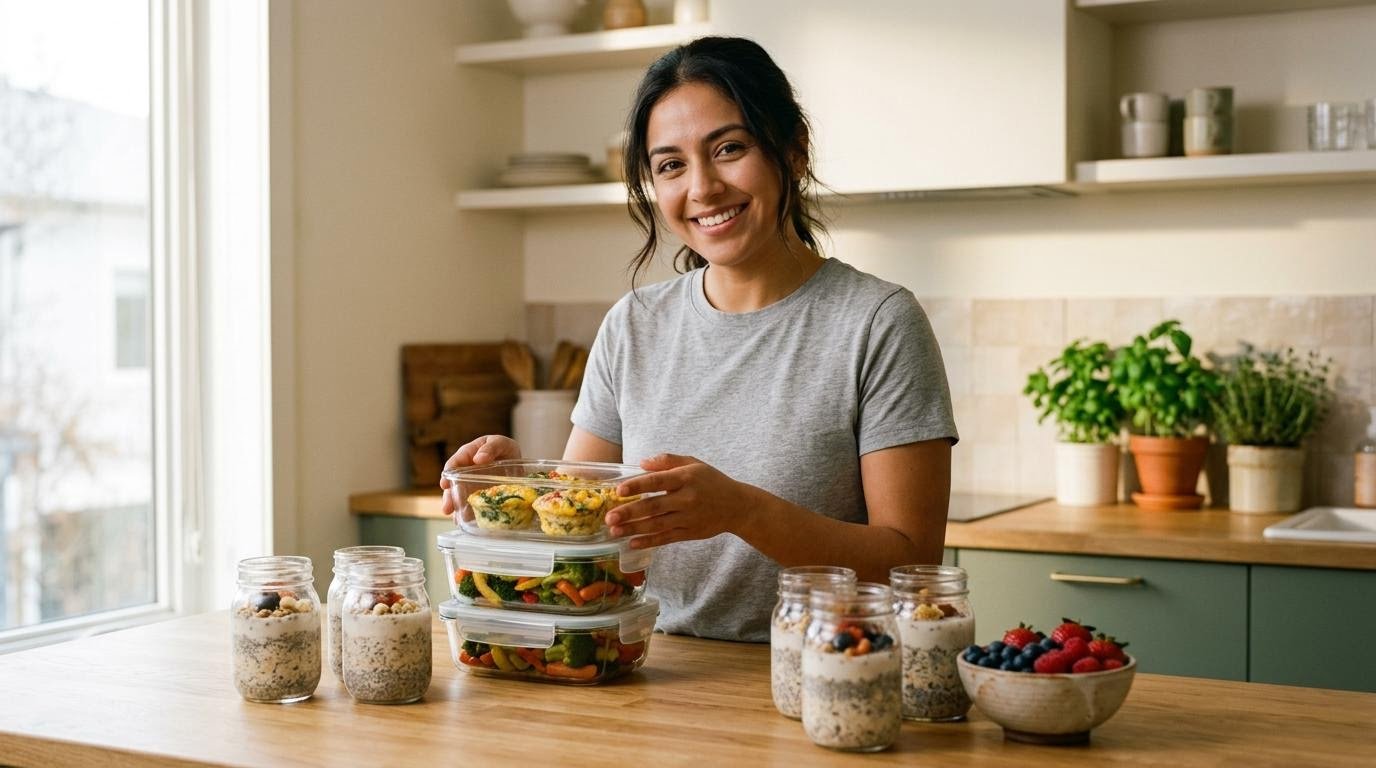
Most failed breakfasts fail at 7:40 a.m. on a weekday, when you are late and the fridge holds nothing ready. Thirty minutes on Sunday fixes that, and the routine below uses the same batch-cooking logic as our weekend meal prep plan for high-protein eating.
- Bake a dozen egg muffin cups. They take about 20 minutes in the oven, and you can wash up while they cook.
- Portion four jars of overnight oats. Rolled oats, milk, yogurt, and chia in each. Add berries on the day.
- Wash and bag the fruit. Berries, apples, or whatever is in season.
- Portion nuts and seeds into small containers. A quarter cup is plenty for a topping.
- Prep one savory option. Cooked beans, or boiled eggs, in a container ready to grab.
By Sunday evening you have three breakfasts ready for the week with no decisions left to make. Rotate them if you get bored, or repeat the same two. A simple routine that you actually follow beats an impressive one that you abandon.
Health disclaimer: This article is general information, not personal medical or nutrition advice. Talk to a doctor or registered dietitian before changing your diet, especially if you have diabetes, a history of disordered eating, food allergies, a medical condition, or take medication, or if you are pregnant, breastfeeding, or under 18. Calorie and protein figures here are rounded estimates and will vary by brand and portion.

Frequently Asked Questions About Weight Loss Breakfast Ideas
What is the best breakfast for weight loss?
The best breakfast is the one that pairs protein with fiber, lands in roughly the 300 to 500 calorie range that Cleveland Clinic's dietitian suggests, and that you will actually eat repeatedly. Eggs with vegetables and toast, Greek yogurt with berries and chia, and overnight oats with yogurt all fit. No single food is magic. The structure of the meal does the work.
How much protein should I eat at breakfast?
There is no official breakfast-specific target, so treat this as a practical range rather than a rule. The Harvard Health study compared about 12 grams of protein with about 28 grams, and the higher amount was linked to lower blood sugar and less appetite later in the day. Aiming for roughly 20 to 30 grams, scaled to your size and appetite, is a sensible place to start.
Does skipping breakfast help weight loss?
This article does not claim that eating breakfast causes weight loss, and it does not claim skipping is harmful. What the sources above show is narrower: a protein-and-fiber breakfast can reduce later hunger and cravings. If you wake up without an appetite and stay steady until lunch, you do not need to force food. If skipping leads to a raid on the vending machine at 3 p.m., a filling breakfast is probably the better trade.
Are smoothies good weight loss breakfast ideas?
They can be, if you build them like a meal. Use a protein source such as Greek yogurt or a low-sugar protein powder, add spinach and oats for fiber, and use unsweetened milk. Skip the juice, honey, and big scoops of nut butter that turn a 350-calorie smoothie into an 800-calorie one without you noticing.
What are good vegetarian or vegan weight loss breakfast ideas?
Vegetarians can use most of the ideas above, since eggs, Greek yogurt, and cottage cheese are all vegetarian. For vegan meals, swap in a tofu scramble with peppers, soy yogurt with chia and berries, or beans and avocado on whole-grain toast. Beans and tofu give you protein and fiber without any animal products.
Can I eat the same breakfast every day?
Yes. Repeating one or two simple breakfasts removes decisions and makes the routine easier to keep. Rotate your fiber sources, such as different fruits, seeds, and grains, so you are not stuck with a single food for months.

Pick One of These Weight Loss Breakfast Ideas and Run It for a Week
You do not need a perfect plan. You need a breakfast that is built from protein and fiber, sits near 300 to 500 calories, and takes less than ten minutes on a bad morning. Start with one of the weight loss breakfast ideas above, the one that sounds easiest rather than the one that sounds healthiest, and run it for a week. Notice what time you get hungry again. If it is closer to lunch than it used to be, you have the right idea. If not, add more protein or fiber and try again.
Small, repeatable breakfasts do more for your weight than a perfect plan you quit by Thursday. Pick your first one tonight, prep the ingredients, and let tomorrow morning be easy.
References
- Harvard Health — Extra protein at breakfast helps control hunger, 2018
- Mayo Clinic — Dietary fiber: Essential for a healthy diet, 2025
- Cleveland Clinic — How to Build a Healthy Breakfast for Weight Loss, 2020
- NHS — Eating a balanced diet, 2026
- NIDDK (NIH) — Health Risks of Overweight & Obesity, 2023
- Mayo Clinic (YouTube) — Making Mayo's Recipes: Make Ahead Breakfasts, 2017