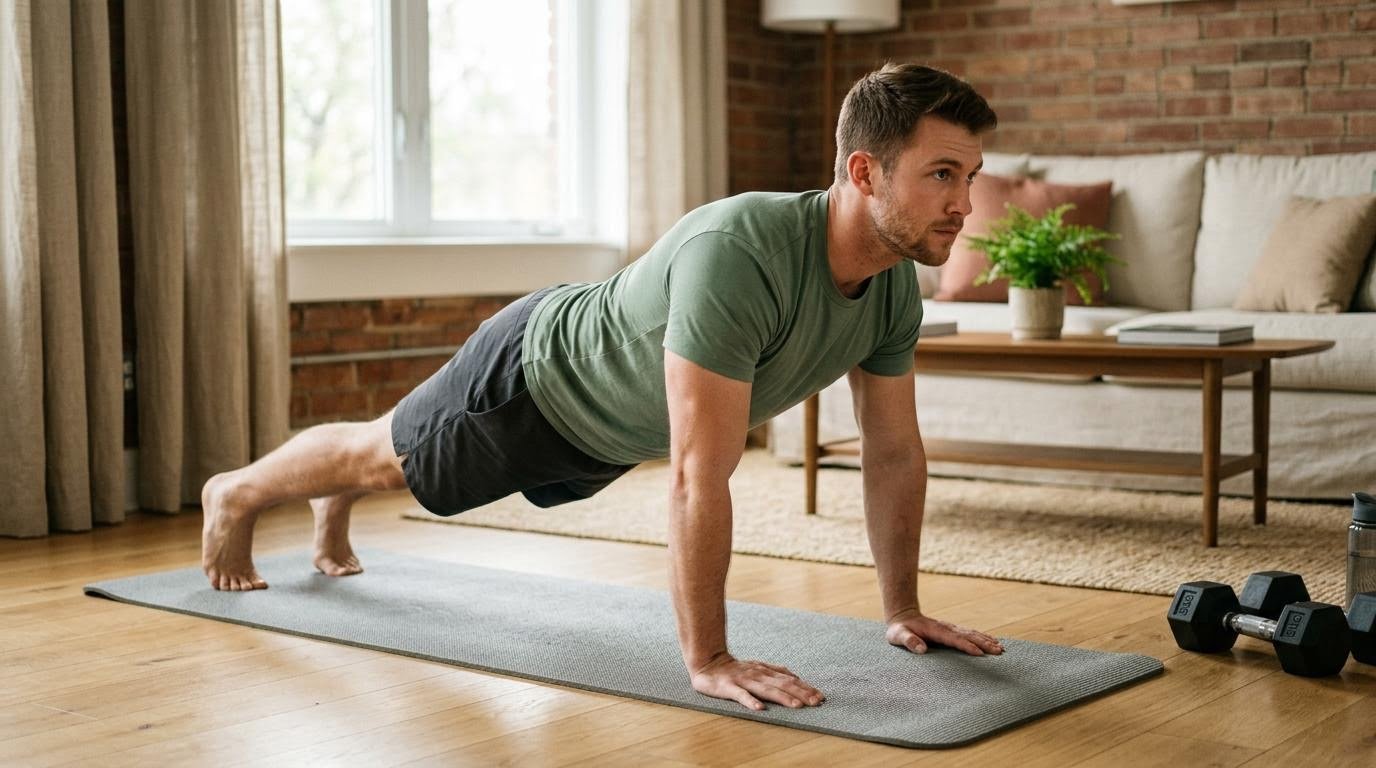


Most workout advice for losing weight picks a favorite and defends it. Runners swear by cardio, lifters swear by muscle, and every fitness feed claims its own routine is the one. The data tells a calmer story. The best exercises for weight loss are the ones that fit inside a 150-minute weekly baseline, burn a meaningful number of calories per session, and get repeated for months instead of weeks.
If you are between 18 and 28 and starting from scratch, the pressure to find the perfect plan is real. It also backfires, because a "perfect" plan you quit in nine days loses to an average plan you keep for nine months. This guide ranks your options with numbers from the CDC, Mayo Clinic, Harvard Health and a randomized trial, then turns them into a week you can actually follow.

Diet sets the pace of weight loss, but exercise decides whether it stays off
Start with the uncomfortable part. The CDC explains that most weight loss comes from eating and drinking fewer calories, while regular physical activity is what helps you keep the weight off afterward. That does not make exercise optional. It changes its job.
Picture a 22-year-old who cuts late-night snacks, drops a few kilograms over two months, then stops training because the scale finally moved. That arc is familiar, and it shows why exercise matters after the first wins. Food gets you moving in the right direction. Movement is what holds the new position. If the arithmetic behind that is fuzzy, our explainer on what a calorie deficit is and how weight loss really works covers it in plain language.
Here is the non-obvious part. Exercise burns far fewer calories than most people assume. A 155-pound person who runs at 5 miles per hour for 30 minutes burns roughly 288 calories, according to the Harvard Health chart you will see further down. That is real, but it is also easy to cancel out with one large coffee drink. So the question is not which workout feels the most punishing. The question is which workout you will repeat often enough for the small numbers to add up.
Mayo Clinic's short video on diet versus exercise makes the same point in plain terms.

The 150-minute baseline is a floor, not a weight loss plan
CDC guidelines for adults call for about 150 minutes of moderate-intensity aerobic activity per week, plus muscle-strengthening activity on 2 days. That works out to about 30 minutes on five days, or roughly 21 minutes a day if you spread it across the whole week. Most people can find 21 minutes. Almost nobody can find 90 minutes in one go, so splitting it is the realistic move.
Mayo Clinic adds a useful second number. Around 300 minutes a week of moderate activity may help with losing weight or keeping it off, and short bursts spread through the day count toward the total.
Why 150 minutes alone rarely moves the scale
Run the numbers. Mayo's table estimates that a 160-pound person burns about 314 calories in an hour of walking at 3.5 miles per hour. Walk for 150 minutes and you have burned about 785 calories across the entire week. That is a fine investment in your heart, mood and sleep, but it is a small dent in weight terms. The baseline protects your health. It does not promise a smaller waistline, and anyone who tells you otherwise is rounding up.
Three ways to reach 150 minutes
- Five sessions of 30 minutes, ideally on days you already have a gap between classes or work.
- Three longer sessions of about 50 minutes, if you prefer fewer, bigger workouts.
- Daily movement of around 21 minutes, including a brisk walk to campus or the office.
None of these is better than the others. The best one is the one that survives a busy Wednesday.

Aerobic exercise beat lifting for fat loss in an eight-month trial
The cleanest evidence comes from a head-to-head test. A randomized trial published in the Journal of Applied Physiology in 2012 assigned 119 sedentary adults with overweight or obesity to resistance training, aerobic training, or both for eight months. The aerobic group and the combined group reduced fat mass and body mass more than the resistance-only group.
Now the part that surprises people. The combined group spent twice as much time exercising, yet it did not lose significantly more fat or body mass than the aerobic-only group. The extra hours bought extra lean mass, not extra fat loss. If your week has 40 spare minutes instead of 80, that finding matters. Spending your limited time on aerobic work gets you most of the fat loss benefit, and two short strength sessions can fill in the rest.
One trial is one trial. It tested sedentary adults over a fixed period, and your results will depend on your food, sleep and starting point. Treat it as a strong signal about priorities, not a verdict that lifting is pointless.
Aerobic options that hold up
- Brisk walking: low barrier, low injury risk, easy to stack onto a commute.
- Jogging or running: a high calorie burn per minute, with a ramp-up period for your joints.
- Cycling: easy on the knees, and indoor bikes make weather irrelevant.
- Swimming: full-body and joint-friendly if you have pool access.
- Elliptical or rowing machine: high output with less impact than running.
Pick one or two, not all five. Variety helps boredom, but only if you still show up.

Strength training earns its place by protecting muscle while the scale drops
If aerobic work does more for fat loss, why lift at all? Because weight loss without resistance work can take muscle along with fat. Mayo Clinic notes that pairing diet changes with exercise, especially strength and aerobic training, helps preserve muscle and bone during weight loss. In the trial above, the resistance and combined groups also gained more lean mass than the aerobic-only group.
Lean mass is what makes weight loss look and feel like progress. Clothes fit differently, stairs feel easier, and everyday tasks stop feeling like workouts. That is the payoff the scale cannot show you.
Effort changes the calorie math
Intensity matters more than most beginners expect. In the Harvard Health chart, general weight lifting burns about 108 calories in 30 minutes for a 155-pound person, while vigorous lifting burns about 216. Same time, same body, double the burn. Resting two minutes between every set while scrolling your phone belongs to the first category. Moving briskly between exercises and working close to your limit belongs to the second.
A simple two-day strength menu
- Squats or goblet squats for your legs and hips.
- Push-ups, incline push-ups or a dumbbell press for your chest and arms.
- Rows with dumbbells, bands or a cable machine for your back.
- Lunges or step-ups for single-leg strength.
- Planks or dead bugs for your core.
Do two or three sets of 8 to 12 repetitions of each, twice a week. That matches the CDC's muscle-strengthening recommendation and takes about 30 minutes. Add a little weight or one extra repetition each week and you have built progression into the plan without any apps.

Which activities burn the most calories in 30 minutes
Here is how common activities compare. These figures come from Harvard Health's calorie chart, which lists estimated calories burned in 30 minutes at three body weights. We kept the activities that most people can start without special equipment or training, and sorted them from lowest to highest burn at 155 pounds.
| Activity (30 minutes) | 125 lb | 155 lb | 185 lb |
|---|---|---|---|
| Weight lifting: general | 90 | 108 | 126 |
| Walking: 3.5 mph (17 min per mile) | 107 | 133 | 159 |
| Weight lifting: vigorous | 180 | 216 | 252 |
| Swimming: general | 180 | 216 | 252 |
| Rope jumping: slow | 226 | 281 | 335 |
| Bicycling: 12 to 13.9 mph | 240 | 288 | 336 |
| Running: 5 mph (12 min per mile) | 240 | 288 | 336 |
| Calisthenics: vigorous | 240 | 306 | 336 |
| Elliptical trainer: general | 270 | 324 | 378 |
| Rope jumping: fast | 340 | 421 | 503 |
Source: Harvard Health, 2021. Estimated calories burned in 30 minutes.
Three things stand out. First, body weight matters. The same 30-minute run burns about 240 calories at 125 pounds and about 336 at 185 pounds, so a friend's number is not your number. Second, walking at 3.5 miles per hour burns less than half of what the elliptical does in the same time, yet it wins on repeatability, which is why it stays on the list. Third, intensity beats variety. Vigorous calisthenics and fast rope jumping sit near the top because you simply do more work per minute.
Turning the chart into a weekly budget
Use the table as a rough budget, not a scoreboard. A 155-pound person who runs for 30 minutes on three days burns about 864 calories across those sessions (288 times three). Swap in two vigorous lifting sessions at about 216 each and three brisk walks at about 133 each, and the week adds up to about 831 calories. Both weeks look modest next to a day of eating, and that is exactly the point. Exercise adds a steady margin on top of your food choices, and the margin only shows up if you collect it week after week.
These are estimates for an average person, so your watch or gym machine may disagree. That is fine. Use the chart to compare activities against each other, not to justify an extra meal.
Intervals: the time-saving option with a catch
Fast rope jumping tops the 155-pound column at about 421 calories in 30 minutes, which makes interval formats tempting when time is tight. The catch is that very few beginners can sustain that pace, and the aerobic-versus-resistance trial above tested steady training, not intervals. Treat intervals as a useful tool for short sessions, not as a proven winner. Start with 20 seconds hard and 40 seconds easy for a few rounds, and build only when that feels routine.
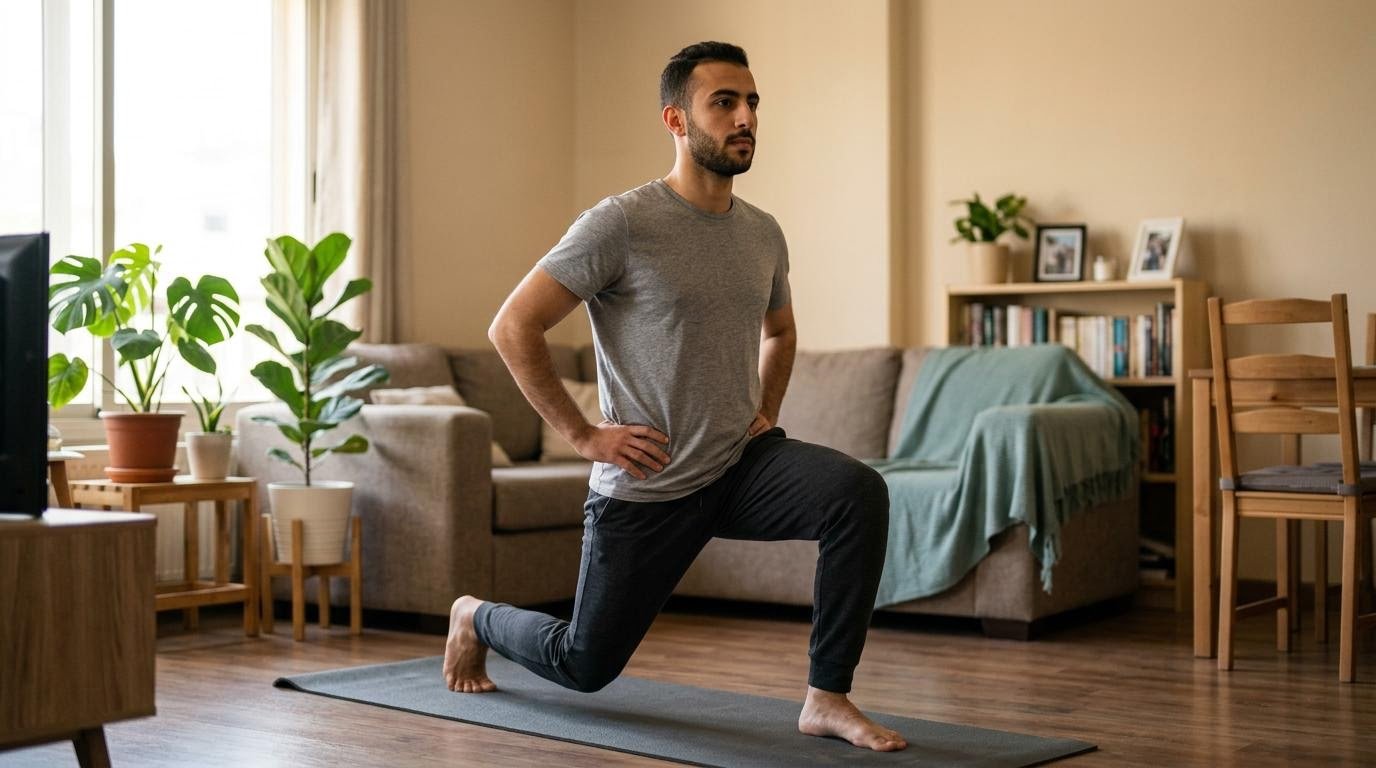
Best exercises for weight loss in women and men: the gap is smaller than you think
Search results split this topic by gender, but the physiology behind the advice barely changes. The CDC's guidance applies to every adult the same way, with 150 minutes of aerobic activity and two strength days. What differs between people is body weight, starting fitness and joint history, and those vary more within each gender than between them.
For women
The best exercises for weight loss in women follow the same pattern as everyone else: a base of brisk aerobic work plus two strength days. A common worry is that lifting will add bulk. The trial above points the other way. Adding resistance training raised lean mass and did not reduce fat loss compared with aerobic work alone. If you are pregnant, postpartum, going through menopause or managing a condition such as PCOS, check your plan with a clinician first, because the safe starting point can change.
For men
The best exercises for weight loss for men often get framed as heavy lifting only. The aerobic findings still apply. In the trial, adding resistance work to aerobic work cost twice the time and did not improve fat loss over aerobic work alone. Men who want visible fat loss should keep two or three aerobic sessions in the week, even if lifting stays the favorite part.
The takeaway for both groups is the same. Match your plan to your schedule and your joints first, and to your gender second.

A six-day beginner week built around the best exercises for weight loss
Here is a simple template that follows the CDC baseline and puts the research above to work. It looks like a lot on paper, but each session is 30 minutes, and Sunday is a full rest day.
- Monday: 30 minutes of brisk walking, easy cycling or a jog-walk mix.
- Tuesday: 30 minutes of strength training using the five-move menu above.
- Wednesday: 30 minutes of aerobic work. Swap in the elliptical, swimming or the stairs.
- Thursday: 30 minutes of strength training, adding one repetition or a little weight to Tuesday's numbers.
- Friday: 30 minutes of aerobic work, or a few interval rounds if you feel good.
- Saturday: 30 minutes of easy aerobic work that you extend as fitness improves.
- Sunday: rest, with an optional casual walk.
That is 120 minutes of aerobic activity and 60 minutes of strength work in week one. Stretch Saturday's session by 10 minutes each week and you reach the 150-minute aerobic baseline by week four, without a dramatic jump that invites injury or burnout. Prefer a different layout? This fat loss exercise routine offers another way to structure the week.
Track progress with more than the scale
Body weight moves in jumps and stalls, which makes it a noisy daily signal. Pair it with numbers you control. Write down how long you walked, how many push-ups you completed, or how much weight you used for squats. A page of small improvements keeps you training through the weeks when the scale refuses to cooperate, and those are the weeks that decide whether the habit sticks.
Morning or evening?
People spend a surprising amount of energy arguing about timing. Our breakdown of the best time to workout for weight loss covers the trade-offs, but the practical answer is the hour you will actually show up. A workout you protect on your calendar beats an optimal one you skip.
The short version
The best exercises for weight loss are not a secret list. They are the mix of aerobic work and two strength days that you can repeat for months while eating in a modest calorie deficit. Choose two aerobic activities and a short strength menu, schedule them like appointments, and let the small numbers compound. The scale will respond, and so will your energy, your sleep and your confidence.
Health disclaimer: This article is general education, not medical advice. Talk to a doctor before starting a new exercise program or changing your diet, especially if you have a heart condition, diabetes, joint or back problems, high blood pressure, or take regular medication. Check with a clinician first if you are pregnant, breastfeeding or under 18. Stop and seek care if you feel chest pain, dizziness or unusual shortness of breath.
Frequently asked questions
What are the best exercises for weight loss?
The best exercises for weight loss combine steady aerobic activity such as brisk walking, jogging, cycling or swimming with two weekly strength sessions. Aerobic work did more for fat mass in a 2012 randomized trial, while strength work preserved and built lean mass. The best choice is whichever mix you can repeat consistently.
Can you lose weight with exercise alone?
You can, but it is slow. The CDC says most weight loss comes from eating and drinking fewer calories, and that losing weight with activity alone generally takes a high amount of it. Exercise matters most for keeping weight off and for protecting your health along the way.
How much exercise do you need to lose weight?
Start with the 150-minute weekly baseline and two strength days recommended by the CDC. Mayo Clinic says around 300 minutes of moderate activity a week may help with weight loss or maintenance. Build toward that gradually instead of jumping in, and pair it with a modest calorie deficit.
Is cardio or strength training better for losing weight?
For fat loss alone, cardio came out ahead in the 2012 trial, and combining it with lifting did not add significantly more fat loss despite doubling the time. Strength training still earns two days a week because it builds lean mass and helps preserve muscle while you lose weight.
Can you do the best exercises for weight loss at home?
Yes. Vigorous calisthenics such as squats, push-ups and lunges burned about 306 calories in 30 minutes for a 155-pound person in the Harvard Health chart, which is more than a brisk walk or general weight lifting. Add a pair of dumbbells or a resistance band to keep progressing.
References
- CDC — Adding Physical Activity as an Adult, 2025
- CDC — Physical Activity and Your Weight and Health, 2026
- Mayo Clinic — Exercise for weight loss: Calories burned in 1 hour, 2024
- Harvard Health — Calories burned in 30 minutes for people of three different weights, 2021
- NIH, PubMed — Effects of aerobic and/or resistance training on body mass and fat mass in overweight or obese adults, 2012
- Mayo Clinic — Mayo Clinic Minute: Which is better for losing weight – diet or exercise?