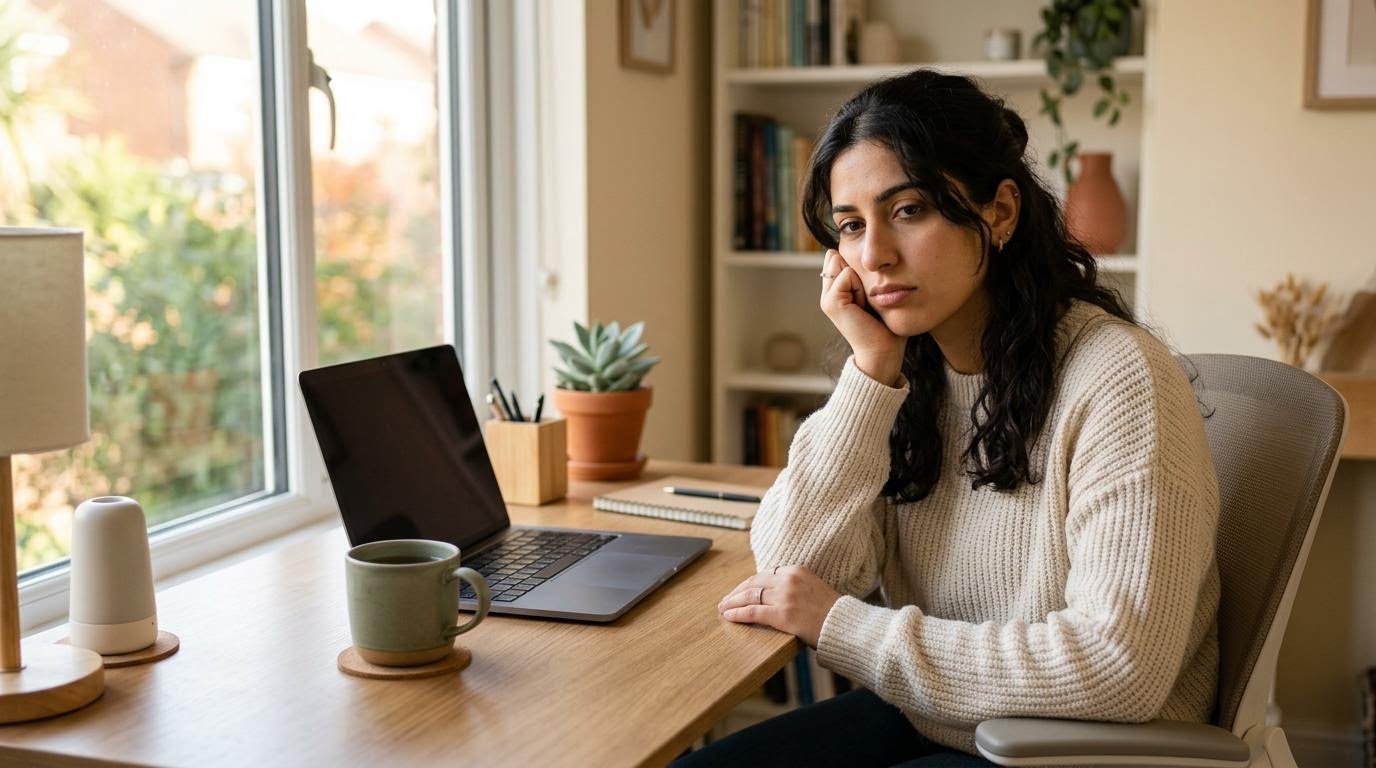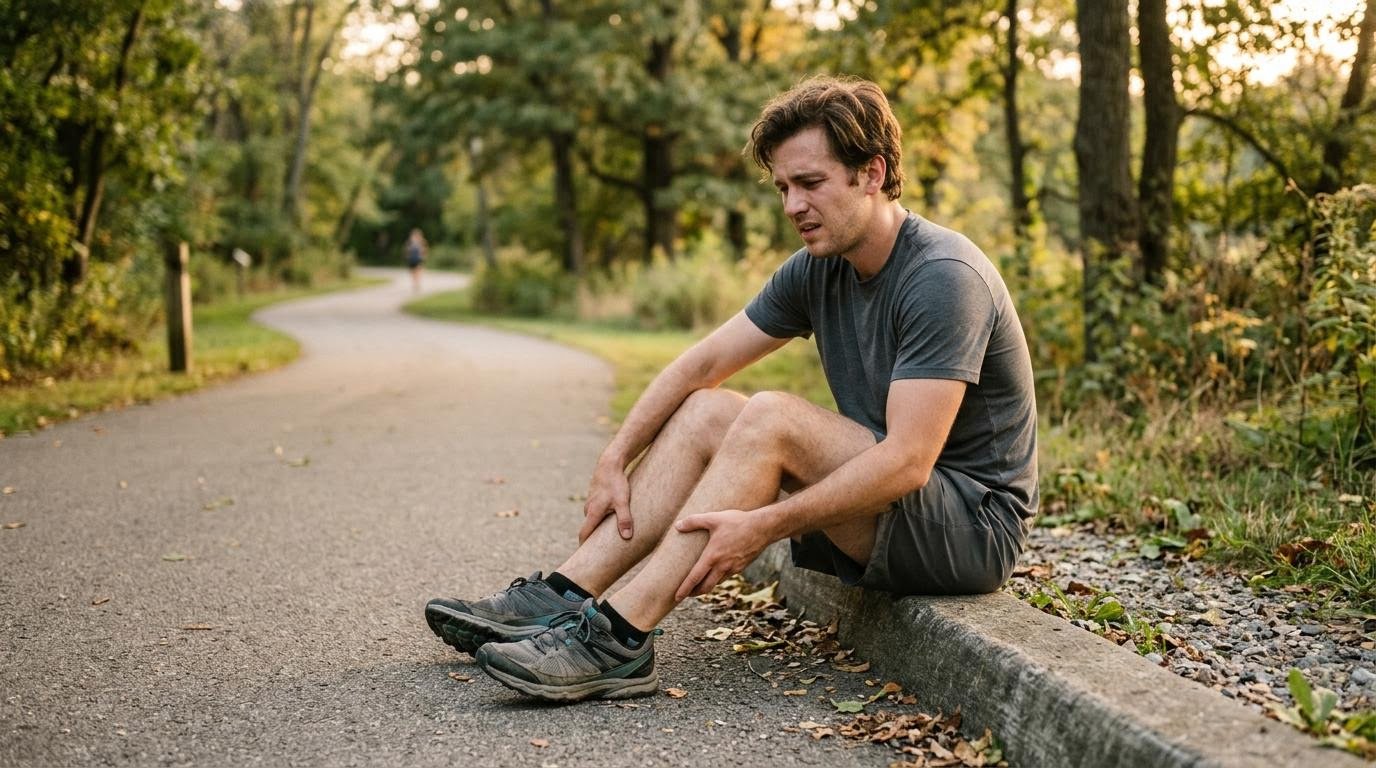


Chest pain that is sudden, severe or spreading to your arm, neck, jaw or back needs an emergency call before it needs an article. The CDC advises calling 9-1-1 straight away if you notice heart attack symptoms in yourself or someone else, including chest discomfort with sweating, nausea or trouble breathing. Everything below can wait until you are safe.
So, can anxiety cause chest pain? Yes. Anxiety and panic attacks are a recognised cause, and the National Institute of Mental Health describes panic attacks that can mimic a heart attack. That resemblance is the whole problem. The pain is real, it feels alarming, and it is often hard to tell apart from a heart problem by feel alone.
This guide breaks the question into usable pieces: why anxiety hurts your chest, what it tends to feel like, how it overlaps with a heart attack, which warning signs mean 911, and what helps in the moment and over the following weeks. If you are between 18 and 28 and your chest tightens during exams, a new job or a rough month, it was written for you.
Advertisement



Can anxiety cause chest pain? Yes, because the stress response is physical, not imagined
Anxiety is not only a thought. When your brain flags something as a threat, it switches on the body's alarm system. Your heart beats faster and harder, your breathing speeds up, and your muscles tighten, including the ones around your ribs and chest wall. Any of those may leave your chest feeling tight, sore or pressed on.
That is why the symptom feels so physical. It is. Mayo Clinic lists chest pain among the typical symptoms of a panic attack, next to dizziness and headache. The NHS chest pain guide also names anxiety and panic attacks as a possible cause, describing pain that follows worry or a stressful moment, often sharp and steady, and sometimes paired with a faster heartbeat, sweating or dizziness.
Picture a hypothetical 23-year-old in the final week of a big project, running on three coffees a day and four hours of sleep. During a tense meeting, their chest tightens, their heart races and their hands go cold. Nothing in that picture proves anxiety. It shows how ordinary the setup is, and why the pain feels so convincing in the moment.
Here is the non-obvious part. Calling it "anxiety chest pain" does not make it imaginary, and calling it real does not make it dangerous. Your body is reacting to a perceived threat with genuine physical effects. The NIMH describes panic attacks as not life-threatening, with the physical symptoms usually fading. That is reassuring about the attack itself. It says nothing about whether this particular chest pain is an attack, which is the next problem.
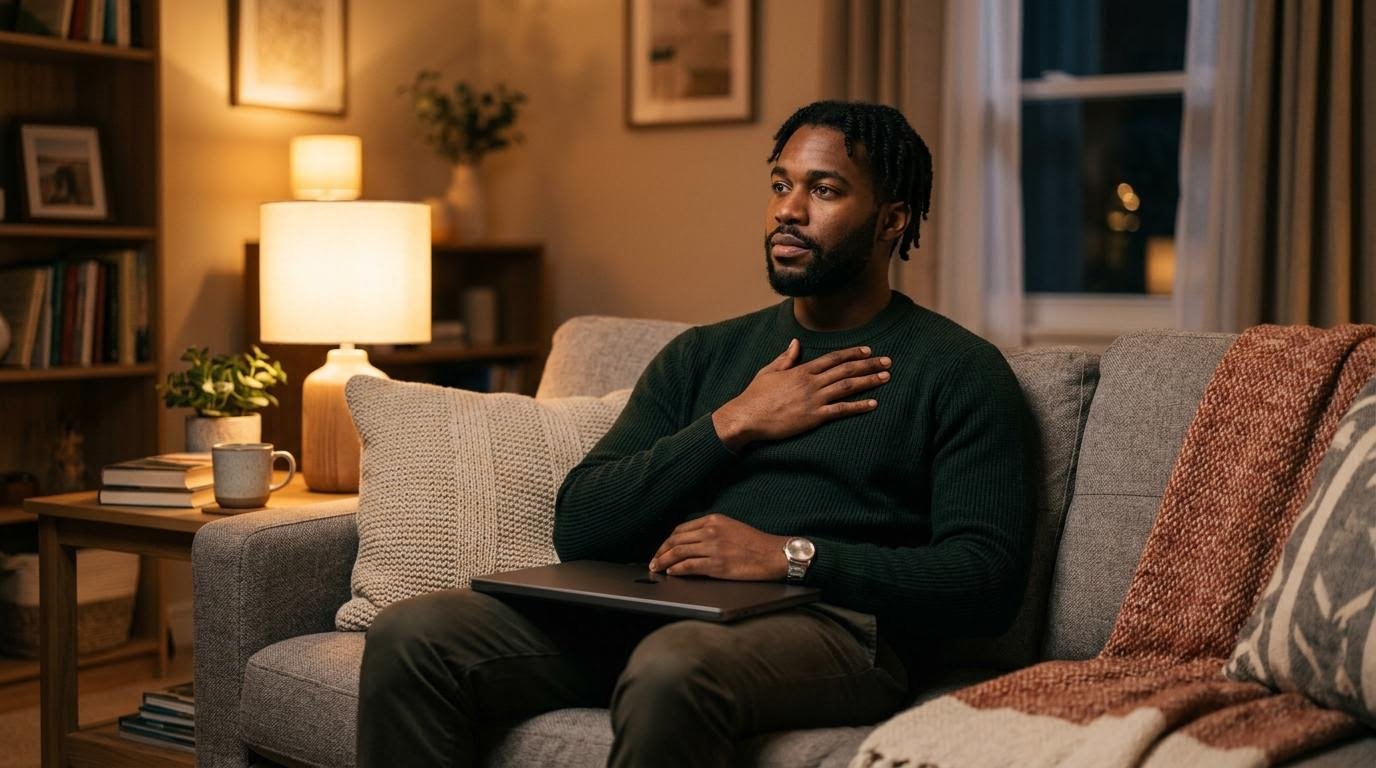
What anxiety chest pain feels like, and why its location alone settles nothing
Descriptions vary from person to person. The NHS describes anxiety-related chest pain as often sharp and continuous, while other people report tightness, pressure or a band across the ribs. A racing or pounding heart often comes along for the ride, and the NIMH lists both that and chest pain among the physical symptoms of a panic attack.
Searches for anxiety chest pain location are common, and the honest answer is disappointing. Anxiety pain has no reliable home address. The CDC describes heart attack discomfort as usually in the centre or left side of the chest, which means a left-side pain does not prove a heart problem, and a pain elsewhere does not rule one out. Location cannot do the sorting for you.
Timing gives you slightly more to work with. Mayo Clinic says panic attack symptoms usually peak within minutes, and you may feel worn out afterwards. The NIMH, in its 2025 revision of the panic disorder guide, says attacks can last from a few minutes to an hour, sometimes longer. A pain that peaks, then fades as you calm down, fits anxiety better than a pain that builds or stays put.
But "fits" is not "proves". The CDC notes heart attack discomfort may also last several minutes or come and go, so even timing overlaps. Other clues that point toward the anxiety side of the ledger include:
- A clear stress trigger just before it started
- A racing heart, sweating or dizziness that settles as the stress eases
- Feeling drained once it passes
- A similar pattern that a doctor has already checked and explained
Chest pain also rarely travels alone in a panic attack. Mayo Clinic's symptom list includes a fast, hard heartbeat, sweating and trembling, breathlessness or a tight throat, nausea, dizziness, numbness or tingling, and a feeling of being detached from yourself. It also lists a sense that something terrible is about to happen and a fear of losing control or dying. That last pair explains why the episode feels so much like a medical emergency: the body and the mind are both sounding the same alarm.
There is some comfort in the numbers for younger readers. Mayo Clinic notes that many people have only one or two panic attacks in their lives, and these often stop once a stressful period ends. It also says panic disorder usually begins in the late teens or early adulthood, so a first episode around exam season or a first full-time job is common, not a sign that something is permanently wrong with you.
Anxiety rarely hits one system only. If your gut joins in, our guide to stomach anxiety symptoms covers that side of the picture.

Can anxiety cause chest pain that feels like a heart attack? The overlap is bigger than most people expect
If you have searched panic attack vs heart attack symptoms hoping for a clean checklist, the table below is the closest honest version. Read the columns side by side and notice how often they overlap.
| Feature | Described for anxiety or panic | Described for heart attack |
|---|---|---|
| Where it is felt | In the chest, with no reliable spot | Usually the centre or left side of the chest |
| Timing | Symptoms usually peak within minutes, and an attack can last minutes to an hour | May last several minutes or come and go |
| Other body signs | Racing or pounding heart, sweating, dizziness | Pain in the jaw, neck, back, arms or shoulders, light-headedness, cold sweat, shortness of breath |
| Common trigger | Worry or a stressful situation | No single trigger listed |
| What the sources advise | Get medical help soon if you cannot tell what is causing it | Call 9-1-1 immediately |
Source: CDC, 2024; NHS; Mayo Clinic; National Institute of Mental Health
Timing, a racing heart and the sense that something is wrong show up on both sides. Cleveland Clinic stresses that only medical testing can tell a heart attack from a panic attack, which is why the safest rule is to treat new, severe or unexplained chest pain as urgent until a clinician says otherwise. A diagnosis of anxiety is the end of a process, not the first guess.
Cleveland Clinic cardiologist Jacqueline Tamis-Holland, MD, walks through the difference in this video from the clinic's Health Essentials podcast.
One more wrinkle. The CDC adds that unusual tiredness, nausea and vomiting are more likely in women having a heart attack, and those signs are easy to blame on stress. If a symptom list does not match the textbook picture, that is a reason to get checked, not a reason to relax.
Other causes of chest pain people mix up with anxiety
Anxiety and heart trouble are not the only two options. The NHS chest pain guide lists several everyday causes, and a few of them are worth knowing because their patterns differ:
- Heartburn or indigestion: pain that starts after eating, often with a full, bloated feeling
- Chest strain or sprain: pain after an injury or chest exercise that may worsen when you breathe in and ease when you rest
- Chest infection or pleurisy: pain that worsens on breathing in, usually with coughing and a high temperature
- Shingles: tingling skin followed by a blistering rash
- Pericarditis: sudden, sharp, stabbing pain that gets worse when you breathe deeply or lie down
Notice what this list does and does not do. It shows that the pattern of the pain, such as pain after meals or pain that changes with breathing, gives a doctor useful clues. It does not turn you into your own diagnostician, and the NHS advises against self-diagnosing for exactly that reason. Treat this list as vocabulary for your appointment, not a substitute for it.
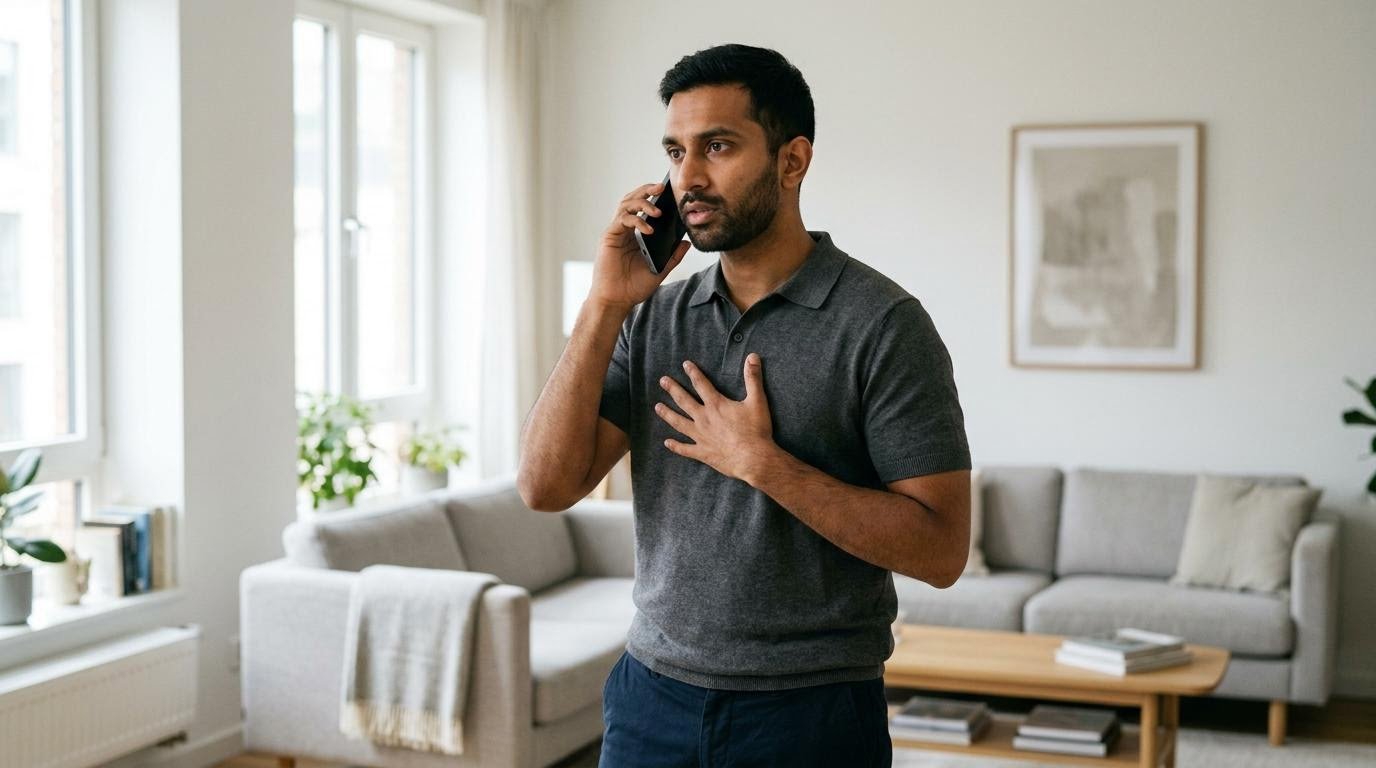
Call 911 first when these warning signs appear, even with a history of anxiety
A history of anxiety is not a reason to wave away new chest pain. Being checked and told it was anxiety costs you an afternoon. Missing a heart attack costs far more. Call 911 or your local emergency number if you have any of these:
- Chest pain or discomfort in the centre or left of the chest that lasts several minutes or comes and goes
- Pain or discomfort in the jaw, neck, back, or one or both arms or shoulders
- Shortness of breath, with or before the chest discomfort
- Feeling weak, light-headed or faint, or breaking into a cold sweat
- Nausea, vomiting or unusual tiredness
- Sudden chest pain that does not go away
The NHS gives the same advice for the UK, telling people to call 999 for sudden chest pain that does not go away, pain spreading to the arm, neck, jaw, stomach or back, or chest pain with sweating, sickness, light-headedness or breathlessness.
If it is not an emergency, it still needs a doctor. The NHS advises seeing a GP if chest pain comes and goes, or fades quickly but still worries you. Mayo Clinic advises getting evaluated by a primary care provider when you are unsure what is behind symptoms that can resemble a heart attack. A doctor can check your heart, and once it is cleared, anxiety becomes a working explanation instead of a guess. Bring a few notes to the visit:
- When the pain started and how long it lasted
- What you were doing or feeling just before
- How much caffeine and sleep you had that day
- Any family history of heart disease

Calm anxiety chest pain in the moment with slower breathing and a grounded body
Use these steps only when a serious cause has been reasonably ruled out, meaning a doctor has checked this pattern before and said anxiety is the likely explanation. If the pain is new, severe or getting worse, skip straight to the 911 section above.
- Sit down and drop your shoulders. Rest your back against something solid so your muscles can stop bracing.
- Slow the breath. Breathe in through your nose for about four seconds and out through your mouth for about six, for a few minutes. A longer out-breath tends to settle the body.
- Ground yourself. Name five things you can see, four you can touch and three you can hear. It pulls attention out of your chest and into the room.
- Soften the chest wall. Roll your shoulders back, unclench your jaw and let your belly relax.
- Note the time. Write down when it started and when it eased. A pattern that peaks and fades is useful information for your doctor.
If any new symptom appears during the exercise, stop and call 911. For a longer toolkit you can use daily, not only during an episode, see our guide to nervous system regulation techniques that calm you down fast.

Worrying about the pain feeds it, and breaking that loop is a skill you can learn
Here is the cruel part. After one scary episode, you start scanning your chest. Every twinge becomes evidence, the alarm goes off again, and the pain you were watching for arrives. Cleveland Clinic describes this on its cardiophobia page as "a type of fear loop", where worry about symptoms makes them feel worse.
Loops respond to practice. The NIMH describes cognitive behavioural therapy (CBT) as a research-supported treatment for panic disorder, one that teaches new ways to think about and respond to panic sensations. Cleveland Clinic adds that a provider may refer you to a mental health professional when your heart has been checked and the symptoms keep returning.
It also helps to know what raises the odds of panic episodes in the first place. Mayo Clinic lists major stress, big life changes such as a breakup or having a baby, a family history of panic attacks, and smoking or heavy caffeine use among the risk factors. You cannot change your family history, but caffeine, nicotine and the pace of a stretch of life are levers you may be able to adjust, ideally with your doctor's input.
Mayo Clinic is honest that no method reliably prevents panic attacks. It says early treatment, sticking with a treatment plan and regular exercise may help. That framing is worth borrowing. You are not aiming for a life with zero anxious moments, which nobody has. You are aiming for a body that recovers faster and a mind that stops treating every twinge as proof of disaster.
Between sessions, writing helps many people sort worry from fact. Our post with 20 journaling prompts for anxiety gives you ideas for naming worries, testing thoughts and calming your body.
So, can anxiety cause chest pain? Yes, and it deserves both a calm response and a proper check. Get new, severe or unexplained pain looked at first. Then, once a clinician has told you your heart is not the culprit, treat the anxiety itself as the thing to work on.
Health disclaimer: This article is general information, not medical advice. Chest pain can come from the heart, lungs, digestion or muscles, and only a clinician can tell which applies to you. Call 911 or your local emergency number for sudden, severe or spreading chest pain. Talk to a doctor before changing any medication, and seek care promptly if you have heart disease, high blood pressure, or are pregnant.

Anxiety chest pain FAQ: quick, specific answers
How long can anxiety chest pain last?
Panic attack symptoms usually peak within minutes, and the National Institute of Mental Health says an attack can last from a few minutes up to an hour or longer. Pain that lasts for hours or keeps returning over several days needs a medical check, because length alone cannot confirm the cause.
Where is anxiety chest pain usually felt?
There is no reliable spot. It can show up in the centre, left or right of the chest. The CDC describes heart attack discomfort as usually in the centre or left side, so location cannot separate the two. Judge the whole picture and get unexplained pain checked.
Can anxiety cause chest pain on the left side?
Yes, it can. But the left side is also a common spot for heart attack discomfort, so do not assume. If the pain is new, severe, spreads to your arm, jaw or back, or comes with sweating, faintness or breathlessness, call 911.
Can anxiety cause chest pain without a panic attack?
Yes. The NHS lists anxiety as a possible cause of chest pain alongside panic attacks, and describes pain that follows worry or a stressful situation. You do not need a full panic attack, but ongoing chest pain with no clear cause still deserves a doctor's visit.
How do you stop anxiety chest pain?
Once a doctor has ruled out a heart problem, slow breathing, grounding and relaxing your shoulders and jaw can help an episode pass. For repeat episodes, cognitive behavioural therapy is a research-supported treatment for panic disorder, according to the National Institute of Mental Health.
Is chest pain from anxiety dangerous?
The National Institute of Mental Health describes panic attacks as not life-threatening, and the physical symptoms usually fade. The risk is the guess. The same chest pain can come from a heart attack, and Cleveland Clinic notes that only medical testing can tell them apart, so get new or unexplained pain checked.
References
- CDC — About Heart Attack, 2024
- NHS — Chest pain, 2023
- Mayo Clinic — Panic attacks and panic disorder, 2026
- Cleveland Clinic — Cardiophobia, 2024
- National Institute of Mental Health — Panic Disorder: When Fear Overwhelms, 2025
- Cleveland Clinic (YouTube) — Heart Attack vs. Panic Attack: How to Tell The Difference, 2025