It is 3:15 on a Tuesday afternoon. Lunch is a memory, dinner is three hours away, and the vending machine is calling your name. This is the moment where most diets quietly lose. The right low calorie weight loss snacks make that gap easy to cross, and the wrong ones leave you back in the pantry twenty minutes later. Here is the thing: a snack does not have to taste like a punishment to fit your calorie target. It just has to be built well.
This guide gives you the building rules, fifteen specific ideas with approximate calorie counts, a portion method that actually works, and a simple plan you can run this week. No miracle foods, no rapid-timeline promises. Just snacks that keep hunger manageable while you stay in the calorie range that supports steady weight loss.

Low calorie weight loss snacks work when they bring volume, protein or fiber
Most people judge a snack by one number: the calories on the label. That number matters, but it only tells half the story. The other half is how much food you get for those calories, and how long that food keeps you satisfied.
Nutrition researchers call the first idea energy density, meaning calories per amount of food. Mayo Clinic explains that foods with lower energy density let you eat a larger portion for fewer calories, which helps with fullness. Their example is easy to picture. A cup of grapes has about 104 calories, while a cup of raisins has about 480. Same bowl, more than four times the calories. At 3 pm, that difference decides whether you feel fed or tricked.
Fiber is the second lever. Mayo Clinic notes that high-fiber foods tend to be more filling and take longer to eat, so you often finish satisfied on less. The same page lists the National Academy of Medicine targets of roughly 25 grams a day for women and 38 grams a day for men up to age 50. Most young adults fall well short of that, which means snack time is one of the easiest places to close the gap. If you want the full case for fiber, the breakdown in why a high fiber weight loss diet beats counting calories goes deeper.
Protein is the third piece. It tends to keep hunger quieter for longer, which is why so many of the ideas below lean on eggs, yogurt, cottage cheese and legumes. A snack with protein plus fiber plus water-rich volume is the combination to aim for.
The quick test for any snack
Before you buy or make something, ask three questions:
- Is it roughly 100 to 200 calories for the portion you will actually eat?
- Does it contain protein, fiber, or a lot of water-rich volume?
- Would you eat it slowly, sitting down, rather than from a bag while scrolling?
Two yeses out of three is a solid snack. Three out of three is a keeper. The 100 to 200 calorie range is a practical rule of thumb rather than a medical rule, so adjust it to your own daily target and your own appetite.

Ultra-processed "diet" snacks can push you to eat more, not less
Here is the non-obvious part. The snack aisle is full of products that wear a "low calorie" or "100 calorie" badge and still leave you hungrier than a plain apple. The reason is partly texture and engineering, and one well-known experiment shows how big the effect can get.
In a tightly controlled study at the National Institutes of Health, 20 adults lived in a research unit for a month and spent two weeks on each of two diets. According to the NIH summary of the 2019 trial, people ate about 500 more calories per day on the ultra-processed diet and gained roughly 2 pounds, then lost a similar amount on the minimally processed diet. The meals were matched on what was offered, yet people simply ate more of the processed food and ate it faster.
Keep the limits of that study in mind. It was small, short, and it tested whole menus, not snack bars specifically. It does not prove that every packaged snack is a trap. What it does suggest is a useful habit: do not let a calorie claim on the front of a package do your thinking. Flip the pack over and check the ingredient list. A snack with a short list of recognizable foods tends to be easier to stop eating than one built from five forms of sugar and a protein isolate.
What this looks like at the store
Picture two options at a gas station. One is a bar with a "low calorie" banner, a dessert-style name and a long ingredient list. The other is a banana and a string cheese from the cooler. The bar may win on calories by a few points. The banana and cheese will usually win on how you feel an hour later, because they bring fiber, water and protein to the table. That is the whole game. You are not shopping for the lowest number, you are shopping for the most satisfaction per calorie.
That does not mean every packaged option is off limits. Plenty of packaged foods work fine: plain popcorn, roasted seaweed, single-serve cottage cheese, unsweetened applesauce cups. The filter is the same each time. Short ingredient list, real protein or fiber, a portion you can finish without a fight.

15 low calorie weight loss snacks that taste like real food
All calorie figures below are approximate. Brands, sizes and ripeness change the numbers, so check the label or your own measurements if you are tracking closely. Each idea is built to land around 60 to 200 calories while bringing some mix of protein, fiber and volume.
Crunchy and savory
- Air-popped popcorn, 3 cups (about 90 calories). A whole-grain food with real volume. Season with smoked paprika or nutritional yeast instead of drowning it in butter.
- Cucumber rounds with 2 tablespoons hummus (about 90 calories). Cold, crisp and creamy. Swap in bell pepper strips for extra crunch.
- Roasted chickpeas, 1/4 cup (about 120 calories). Toss canned chickpeas with a little oil and spices, then bake until crisp. Fiber and plant protein in one handful.
- Baby carrots with salsa (about 60 calories). Almost laughably low in calories for the amount of chewing involved.
- Roasted seaweed snacks, one small pack (about 30 calories). Salty and light, ideal when the craving is for chips specifically.
Sweet and creamy
- Plain Greek yogurt with 1/2 cup berries (about 130 calories). Add cinnamon and a drizzle of honey if you want it sweeter. Plain yogurt keeps added sugar in your hands, not the manufacturer's.
- Frozen grapes, 1 cup (about 100 calories). They eat like tiny sorbet bites and take longer to finish than you would expect.
- Apple slices with 1 tablespoon peanut butter (about 190 calories). The upper end of the range, but the fiber plus fat makes it a true mini meal.
- Cottage cheese with pineapple, 1/2 cup each (about 130 calories). Sweet, tangy and surprisingly filling.
- Baked cinnamon apple (about 100 calories). Core an apple, sprinkle cinnamon, microwave for 3 to 4 minutes. Dessert energy without the dessert calories.
High protein low calorie snacks that keep you full
If you only remember one category, make it this one. These high protein low calorie snacks tend to be the ones that carry you comfortably to dinner.
- Hard-boiled eggs, 2 (about 155 calories). Make a batch on Sunday. Sprinkle with everything-bagel seasoning.
- Edamame in the pod, 1/2 cup shelled (about 95 calories). Shelling them slows you down, which is a feature.
- String cheese, 1 stick (about 80 calories). Pair it with a clementine for a balanced 140 calories.
- Turkey roll-ups with mustard (about 70 calories). Wrap a slice of turkey around a pickle spear or cucumber stick.
- Tuna on cucumber rounds (about 100 calories). Mix canned tuna with plain yogurt instead of mayonnaise for a lighter, tangier spread.
Notice the pattern. Almost every item pairs a whole food with either protein or a high-water, high-fiber partner. That is how you build healthy low calorie snacks for weight loss that do not feel like deprivation. It is also why the list never needs a branded product to work.
Portion size decides whether a snack helps or stalls your deficit
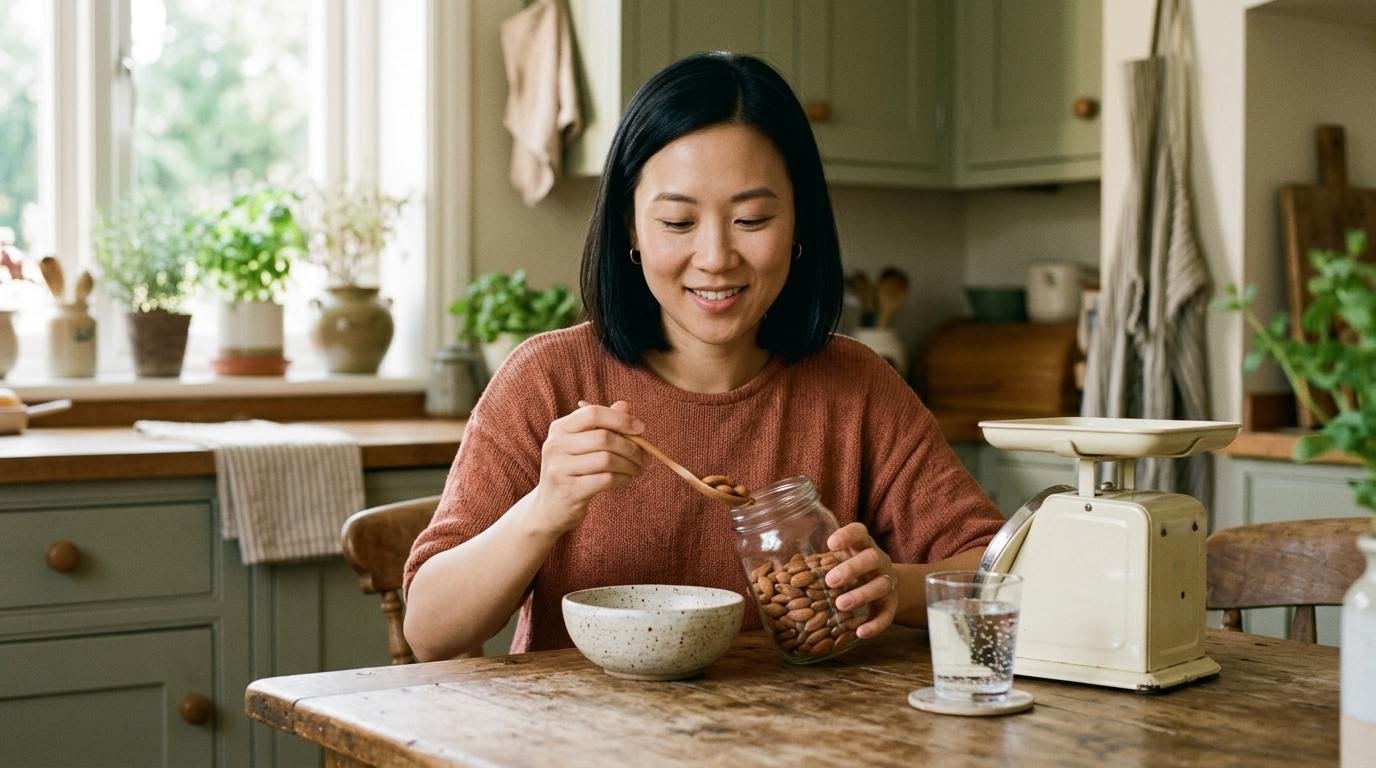
A healthy snack is not automatically a low calorie snack. This is the trap that catches people who are doing most things right. Nuts, nut butters, granola, trail mix, dried fruit and smoothie bowls are all nutritious, and all easy to overeat. A single ounce of almonds, roughly a small handful, runs in the neighborhood of 160 calories. Eat three handfuls straight from the bag while answering emails and you have quietly added a small meal.
This matters because weight loss is a pace game. The CDC says that gradual, steady loss of about 1 to 2 pounds per week makes it more likely you will keep the weight off than faster loss does. At that pace there is no room for a few hundred unnoticed calories a day. If you want the arithmetic behind a calorie deficit, including why the old 3,500-calorie rule is only a rough guide, read what a calorie deficit is and how weight loss really works.
Three portioning habits that need no app
- Bowl, not bag. Serve the snack into a bowl or onto a plate, then put the package away. The act of serving gives you a natural stopping point that a bag never does.
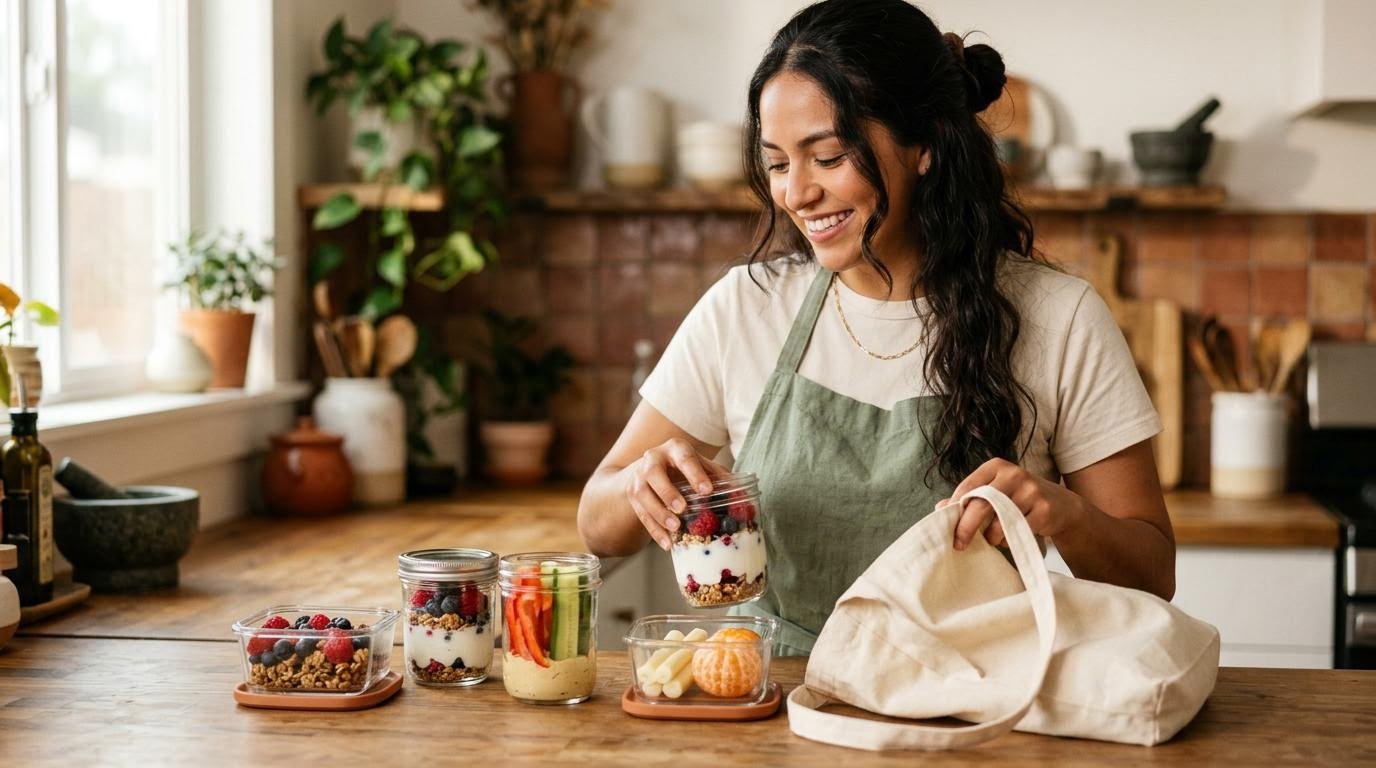
- Pre-portion on a calm day. Divide nuts, popcorn and roasted chickpeas into small containers on Sunday. Future you, at 3 pm and tired, will not do the math.
- Pair the dense food with a light one. If you love peanut butter, keep it to a tablespoon and put it on celery or apple. You get the flavor you want and the volume you need.
One more practical point. Snacks count. If your plan has a daily calorie target, the snack is part of it, not a bonus on top of it. Many people feel they are eating well all day and still stall because three or four unlogged snack moments add up to a full extra meal. You do not need to weigh everything forever. A week of honest tracking is usually enough to show you where the extra calories hide.

Match the snack to the craving, not the clock
Snacking on a schedule works for some people. For many others, the better question is not "what time is it?" but "what exactly do I want?" A craving for something crunchy and salty will not be satisfied by yogurt, and a craving for something sweet will not be settled by carrots. When the snack does not match the craving, you end up eating the right thing and then the wrong thing.
Use this quick matching guide:
- Want salty and crunchy: popcorn, roasted chickpeas, seaweed, cucumber with hummus.
- Want sweet and cold: frozen grapes, Greek yogurt with berries, baked cinnamon apple.
- Want creamy and rich: cottage cheese with fruit, yogurt with a spoon of peanut butter.
- Want something real and savory: hard-boiled eggs, turkey roll-ups, tuna on cucumber.
Where sweets fit in
Sweet cravings deserve a plan rather than a ban. The Dietary Guidelines for Americans advise keeping added sugars below 10 percent of daily calories for everyone age 2 and older, and they frame the rest of eating as a "make every bite count" approach. In practice that means about 85 percent of your calories come from nutrient-dense foods, which leaves roughly 15 percent of room for added sugars, saturated fat and similar extras.
That 15 percent is not a loophole to ignore. It is permission to plan. If you know you want something sweet most evenings, schedule a small, deliberate portion, such as two squares of dark chocolate or a small scoop of ice cream, and build the rest of the day around it. A planned treat is far easier to stop than a surprise one that arrives after you have already told yourself "I am being good."
The late-night snack scenario
Imagine you are studying or finishing work at 10:30 pm and the kitchen starts to feel closer than it is. Run a quick check. If you are physically hungry, reach for something with protein and volume, such as cottage cheese with fruit or a hard-boiled egg. If you are not sure, wait ten minutes, drink a glass of water or tea, and see whether the urge fades. If it does, it was probably boredom or stress, and the real fix is rest, not food. If it does not, eat the snack without guilt. Hunger is a signal, not a character flaw.
A simple snack plan: three rules and one sample day
Good snacking is mostly a system. You do not need a perfect willpower streak. You need a few rules that make the right choice the default choice.
The three rules
- Anchor every snack with protein or fiber. If it has neither, add something that does. Crackers alone are a mood, crackers with cheese and cucumber are a snack.
- Portion before you sit down. Decide the amount first, then eat. This single habit removes most accidental overeating.
- Keep one backup. Stock one shelf-stable option, such as roasted chickpeas, at work or in your bag, so a long day does not push you toward the vending machine.
A sample day
- Mid-morning: Plain Greek yogurt with 1/2 cup berries (about 130 calories).
- Mid-afternoon: Cucumber rounds with 2 tablespoons hummus plus a string cheese (about 170 calories).
- Evening, only if hungry: 3 cups air-popped popcorn (about 90 calories), or a baked cinnamon apple (about 100 calories).
That is roughly 300 to 400 calories of snacks, packed with protein, fiber and volume, and nothing in it needs a special store. If your calorie target is lower or higher, scale the portions rather than abandoning the structure.
Snack habits are easier to keep when the rest of your routine supports them. Good sleep, a decent breakfast, and a plan for the hardest hour of your day all reduce the pull toward random grazing. For more on building routines that survive stress and busy weeks, see sustainable weight loss habits that actually stick.
The best low calorie weight loss snacks are not the ones with the cleverest label. They are the ones you will actually eat, in a portion you will actually stop at, with enough protein or fiber to carry you to the next meal. Start with two or three ideas from the lists above, run them for a week, and keep what works.
Health disclaimer: This article is general education, not medical advice. Calorie needs vary by age, body size, activity and health status. If you have diabetes, a food allergy, a history of disordered eating, kidney disease, or take medication that interacts with diet, or if you are pregnant, breastfeeding or under 18, speak with a doctor or registered dietitian before changing how you eat or restricting calories.

Questions people ask about low calorie weight loss snacks
How many calories should a weight loss snack have?
A practical target for most adults is about 100 to 200 calories per snack, scaled to your daily goal. If you eat two snacks a day on a moderate calorie target, that range leaves plenty of room for three real meals. Larger or more active people can go higher, and anyone using a lower target should go lower. The better measure is whether the snack keeps you comfortably full until the next meal.
Are low calorie snacks actually good for weight loss?
They can be, but calories alone do not decide it. Snacks help when they prevent a large, rushed meal later and when they are built from filling foods. They hurt when they are ultra-processed, easy to overeat, or added on top of a full day of eating. Pick whole-food options with protein or fiber and keep the portion fixed.
What are the best high protein low calorie snacks?
Hard-boiled eggs, plain Greek yogurt, cottage cheese, edamame, string cheese, turkey roll-ups and tuna on cucumber rounds are reliable choices. Each delivers meaningful protein for roughly 70 to 155 calories. Pair them with fruit or vegetables and you also pick up fiber and volume.
What are healthy low calorie snacks for weight loss at night?
Choose something small with protein and water-rich volume, such as cottage cheese with fruit, a hard-boiled egg, or a cup of berries with plain yogurt. Avoid snacks you tend to eat straight from the bag, like chips or granola, because late-night portions are the hardest to control. If you are unsure you are hungry, drink water or tea first and wait ten minutes.
Which snacks should I avoid when trying to lose weight?
You do not need a forbidden list, but be cautious with snacks that are easy to overeat and low in protein and fiber: chips, candy, sweetened granola bars, large trail mix portions and anything marketed as "100 calories" with a long ingredient list. Occasional servings are fine. The issue is when they become your default.
Do I need to snack at all to lose weight?
No. If you feel satisfied between meals, you can skip snacks entirely. Snacking is a tool for managing hunger, not a requirement. If you find yourself ravenous at dinner, a planned afternoon snack is often the easiest fix. If you are never hungry between meals, skip it and save the calories.
References
- NIH — NIH study finds heavily processed foods cause overeating and weight gain, 2019
- Mayo Clinic — Weight loss: Feel full on fewer calories, 2024
- Mayo Clinic — Dietary fiber: Essential for a healthy diet, 2025
- CDC — Steps for Losing Weight, 2025
- Dietary Guidelines for Americans — Top 10 Things You Need to Know About the Dietary Guidelines for Americans, 2020-2025