
Scroll through any fitness retailer and the hiit workout equipment aisle starts to feel like a promise: buy the gear, get the results. The reality is less glamorous. High-intensity interval training works because of the intervals, hard efforts followed by recovery, and almost nothing sold around it changes that basic recipe. A few items make the work easier to repeat. Many others only make your budget smaller.
This guide sorts the market into three piles: what earns its place in a small home setup, what depends on your space and habits, and what to leave on the shelf. If you are 18 to 28, short on cash, and tired of conflicting advice, the order you buy things in matters more than the total you spend.
The best hiit workout equipment is a timer, a floor and 20 minutes
Start with what HIIT actually is. Harvard Health Publishing describes it as alternating short bursts of hard effort with recovery, and notes that scaling the intensity to your current fitness is what keeps it safe and effective. Nothing in that definition requires a machine. The "equipment" is the interval pattern itself.
Here is why that matters for your wallet. The CDC's adult activity guidelines, last reviewed in December 2023, count 75 minutes of vigorous activity a week as the equal of 150 minutes of moderate activity, and they ask for muscle-strengthening work on at least 2 days a week. Hard intervals are a time-efficient way to collect those vigorous minutes. The bar for vigorous effort is a feeling in your body, not a price tag on your gear.
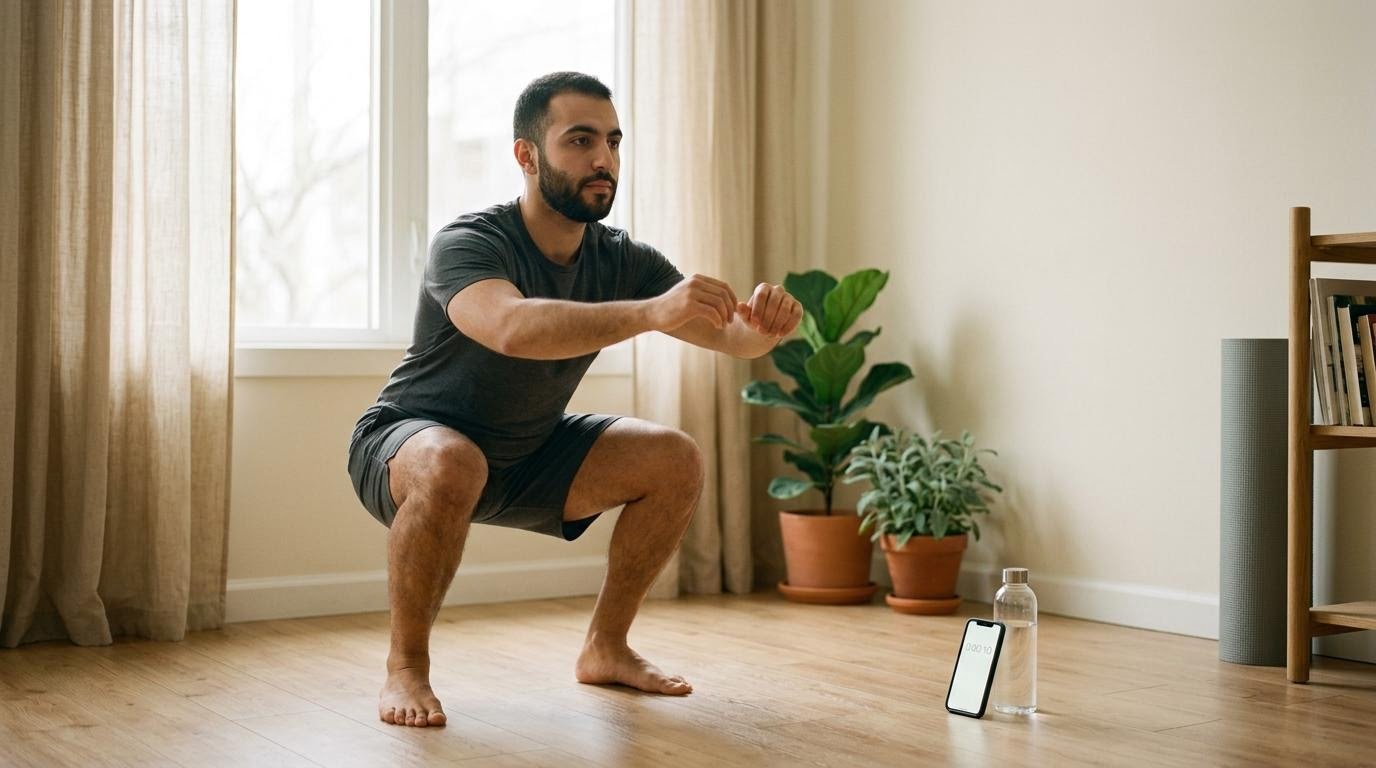
Picture a 23-year-old renting a room with a downstairs neighbor and a budget of about the cost of two takeaway dinners. Their first workout needs a free phone timer, a patch of floor, and a pattern such as 30 seconds of fast squats or high knees, then 60 seconds of easy movement, repeated for 10 to 20 minutes. That session is real HIIT. Every purchase after it should answer one question: does this help me repeat that session more often, or push it harder in a way I cannot already do?
The one non-obvious rule: buy for friction, not features
People rarely stop training because a product lacked a feature. They stop because setup took eight minutes, the machine sat in a bedroom corner collecting laundry, or the noise annoyed a flatmate. Gear that lives within arm's reach and works in 10 seconds beats gear with a better spec sheet. Keep that rule in mind as you read the rest of this guide.
How to tell your intervals are hard enough
Without a heart rate strap or a screen full of metrics, the American Heart Association's talk test is the most practical gauge. During a work interval, you should be able to manage only a few words at a time. During recovery, your breathing should settle enough to speak in short sentences again. If you can hold a full conversation during the "hard" part, raise the pace, add load, or lengthen the work interval a little. If you cannot catch your breath by the end of the rest period, shorten the work or lengthen the rest. Adjusting to your own fitness, rather than copying someone else's numbers, is the whole point.
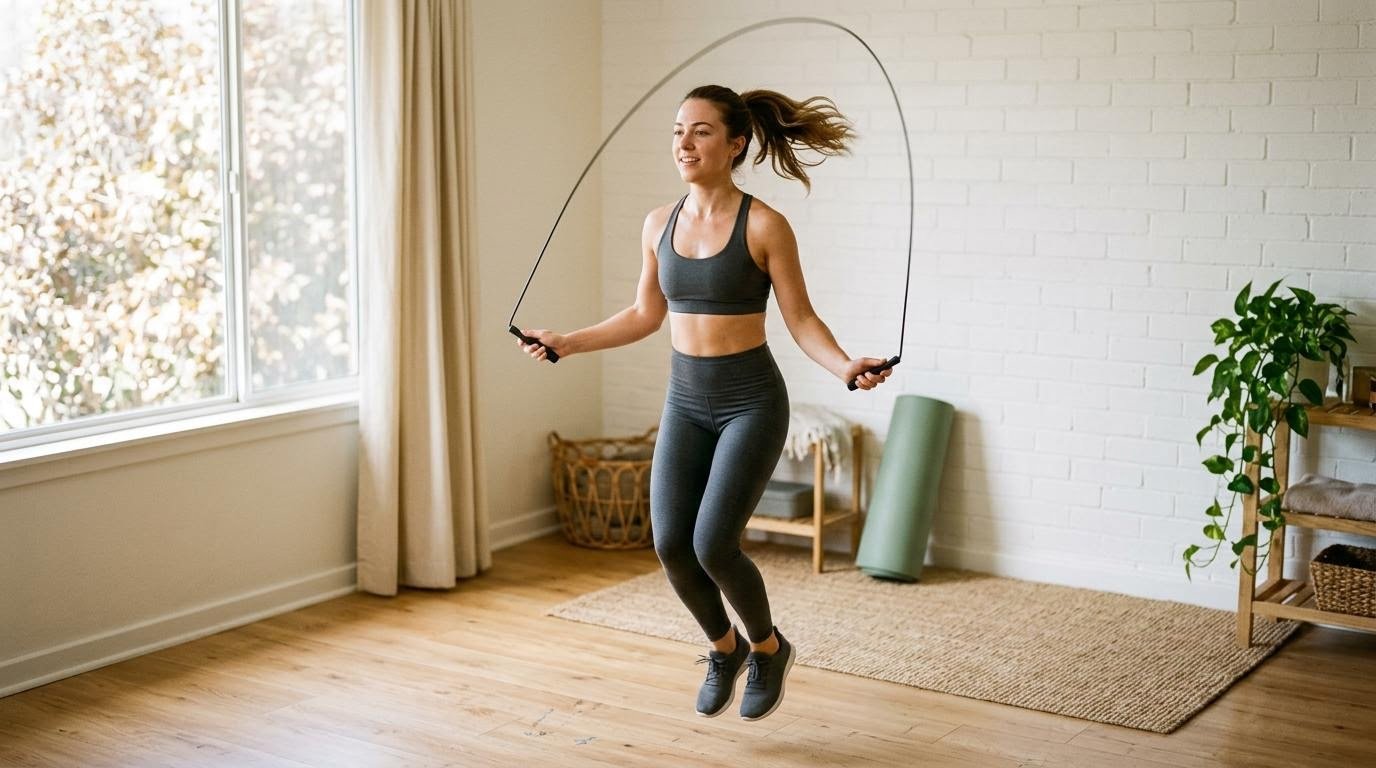
Buy a jump rope first: it gets you to vigorous effort in under a minute
If one item deserves your first spend, make it a jump rope. The American Heart Association's adult activity page, last reviewed in January 2024, lists jumping rope among its examples of vigorous activity, and describes vigorous effort as the point where you cannot talk much without getting out of breath. That gives you a built-in test. If you can chat comfortably between jumps, you are not at interval intensity yet.
A rope also packs away into a bag, works in a garage, a park or a hotel room, and costs far less than any machine. Many beginners underestimate how tiring it is: 30 seconds of steady skipping followed by 30 seconds of rest feels easy on round one and humbling by round six.
What to look for in a rope
- Adjustable length. Stand on the middle of the cord; the handles should reach roughly your armpits. A rope that is too long tangles your feet, and one too short forces you to hunch.
- Light, plain handles. You do not need weighted handles, counters or app connections to reach vigorous effort.
- A surface match. A thin cord wears quickly on rough concrete. A flat rubber mat or a wooden floor is kinder to both the rope and your joints.
Curious how much a session might burn at your body weight and pace? GenZiest's jump rope calorie calculator walks through how those estimates are built and what makes them rough.
Who should wait, and what to do instead
A rope is high-impact. If you have sore knees, shins or ankles, a low ceiling, or neighbors directly below, skip it for now. You can still reach interval intensity with low-impact moves like fast step-ups, marching with big arm drives, or shadow boxing. GenZiest's simple cardio workouts at home are a gentle starting point if you are not sure what your body tolerates yet.
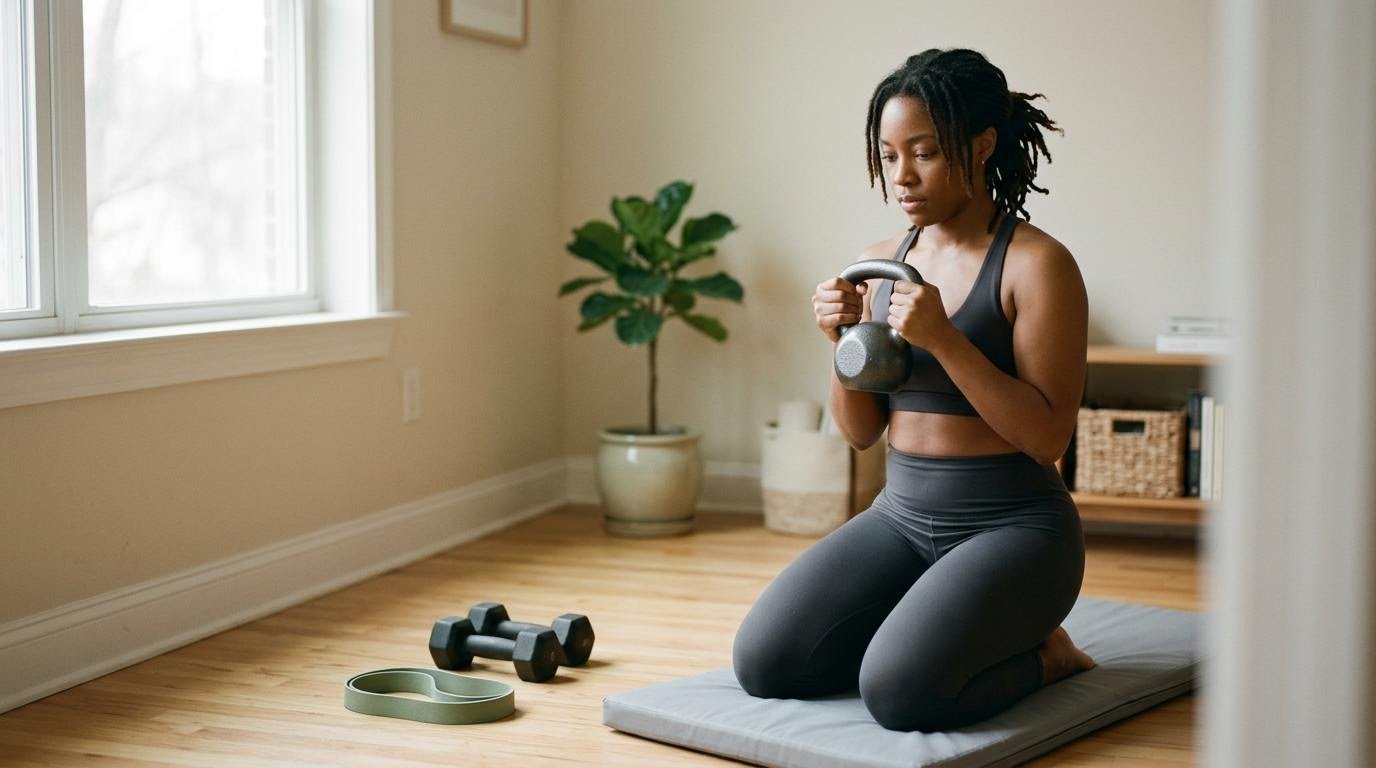
One resistance tool beats a shelf of gear: a dumbbell, a kettlebell or loop bands
Intervals feel better when some of them load your muscles, not just your lungs, and the guidelines above already ask for strength work twice a week. On a Cleveland Clinic Health Essentials episode on HIIT, the guest names dumbbells for squats and kettlebells for swings as optional extras, and says bodyweight squats can be enough for some people. In other words, the resistance tool is an upgrade, not an entry ticket.
You also do not need a heavy starting weight. The NHS strength exercise guidance, last reviewed in February 2024, suggests aiming for at least two sessions a week and notes that filled water bottles will do in place of light weights. Test your routine with what is already in your kitchen before spending anything.
Dumbbell or kettlebell?
Pick based on the moves you will actually do, not on trends.
- One adjustable or fixed dumbbell: best for goblet squats, thrusters, rows and presses. It is also the easiest to learn safely, since your wrists and shoulders stay in familiar positions.
- One kettlebell: best for swings and cleans, which keep your heart rate high with little equipment. The hip-hinge technique takes a few sessions to learn, so watch a qualified coach demonstrate it first if you can.
- Weight selection: choose a load you can move with clean form for the whole work interval, where the last few reps feel hard but not sloppy. If form breaks down by the third round, the weight is too heavy for intervals.
How to progress without buying more
Change one variable at a time. Add two seconds to the work interval, trim two seconds from the rest, add a round, or move up one band color or one dumbbell step. Changing two things in the same week makes it hard to tell what helped and what caused a sore knee. A single dumbbell, a rope and a timer can keep a beginner progressing for months, which is exactly why a second piece of gear rarely needs to be bought in the first few weeks.
When loop bands win
Bands cost little, weigh almost nothing and suit tiny spaces. They work well for lateral walks, glute bridges, pull-aparts and banded squats, and they travel well. If you move often or train in rented rooms, they are the strongest value on the list. GenZiest's guide to travel workout equipment shows how a few packable pieces can cover a full session in a small room.
One honest limitation: bands make resistance harder as they stretch, so the hardest point of a move may not match where your muscles are strongest. For many beginners that is a fine trade for the convenience, but it is a reason to choose one dumbbell if you want to progress in heavier lifts later.
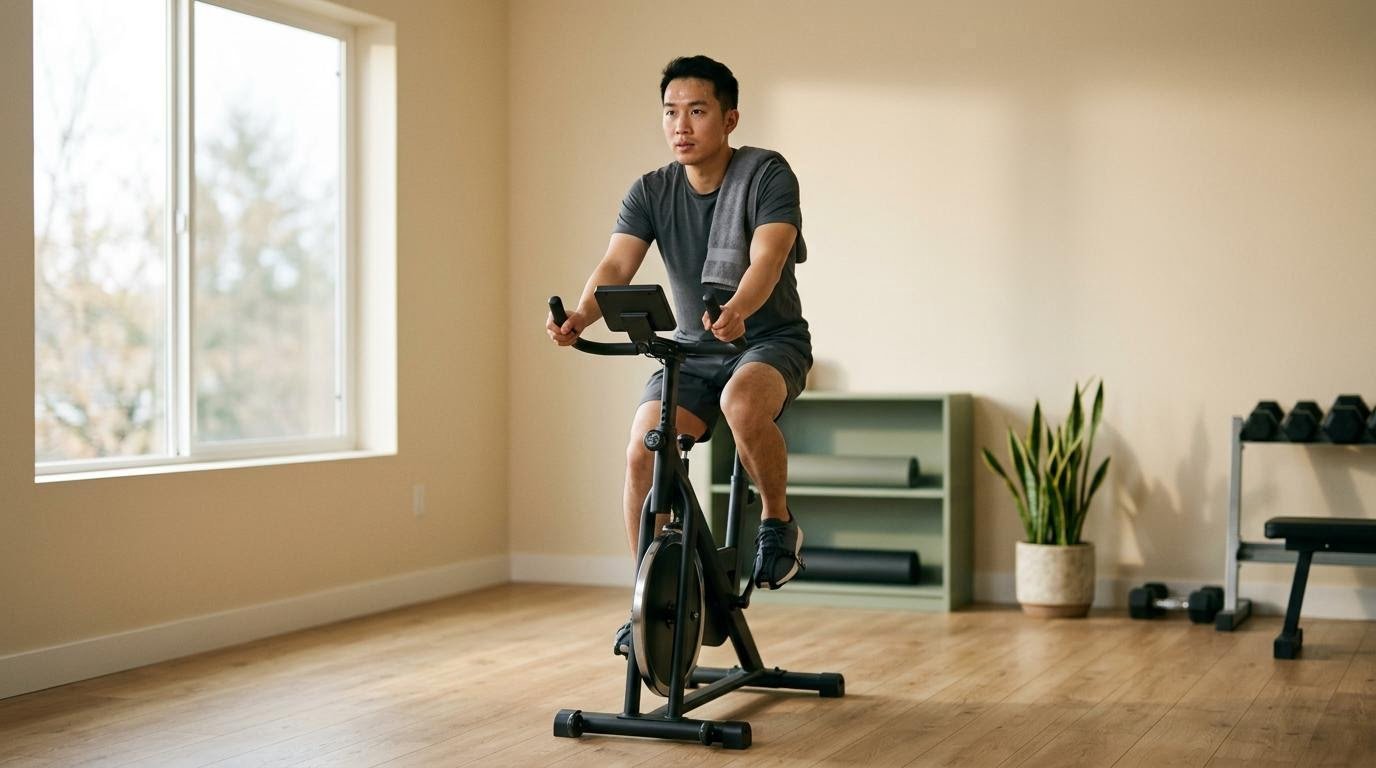
Cardio machines are worth buying only if you already use them
The same Cleveland Clinic episode lists treadmills, rowing machines and bikes as workable options for interval training, and each one can be excellent. They are also the purchases people regret most. A machine is the gear most likely to turn into a clothes rack, because it asks for floor space, setup, sometimes noise, and a bigger up-front decision.
The four-week test before you buy
Before committing to a bike, rower or treadmill, run this simple test:
- Use the same type of machine at a gym, a friend's home or a trial pass for four weeks. Count how many sessions you actually do, not how many you plan.
- Measure the space. Check the machine's footprint, the clearance behind it, and whether it fits through your doorway.
- Check the noise and vibration. Upstairs and downstairs neighbors will notice a treadmill or a heavy flywheel long before you do.
- Decide where it lives when not in use. If the answer is "in the middle of the room," your friction rule says to wait.
If you used a machine regularly through those four weeks and still want one, buy it. If you skipped half the sessions, you just saved a large amount of money by learning that cheaply. A bike is usually the gentlest on joints, a rower works the back and legs together but needs good technique, and a treadmill suits people who want to run intervals indoors but takes the most space.
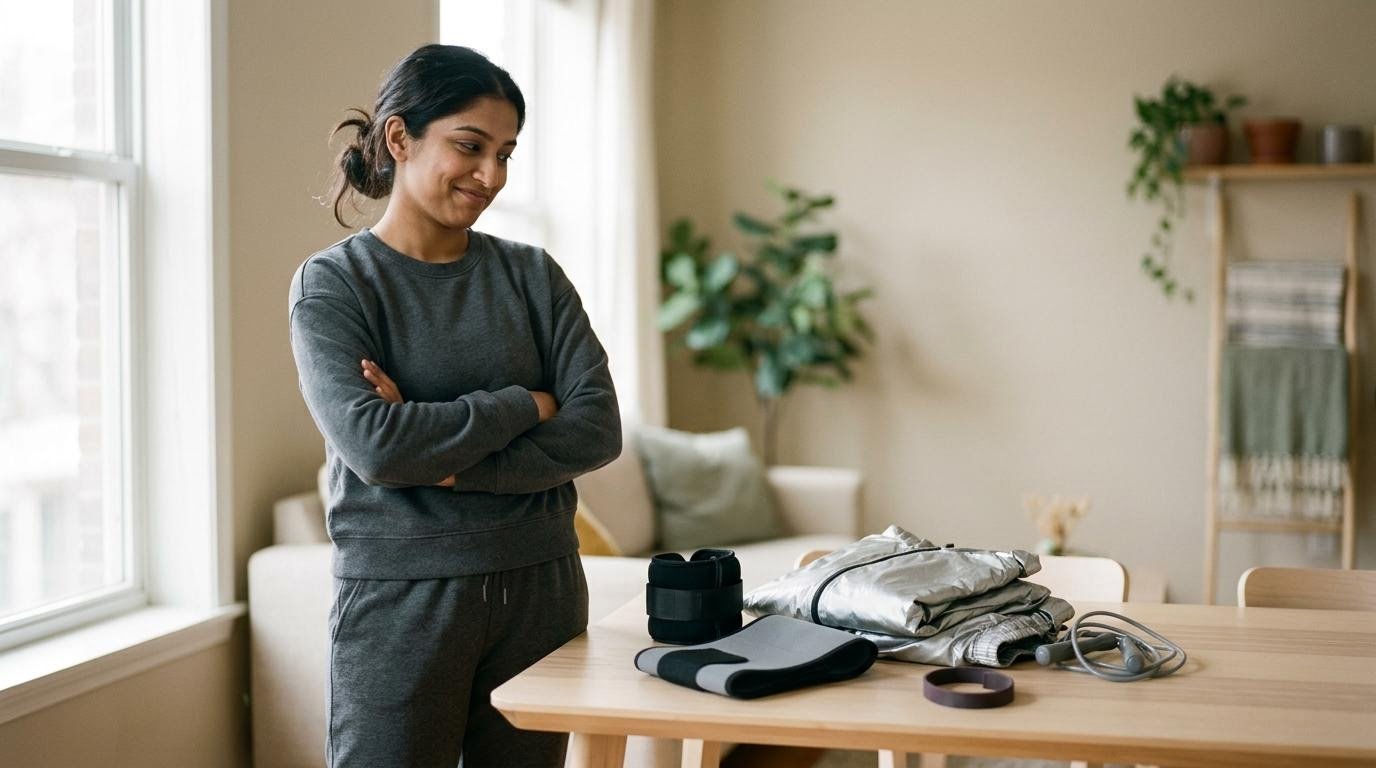
Skip these hiit workout equipment gimmicks: sweat is not intensity
These are editorial judgments from reading general exercise guidance, not medical rules, but they hold up for most people starting out.
- Sweat suits and waist trimmers. They trap heat, so you sweat more, but sweat reflects temperature, not workload. The talk test above measures effort far better, and heat adds risk without adding intensity.
- Ankle and wrist weights for fast moves. Adding load to your limbs during jumping, kicking or sprinting changes how your joints are loaded at speed. Use a held dumbbell or the plain bodyweight version first.
- All-in-one "HIIT bundles." They often include a few useful pieces and several you will not use. Buying the rope, band and dumbbell separately costs less if you know what you need.
- Gear with a subscription you did not plan on. A connected device is only worth it if you will actually follow its programs. A free interval timer app does the same job for intervals.
- Heavy equipment you cannot store. Anything that cannot fit under a bed or in a closet will fail the friction rule in a small home.
One more category worth skipping is anything that promises spot fat loss or a body shape result. Interval training is a way to train your heart and muscles, not a shortcut for changing a single body part, and no product turns it into one.
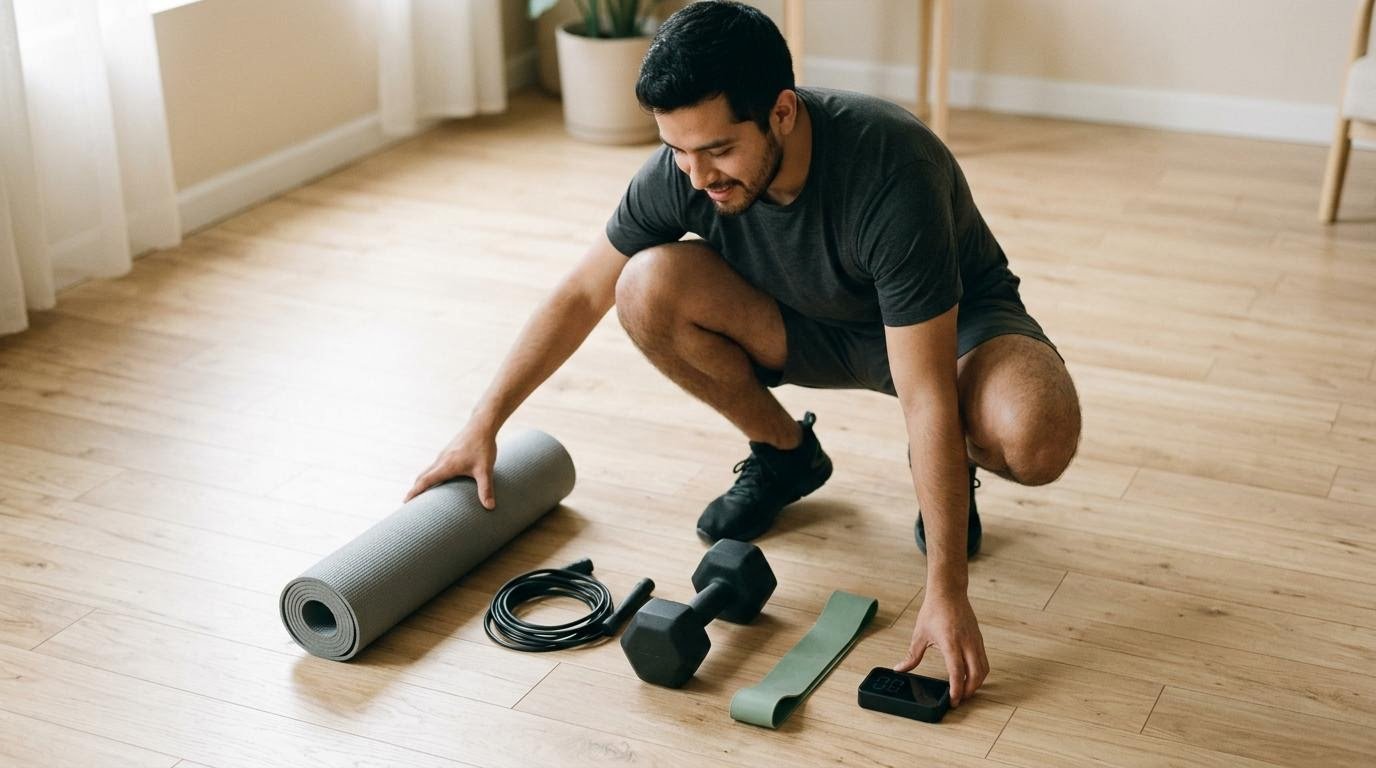
Build your kit in this order, and stop after step four
Buying in the right sequence protects you from impulse spending. Use this order and pause at each step until you have used the item for at least two weeks.
- A free interval timer. Any phone timer works. Set a work interval and a rest interval, and let the beep decide when to start and stop.
- A mat or a spot of forgiving floor. This protects your joints, your floor and your neighbors' ceilings.
- A jump rope or a low-impact alternative. Choose the rope if your joints and your ceiling allow it. Otherwise, rely on step-ups, marching and shadow boxing.
- One resistance tool. A single dumbbell, kettlebell or set of loop bands, chosen from the section above.
- A machine, only if you passed the four-week test. This is optional, and many people never need it.
Notice how short that list is. A starter setup for a typical home covers cardio intervals, strength intervals and recovery with four inexpensive items and a free app. You can add more later, but you will do it with real data about what you use.
What a realistic week looks like with this kit
Two short interval sessions plus one strength-focused session is a sensible week for most beginners. For example: a 15-minute rope or low-impact interval session on Monday, a 20-minute dumbbell and bodyweight circuit on Wednesday, and another cardio interval session on Saturday, with easy walking in between. That pattern respects recovery, keeps each session short enough to finish, and lines up with the strength and vigorous-activity targets from the CDC and the American Heart Association without needing anything beyond the four items above.
Your next step with hiit workout equipment
Pick one session this week: timer, mat, and one move you can do for 30 seconds without stopping. Do it twice, then decide what is missing. The best hiit workout equipment is whatever gets you to do the session again on Thursday, and the answer for most people is far smaller and cheaper than any retail bundle suggests.
Health disclaimer: High-intensity exercise places real demands on your heart, muscles and joints. Talk with a doctor or other qualified healthcare professional before starting HIIT or buying equipment for it, especially if you have a heart, lung, blood pressure or joint condition, are pregnant or postpartum, are under 18, or have been inactive for a long time. Stop and seek medical help if you feel chest pain, dizziness or unusual shortness of breath. This article is general information, not personal medical advice.

FAQ: your hiit workout equipment questions, answered
What equipment do you need for a HIIT workout?
None is required. A phone timer and a patch of floor are enough for bodyweight intervals. If you want to add something, a jump rope, one dumbbell or kettlebell, and a set of loop bands cover cardio and strength intervals for most people. Cleveland Clinic's guest on its HIIT episode describes dumbbells and kettlebells as optional.
Can you do HIIT without any equipment?
Yes. Fast squats, high knees, step-ups, mountain climbers and shadow boxing all work as intervals when you push hard for a short period and recover between rounds. Choose low-impact versions if your joints or your neighbors need a quieter session.
How often should you do HIIT in a week?
It depends on how hard you go. In the Cleveland Clinic episode, the guest recommends all-out efforts about once a week because they take longer to recover from, and says lighter sessions can be done more often. Fit them around the CDC's target of 75 minutes of vigorous or 150 minutes of moderate activity weekly, plus two days of strength work, and build up gradually.
Is HIIT equipment worth buying as a beginner?
Only a few items are. Start with a free timer, then add a jump rope or a low-impact alternative and one resistance tool. Hold off on machines until you have used a similar one regularly for about four weeks, because unused machines are the most common wasted purchase.
What is the cheapest HIIT equipment to start with?
A phone timer is free, and a filled water bottle can stand in for a light weight, as NHS guidance on strength exercises notes. After that, a jump rope or a loop band is usually the lowest-cost real piece of gear, and both pack into a bag.
Is a jump rope or a kettlebell better for HIIT?
Neither is better for everyone. A rope is cheaper, more portable and quick to reach vigorous effort, but it is high-impact. A kettlebell adds strength work and suits low-impact swings, but it takes more care to learn. If you can only pick one, choose based on your joints, your ceiling height and your neighbors.
References
- Centers for Disease Control and Prevention (CDC) — Physical activity guidelines for adults, 2023
- American Heart Association — American Heart Association recommendations for physical activity in adults, 2024
- Harvard Health Publishing — Safe and effective high-intensity interval training, 2026
- Cleveland Clinic — High-intensity interval training: a HIIT for everyone with Katie Lawton, MEd (Health Essentials podcast)
- NHS — Strength exercises, 2024