

You've done the math in your head before: fifteen minutes of jumping rope, probably burns a few hundred calories, close enough. Except "close enough" is exactly the problem when you're trying to hit a real weekly calorie target instead of guessing at one. A proper jump rope calorie calculator doesn't just multiply minutes by a flat number, it factors in your body weight, your jumping pace, and the rope style you're using, because all three change the output more than most people assume.
This guide walks through the actual formula behind the numbers, gives you a real reference chart broken out by weight and pace, and covers the mistakes that quietly throw off even a carefully built calculator. By the end you'll know exactly why two people jumping rope for the same fifteen minutes can burn meaningfully different amounts, and how to stop treating your own estimate as a rough guess.
None of this requires special equipment beyond the rope itself, and none of it requires a science background to apply. Once you understand the handful of variables that actually move the number, plugging accurate inputs into any calculator, app, or the reference chart below becomes a five-second habit instead of a guess you make once and never revisit.

Why a Jump Rope Calorie Calculator Beats Guessing Your Burn
Most fitness trackers and workout apps use a single flat number for "jump rope," somewhere around 10 calories a minute, and call it done. That number isn't wrong exactly, it's just averaged across every body size and every pace, which makes it close to useless for anyone trying to hit a specific weekly deficit. A 125-pound person and a 185-pound person doing the identical fifteen-minute session burn genuinely different totals, and flattening that gap into one shared number erases information you actually need.
I know what you're thinking: does the difference really matter enough to bother with a calculator instead of a rough guess? Here's the thing, it compounds. A gap of even 40 calories per session, repeated four times a week for a month, is close to 700 calories, roughly a fifth of a pound of fat, sitting inside an estimate you thought was already accurate. That's not a rounding error once you're tracking toward a real goal.
A specific, non-obvious wrinkle most people never think about: pace matters more for jump rope than it does for an activity like walking. Walking speed changes your burn gradually, jump rope pace changes it in steps, because slow jumping and fast jumping recruit your muscles differently rather than just moving the same motion faster. That's part of why a real calculator asks about pace at all instead of assuming everyone jumps at the same rhythm.

How the Jump Rope Calorie Calculator Math Actually Works
Every legitimate calorie calculator, jump rope included, runs on something called a MET value, short for Metabolic Equivalent of Task. One MET is roughly the energy your body burns just sitting still. An activity's MET value tells you how many multiples of that resting rate the activity demands. Slow-paced jump rope sits around 8.8 METs. A fast, vigorous pace pushes closer to 12.3 METs, which is a meaningfully bigger jump than most people expect from "the same exercise, just faster."
The formula itself is simpler than it looks: calories burned per minute equals MET value multiplied by your body weight in kilograms, multiplied by 3.5, divided by 200. Plug in a slow pace (8.8 METs) for someone weighing 81.6 kilograms (180 pounds), and you get roughly 12.6 calories a minute, or about 754 calories across a full hour at that pace. Switch to a faster pace and the same person's per-minute burn climbs noticeably, even though nothing else about their body changed.
This is also where a lot of app-based estimates quietly go wrong. Many default to your average pace across an entire session, including the seconds you spent resetting your rope after a trip or catching your breath between rounds. A calculator working from true active minutes, not total session time, gives you a number that actually reflects the work you did rather than the clock you left running.
Body weight matters more than pace does for most people's day-to-day estimate, purely because it's the variable that changes least often but affects every single calculation. A 40-pound difference in body weight, common between two adults of the same height, shifts the calorie output by roughly a third at the same pace and duration. That's a bigger swing than most people expect from a single input field, which is exactly why a calculator that skips body weight entirely, and just gives a flat number for "jump rope, 10 minutes," is functionally useless for anyone tracking a real goal.
There's a practical upside to understanding the formula rather than just trusting a black-box number: you can sanity-check any app or website that claims to calculate this for you. If a tool spits out a wildly higher or lower figure than the reference chart further down this page for a comparable weight and pace, that's a signal the tool is using outdated MET data or rounding aggressively, not that your own math is wrong.
Jump Rope Calories Burned by Weight, Pace, and Duration
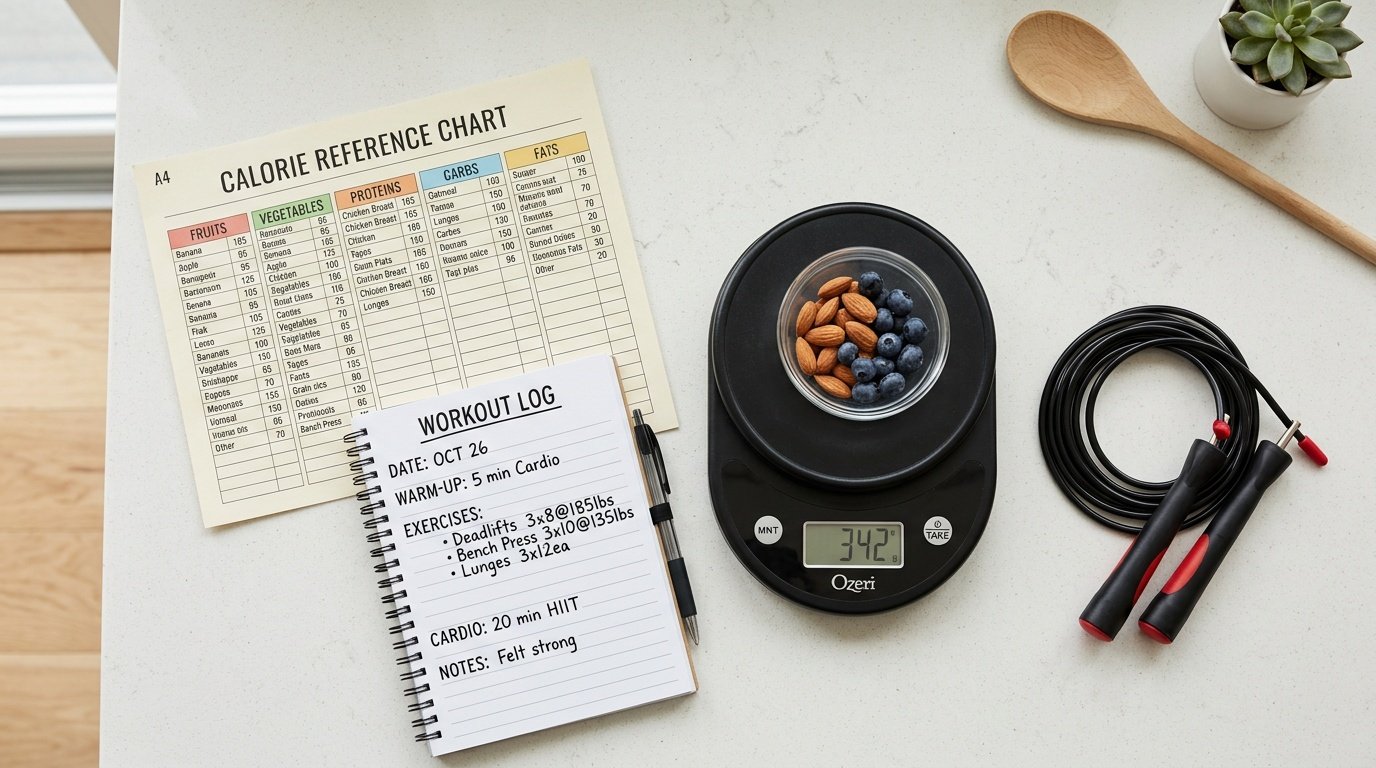
Numbers land better with a real reference point, so here's what a 30-minute jump rope session actually burns across three common body weights, at both a slow and a fast pace, based on Harvard Health Publishing's calorie chart. These figures already account for the MET differences covered above, so you can use them as a sanity check against whatever your own jump rope calorie calculator app spits out.
| Body Weight | Slow Pace, 30 min | Fast Pace, 30 min |
|---|---|---|
| 125 lb (57 kg) | 226 calories | 340 calories |
| 155 lb (70 kg) | 281 calories | 421 calories |
| 185 lb (84 kg) | 335 calories | 503 calories |
Source: Harvard Health Publishing, 2021
Notice the gap between slow and fast pace at every single weight is roughly 50 percent, not a marginal tweak. That's the same pattern the MET math predicted. If your own app-based calculator gives you a number wildly outside these ranges for a comparable weight and duration, it's worth double-checking whether it's counting rest time as active minutes, since that's the most common source of an inflated or deflated estimate.
Slow Pace vs Fast Pace vs Weighted Rope: Which Burns the Most
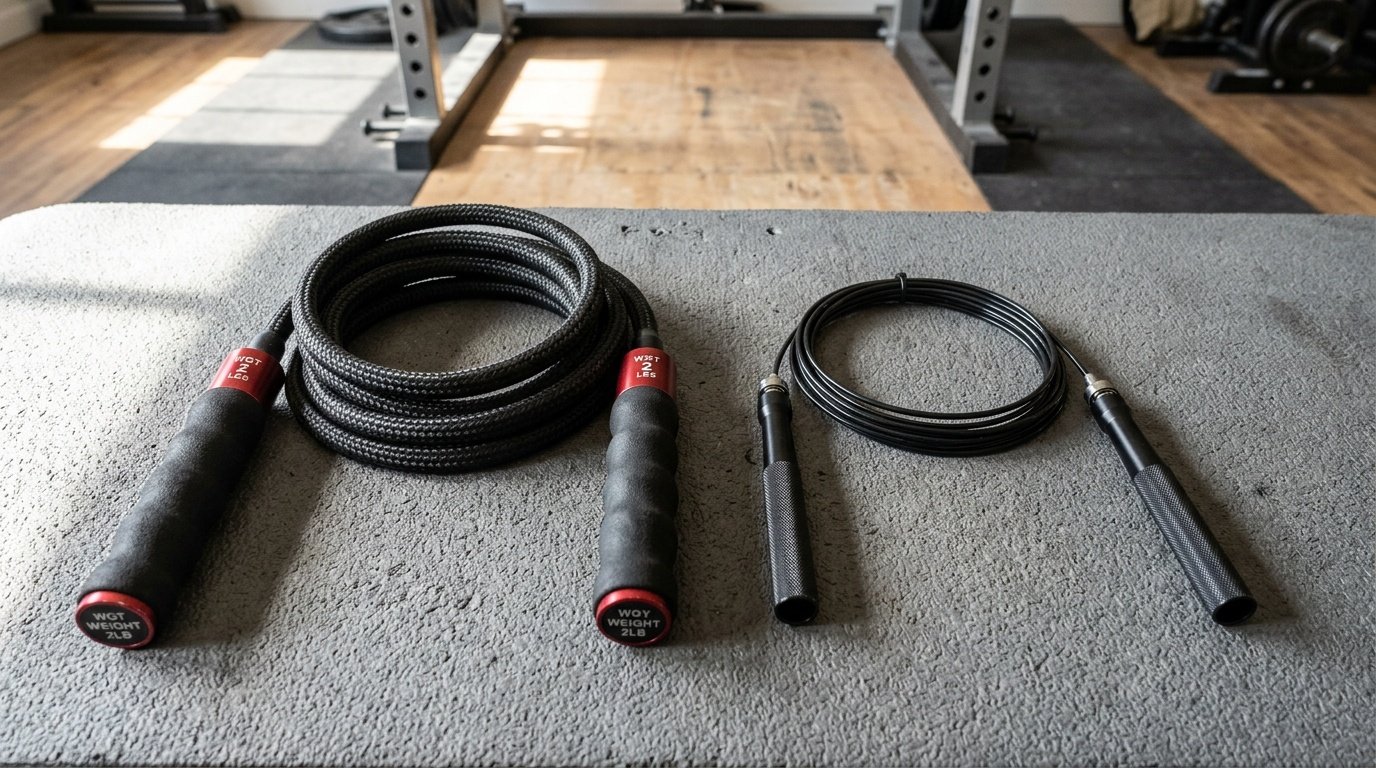
Pace isn't the only variable that shifts your number. Rope type matters too, and not in the way most marketing around weighted ropes implies. A weighted rope, typically anywhere from half a pound to two pounds heavier than a standard speed rope, forces your arms and shoulders to work harder on every rotation, which does raise your calorie burn somewhat. But the increase is smaller than most people expect, usually in the range of 5 to 10 percent over a standard rope at the same pace, not the dramatic jump the product pages suggest.
The bigger lever by far is intensity structure, not equipment. A session built around HIIT-style intervals, short bursts of maximum-effort jumping followed by brief rest, produces a meaningfully higher average burn than a steady, unbroken pace held for the same total time. According to the American Heart Association's guidance on target heart rate zones, vigorous-intensity activity sits at roughly 70 to 85 percent of your estimated maximum heart rate, and interval-style jump rope tends to push you into that zone repeatedly rather than holding you at a flatter, moderate rate the whole time.
Double-unders, where the rope passes under your feet twice per jump instead of once, sit at the far end of the intensity spectrum and burn noticeably more per minute than basic single-pass jumping, but they also demand a coordination level most beginners simply don't have yet. Chasing double-unders before your basic rhythm is solid is a common way people either give up in frustration or trip so often that their "active minutes" barely count, undermining the exact calorie total they're trying to maximize.

Building a Weekly Jump Rope Routine Around a Real Calorie Goal
Once you trust your numbers, the next question is how much jump rope actually fits into a realistic week. The CDC's physical activity guidelines for adults set the baseline at 150 minutes of moderate-intensity activity a week, or 75 minutes if the activity is vigorous, and jump rope at anything faster than a gentle pace qualifies as vigorous. That means three 25-minute sessions a week, at a fast pace, technically clears the full weekly recommendation on its own.
Realistically, most beginners shouldn't start there. Jump rope is higher-impact than walking or cycling, and your calves, shins, and feet need time to adapt to the repeated landings before you're doing 25-minute sessions multiple times a week. A more sustainable entry point is three 10-minute sessions in week one, building toward longer or more frequent sessions over three to four weeks as your joints and coordination catch up to your cardiovascular fitness, which typically improves faster than your tissue tolerance does.
A useful way to think about the weekly build-up: treat your calorie total as the outcome of consistency, not the target you chase directly session by session. Someone who commits to three honest 10-minute sessions every week for a month, tracking real active time, ends up with a more trustworthy weekly average than someone who does one ambitious 30-minute session, skips the next four days entirely, and estimates the missing days by guesswork. The calculator only stays useful if the sessions feeding it actually happen on a predictable rhythm.
Weeks 1 and 2 are about building the pattern, not the number. Three sessions, 8 to 10 minutes each, mostly at a slow to moderate pace while your form and footwork settle in. Weeks 3 and 4 are where pace and duration can both climb, since your joints have had roughly two weeks of repeated, lower-intensity loading to adapt. By week five or six, most people can comfortably hold a faster pace for longer stretches without the early soreness that made week one feel harder than it should have.
If your goal is tied to an overall calorie deficit rather than jump rope specifically, it's worth keeping perspective on where exercise fits relative to nutrition. The National Institute of Diabetes and Digestive and Kidney Diseases notes that sustainable weight management depends on the combined balance of what you eat and how active you are, not on any single workout carrying the full load. A jump rope session that burns 300 calories is meaningful, but it's one input into a much larger weekly equation, not a standalone fix.
Health disclaimer: Jump rope is a high-impact, vigorous-intensity activity. If you have a history of joint problems, are pregnant, are managing a heart condition, or haven't exercised regularly in some time, talk with a doctor before starting a jump rope routine. Stop immediately and seek medical attention if you feel chest pain, dizziness, or sharp joint pain during a session.

The Calculator Mistakes That Quietly Inflate Your Numbers
A handful of small errors show up constantly once people start relying on a calculator instead of a flat guess, and most of them push the number higher than what actually happened.
Counting total session time instead of active jumping time. If you jumped for 20 minutes but spent 5 of those minutes resetting a tangled rope or catching your breath, your true active time is 20 minutes, not 25. Enter the honest number, not the clock time.
Assuming a single pace for the whole session. Most real sessions start slower and speed up, or include a few sprint intervals mixed with recovery jumping. Averaging your pace roughly, rather than defaulting to whichever pace felt most impressive, keeps your total closer to reality.
Ignoring bodyweight changes over time. A calculator using your weight from three months ago, before or after a change in body composition, is quietly working off outdated math. Update your input weight periodically rather than setting it once and forgetting it.
Treating the calculator's output as exact rather than an estimate. Every method here, including the Mayo Clinic's own guidance on measuring exercise intensity, is built on population averages, not a metabolic reading unique to your body. Use the number as a reliable planning tool, not a figure precise to the calorie.
Forgetting that fitness level shifts the real-world number over time. A beginner working hard at a slow pace and someone six months in cruising at that same slow pace are not burning identical amounts, even though a basic calculator treats them the same. As your cardiovascular efficiency improves, the same movement at the same apparent pace costs your body slightly less energy, which is part of why progress usually means increasing pace or duration rather than expecting last month's numbers to keep climbing on their own.
None of these mistakes require throwing out the calculator, they just require feeding it accurate information instead of the most flattering version of your session. A calculator is only as good as its inputs, and the gap between a rough guess and a genuinely useful number almost always comes down to five or six small corrections like these, not a completely different tool.
A jump rope calorie calculator built on the actual MET math, checked against a real reference chart, and fed honest active-time input gets you meaningfully closer to your real number than any flat app estimate ever will. That's the whole difference between a rough guess you half-trust and a figure you can actually plan a week around.
For a broader look at how jump rope fits alongside other home cardio and core options, this 15-minute no-equipment cardio routine pairs naturally on days you skip the rope, and this 10-minute core workout covers the strength side jump rope alone doesn't. If you're still working out what a realistic weekly number even looks like for you, setting a clear fitness target before you start makes every number this calculator gives you easier to act on.
Frequently Asked Questions
How many calories does jumping rope burn in 10 minutes?
At a moderate to fast pace, a person weighing around 155 pounds burns roughly 140 calories in 10 minutes of jump rope, based on Harvard Health's 30-minute figures scaled down proportionally. Lighter body weights burn somewhat less, heavier body weights somewhat more, and a slower pace lowers the total across the board.
How do I calculate calories burned jumping rope?
Multiply the activity's MET value (roughly 8.8 for a slow pace, 12.3 for a fast pace) by your body weight in kilograms, multiply that by 3.5, then divide by 200. The result is your estimated calories burned per minute, which you can multiply by your total active jumping time.
How many calories does jumping rope burn in 30 minutes?
Using Harvard Health's published figures, a 30-minute session burns roughly 226 to 335 calories at a slow pace and 340 to 503 calories at a fast pace, depending on body weight between 125 and 185 pounds.
Does jumping rope burn more calories than walking?
Yes, generally. A 30-minute walk at 3.5 miles per hour burns roughly 107 to 159 calories depending on body weight, well under even slow-paced jump rope's 226 to 335 calorie range for the same duration, because jump rope is a higher-intensity, full-body activity.
Does a weighted jump rope burn more calories than a regular one?
Somewhat, but not dramatically. A weighted rope typically increases calorie burn by roughly 5 to 10 percent over a standard rope at the same pace, since your arms and shoulders work harder against the added resistance. Pace and interval structure affect your total burn far more than rope weight does.
References
- Harvard Health Publishing — Calories Burned in 30 Minutes for People of Three Different Weights, 2021
- Centers for Disease Control and Prevention — Physical Activity Guidelines for Adults, 2025
- American Heart Association — Target Heart Rates Chart
- National Institute of Diabetes and Digestive and Kidney Diseases (NIDDK) — Weight Management
- Mayo Clinic — Exercise Intensity: How to Measure It