
You sign up for a 30-day push. Day 4 arrives, your legs ache, and the plan feels like homework. By day 9 the app sits closed. A fitness challenge for beginners fails this way far more often than it fails on workout quality. It fails on structure and payoff. The workouts were fine. Nothing in the plan gave you a reason to show up on a Tuesday night.
This guide fixes the payoff problem. You will set a baseline tied to CDC guidance, choose challenge formats you will tolerate, build a reward ladder tied to effort, and plan the exit before day 1. One 2019 trial of 602 adults shows why the exit matters. Points and competition lifted daily steps, then most of the lift faded once the game stopped.
Why a Fitness Challenge for Beginners Beats a Vague Resolution
Resolutions have no edges. "Get fit" never ends, so it never feels finished, and nothing marks progress. A challenge has edges: a start date, a finish line, a daily action, and a scoreboard. Those four parts do the work willpower alone fails to deliver.
Mayo Clinic's fitness planning guidance says clear goals help you measure progress and stay motivated. It also advises treating exercise like any other appointment and writing your plan down. A challenge bakes both habits into the format.
Short finish lines beat open-ended goals
A 21-day or 4-week window suits beginners because the end stays in sight. You do not need to love exercise yet. You need to get through 28 days. Most people overestimate first-week motivation and underestimate week-three boredom, so plan for the dip.
Picture a 23-year-old with a desk job and a gym pass unused since August. "Run a marathon" fails her. "Walk 20 minutes and do one bodyweight circuit, five days a week, for 28 days" works, because by 8 pm she knows whether she did it or not.
Why beginners need the scoreboard more than experts
Experienced exercisers feel progress in their bodies. They notice a lifted weight, a faster mile, an easier staircase. Beginners feel soreness first and progress later. A scoreboard fills the gap. It shows you the work before your body does, which keeps you moving through the weeks when the mirror says nothing and your legs say too much.
What the research says about points, levels and rivals
In the STEP UP randomized trial, published in JAMA Internal Medicine in 2019, 602 adults wore step trackers for 24 weeks. Participants picked a step goal, then three groups played a game built on points and levels. Each game group out-walked a control group with no game.
- Competition group: about 920 more daily steps than controls
- Support group: about 689 more daily steps
- Collaboration group: about 637 more daily steps
The average participant was 39 and carried extra weight, so you are likely younger than the typical subject. The mechanics still apply to you: visible points, small goals, and other people watching your progress.

Start Below the CDC Baseline, Then Climb 10% a Week
The CDC says adults need 150 minutes of moderate-intensity activity a week plus muscle-strengthening on at least 2 days. Treat this number as your destination, not your day-one workload. Starting at the finish line is how beginners earn a week of soreness and a quiet exit.
The American Heart Association lists the same targets and adds a vigorous option. It also reminds you to sit less, since even light activity offsets some of the risk of long sedentary stretches.
| Activity type | Weekly target for adults |
|---|---|
| Moderate-intensity aerobic activity | At least 150 minutes |
| Vigorous aerobic activity (alternative) | At least 75 minutes |
| Muscle-strengthening, moderate to high intensity | At least 2 days |
| Time spent sitting | Reduce where possible, light activity helps |
Source: American Heart Association, 2024
Find your baseline before day 1
Track one ordinary week first. Log your walking minutes and any workouts. This total is your baseline. If it sits near zero, begin with 10 minutes a day and count it as a win. A small start is not a weak start. It is a start you will repeat.
Here is a quick example. Say your baseline week shows 40 minutes of walking and no strength work. Your week 1 target becomes about 45 minutes of walking plus one short bodyweight circuit on two days. You stay within reach of what you already do, so the first week feels like a win instead of a punishment.
Light days still count
A 10-minute walk after lunch will not feel like training, yet it counts toward your weekly total and breaks up sitting time. Beginners often discard short sessions as too small to matter. Log them anyway. Short sessions keep the streak alive on tired days, and the streak is what a challenge sells you.
Use the 10% ceiling
Mayo Clinic advises raising your activity by no more than 10% a week. If you walk 60 minutes this week, aim for about 66 next week. It feels slow. The slowness is the design. Beginners who jump from zero to five hard sessions get sore, skip day 4, and drop out by day 9.
Pick Fitness Challenge Ideas You Will Still Like on Day 12
Day 12 is where challenges die. Novelty is gone, soreness peaks, and the finish line still sits far away. Choose a format built for day 12, not for day 1.
Filter ideas through three constraints
Before you pick a format, answer three questions. How much time do you have on your worst day? What space do you have at home? How do you feel about other people watching you work out? Your answers eliminate most options fast. A 15-minute worst-day window rules out hour-long classes. A tiny apartment rules out jump-heavy routines. A dislike of audiences points to the solo track below.
Solo fitness challenge exercises
These fitness challenge exercises need no equipment and fit a small room:
- Step ladder: add 500 daily steps each week from your baseline
- No-zero streak: move for 15 minutes every day, any type, no blank squares on the calendar
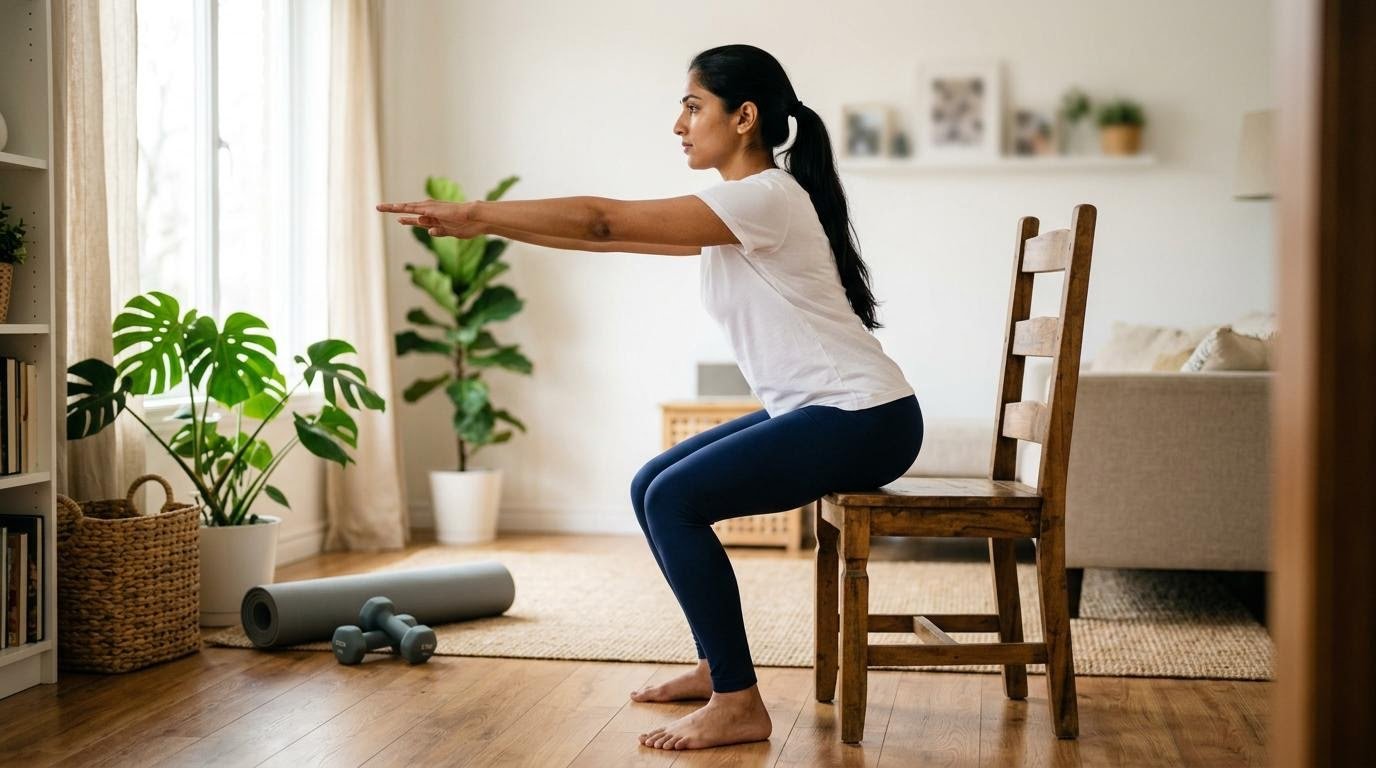
- Bodyweight ladder: chair squats, wall push-ups, glute bridges and bird dogs, adding one rep per day
- Skill target: hold a 30-second plank or finish 10 clean wall push-ups by day 28
Pick one and stick to it. Stacking three challenges at once is the classic beginner mistake, because each one adds a new way to fail.
Group fitness challenge ideas
Group fitness challenge ideas work because other people notice when you skip. Try one of these:
- Friend step-off: two to four friends compare weekly step totals in a shared chat
- Minute pool: everyone adds minutes toward one shared weekly target, so one person's strong week covers another's weak one
- Voice-note check-in: a 20-second message each evening, saying done or not done
Our guide on finding social support for weight loss explains how to recruit people who help instead of hover.
Here is the non-obvious part. Competition produced the biggest gain in STEP UP, but collaboration and support still beat the control group. If rankings stress you out, choose the pooled-minutes format. A smaller gain you sustain beats a bigger one you resent.
Build a Reward Ladder Around Effort, Not Pounds
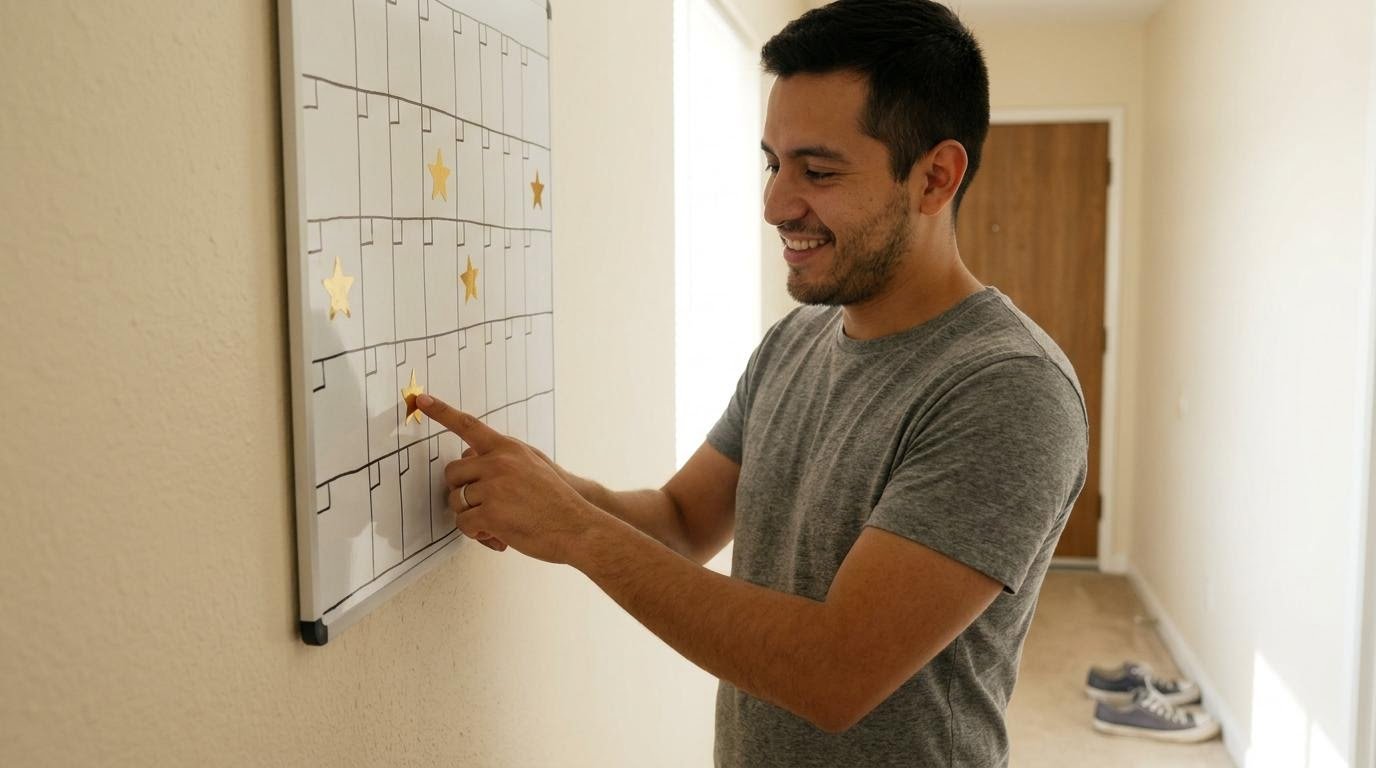
Reward what you control. You control sessions completed. You do not control what the scale says on Friday, and a reward tied to the scale turns a normal water-weight swing into a punishment. A ladder spreads payoffs across the whole challenge so there is always a next rung.
- Daily: mark an X on a visible calendar. The growing streak is the reward.
- Weekly: finish 4 of 5 planned sessions, then claim a small treat such as a new playlist, an evening with no guilt, or a movie night.
- Day 14: a mid-size reward such as a class pass or a good water bottle.
- Day 28: a bigger reward tied to the habit itself, such as running shoes or a massage, so workout 29 feels easier.
Match reward size to effort size
A big reward for a small effort loses meaning fast. A tiny reward for a big effort feels insulting. Scale the two together. Finishing one session earns a tick mark. Finishing a week earns a small treat. Finishing the challenge earns something you will use for months. When rewards track effort, they teach your brain the right lesson about what counts.
Rewards to skip
Skip food rewards. A "pizza night for finishing the week" teaches your brain exercise earns dessert, and it often cancels the effort you spent minutes earlier. Skip rewards tied to weight loss for the same reason. Pick treats unrelated to eating and unrelated to the scale.
Set the rules before day 1
Write down what earns each reward, then keep the rules fixed. Changing the rules mid-challenge makes every reward negotiable. Our guide to getting your fitness targets clear before you start walks through writing goals with a measurable finish.
Borrow the points system
STEP UP players earned points and levels for hitting daily step goals. Copy the idea. Give yourself 10 points per completed session, 5 bonus points for a full week, and a "level up" at 50 points. The numbers are arbitrary. The scoreboard is not.
A 4-Week Fitness Challenge for Beginners to Copy
Mayo Clinic's short video on jump-starting your workout repeats the starting rules: pick activity you enjoy, ease in, and schedule it.
The plan below meets the CDC's two strength days from week 1 and raises walking time by roughly 10% a week. These fitness challenge workouts take 20 to 30 minutes a day. Walk five days a week and do the circuit on two non-consecutive days.
The circuit
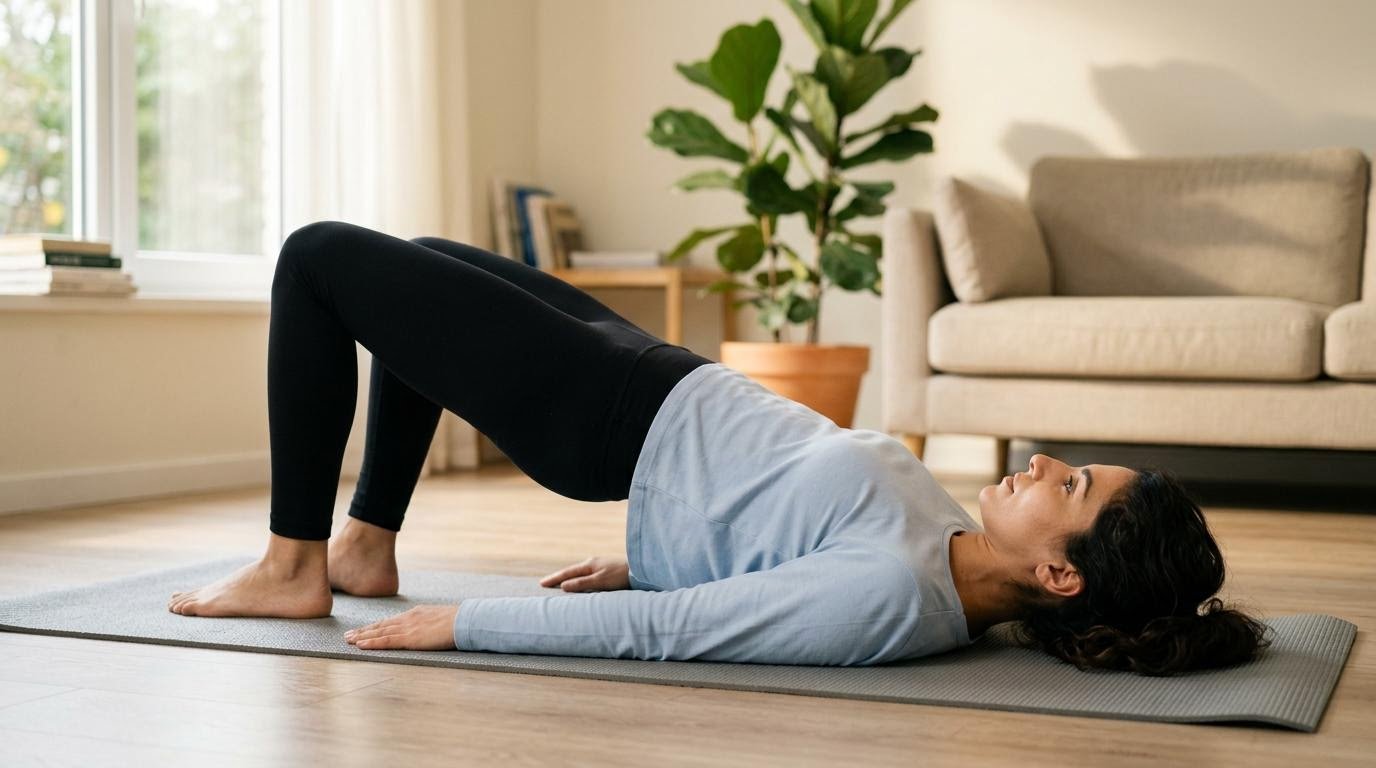
One round: 8 chair squats, 6 wall push-ups, 8 glute bridges, and 6 bird dogs per side. Rest as needed between moves.
Week 1: show up
Walk 15 minutes a day, five days. Do one round of the circuit on two days. Keep the pace easy. Your only job is to finish every session.
Week 2: add a little
Walk 16 to 17 minutes a day. Do two rounds of the circuit on two days. Claim your first weekly reward.
Week 3: survive the dip
Walk 18 minutes a day. Keep two rounds of the circuit. This is the boredom week, so lean on your group check-in. If you want a different home option, our 15-minute cardio workout at home for beginners fits the walking slots on two days.
Week 4: finish and retest
Walk 20 minutes a day. Do three rounds of the circuit on two days. On day 28, count your wall push-ups in one set and time your usual walk route. Compare both to day 1. Then claim the finish reward.
Sore the next morning? Soreness means lower intensity, not zero movement. Swap the circuit for an easy walk and keep the streak. Sharp pain, joint pain, or pain lasting longer than a few days means you stop and see a professional.
Miss a day? Resume the next day and skip nothing. Never double up to catch up, since doubling is how soreness and injuries start.

Rewards Fade When the Challenge Ends, So Plan the Exit
Here is the finding most challenge articles skip. In the 12 weeks after the STEP UP game stopped, activity fell in every group. Only the competition group stayed significantly above the control group, by about 569 daily steps. The support and collaboration groups lost their statistical edge.
Read this as a design rule. Your reward system is scaffolding, not the building. Build an exit before you need one.
Swap outside rewards for inside ones
The CDC reports physical activity helps you sleep better, lowers short-term anxiety and reduces the risk of depression and anxiety. Some brain-health benefits arrive right after a single session. Make those payoffs visible. Rate your mood and sleep from 1 to 5 on the same calendar where you mark your X. By week 2, the pattern becomes your own evidence. You may notice you fall asleep faster on workout days, or that Thursday afternoons feel less tense after a walk. Those notes are rewards no store sells, and they keep paying after the challenge ends.
Fade the rewards on a schedule
Move from weekly treats to every second week, then monthly. Keep the calendar and the group chat. Those two items carry the habit when the game ends. If you notice yourself exercising only when a reward is due, shrink the reward and keep the habit. The goal is a routine strong enough to survive a week with no treat in sight.
Roll straight into round two
Do not leave a gap between challenges. Start a new 4-week block on the following Monday with one change, such as a longer walk or a new bodyweight move. A fresh finish line restarts the scoreboard.

Your Next Step: Start a Fitness Challenge for Beginners This Week
You now hold the full kit. Pick a Monday start date. Track your baseline this week. Choose one challenge format and recruit two people. Write three rewards on paper, with the rule for each one. Print or copy the 4-week plan and mark day 12 in red, because day 12 is the day to defend.
A fitness challenge for beginners does not need heroics. It needs a small daily action, a scoreboard in plain view, and a payoff arriving sooner than the scale will deliver it.
Health disclaimer: This article offers general fitness information, not medical advice. Talk to a doctor or qualified fitness professional before starting a challenge if you have an injury, a heart or lung condition, diabetes, high blood pressure, or take regular medication, or if you are pregnant, postpartum, or under 18. Stop exercising and seek care if you feel chest pain, dizziness, or unusual shortness of breath.
Fitness Challenge for Beginners: Common Questions
How long should a fitness challenge for beginners last?
Four weeks suits most beginners. It covers the day-12 slump and gives time for first measurable gains, while keeping the finish line close. After day 28, start a second block with one new variable instead of extending the first.
How much exercise should a beginner do in a challenge?
Aim toward the CDC target of 150 minutes of moderate activity a week plus 2 days of muscle-strengthening, but start below it. Begin near your current baseline and add about 10% a week. Ten minutes a day is a valid start.
What are good rewards for a fitness challenge?
Pick effort-based, non-food rewards: a playlist, a class pass, new socks, a movie night, or running shoes at the finish. Tie each one to sessions completed, never to weight lost. Write the rules down before day 1.
Is a solo or group fitness challenge better?
Both work. In the STEP UP trial, competition, support and collaboration all beat the control group during the game, and competition gained the most. Choose by temperament. If rankings motivate you, compete. If they stress you, pool minutes with friends.
What should I do if I miss a day?
Resume the next day and skip nothing. Do not double up. Mark the missed square honestly, then protect the following day. One miss does not break a 28-day plan, though two in a row is the signal to trim the week's targets.
Do fitness challenges help mental health?
Regular activity links to better sleep, lower short-term anxiety and a lower risk of depression and anxiety, according to the CDC. A challenge adds structure and social contact. If low mood or anxiety persists, speak with a healthcare professional. Exercise supports treatment but does not replace it.
References
- CDC: Physical Activity Guidelines for Adults, 2023
- JAMA Internal Medicine: Effectiveness of Behaviorally Designed Gamification Interventions With Social Incentives for Increasing Physical Activity Among Overweight and Obese Adults Across the United States: The STEP UP Randomized Clinical Trial, 2019
- Mayo Clinic: Fitness program: 5 steps to get started, 2023
- CDC: Benefits of Physical Activity, 2025
- American Heart Association: American Heart Association Recommendations for Physical Activity in Adults and Kids, 2024
- Mayo Clinic: Mayo Clinic Minute: How to jump-start your workout, 2025