


Typing why am i always tired and have no energy female into a search bar usually happens after weeks of dragging yourself through the day. You sleep, you eat, you drink the coffee, and the afternoon still hits like a wall. The answer is rarely one dramatic thing. It is more often two or three quiet drains stacking up, and a few of them show up in women far more often than in men.
This guide covers nine causes of constant tiredness that major medical sources actually list. It starts with the unglamorous ones, like sleep, and moves to the ones people miss, like iron, thyroid and medicines. You also get a 7-day check to run on yourself and a short list of questions to take to a doctor. None of it replaces a diagnosis. What it does is help you walk into an appointment with better information than "I'm tired."
One honest limit before we start: no article can tell you which cause is yours. Blood tests and a clinician can. What an article can do is shrink the list so you stop guessing.
Advertisement



Why Am I Always Tired and Have No Energy Female? Start by Separating Tired From Fatigued
Everyone feels wiped after a bad night or a brutal week. Fatigue is different. It is the kind of tiredness that does not lift much with rest, makes ordinary tasks feel heavy, and hangs around for weeks. The distinction matters because the fixes differ. A rough week needs rest. Fatigue needs an explanation.
Mayo Clinic's list of fatigue causes sorts them into three buckets: lifestyle factors, mental health conditions, and medical conditions. That three-bucket view is more useful than it sounds, because most people with long-running tiredness have something from more than one bucket. Short sleep plus stress plus a mild iron shortage can flatten you in a way none of them would alone.
Picture two women. The first is 24, works an early office shift, trains three evenings a week, and scrolls in bed until 12:30 a.m. Her alarm goes off at 6:30. Her sleep log shows six hours on a good night. She is not mysteriously ill. She is under-slept. The second sleeps a solid eight hours, has heavy periods, and still crashes at 2 p.m. Her story points somewhere else entirely. Same complaint, different causes, and a different next step for each.
Before you read the causes, answer three questions in your head:
- How long has this lasted? A few days points to a recent trigger. Several weeks or more points to something worth checking.
- Does rest help at all? If a quiet weekend restores you, look at workload and sleep first. If it does not, widen the search.
- What changed around the time it started? A new medicine, a new job, a shift in your periods, a move, a breakup. Write the date down.
Hold on to those answers. They make the 7-day check near the end of this guide far more useful.
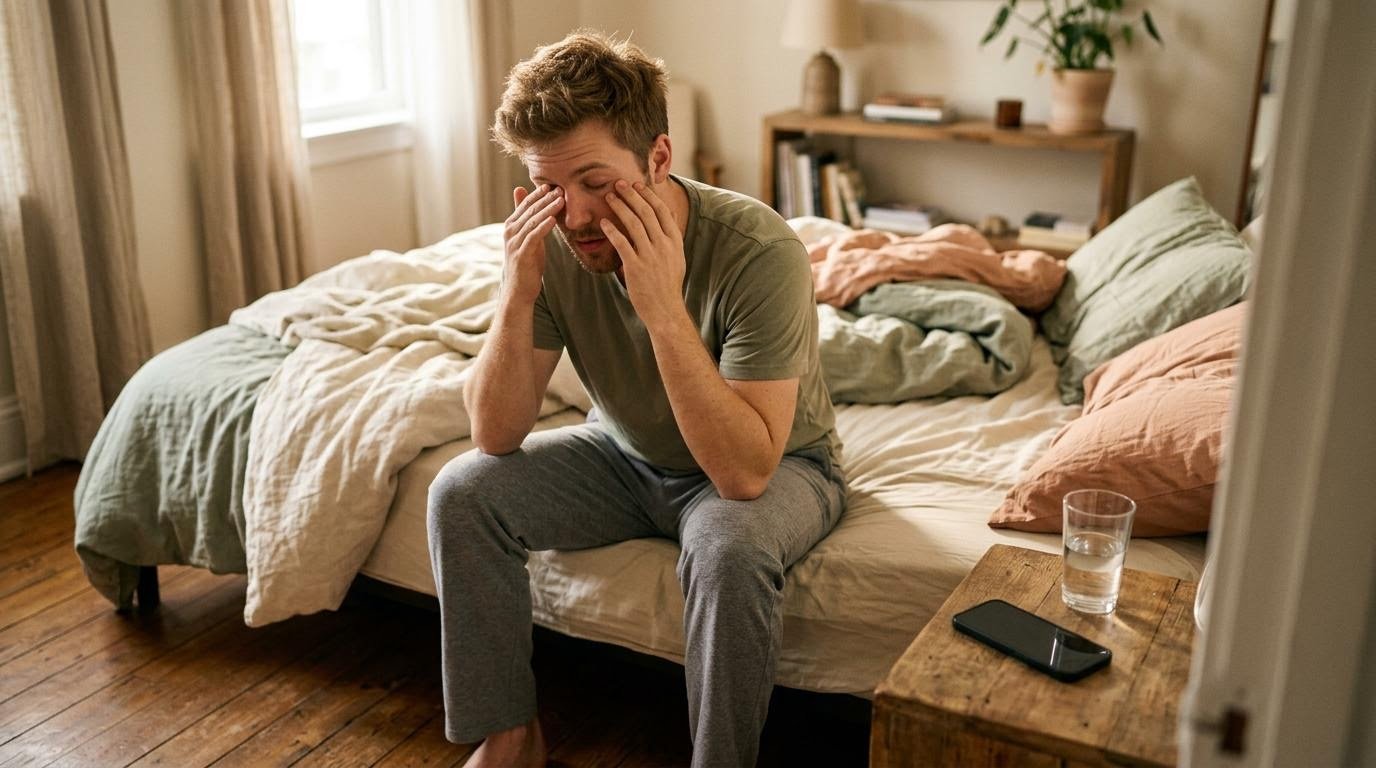
Causes 1 and 2: Too Little Sleep and Broken Sleep Come Before Everything Else
Start with the least exciting suspect, because it is also the most common. CDC's sleep guidance for adults recommends 7 or more hours a night for ages 18 to 60 (page last reviewed November 2023). Notice the wording: hours of sleep, not hours in bed. If you are in bed from 11:30 p.m. to 6:30 a.m. but spend 40 minutes scrolling and wake twice, you are closer to six hours than seven.
Cause 1: not enough sleep. This one sounds obvious, yet it hides behind routines. Late-night phone use pushes your bedtime later while the alarm stays put. The gap is your sleep debt, and a weekend lie-in only repays part of it. A steady wake time is a practical anchor because it gives the rest of your day a fixed starting point.
Cause 2: sleep that looks long but is broken. Mayo Clinic lists sleep apnea among the medical causes of fatigue. NHLBI's sleep apnea page says that if someone notices you snore or gasp for air during sleep, you may want to talk to your healthcare provider. It lists excessive daytime sleepiness as another sign of poor sleep quality worth raising, and it names obesity, large tonsils and hormone changes as factors that can narrow the airway. Snoring and gasping are easy to dismiss at any age, so treat a partner's or roommate's comment as data worth sharing with a doctor.
Two small experiments cost nothing. First, pick one wake time and hold it for seven days, weekends included. Second, move your phone out of reach of the bed for the same week. If your energy shifts even slightly, sleep was part of the picture. If nothing moves after a steady week, the next causes deserve more of your attention.

Cause 3: Iron Deficiency Hits Women Harder Because Periods Drain Your Stores
Mayo Clinic's fatigue list includes anemia, and low iron is one of the best-known routes to it. Here is the part that matters for women. The NIH Office of Dietary Supplements iron fact sheet notes that premenopausal women are among the groups at risk of not getting enough iron, and that menstruating women lose more iron through blood loss than other adults.
The same fact sheet sets the recommended dietary allowance (RDA) for women aged 19 to 50 at 18 mg a day. Pregnancy raises the target and breastfeeding lowers it, as the table shows.
| Life stage (women) | Iron RDA per day |
|---|---|
| Ages 19 to 50 | 18 mg |
| Pregnancy | 27 mg |
| Lactation | 9 mg |
Source: NIH Office of Dietary Supplements, Iron fact sheet
Low iron also tends to travel with training. Mayo Clinic experts have reported that women who exercise for long stretches, or play sports with repeated heel impact, face a higher risk of iron deficiency and iron-deficiency anemia. If you run, row or play field sports, raise that with your doctor. This short Mayo Clinic video covers the idea in under a minute:
A word of caution about guesswork. Do not start iron supplements to test the theory. Only a blood test shows whether your iron is low, and the right plan depends on the result and your health history. If you already take supplements, our guide on whether to take supplements in the morning or at night explains why iron is best kept away from calcium.

Cause 4: A Slow Thyroid Is Much More Common in Women, and the Symptoms Creep In
The thyroid is a small gland that helps set your body's pace. When it runs slow, the condition is called hypothyroidism. NIDDK states that women are much more likely than men to develop it, and it lists fatigue first among the common symptoms. NIDDK also notes the condition is more common in people over 60, so it is not the first suspect for most people in their 20s. It stays on the list because a simple blood test can check it.
Two details from NIDDK are worth remembering. Symptoms can take months or years to appear because the disease develops slowly. And fatigue and weight gain are common symptoms that do not necessarily mean a thyroid problem. That slow creep is why a sluggish thyroid gets missed: you adjust a little each month, and eventually "I'm just a tired person" becomes your baseline.
NIDDK also says a diagnosis cannot rest on symptoms alone, because they overlap with so many other conditions. Doctors typically take a medical history, perform a physical exam and often order thyroid blood tests. So skip the online symptom quizzes that claim to diagnose you. Take your 7-day log to a clinician and ask whether a thyroid test makes sense for your history.

Causes 5 and 6: Stress, Anxiety and Low Mood Drain Energy Even When You Do Not Feel Sad
Mayo Clinic's list names anxiety disorders, depression, grief and stress as causes of fatigue. That surprises people who expect mental health problems to feel like sadness. In practice they can show up as heaviness in the body, trouble starting tasks, or a constant low hum of worry that keeps your system switched on while you are trying to rest.
Cause 5: ongoing stress or anxiety. Picture a student who is in bed at a sensible hour but spends the night rehearsing tomorrow's presentation. The hours are on the clock, yet the rest feels shallow. If pressure at work is the source, our guide on recovering from job burnout explains how burnout differs from ordinary tiredness and what a gradual recovery looks like.
Cause 6: low mood or depression. Mayo Clinic lists depression as a cause of fatigue. Tiredness that arrives with a flat mood, loss of interest or changes in appetite deserves a conversation with a doctor or therapist, not another coffee.
If you ever feel hopeless or have thoughts of harming yourself, contact your local emergency number or a crisis line straight away. That applies at 3 a.m. and on a Sunday. It does not need to wait for an appointment.

Causes 7 to 9: Poor Eating, Medicines and the Wrong Amount of Exercise Hide in Plain Sight
These three sit in Mayo Clinic's lifestyle bucket, which makes them easy to dismiss and easy to fix once you spot them.
Cause 7: poor eating and low vitamin D. Mayo Clinic lists both among the causes of fatigue. A typical crash day looks like this: coffee at 8, a granola bar at 11, nothing until a huge late lunch, then a slump at 3. That pattern is common and fixable. Regular meals that include some protein and fibre, plus water through the day, are a reasonable first move. Low vitamin D, though, is a lab result and not a guess, so ask about testing before you buy a bottle.
Cause 8: medicines and alcohol. The same Mayo Clinic list includes alcohol and drug use, plus certain medicines such as allergy or cough medicines. Check the label of anything you take regularly, including over-the-counter products. If Monday feels like a write-off after a few weekend drinks, give that link a fair look. Never stop a prescribed medicine on your own. Ask your pharmacist or prescriber whether tiredness is a known effect.
Cause 9: the wrong amount of activity. Here is the non-obvious one. Mayo Clinic lists both too little and too much physical activity as causes of fatigue. Most advice assumes tired people should move more, and often that helps. But if you stacked a new training plan on top of short sleep and low iron, more is not the answer. Match your plan to your recovery. If you are mostly sedentary, our beginner cardio routine that boosts energy keeps it to a short, no-equipment circuit, which is a gentler start than a full gym session.

Why Am I Always Tired and Have No Energy Female Even After Sleep? Run a 7-Day Check, Then Ask These Questions
If your sleep looks fine on paper and you are still flat, treat the next week as a mini investigation. You are collecting evidence, and you are doing it before you spend money on supplements or tests that may not fit.
The 7-day check
Each day, jot down:
- Bedtime, wake time and roughly how many hours you slept
- Caffeine and alcohol, with times
- Meals, including skipped ones
- The day of your cycle, if you track it, and how heavy your period is
- Energy at 10 a.m., 3 p.m. and 8 p.m. on a scale of 1 to 10
- Mood and stress level in a few words
Patterns to look for
After seven days, read it back. Energy that drops after short sleep points to sleep. Energy that crashes at the same time after the same food pattern points to meal timing. Energy that dips around your period is worth mentioning to a doctor, especially with heavy bleeding. Flat energy at all hours despite decent sleep, food and mood is the situation where bloodwork is most useful.
Questions to take to your appointment
- Could my periods be draining my iron, and should my iron levels be checked?
- Does a thyroid blood test make sense for me?
- Could my sleep be disrupted by something like sleep apnea?
- Could any medicine I take be causing tiredness?
- What should I keep tracking before my next visit?
Doctors usually begin with your history and a physical exam before deciding on tests. Your log is that history, already written down.
When not to wait
Do not wait for a week of notes if tiredness comes with chest pain, severe shortness of breath, fainting or thoughts of harming yourself. Call your local emergency number or get urgent care.
So, why am i always tired and have no energy female? Usually it is a stack: short or broken sleep, a drain such as low iron or a slow thyroid that only a blood test can confirm, and stress or habits that keep the tank low. You do not need to solve all nine causes this week. Hold a steady wake time, keep the 7-day log, and book the appointment with a short list of questions. That sequence gets you a real answer faster than any supplement aisle.
Health disclaimer: This article is general information and not medical advice. Constant tiredness has many possible causes, and only a healthcare professional can diagnose yours. Talk to a doctor or pharmacist before starting supplements, especially iron or vitamin D, and before changing any prescribed medicine. If you are pregnant, breastfeeding or under 18, check with a healthcare professional before changing your diet, supplements or exercise.

Frequently Asked Questions About Constant Tiredness in Women
Why am I always tired even after sleep?
Hours alone do not tell the whole story. Sleep can be cut short by late phone use, broken by something like sleep apnea, or followed by a daytime drain such as low iron, a slow thyroid, stress or certain medicines. Mayo Clinic's fatigue list covers all of these. Track seven days of sleep and energy, then ask a doctor which tests fit your history.
Why am I always tired and sleepy during the day?
Daytime sleepiness points first to not enough sleep or broken sleep. NHLBI lists excessive daytime sleepiness as a sign of poor sleep quality worth raising with a healthcare provider, especially if someone notices snoring or gasping at night. Certain medicines, such as allergy or cough medicines, also appear on Mayo Clinic's list of fatigue causes.
Can my period make me tired all the time?
Periods can contribute through blood loss. The NIH Office of Dietary Supplements notes that menstruating women lose more iron, and low iron can lead to anemia, which Mayo Clinic lists among the causes of fatigue. If your periods are heavy and you feel drained, ask a doctor about checking your iron instead of guessing with supplements.
How much iron do women need each day?
The NIH Office of Dietary Supplements sets the RDA at 18 mg a day for women aged 19 to 50, 27 mg during pregnancy and 9 mg during lactation. These are dietary targets. They are not a reason to take iron supplements without a blood test and medical advice.
Can a thyroid problem cause tiredness in young women?
It can. NIDDK lists fatigue first among the common symptoms of hypothyroidism and says women are much more likely than men to develop it. NIDDK also says the condition is more common in people over 60 and that fatigue alone does not prove a thyroid problem. A blood test ordered by a clinician can check it.
Which tests might a doctor order for constant tiredness?
Doctors usually start with your medical history and a physical exam. After that they may order blood tests, such as thyroid tests, depending on what your history points to. Which tests make sense for you is a decision for your clinician, so bring your 7-day log.
References
- Mayo Clinic — Fatigue - Causes and definition
- CDC — About Sleep, 2023
- NIH Office of Dietary Supplements — Iron: Dietary Supplement Fact Sheet
- NIDDK — Hypothyroidism (Underactive Thyroid), 2021
- NHLBI — What Is Sleep Apnea?, 2025
- Mayo Clinic News Network — Mayo Clinic Minute: Female athletes may need more iron, 2017
- Mayo Clinic (YouTube) — Mayo Clinic Minute: Female athletes may need more iron