

You went looking for a low carb diet sheet because the version everyone else hands you isn't actually one. It's a vague list of "good carbs and bad carbs" with no numbers attached, which is a suggestion, not a sheet. A real low carb diet tells you three things: how many grams of carbohydrate to aim for each day, which foods deliver that number without guesswork, and what changes in your body once you stick with it past the first weekend.
That's what this guide builds with you, using the carbohydrate ranges recognized by bodies like the CDC's carb counting guidance, not numbers pulled from an influencer's caption. You'll walk away with an actual low carb diet plan for beginners, a two-week starting framework, and a food list you can screenshot and use at the grocery store tonight.

What a Low Carb Diet Sheet Actually Tracks (It's Not Just "No Bread")
Here's the thing most low carb diet plan skip: not all carbohydrates on a label count the same way toward your daily number. A proper sheet tracks net carbs — total carbohydrate grams minus fiber grams — because fiber passes through your digestive system largely undigested and doesn't spike blood sugar the way starch or sugar does. A cup of raspberries has about 15 grams of total carbs but only 7 grams of net carbs, thanks to 8 grams of fiber. Treat every gram the same and you'll cut foods you didn't need to cut.
A low carb diet sheet also tracks three separate carbohydrate categories, not one blob:
- Sugars — table sugar, honey, the natural sugar in fruit and dairy
- Starches — bread, rice, pasta, potatoes, most grains
- Fiber — vegetables, legumes, whole fruit with the skin on
You're aiming to reduce the first two categories while keeping the third one relatively intact. That distinction is the difference between a sustainable low carb diet plan and one that leaves you constipated and irritable by Thursday, which is the most common reason people quit in the first ten days.

Your Low Carb Diet Sheet Numbers: The Exact Carb Ranges to Aim For
There's no single "low carb" number, and that's exactly why so many people's sheets never work — they copy a keto influencer's 20-gram limit without needing anywhere near that level of restriction. Carbohydrate ranges fall into three practical tiers, and where you land depends on your goal, activity level, and how your body responds.
| Diet type | Daily carbs (grams) | Best suited for |
|---|---|---|
| Standard diet | 225–325g | No restriction, general population |
| Moderate low carb | 100–150g | First-time low carb dieters, beginners |
| Low carb | 50–100g | Established low carb eaters, steady weight loss |
| Very low carb (ketogenic) | Under 50g | Short-term, medically supervised only |
Source: Mayo Clinic
If this is your first low carb diet sheet, start at 100 to 150 grams a day. It's restrictive enough to change how your body burns fuel, but loose enough that you're not white-knuckling every meal. You can always tighten the number later if progress stalls and you want to troubleshoot.
A Mayo Clinic review of low-carb research found people following a low-carbohydrate approach lost slightly more weight over six months to two years than people on comparison low-fat diets, with the gap narrowing over the longer stretch. Slightly more, not dramatically more. That's the honest picture, and it's worth knowing before you build a sheet around promises of rapid, effortless results.

Why Most People's Low Carb Diet Sheet Falls Apart in Week One
I know what you're thinking: you've tried a version of this before and it didn't stick. Here's why, in order of how often it actually happens.
The sheet has no protein target. Cutting carbs without deliberately raising protein leaves you hungry by 3pm, and hungry people don't follow sheets, they abandon them. This is one of the most common mistakes across our weight loss tips for beginners as well, not just low-carb specific plans. Aim for 20 to 30 grams of protein at each meal — eggs, chicken, fish, tofu, Greek yogurt — before you even look at the carb column.
The sheet ignores hidden carbs. Salad dressing, flavored yogurt, sauces, and "healthy" granola bars carry more sugar than people expect. A tablespoon of a supposedly light vinaigrette can run 6 to 8 grams of carbs, which adds up fast across three meals.
The sheet doesn't account for the first-week water drop. When you cut carbs, your body burns through stored glycogen, and glycogen holds roughly three to four times its weight in water. That first 3 to 5 pounds you lose in week one is mostly water, not fat, and when it stalls in week two, people assume the diet stopped working and quit. It didn't stop working. Your body just finished the glycogen phase and moved into the slower fat-loss phase, which is the non-obvious part nobody explains upfront.
The sheet is too extreme too fast. Someone eating 250 grams of carbs a day who drops straight to 20 grams is setting up headaches, fatigue, and the "keto flu" that has nothing to do with keto specifically and everything to do with an abrupt electrolyte shift. Step down gradually over one to two weeks instead, cutting roughly a third of your current carb intake each week rather than jumping straight to the floor.
There's a fifth reason that gets less attention: the sheet has no plan for eating outside the house. Restaurants, work lunches, and social events are where most low-carb attempts quietly unravel, not because the person lacks willpower, but because nobody built a strategy for them in advance. A workable low carb diet sheet includes two or three "default orders" you already know work — a burger without the bun and a side salad instead of fries, a protein bowl with double vegetables instead of rice, grilled fish with a vegetable side instead of pasta — so you're never improvising under pressure with a menu in front of you and a table full of people waiting.
Electrolytes deserve a direct mention too, since they're the most common physical complaint in the first week and the easiest one to fix. Cutting carbs drops insulin levels, and lower insulin tells your kidneys to release more sodium than usual, which pulls potassium and magnesium out with it. That's the actual mechanism behind the headaches and light-headedness people report, not some vague "carb withdrawal." A cup of broth, a bit of extra salt on your food, and a handful of leafy greens or nuts for magnesium usually resolves it within a day or two.
The 2 Week Low Carb Diet Plan: A Day-by-Day Starting Framework
Here's a realistic 2 week low carb diet plan built around the 100 to 150 gram range, structured so you're not reinventing meals every single day.
Days 1 to 3: Establish the baseline
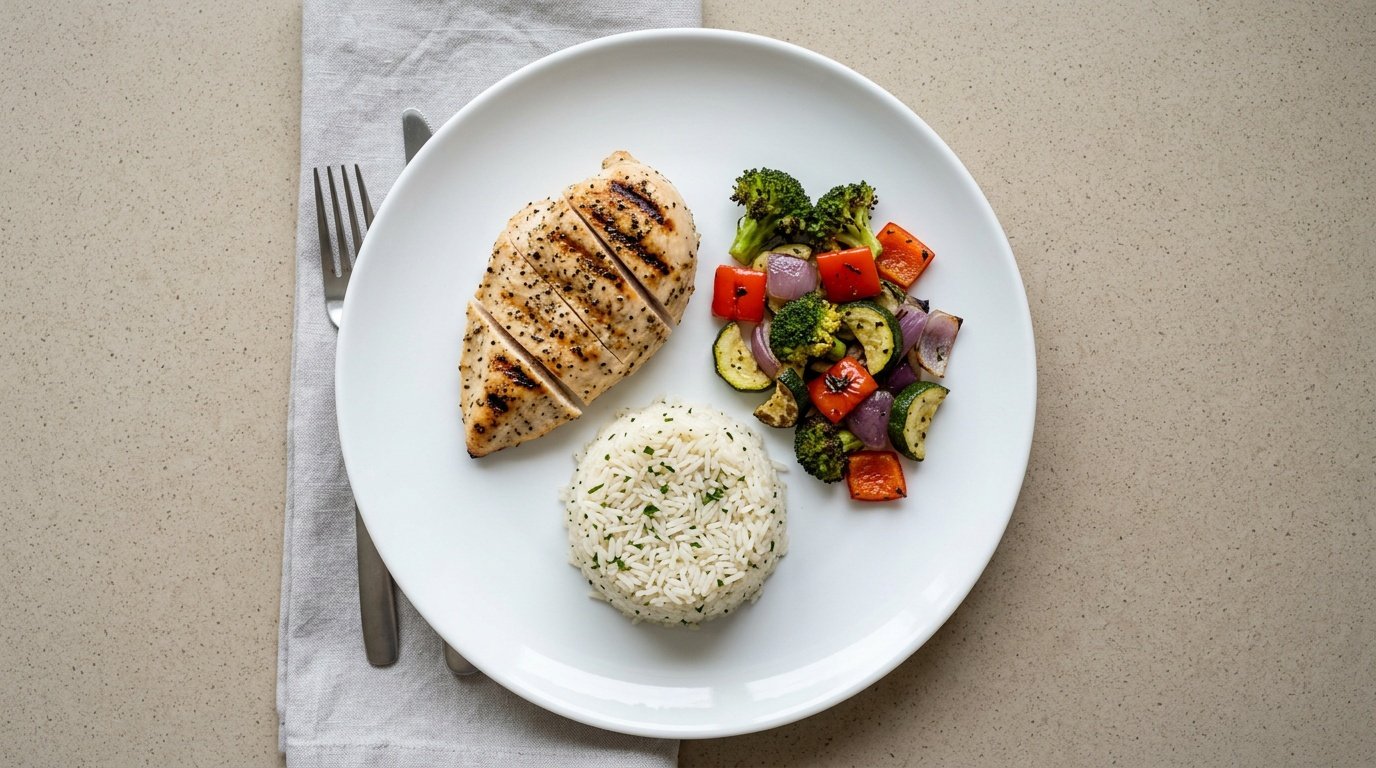
Pick three breakfasts, three lunches, and three dinners you'll rotate. Repetition removes decision fatigue, which is the single biggest reason people abandon a new eating pattern in the first 72 hours. Example: eggs with spinach and avocado for breakfast, a grilled chicken and vegetable bowl for lunch, salmon with roasted broccoli for dinner.
Days 4 to 7: Add variety without adding carbs
Swap proteins (chicken to turkey to shrimp) and vegetables (broccoli to zucchini to cauliflower) while keeping the meal structure identical. This is where most people quietly go over their carb target, because a new sauce or side dish sneaks in without being logged.
Days 8 to 10: Introduce meal prep
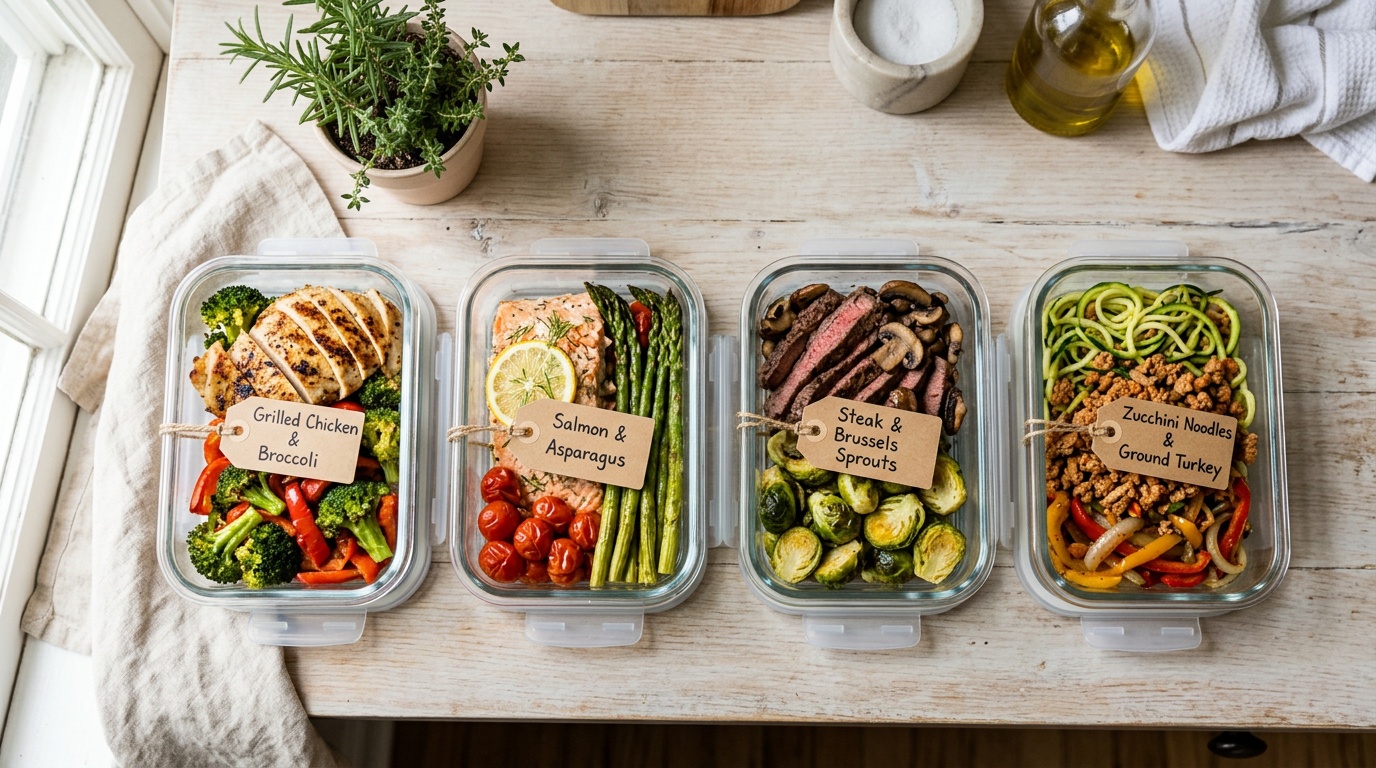
Batch-cook proteins and roasted vegetables for four days at once. This single habit shift is what separates people who make it past week two from people who don't, because it removes the daily "what am I eating" decision entirely.
Days 11 to 14: Assess and adjust
Check in on energy, hunger, and whether the scale moved. If weight loss has stalled and it's been more than 10 days since the initial water drop, look at hidden carb sources — sauces, dressings, drinks — before assuming the approach isn't working for you.

What Belongs on a Low Carb Diet Plan for Beginners (and What Doesn't)
Your grocery list matters more than any app or tracker. Build around these categories:
- Proteins: eggs, chicken, turkey, fish, shellfish, tofu, tempeh, plain Greek yogurt
- Low-carb vegetables: leafy greens, broccoli, cauliflower, zucchini, peppers, mushrooms, asparagus
- Healthy fats: olive oil, avocado, nuts, seeds, nut butter without added sugar
- Higher-carb foods to portion carefully: berries, legumes, winter squash, higher-fat dairy
- Foods to mostly skip on a low carb diet sheet: white bread, white rice, sugary cereal, soda, most packaged snack foods, sweetened yogurt
Rice deserves its own note here, since it's one of the most argued-about foods on any low carb list — see our breakdown of rice and weight loss for the full picture on portioning it rather than cutting it entirely. Notice fruit isn't banned, it's portioned. A low carb diet plan that eliminates entire food groups outright is harder to sustain and, per the 2025-2030 Dietary Guidelines for Americans, restrictive patterns that cut whole categories tend to be harder for people to maintain long term than patterns that simply shift proportions.

What Actually Changes in Your Body When You Follow the Sheet
A 2021 NIH-funded study published in Nature Medicine put this to a direct test, comparing a low-carbohydrate, animal-based diet against a low-fat, plant-based diet in the same participants under tightly controlled inpatient conditions. The NIH's own research summary reported that people lost weight on both approaches, but the low-carb group showed lower insulin and blood glucose levels throughout the trial, while the low-fat group lost more body fat specifically over the same window. Neither diet won outright. The honest takeaway is that a low carb diet sheet changes your blood sugar and insulin response noticeably, and that effect shows up faster than fat-loss numbers on a scale.
The American Heart Association's 2023 scientific review of ten popular eating patterns placed low-carb diets in its third tier for heart-healthy alignment, largely because restricting whole grains and legumes can mean eating less fiber unless you're deliberate about vegetable and legume portions. That's a fixable gap, not a reason to avoid the approach, but it's exactly why a well-built sheet keeps non-starchy vegetables and some fiber-rich carbs in the picture instead of cutting everything that isn't meat.

Turning a Diet Sheet Into a Habit You Keep Past Week Two
Take someone like a 27-year-old graphic designer working from a home office, snacking through the afternoon out of boredom rather than hunger. A rigid carb-counting app made her quit within four days because logging every bite felt like a second job. What actually worked was three fixed meals built from the sheet above, one planned snack, and zero tracking on weekends. The structure did the work; she didn't have to think about it meal to meal.
That's the real test of any low carb diet sheet — not whether it produces a dramatic first-week number, but whether you can still be eating this way in month three. Build in one flexible meal a week from the start. Rigid systems with zero give tend to break completely the first time real life interrupts them, whereas a plan with a built-in pressure valve survives a birthday dinner or a bad week without collapsing entirely.
Compare that to someone who treats every single gram as a pass-fail test. A 34-year-old warehouse supervisor tracked every meal to the decimal for six weeks, hit her carb target daily, then missed one office birthday cake and quit the entire approach the same afternoon, convinced the "streak" was ruined. The all-or-nothing framing did more damage than the cake ever could have. A sheet that expects occasional deviation, and treats it as data rather than failure, survives contact with an actual life. One slice of cake shifts your daily total by maybe 30 grams. It doesn't erase six weeks of consistent eating, and it doesn't require starting over from day one.
Pairing the sheet with movement helps too — our guide to a fat loss exercise routine covers how activity level should shape where in the 100 to 150 gram range you land. Print your low carb diet sheet, tape it inside a cabinet door, and revisit the gram targets every few weeks rather than daily. The goal isn't perfect tracking forever — it's internalizing roughly what 100 to 150 grams of carbs looks like on your plate so the sheet eventually becomes a habit you don't need to consult at all.
A note before you start: This guide is for general education and isn't a substitute for personalized medical advice. If you have diabetes, kidney disease, are pregnant, or take medication affected by diet, talk with a doctor or registered dietitian before changing your carbohydrate intake. This is especially important if you take insulin or other blood sugar medication, since a lower-carb diet can change your dosing needs.
Frequently Asked Questions
What exactly is a low carb diet sheet?
It's a structured reference showing your daily carbohydrate target in grams, a food list split into what to eat freely and what to portion carefully, and a simple way to track net carbs (total carbs minus fiber). A real sheet gives you numbers, not just a list of "avoid these" foods.
How many carbs should be on my low carb diet sheet each day?
Most beginners do best starting at 100 to 150 grams of net carbs per day. That's restrictive enough to shift how your body uses fuel without the harsh side effects of dropping straight to under 50 grams, which is better reserved for short, medically supervised periods.
Can I use a low carb diet sheet if I have diabetes?
Many people with type 2 diabetes use lower-carb eating patterns as part of blood sugar management, but this should be built with your care team, since reducing carbs can require adjusting insulin or other medication doses. Never change your carb intake significantly without looping in your doctor first if you're on blood sugar medication.
Why did I stop losing weight on my low carb diet sheet?
The first 3 to 5 pounds lost in week one is mostly water from depleted glycogen stores, not fat. When that water loss levels off around week two, progress can look stalled even though fat loss is still happening at a slower, steadier rate. Check hidden carbs in sauces and drinks before assuming the plan has stopped working.
Is a low carb diet sheet safe long term?
A moderate low carb approach in the 100 to 150 gram range, built around whole foods with plenty of non-starchy vegetables, is generally considered reasonable for sustained use by most healthy adults. Very low carb or ketogenic eating under 50 grams a day is better used short-term and with medical guidance, particularly for anyone with kidney concerns.
What foods should never be on a low carb diet sheet?
Nothing has to be permanently banned, but sugary drinks, white bread, white rice, and most packaged snack foods deliver a large carb load with little nutritional benefit, so they're the first things to trim rather than fruit or legumes.
References
- CDC — Carb Counting, 2024
- National Institutes of Health (NIDDK) — Low-fat diet compared to low-carb diet, 2021
- Harvard Health Publishing — Low fat, low carb, or Mediterranean: which diet is right for you?, 2021
- Mayo Clinic — Low-carb diet: Can it help you lose weight?
- American Heart Association — Here's how 10 popular diets scored for heart health, 2023
- Office of Disease Prevention and Health Promotion (ODPHP) — Current Dietary Guidelines, 2025-2030, 2026