

You downloaded a calorie tracker, bought new running shoes, and told your group chat you're "finally doing this." Two weeks later, the shoes are by the door and the tracker's been closed since Tuesday. That gap between the big decision and the boring daily follow-through is where most beginner plans die, and it's exactly where the right weight loss tips for beginners can change the outcome. Not motivation tricks. Not a stricter diet. Just a handful of decisions that are small enough to survive a bad week.
This isn't a 30-day miracle plan, and it won't promise you'll drop a dress size by next month. What it will do is walk you through seven changes that beginners consistently underrate, backed by what public health researchers actually recommend, not what's trending this week.
Think of it less like a diet and more like a short list of defaults you're resetting. Defaults matter more than willpower, because willpower is a finite resource that runs low by Thursday evening, while a default is just what you do without having to decide. The goal over the next few weeks isn't to white-knuckle your way through a strict plan. It's to make the healthier option the automatic one often enough that the scale, and your energy levels, start moving in the direction you want.

The Weight Loss Tips for Beginners That Actually Work in the First Two Weeks
Most people starting out reach for the most dramatic change available: cut carbs entirely, run five miles a day, eat 1,200 calories starting Monday. It feels productive because it's hard. But difficulty isn't the same as effectiveness, and a plan you can't repeat on a Tuesday when you're tired and it's raining isn't really a plan.
The Centers for Disease Control and Prevention frames healthy weight loss as a gradual pace, roughly 1 to 2 pounds a week, built on nutrition, activity, sleep, and stress management working together rather than any single lever pulled to the extreme. That's a less exciting sentence than "lose 10 pounds in 10 days," but it's the version that's still working for you six months from now. If you've already tried a few approaches and want to compare notes, we've also rounded up other proven weight loss tips that actually hold up once the novelty wears off.

Tip 1: Build a Calorie Deficit You Can Actually Sustain
You don't need to count every almond. But you do need some sense of energy balance, because weight loss is fundamentally about taking in fewer calories than your body uses. Mayo Clinic's weight-loss guidance recommends aiming for a deficit of about 500 to 750 calories a day below what you burn, which lines up with that same 1 to 2 pounds a week pace. Go much steeper than that and you'll likely be hungry, irritable, and looking for an exit by week three.
Here's the non-obvious part beginners miss: the deficit doesn't have to come only from eating less. Walking an extra 20 minutes a day, taking the stairs, or standing more at work all add up on the "calories out" side without touching your plate at all. Splitting the deficit between food and movement is usually more sustainable than trying to carve the whole thing out of dinner.
A simple way to start: pick one meal you eat almost every day and identify one swap, like trading a sugary latte for black coffee with milk, or a side of fries for a side salad. One swap a week compounds faster than a total overhaul that lasts four days.
Take a realistic example. Someone who swaps a 20-ounce soda for water at lunch, adds a 20-minute walk after dinner, and trims one evening snack from their routine is often looking at a deficit somewhere in the 400-to-600-calorie range without ever touching a calorie-counting app. That's most of the way to the range Mayo Clinic describes, built entirely from three small, repeatable decisions rather than one dramatic diet overhaul.
Some beginners ask about structured approaches like intermittent fasting as a shortcut to that deficit. It can work for some people, though the results are more nuanced than the trend suggests; if you're curious, it's worth reading what the research actually shows about intermittent fasting results before building a plan around it.

Tip 2: Put Protein on Every Plate to Protect Muscle While You Lose Fat
When people lose weight quickly through diet alone, a meaningful chunk of what comes off can be muscle, not just fat. That matters because muscle is what keeps your metabolism from tanking as the scale moves. Protein is the nutrient that most directly protects against this. The Academy of Nutrition and Dietetics points to lean meats, poultry, seafood, beans, lentils, and soy foods as reliable protein sources that also help repair and build muscle tissue while you're in a deficit.
Protein also happens to be the most filling macronutrient gram for gram, which is a practical reason to lean on it as a beginner: it buys you patience. A breakfast built around eggs or Greek yogurt tends to carry you further into the morning than a bowl of cereal, even at a similar calorie count.
A workable beginner target is protein at every meal, not just dinner. Think eggs or yogurt at breakfast, a protein source the size of your palm at lunch and dinner, and a protein-forward snack like cottage cheese or a handful of nuts if you get hungry between meals.

Tip 3: Walk Daily Before You Worry About a Gym Membership
Walking gets dismissed as "not real exercise" by people who've never tried to make it a consistent daily habit. It's actually one of the highest-leverage tools available to a beginner, because the barrier to entry is close to zero. No equipment, no learning curve, no intimidating gym floor.
The American Heart Association's activity guidelines recommend adults get at least 150 minutes of moderate-intensity aerobic activity per week, and brisk walking counts fully toward that number. Broken down, that's about 22 minutes a day, or a 30-minute walk five days a week with two rest days built in.
If that sounds like a lot from a standing start, it isn't meant to happen all at once. Start with 10 minutes after dinner. Add five minutes a week. By the time you've been at this for a month, you'll likely be closer to that 150-minute target without it ever feeling like a dramatic jump.

Tip 4: Treat Sleep Like Part of the Plan, Not an Afterthought
Here's the tip most weight loss content skips entirely: how much you sleep affects how much you eat the next day. Short sleep disrupts the hormones that regulate hunger and fullness, which is a big part of why a rough night often ends in reaching for something sweet or salty by mid-afternoon. It's not a willpower failure; it's biology working against you.
The CDC's guidance on losing weight explicitly lists enough sleep alongside nutrition, physical activity, and stress management as one of the core pillars of a healthy weight approach, not a separate wellness topic. If you're nailing your food and workouts but running on five hours of sleep, you're working against yourself on one of the four pillars that actually determines the outcome.
Aim for a consistent bedtime rather than a specific number of hours to start. Going to bed at roughly the same time each night, even on weekends, tends to do more for sleep quality than chasing an exact eight-hour target and then blowing past it anyway.

Tip 5: Add Two Strength Sessions a Week, Even as a Complete Beginner
Cardio gets all the attention in beginner weight loss advice, but strength training is doing quieter, equally important work. Building or maintaining muscle keeps your resting metabolism higher, which means your body burns more calories even when you're not exercising. Mayo Clinic's strategies for weight-loss success specifically recommend strength training exercises at least twice a week, whether that's lifting weights, using resistance bands, or doing bodyweight moves like pushups and squats.
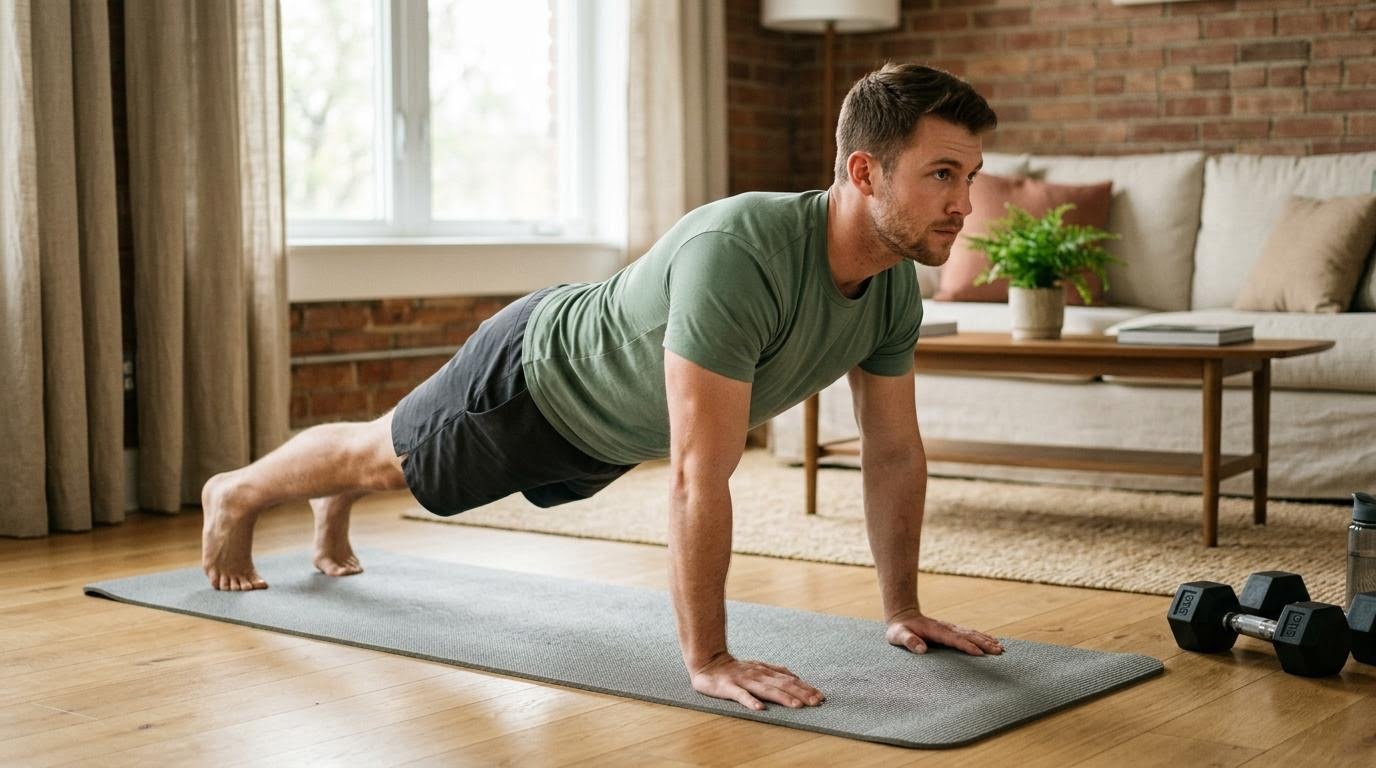
You don't need a barbell or a gym membership to start. Bodyweight squats, wall pushups, glute bridges, and lunges cover most of the major muscle groups and can be done in a living room in 20 minutes. If you want a fuller routine to pair with these moves, we've laid out more simple weight loss tips you can start at home today.
Beginners often avoid strength work because cardio feels more directly tied to "burning calories." But the combination of both is what protects you from the frustrating plateau where the scale stalls even though you're still working hard, because your body has adapted to cardio alone and muscle loss has quietly slowed your metabolism.

Tip 6: Measure Progress With More Than the Bathroom Scale
The scale is noisy. Water retention, hormonal shifts, the salt in last night's dinner, even how much you've had to drink that morning can swing it by a pound or two in either direction, none of which reflects actual fat loss. Beginners who rely on the scale as their only feedback often quit during a completely normal plateau week that wasn't actually a plateau at all.
NIDDK's guidance on maintaining weight loss suggests tracking progress with tools beyond the number on the scale, and specifically notes that setbacks are a normal, expected part of the process, not a sign the plan has failed. That reframe alone keeps a lot of beginners from abandoning a plan that was actually working.
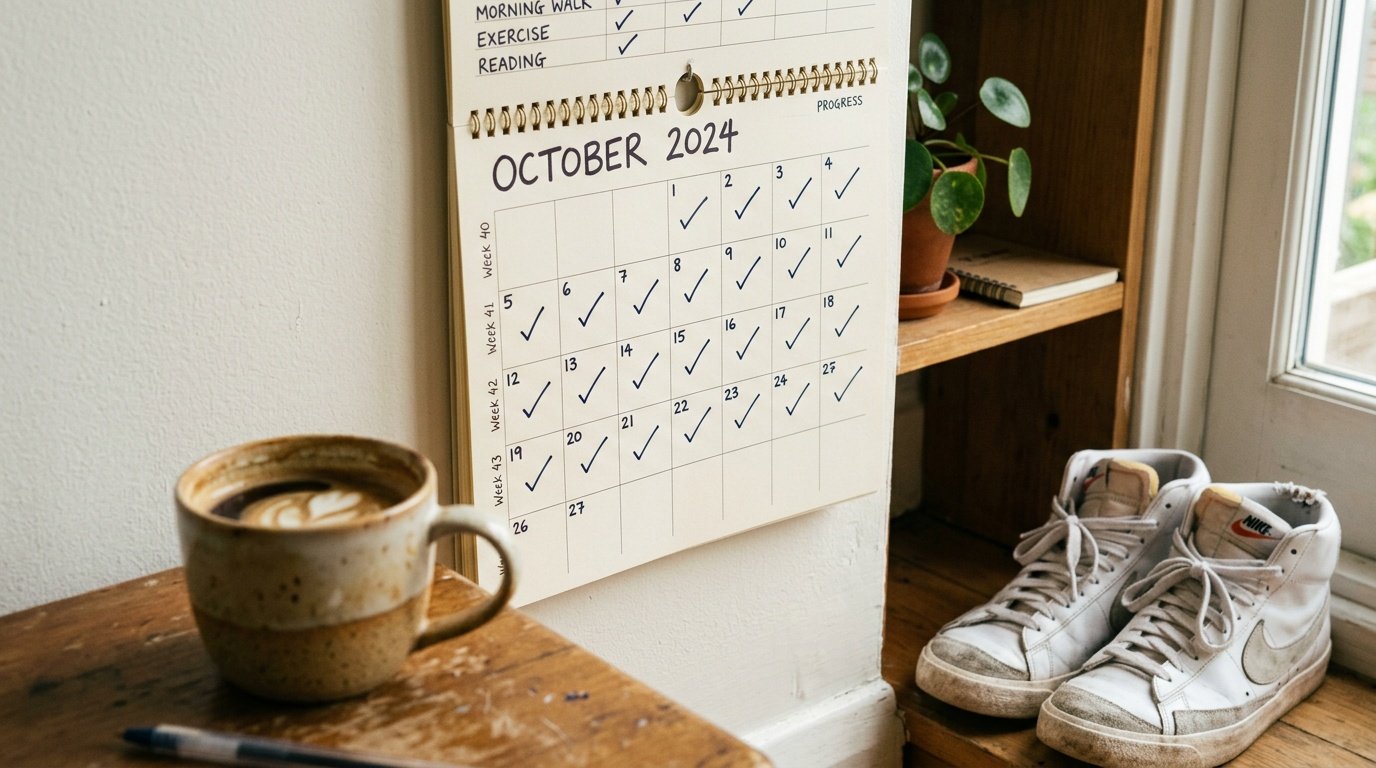
Track how your clothes fit. Note your energy levels. Keep a simple photo log once a month, taken in similar lighting. Log your workouts so you can see strength improving even on weeks the scale doesn't move. Weigh yourself if it helps you, but treat it as one data point among several, not the only verdict on whether you're succeeding.

Tip 7: Build a Plan for the Week You Fall Off Track
This is the tip that separates people who lose weight and keep it off from people who lose it and regain it within a year: deciding, in advance, how you'll handle the week that goes sideways. Because it will. A work trip, a stomach bug, a family event with a table full of your favorite foods. That week isn't optional to plan for; it's the most predictable part of the entire process.
weight loss tips for beginners rarely mention this part, but the difference between one bad week and a full derailment usually comes down to how quickly you get back to your normal pattern. Not punishing yourself, not "starting over Monday" with a stricter version of the plan than before, just picking the routine back up at the next meal or the next scheduled walk.
Write down, right now, what your "back on track" move will be. For most people it's something simple: the next meal includes a vegetable and a protein source, and the next day includes a walk. That's it. No penance required.
It also helps to name your specific high-risk situations ahead of time rather than discovering them in the moment. Maybe it's the office birthday cake on Fridays, or the takeout order that becomes automatic on nights you're too tired to cook. You don't need to eliminate these; you need a default response ready before you're standing in front of the cake wondering what to do. Even something as simple as "I'll have a slice and skip seconds" beats deciding in real time while hungry and tired.
What Changes You Can Realistically Expect in Your First Few Weeks
It helps to know what's actually normal so you're not comparing your week two to someone else's month six. Here's a rough breakdown of what tends to show up at each stage when you're consistent with the habits above.
| Timeframe | What Typically Changes | What Usually Doesn't Yet |
|---|---|---|
| Week 1–2 | Water weight shifts, better energy after meals, workouts feel less intimidating | Visible body composition change |
| Week 3–4 | Clothes starting to fit slightly looser, sleep quality often improves | Consistent scale drops week over week |
| Week 5–8 | 1–2 lb/week average trend, strength gains in bodyweight moves, habits feel automatic | A finished transformation |
Source: Centers for Disease Control and Prevention, guidance on gradual, sustainable weight loss pace, 2025
A steady, unglamorous trend over eight weeks beats a dramatic drop in week one that reverses by week three. If your first month looks like the table above, you're doing it right, even if it doesn't feel dramatic yet.
Health disclaimer: This article offers general, educational information and isn't a substitute for personalized medical advice. If you have a chronic health condition, take medication, are pregnant or breastfeeding, or are under 18, talk with a healthcare provider before changing your diet or starting a new exercise routine. Rapid or extreme calorie restriction isn't recommended without medical supervision.
Consider a short YouTube explainer from a source like the CDC or American Heart Association's official channel if you want a visual walkthrough of pacing your activity goals; at the time of writing, we didn't find a video specific enough to this exact beginner topic on an approved health-organization channel to embed here, so we've kept the citations text-based instead of forcing a loosely related clip.
Frequently Asked Questions About Weight Loss Tips for Beginners
What are the weight loss tips for beginners that actually make the biggest difference?
Consistency beats intensity every time. A moderate calorie deficit, protein at each meal, daily walking, two strength sessions a week, decent sleep, and a plan for off weeks will outperform any single dramatic change, because you can actually keep doing them.
How fast should a beginner expect to lose weight?
Public health guidance points to roughly 1 to 2 pounds a week as a sustainable, evidence-backed pace. Faster losses in the first week or two are usually water weight, not fat, and aren't a reliable predictor of your ongoing rate.
Do I need to count calories to lose weight as a beginner?
Not necessarily. Tracking can help you understand portion sizes at first, but many beginners do well simply building meals around protein and vegetables, watching portion sizes, and paying attention to how full they feel rather than logging every gram.
Is it normal to hit a plateau in the first month?
Yes, and it's rarely a true plateau. Scale weight fluctuates from water, sodium, hormones, and digestion, so a flat or even upward week doesn't mean your plan has stopped working. Track other markers like measurements or how clothes fit alongside the scale.
What should a beginner eat to lose weight without feeling deprived?
Build meals around a protein source, a vegetable, and a modest portion of whole grains or starchy carbs. This combination is filling, gives you steady energy, and leaves room for the foods you enjoy in moderate portions rather than cutting them out entirely.
How many days a week should a beginner exercise?
Aim for daily movement in some form, with two of those days including strength work. That could mean five days of walking plus two strength sessions layered on top, which lines up with the American Heart Association's weekly activity recommendations.
References
- Centers for Disease Control and Prevention — Steps for Losing Weight, 2025
- Mayo Clinic — Weight loss: 6 strategies for success, 2024
- National Institute of Diabetes and Digestive and Kidney Diseases (NIDDK) — Eating & Physical Activity to Lose or Maintain Weight, 2023
- Academy of Nutrition and Dietetics — Back to Basics for Healthy Weight Loss, 2025
- American Heart Association — American Heart Association Recommendations for Physical Activity in Adults and Kids, 2024