

You've probably seen both claims in the same week: rice is why you can't lose weight, and rice is a staple in some of the leanest, longest-living populations on earth. Both can't be fully right, and the truth is less about the grain itself and more about which questions you're asking. Rice weight loss outcomes depend far more on type, portion, and what's on the plate next to it than on whether rice appears at all. This guide walks through what the research actually says, where the "rice is bad" argument breaks down, and how to build a rice-based meal that supports the number on the scale instead of working against it.
Why "Rice Weight Loss" Isn't the Right Question to Ask
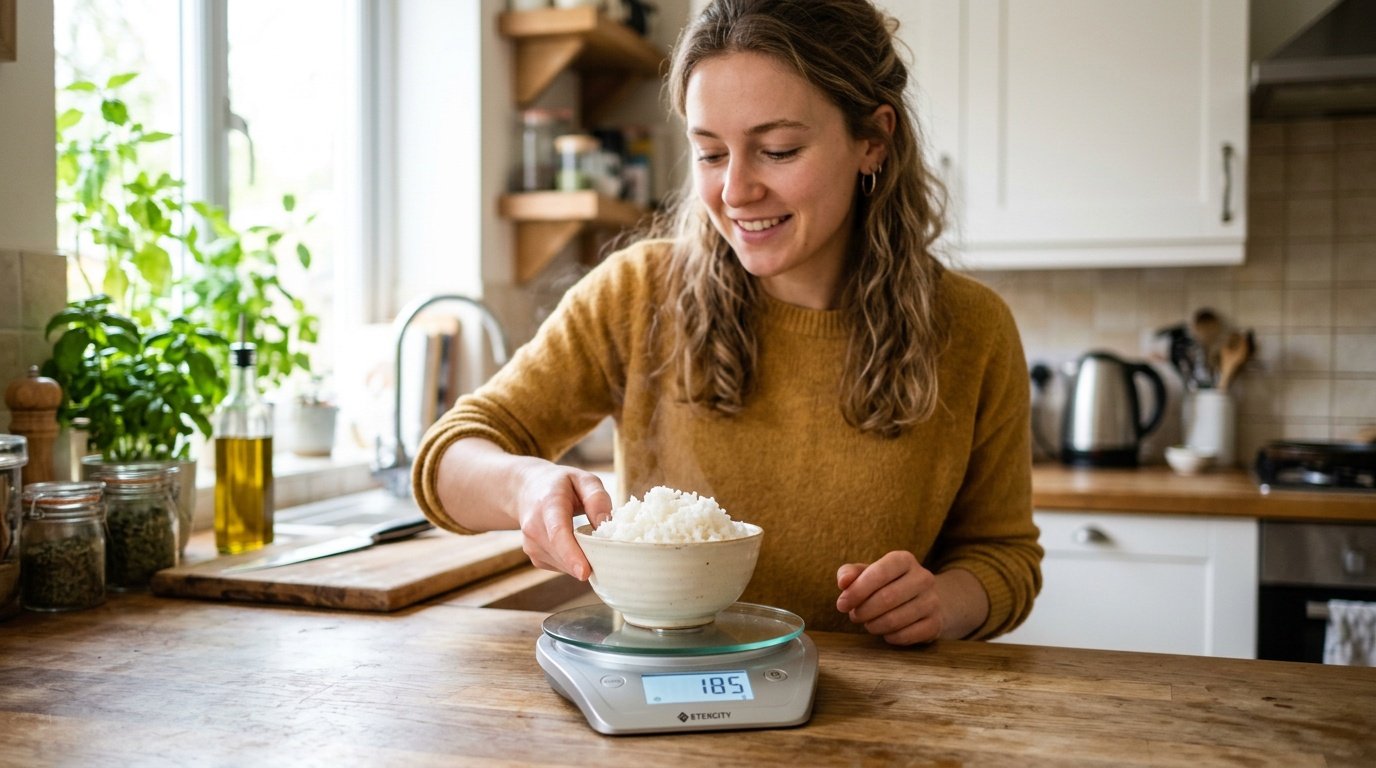
Ask five nutrition professionals whether rice helps or hurts weight loss and you'll likely get five different answers, not because the science is contradictory, but because the question itself is too broad. Rice isn't one food. White rice, brown rice, basmati rice, and cauliflower rice behave differently in your body, and even a single variety changes depending on how much you eat and what you pair it with.
This is why the "experts are divided" framing shows up so often. A dietitian focused on blood sugar management will flag white rice's glycemic index. A dietitian focused on global dietary patterns will point out that some of the longest-lived populations eat rice daily. Both are working from real data, they're just answering slightly different questions.
The more useful question isn't "is rice good or bad for weight loss," it's "which rice, how much, and with what." That reframe is the difference between a sustainable eating pattern and a decade of unnecessarily cutting out a food that never needed to go.
Take someone like a 25-year-old graduate student who cut rice entirely for four months after reading that carbs cause weight gain. She lost some weight initially, mostly from the calorie deficit created by dropping an entire food category, then plateaued and found herself craving rice-heavy meals so intensely that she'd overeat noodles and bread instead, foods with a similar or higher glycemic impact than the rice she'd cut. The problem was never rice specifically, it was an all-or-nothing framing that made one food the scapegoat for a more complicated calorie and satiety picture.
White Rice vs. Brown Rice: The Difference That Actually Moves the Needle
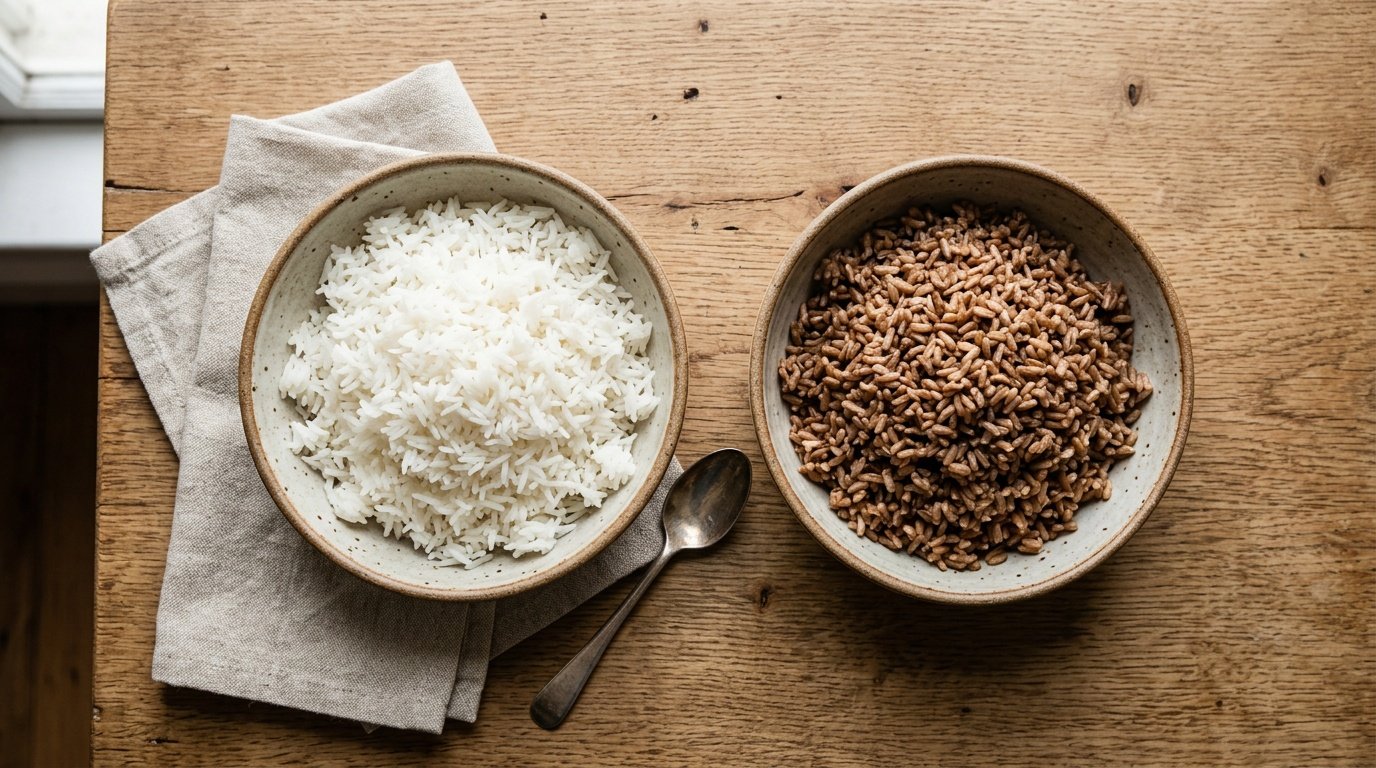
The single biggest lever in white rice weight loss outcomes isn't calories, it's how quickly the grain digests. During milling, white rice loses its bran and germ layers, the parts that carry most of the fiber. What's left is starchier and digests faster, which is exactly why it produces a sharper blood sugar spike than brown rice.
According to a Harvard Health Publishing comparison, white rice sits at a high glycemic index of roughly 73±4, while brown rice lands in the medium range at about 68±4. That's a smaller gap than most people assume, and it matters less than the calorie numbers people expect. A cup of cooked medium-grain brown rice runs about 218 calories, while the same serving of white rice is closer to 242 calories, a modest difference that portion size will always outweigh.
Where brown rice genuinely pulls ahead is fiber and micronutrient density. That extra fiber slows digestion, which means a more gradual blood sugar rise and, practically speaking, feeling full for longer on the same portion. If you're building a plate specifically for satiety, brown rice earns its reputation. If you're managing a digestive flare-up where fiber is temporarily hard to tolerate, white rice isn't the villain it's made out to be, it's simply a different tool for a different situation.
What the Research Actually Shows About Rice Weight Loss and Body Composition

A 2021 NIH-funded inpatient trial, published in Nature Medicine and later summarized in an NIH research summary, put this debate to a controlled test. Researchers compared a low-carbohydrate, animal-based diet against a low-fat, plant-based diet in the same 20 participants under tightly monitored conditions, with meals prepared and tracked precisely. One of the meal photos from the study literally features cauliflower rice standing in for the starchy staple.
The results didn't crown a single winner. People lost weight on both diets, but the mechanisms diverged: the low-fat, higher-carb group ate 550 to 700 fewer calories per day without reporting more hunger, yet ended with higher blood glucose and insulin levels than the low-carb group. The low-carb group kept steadier glucose and insulin throughout, despite eating more calories per gram of food. Neither approach is inherently superior for weight loss, and neither one indicts rice specifically. What the study does confirm is that carbohydrate quantity and quality shift your metabolic response in measurable, predictable ways, which is a more useful takeaway than a blanket "rice is fattening" verdict.
That non-obvious point is worth sitting with: the researchers weren't even testing weight loss as the primary goal, they were testing appetite and metabolic response, and rice-based meals performed reasonably in both directions depending on what surrounded them on the plate. This lines up with what shows up in our deeper breakdown of whether rice is bad for weight loss, where portion and pairing consistently outweigh the grain itself as the deciding factor.
Cauliflower Rice Weight Loss: When the Swap Helps and When It's Overkill
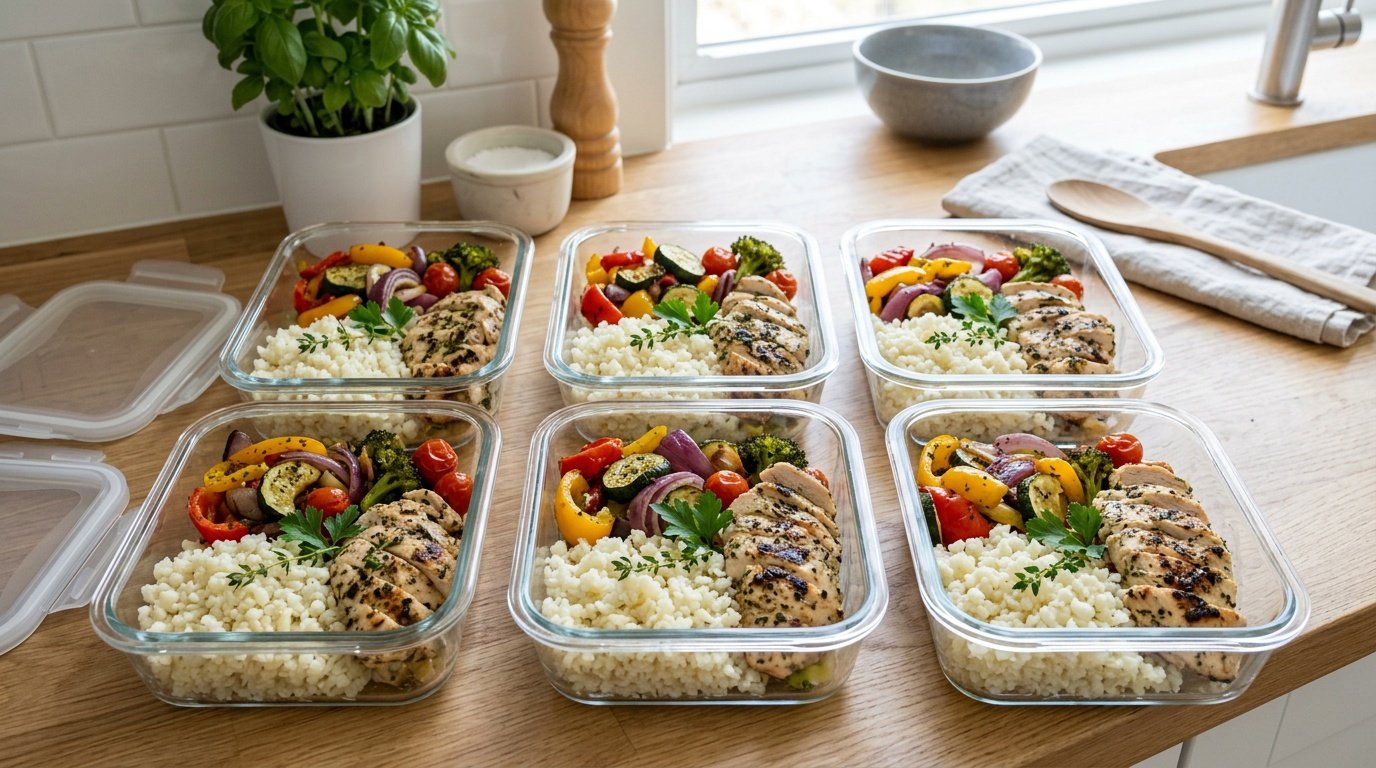
Cauliflower rice has become the go-to swap for anyone chasing a lower-carb plate, and the appeal is real: a cup runs roughly 25 calories compared to over 200 for cooked white or brown rice, with a glycemic impact low enough that it barely registers on a blood sugar test. For someone counting every gram of carbohydrate, or managing insulin resistance closely with a clinician, that's a legitimate and useful substitution.
Where cauliflower rice weight loss advice goes sideways is treating it as mandatory rather than situational. Swapping rice for cauliflower rice removes calories, but it also removes the resistant starch and slower-digesting carbohydrate that helps some people stay full through a workout or a long afternoon. If you're active, training regularly, or simply someone who does better with some starch on the plate, replacing all your rice with cauliflower rice can leave you undereating carbohydrate relative to what your body's actually using, which tends to backfire as increased snacking later.
The honest middle ground: use cauliflower rice on days or meals where you want the volume and the crunch without the carb load, particularly at dinner if you're less active in the evening, and keep real rice in rotation for meals around training or higher activity. Treating it as one tool among several, rather than the automatically "healthier" choice, keeps the swap useful instead of restrictive.
There's also a texture and satisfaction trade-off worth naming honestly. Cauliflower rice releases moisture as it cooks and doesn't hold sauces or seasonings the same way starchy rice does, which means meals built around it often need more active flavor-building, extra spices, a stronger sauce, a squeeze of citrus, to feel as satisfying bite for bite. Skip that step and it's easy to end up eating a smaller, less satisfying meal that leaves you reaching for something else an hour later, which erases whatever calorie advantage the swap was supposed to provide.
Basmati Rice Weight Loss: The Practical Middle Ground
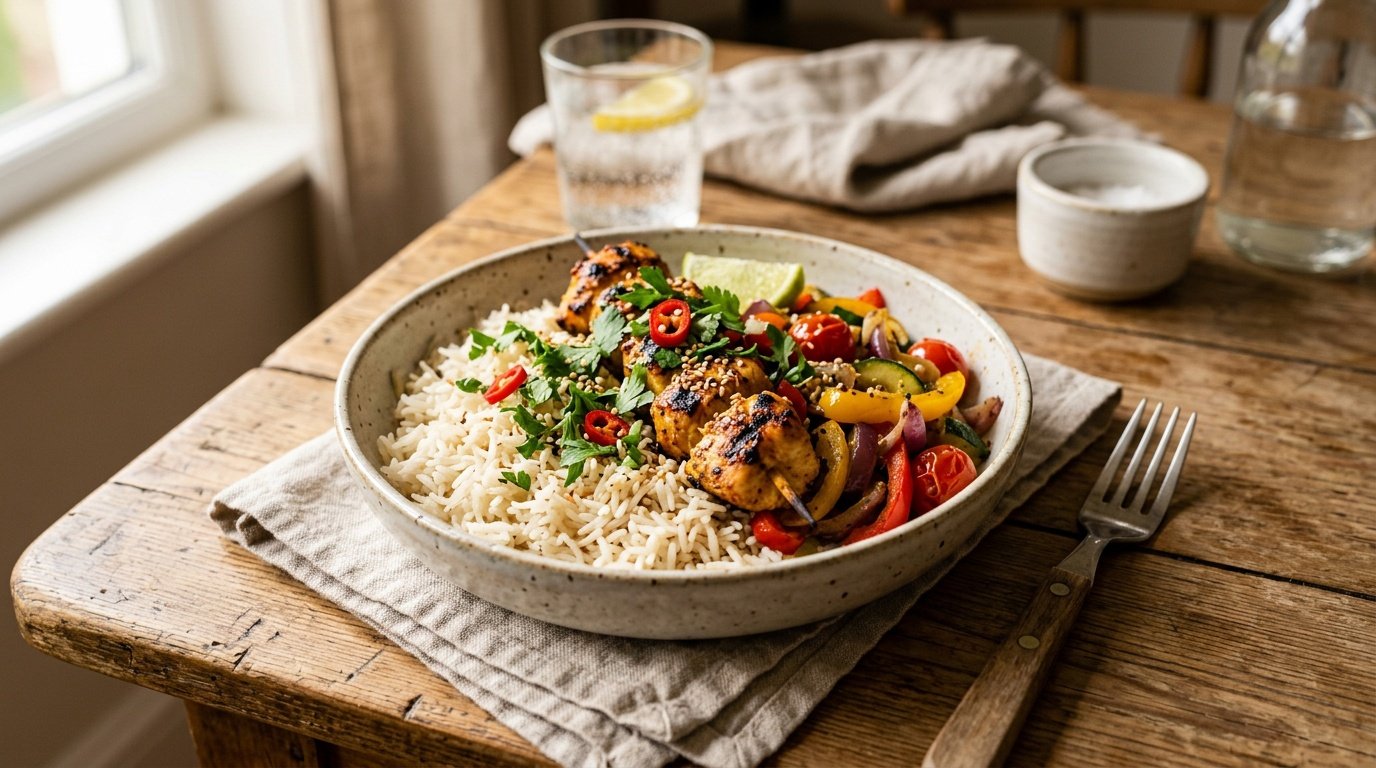
If white rice feels too fast-digesting and brown rice's texture isn't for you, basmati rice sits in a genuinely useful middle spot. Its glycemic index runs lower than regular short or medium-grain white rice, largely because of its higher amylose starch content, which digests more slowly than the starch structure in stickier rice varieties.
For basmati rice weight loss planning, the practical takeaway is that white basmati behaves more like a moderate-GI food than a high-GI one, while brown basmati pushes that advantage further with added fiber. Neither requires elimination, they just call for the same portion discipline any starch needs: roughly half a cup to one cup cooked per meal, built around a plate that also carries lean protein and non-starchy vegetables. We cover this same portioning logic in more depth in our basmati rice technical breakdown, including a full nutritional comparison against regular white and brown rice.
One detail people overlook: aromatic long-grain rices like basmati tend to naturally encourage smaller servings because of how filling and flavorful they are per spoonful. That's not a scientifically validated mechanism so much as a practical observation from anyone who's compared a bowl of basmati to a bowl of short-grain sushi rice, but it's worth factoring into how you build a plate you'll actually stick with.
Preparation changes the picture too, and it's a step most people skip. Rinsing basmati rice before cooking removes surface starch, which produces separate, distinct grains rather than a sticky mass, and that texture difference alone influences how much people naturally serve themselves. A heaping, clumped scoop reads as more food per spoonful than the same weight of fluffy, separated grains, so a rinsed and properly cooked batch of basmati often results in smaller self-selected portions without anyone consciously trying to eat less.
The Portion and Pairing Strategy That Beats Picking the "Right" Rice
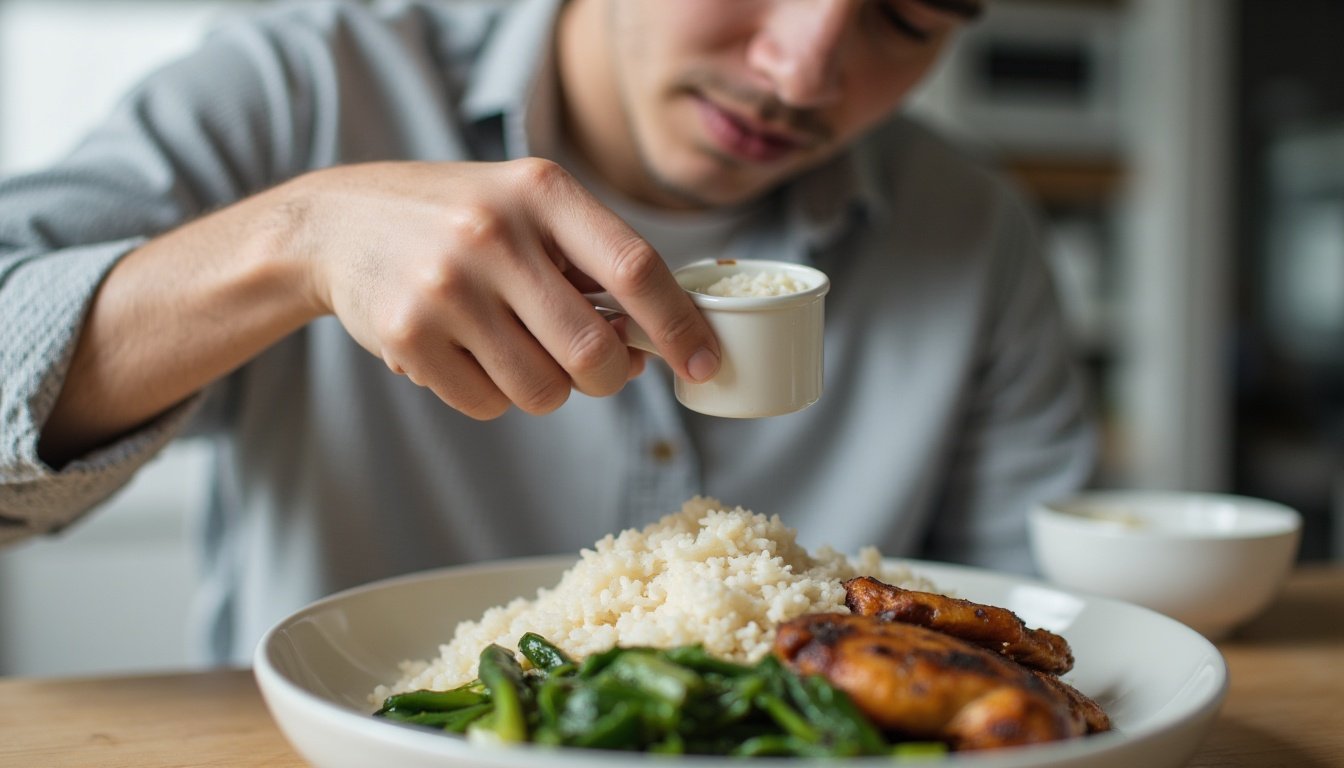
Here's the thing most rice-and-weight-loss content skips entirely: the type of rice you choose matters less than what you build around it. A chicken and rice weight loss combination is one of the most searched pairings for a reason, it works, but not because of some magic macro ratio. It works because lean protein slows gastric emptying, blunts the blood sugar response from the rice, and extends satiety far longer than rice eaten alone.
Three adjustments do more for your results than agonizing over which rice bag to buy:
- Anchor the portion first. Start with ½ to 1 cup of cooked rice, measured rather than eyeballed for the first few weeks until you recalibrate what that actually looks like on your plate.
- Build protein and fiber around it. A palm-sized portion of chicken, fish, tofu, or eggs plus a generous serving of non-starchy vegetables turns rice from the main event into a supporting player, which changes the entire blood sugar and hunger response.
- Cool and reheat when practical. Cooking rice, refrigerating it for a few hours, then reheating increases resistant starch content, which behaves more like fiber in your gut and blunts the glycemic response, a genuinely useful and low-effort trick if you're meal prepping anyway.
Meal timing plays a smaller but real role too. Eating rice earlier in the day, when insulin sensitivity tends to be higher for most people, or immediately after activity when muscles are more receptive to storing glucose as glycogen rather than fat, generally produces a gentler blood sugar response than the same portion eaten late at night after a sedentary day. This isn't a rule to obsess over, but it explains why the exact same bowl of rice can feel different depending on when you eat it.
According to the American Diabetes Association's guidance on carbohydrates, whole intact grains including brown rice fall into the "eat some of these" category alongside whole grain bread and starchy vegetables, meant to make up roughly a quarter of a balanced plate rather than being avoided outright. That's a materially different message than "cut rice to lose weight," and it's the one backed by the organizations actually tasked with managing blood sugar and weight outcomes at a population level.
For anyone tracking carbohydrate intake more precisely, whether for weight loss or blood sugar reasons, the CDC's carb counting guidance is worth bookmarking. It breaks carb servings into 15-gram units, which makes eyeballing a rice portion considerably less guesswork-heavy once you've used it a few times.
| Rice Type | Calories (per 1 cup cooked) | Approx. Glycemic Index | Best Suited For |
|---|---|---|---|
| White Rice | ~242 | 73 ± 4 | Digestive sensitivity, faster-digesting energy |
| Brown Rice | ~218 | 68 ± 4 | Satiety, fiber, general weight management |
| Basmati Rice | ~190-210 | 50-58 (white), 45-52 (brown) | Steadier blood sugar without giving up rice texture |
| Cauliflower Rice | ~25 | Very low | Strict carb limits, volume eating |
Source: Harvard Health Publishing, 2024
Health disclaimer: This article is for general education and isn't a substitute for personalized medical advice. If you have diabetes, prediabetes, kidney disease, are pregnant, or take medication that affects blood sugar, talk with a doctor or registered dietitian before changing your carbohydrate intake or portion sizes. This is especially important if you use insulin or other glucose-lowering medication, since shifting your rice or overall carb intake can change your dosing needs.
None of this requires perfection. A single high-carb meal, a heaping plate of white rice at a family dinner, doesn't undo weeks of otherwise balanced eating any more than one salad creates lasting weight loss on its own. Sustainable rice weight loss progress comes from a default pattern you can repeat most days, not a rulebook you white-knuckle through.
If you're also working on the broader eating pattern around rice, our guide to building a working low carb diet sheet walks through exact gram targets and a two-week starting framework that pairs well with the portion strategy above, particularly if rice has felt like the one food you couldn't figure out how to fit in.
The 2025-2030 Dietary Guidelines for Americans reinforce this same whole-pattern framing: the emphasis is on real, minimally processed food and overall dietary pattern, not eliminating individual carbohydrate sources like rice in isolation.
Frequently Asked Questions
Is rice actually bad for weight loss?
No single food determines weight loss outcomes on its own. Rice can fit a weight loss plan when portioned around ½ to 1 cup cooked per meal and paired with protein and vegetables. The type of rice and the overall calorie balance of your day matter more than rice's mere presence on the plate.
Which rice is best for weight loss, white or brown?
Brown rice offers more fiber and a somewhat lower glycemic index, which supports satiety and steadier blood sugar. White rice isn't inherently fattening, though, and can still fit a weight loss plan with attention to portion size and what it's paired with.
Can I eat chicken and rice every day and still lose weight?
Yes, provided the total calories and portions fit your daily needs. Chicken and rice weight loss combinations work well because the protein slows digestion of the rice's carbohydrates, extending fullness and helping moderate the blood sugar response.
Does cauliflower rice actually help you lose more weight than regular rice?
Cauliflower rice cuts calories and carbohydrates significantly, which can support a calorie deficit if that's your goal. It isn't automatically superior for everyone, though, particularly for people who are highly active and benefit from the carbohydrate and resistant starch regular rice provides.
How much rice should I eat per meal to lose weight?
Most guidance points to roughly ½ to 1 cup of cooked rice per meal as a sustainable starting portion, adjusted for your activity level and overall calorie needs. Measuring for the first few weeks helps recalibrate what an appropriate serving actually looks like.
References
- Harvard Health Publishing — Brown rice versus white rice: A head-to-head comparison, 2024
- National Institutes of Health (NIH Research Matters) — Low-fat diet compared to low-carb diet, 2021
- American Diabetes Association — Carbs and Diabetes
- CDC — Carb Counting, 2024
- Office of Disease Prevention and Health Promotion (ODPHP) — Current Dietary Guidelines, 2025-2030, 2026