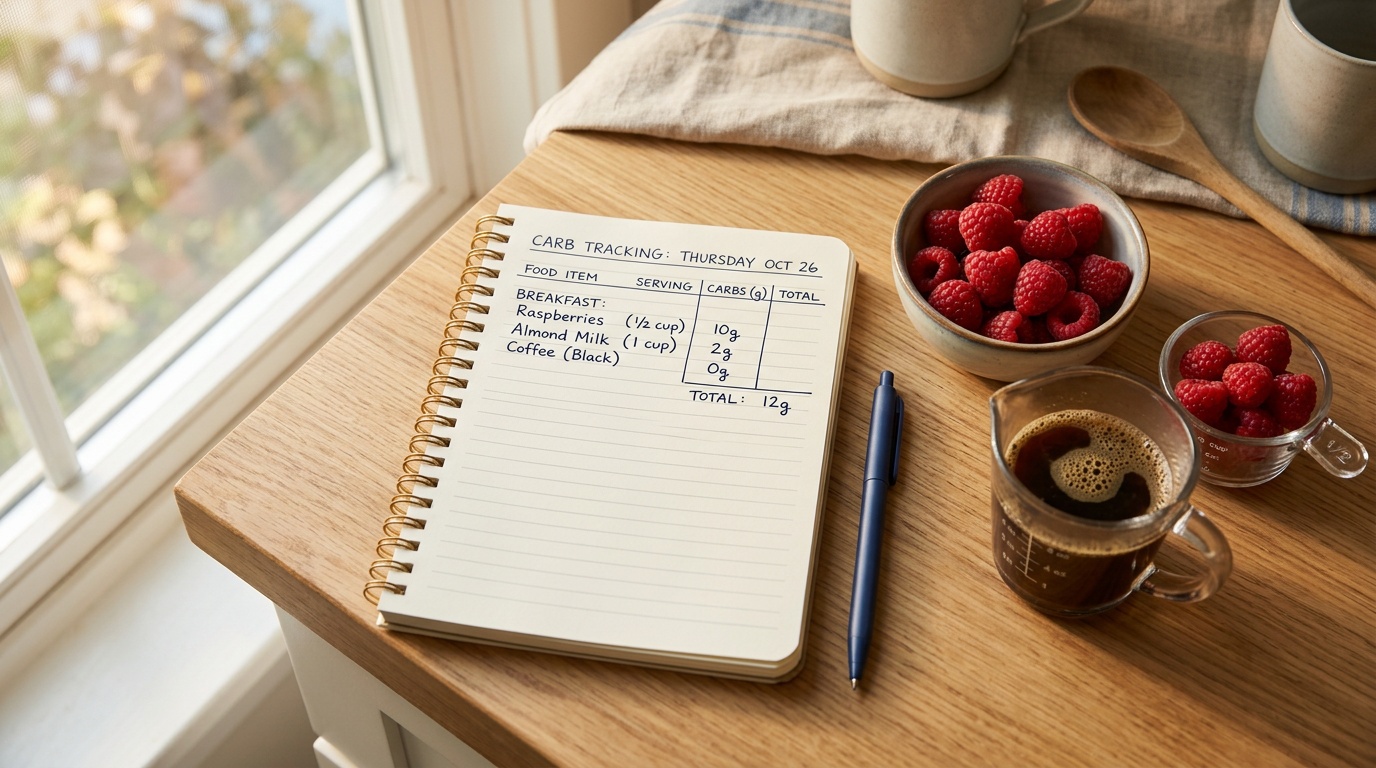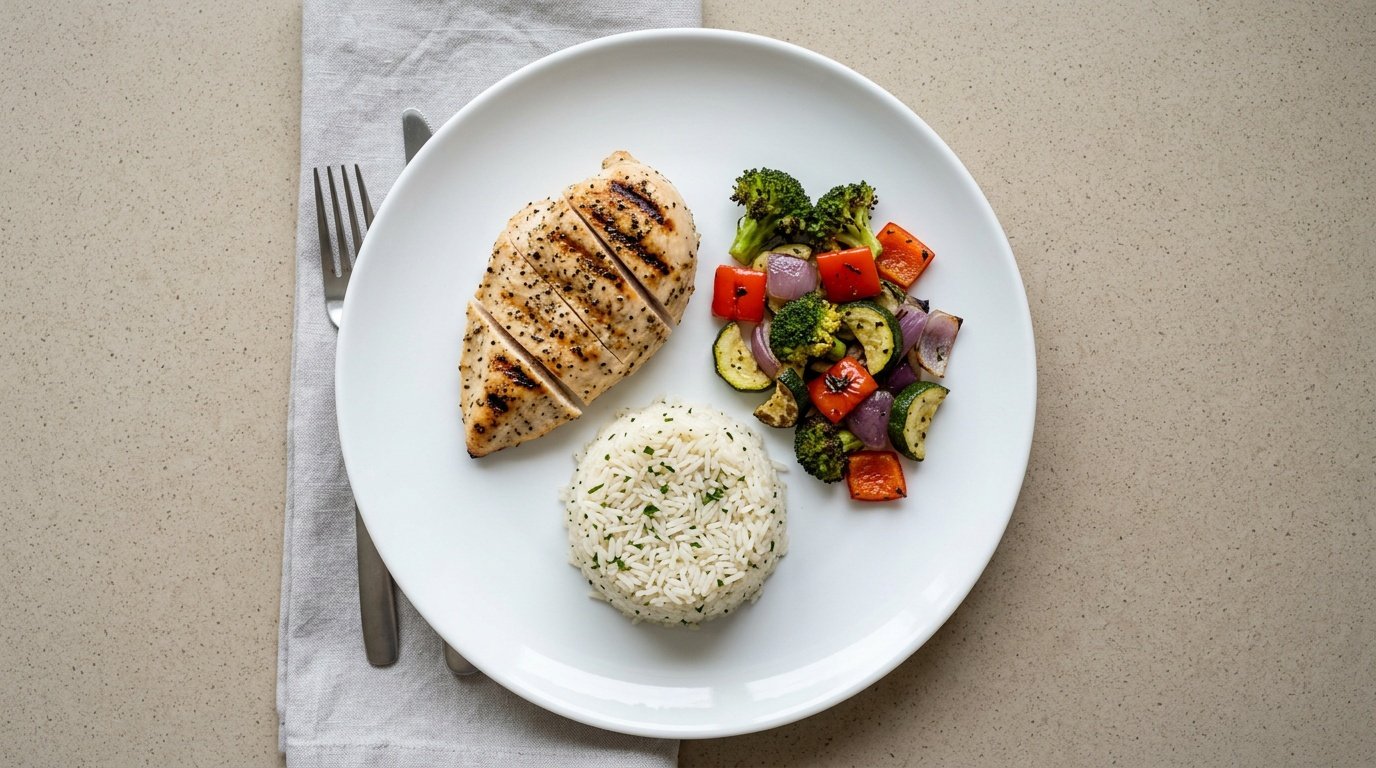


You just had bariatric surgery, and the first real question nobody explained clearly is how much to eat after bariatric surgery without landing back in the ER for nausea or, on the other end, stalling your weight loss before it even starts. Your surgical team handed you a discharge folder with a diet progression chart, but the folder doesn't tell you what a 2-ounce portion actually looks like on a plate, or why your stomach pouch can hold a golf ball's worth of food on day three and still feel "full." If you're still working out your low carb diet sheet for the pre-op phase, this picks up right where that leaves off. This guide walks through the real numbers, stage by stage, backed by the same sources your dietitian is trained on, so you're not guessing your way through the most physically unfamiliar year of your weight loss journey.
How much should you eat after bariatric surgery changes by recovery stage, not by rule of thumb
There's no single portion number that applies from week one through month six. Your surgical team, likely following guidance similar to what the National Institute of Diabetes and Digestive and Kidney Diseases (NIDDK) outlines, will move you through four distinct diet phases. Each phase has its own volume ceiling, and jumping ahead of schedule is the single most common reason people end up back in urgent care in month one.
Week 1 to 2 — liquids only, in teaspoon-sized portions
Right after surgery, you're on clear and full liquids, sipped in 1 to 2 tablespoons at a time, every 15 to 20 minutes while awake. That's not a typo. Your new stomach pouch is swollen from surgery, and anything more than a few sips at once causes sharp pressure pain, not hunger relief. Total daily fluid target sits around 48 to 64 ounces, but it arrives in dozens of tiny sips, never a full glass in one go. A small measuring cup at your bedside does more for your recovery than any app or tracker in this phase, since counting sips is genuinely how most people get through week one without setbacks.
Broth, sugar-free gelatin, diluted juice, and unsweetened protein shakes make up most of this stage. Skip carbonated drinks entirely for at least a month, since trapped gas in a freshly stapled or stitched stomach is one of the most common reasons people call their surgeon in the first ten days.
Week 3 to 4 — pureed foods and the shift toward measured ounces
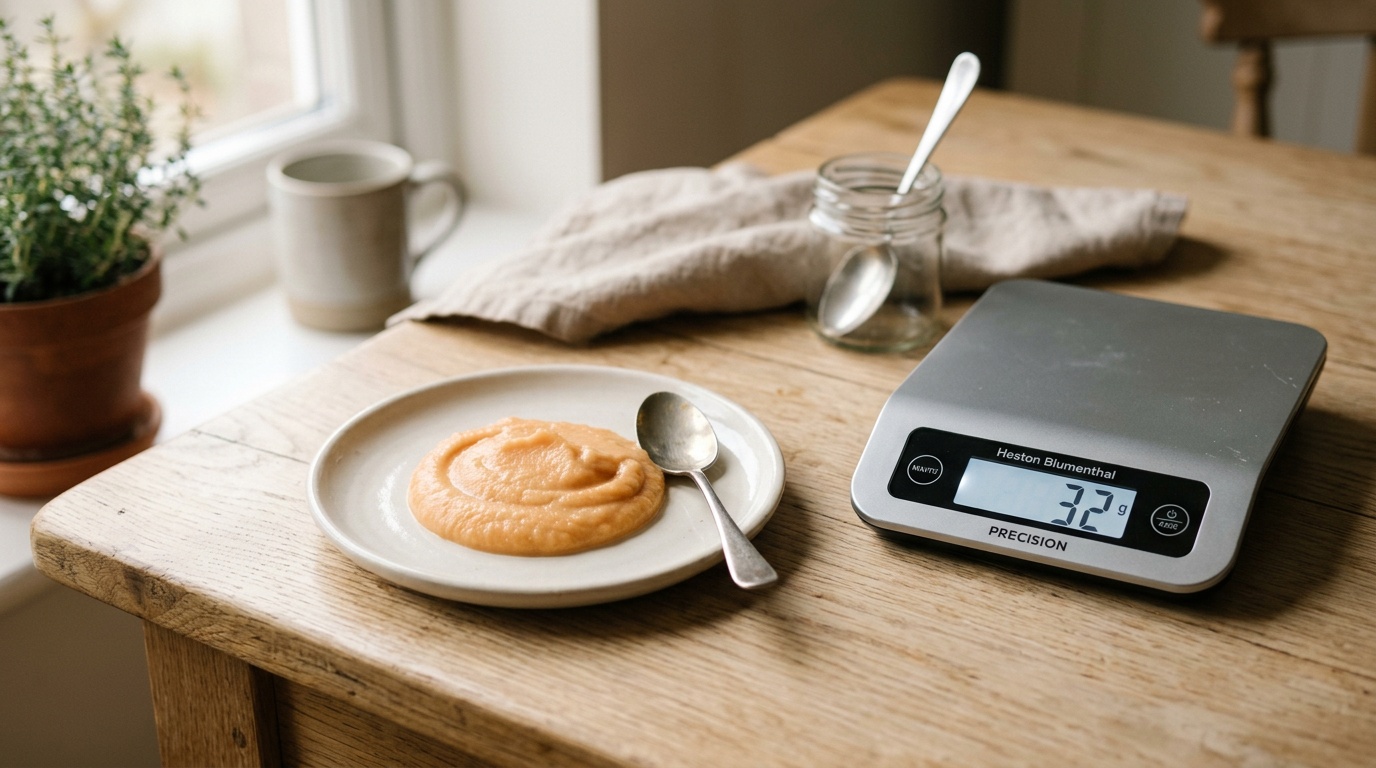
Once your surgeon clears you for pureed food, meals move to roughly 2 to 4 tablespoons, three to six times a day. Think baby-food consistency: pureed chicken, blended cottage cheese, mashed egg. You're still eating by the tablespoon, not the cup, and every meal should take 20 to 30 minutes minimum. Eating faster than that is the number one trigger for the nausea and regurgitation people describe in the first month.
A kitchen scale or measuring spoons matter more here than they will later. Eyeballing "a little bit of pureed chicken" tends to run 50 percent over what your pouch can actually hold at this stage, and that overshoot is exactly what triggers the sharp under-rib pain patients describe as their worst symptom of week three.
Why a 2 to 4 ounce meal can feel like a full Thanksgiving plate
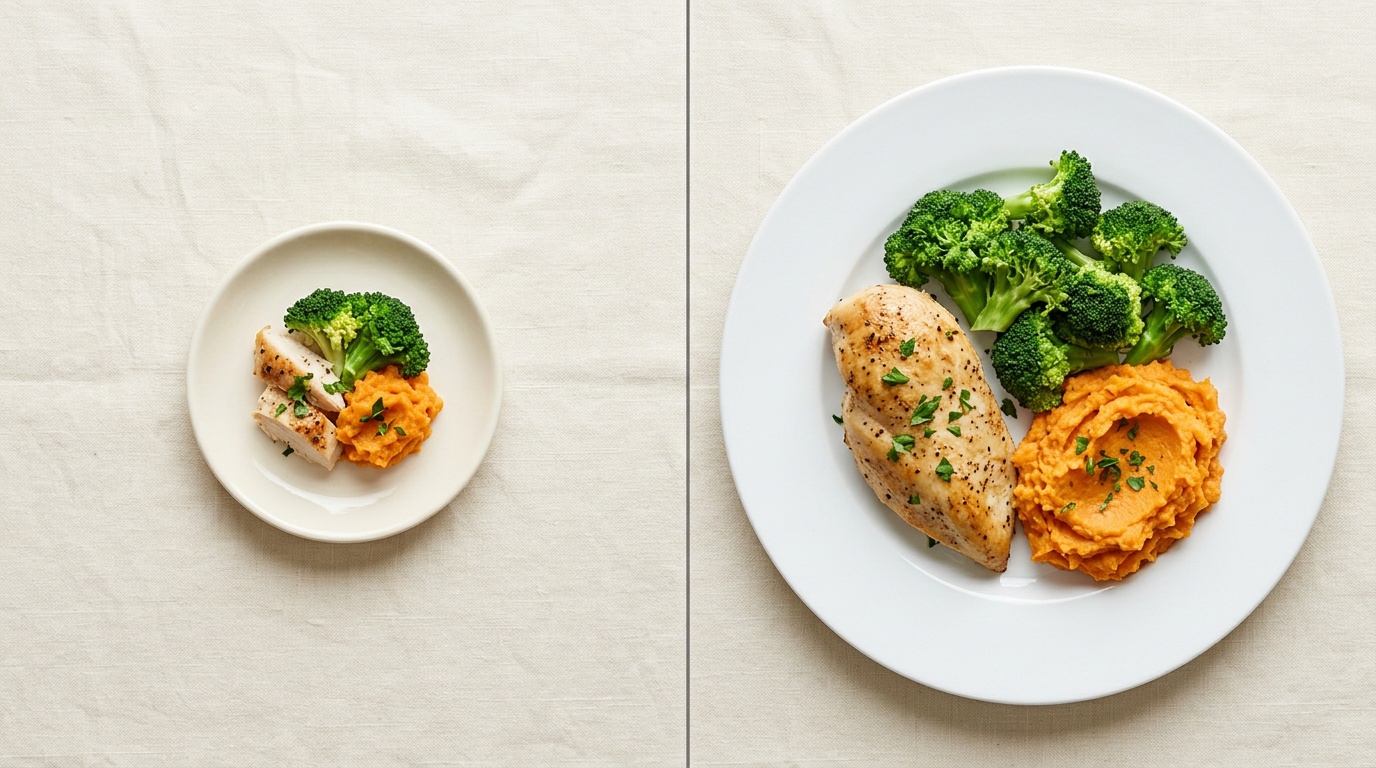
A gastric sleeve reduces stomach capacity from roughly 1,500 milliliters to around 60 to 150 milliliters immediately post-op. A gastric bypass pouch is even smaller, often 15 to 30 milliliters at first. That's the size of a shot glass, not a bowl. This is why 2 ounces of soft scrambled egg can trigger the same fullness signal that used to require an entire breakfast plate.
What your new stomach pouch actually holds
By month three, most patients can comfortably manage 4 to 6 ounces per meal, roughly the size of a small fist. By six months to a year, that stabilizes around 6 to 8 ounces for most people, close to a standard measuring cup. According to Mayo Clinic's gastric bypass diet guidance, that final capacity is roughly 20 to 25 percent of your original stomach volume, and it's meant to stay that way permanently, which is the entire mechanism behind the surgery's long-term success.
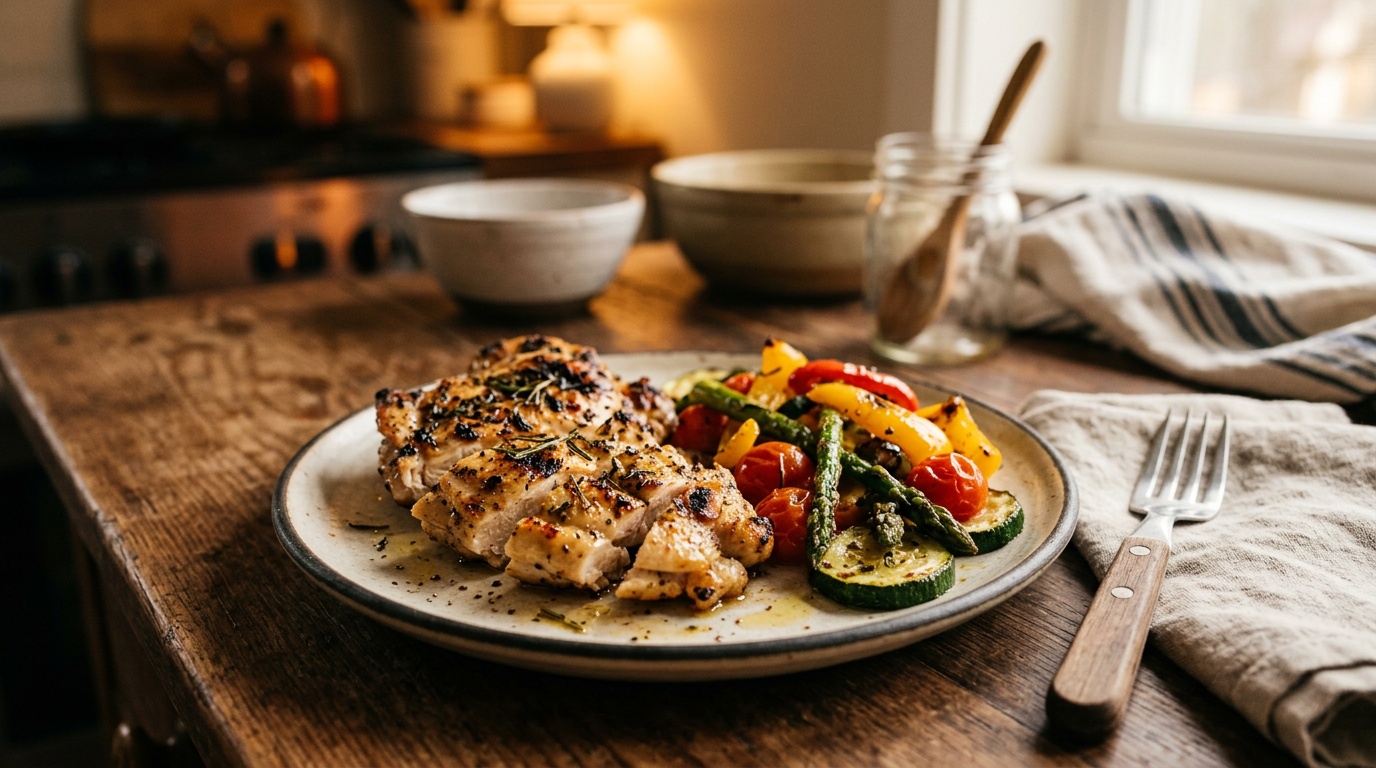
Picture it this way: a deck of playing cards is roughly 3 ounces. At three months, one meal is a deck and a half. At a year, it's two decks. That comparison tends to stick with people far better than "ounces," because it's something you can hold in your hand and picture on an actual plate rather than trying to estimate volume in your head at the dinner table.
The protein-first rule most bariatric teams don't explain well
Here's the part that surprises almost everyone: with a stomach this small, the order you eat food in matters as much as the amount. Protein goes first on the plate, every single meal, before any starch or vegetable touches your fork. If you fill that limited space with rice or bread first, you'll hit fullness before you've gotten enough protein in, and chronic protein shortfall is directly linked to muscle loss and slower healing after bariatric procedures.
Hitting 60 to 80 grams a day without overeating
The Academy of Nutrition and Dietetics recommends most post-bariatric patients target 60 to 80 grams of protein daily, split across 3 small meals plus 2 protein-forward snacks, since no single 2 to 4 ounce meal can hold that much on its own. A typical day might look like a protein shake at breakfast (20 to 25 grams), 2 ounces of grilled chicken at lunch (14 grams), a protein bar snack (15 grams), and 2 ounces of baked fish at dinner (14 grams). That's roughly 65 grams without a single meal exceeding pouch capacity.
Because your total food volume is so limited, getting enough vitamins and minerals from food alone usually isn't realistic in the first year, which is why most surgical teams prescribe a daily bariatric-specific multivitamin along with calcium citrate, vitamin D, and vitamin B12. Skipping these isn't a small oversight, deficiencies from inadequate post-surgery supplementation are one of the more common longer-term complications tracked in bariatric follow-up care, so treat the supplement schedule with the same seriousness as the meal portions themselves.
Common mistakes that stretch your pouch back out early
Portion size is only half the equation. How you eat matters as much as how much, and a handful of habits quietly undo months of careful portioning.
Grazing all day instead of eating structured meals
Constant small nibbling, a few crackers here, a handful of nuts there, adds up to more total volume than three or four planned meals, and it trains your pouch to expect food continuously rather than stretching and resetting between meals the way it's designed to. Structured meal timing, ideally three meals and two snacks on a set schedule, keeps your hunger and fullness signals working the way your surgical team intended. It also makes it far easier to track your daily protein and calorie totals, since five scattered mini-meals a day are harder to log accurately than five planned ones.
Drinking with meals instead of 30 minutes before or after
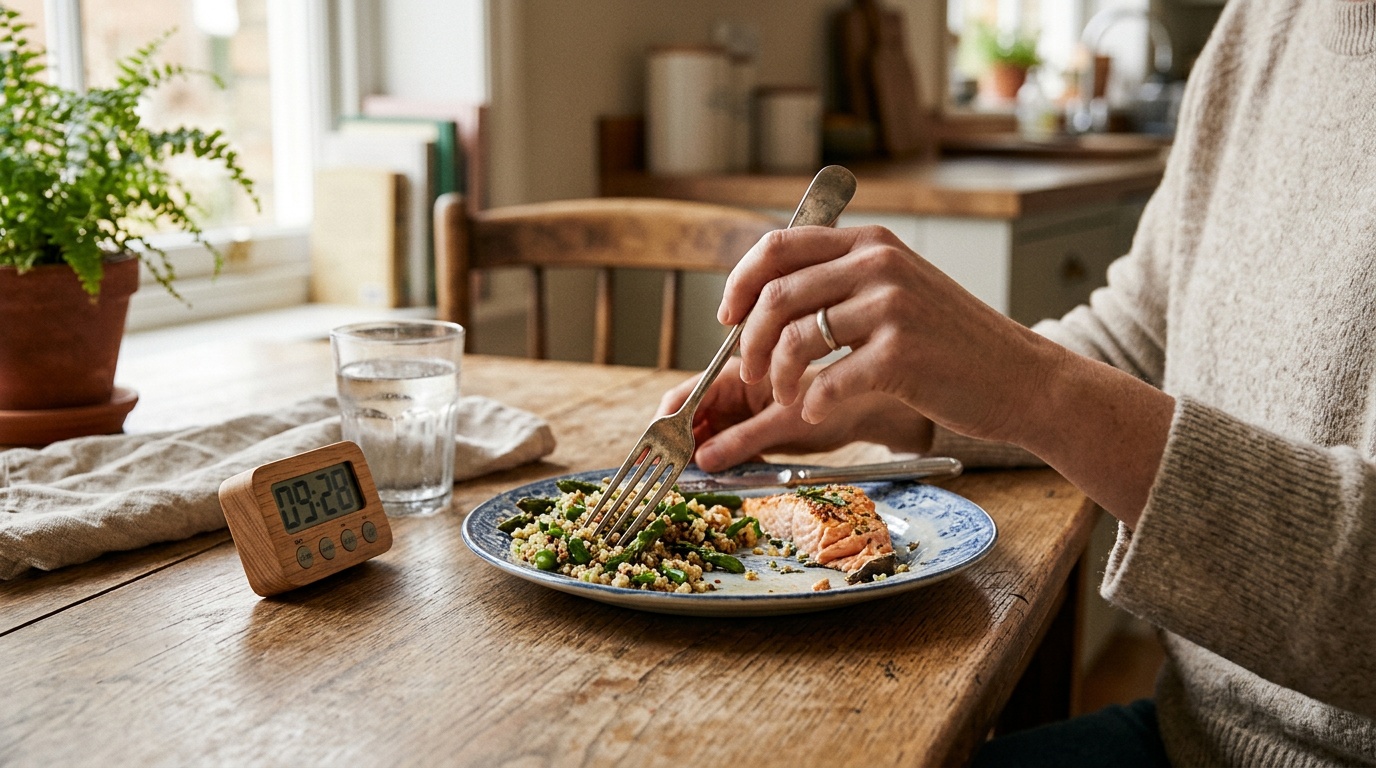
Liquids take up pouch space that solid, protein-dense food should occupy, and they also wash food through the pouch faster, which shortens how long you feel satisfied. Most bariatric programs ask patients to stop fluids 30 minutes before eating and wait another 30 minutes afterward. Skipping this rule is one of the most common reasons people report feeling hungry again within an hour of a meal that should have held them for three or four. Setting a timer for that 30-minute window, rather than trusting yourself to remember, is a small habit that makes a measurable difference in how consistently people stick with it past the first month.

Signs you're eating too much, too fast, or too soon
Your body gives clear warning signs when portions or pacing are off, and learning to read them early prevents a trip to the ER. Nausea within minutes of eating, a tight pressure or pain under your ribs, and reflux that pushes food back up are the three most common signals that a meal was too large or too fast for your current stage.
A useful habit in the first few months: put your fork or spoon down between every bite. It sounds small, but pacing yourself this way adds up to real time, and time is exactly what your pouch needs to send the "I'm full" signal to your brain before you've already overshot it. Most people who report post-meal pain admit, after the fact, that they finished eating in under ten minutes.
Dumping syndrome and what it actually feels like
Gastric bypass patients in particular can experience dumping syndrome when food, especially sugar or refined carbs, moves too quickly into the small intestine. Per Cleveland Clinic's overview of dumping syndrome, symptoms include cramping, rapid heartbeat, sweating, and diarrhea, usually starting 10 to 30 minutes after eating. It's uncomfortable rather than dangerous in most cases, but it's your body's clearest signal that a meal broke the portion or pacing rules, and it's a strong reason bariatric teams push patients away from sugary drinks and refined carbohydrates for good, not just during recovery.
A sample day of eating at 3 months post-surgery
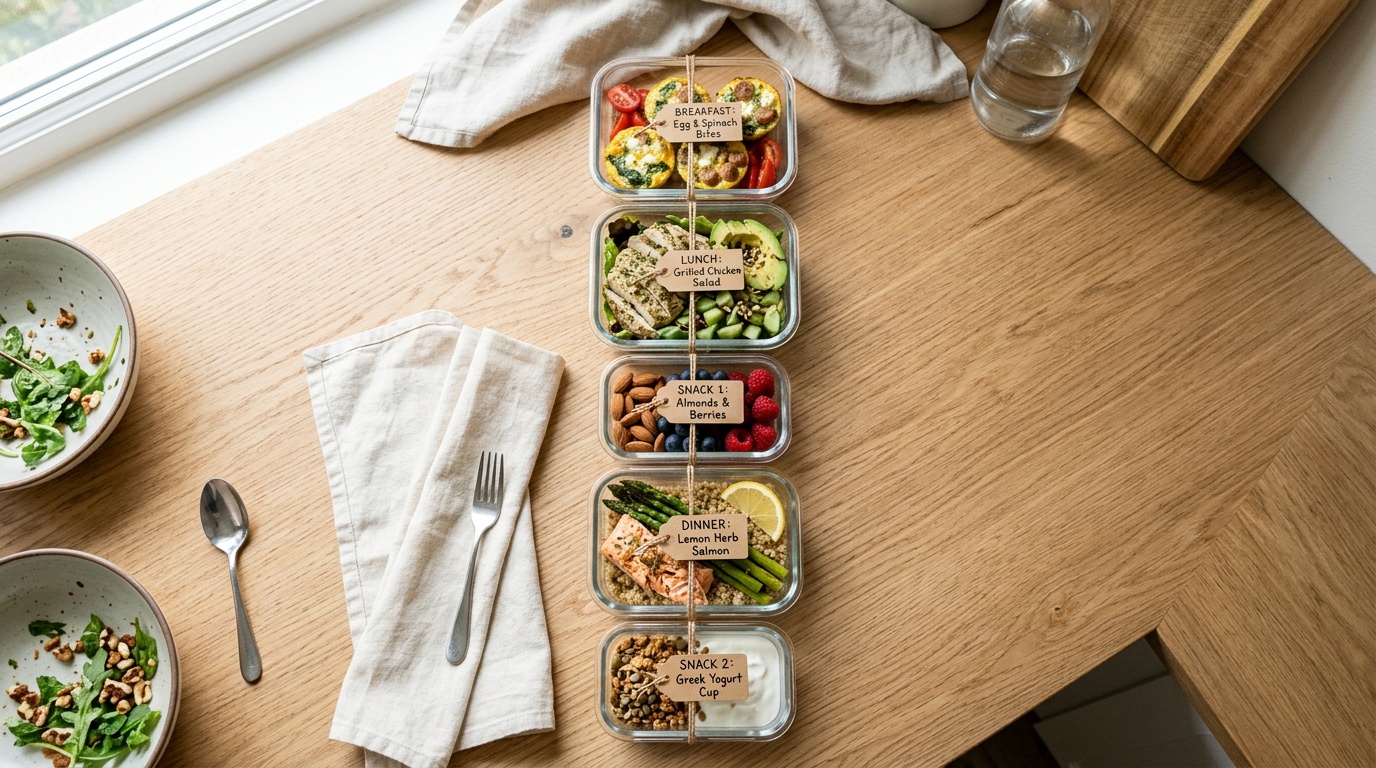
By the three-month mark, most patients have moved onto regular textured food in the portions below. This is a general reference built from common post-bariatric nutrition plans, not a personalized meal plan, always confirm exact targets with your own registered dietitian.
| Meal | Typical Portion | Protein Focus |
|---|---|---|
| Breakfast | 2 to 4 oz scrambled egg or Greek yogurt | 15 to 20g |
| Mid-morning snack | 1 to 2 oz string cheese or protein shake | 10 to 15g |
| Lunch | 3 to 4 oz grilled chicken or fish with soft vegetables | 20 to 25g |
| Afternoon snack | 1 to 2 oz cottage cheese or protein bar | 10 to 15g |
| Dinner | 3 to 4 oz lean protein with small portion soft vegetables | 20 to 25g |
Source: National Institute of Diabetes and Digestive and Kidney Diseases (NIDDK)

Why "eating for one" mentality sabotages long-term weight loss success
The most non-obvious part of this whole process: the number of ounces matters less over time than the mindset shift behind it. Patients who treat portion limits as a temporary punishment tend to slide back toward pre-surgery habits once the pouch stretches slightly with normal use, which happens naturally by year two. Patients who treat the small-plate approach as their new permanent baseline, protein first, slow eating, no drinking with meals, are the ones the NIH's long-term weight management research associates with the strongest maintained weight loss five and ten years out. The surgery resizes your stomach. It doesn't resize your habits for you. If eating for one still feels foreign, our guide to weight loss tips for beginners covers the mindset side of this shift in more depth.
I know what you're thinking if you're three weeks post-op right now: "This feels impossibly small, forever." It won't stay this restrictive. The teaspoon-to-tablespoon phase is genuinely the hardest few weeks, and almost everyone describes it as the part they underestimated going in. But the jump from pureed food to soft regular food, then to your stabilized long-term portion, happens faster than people expect, usually inside three to six months. Knowing how much to eat after bariatric surgery at each stage, rather than guessing from a general chart, is what keeps that transition safe instead of scary.
Health disclaimer: This article is general information, not a substitute for the specific post-surgical diet plan your bariatric surgeon and registered dietitian gave you. Portion sizes, timelines, and protein targets vary by procedure type (gastric sleeve, gastric bypass, gastric band) and by your individual healing progress. Always follow your own care team's instructions over any general guide, and contact them directly if you experience persistent vomiting, inability to keep liquids down, or severe abdominal pain.
Cleveland Clinic's registered dietitians walk through exactly what a post-bariatric plate looks like in practice in this video.
How much to eat after bariatric surgery, stage by stage: the quick recap
If you only remember one thing from this guide, remember the progression: tablespoons of liquid in week one, tablespoons of puree in week three, ounces of soft food by month two, and a stable fist-sized portion by month six to a year, protein first every single time. That's how much to eat after bariatric surgery in a single sentence, and every number above builds toward that same endpoint.
Frequently Asked Questions
How much should I eat right after bariatric surgery?
In the first one to two weeks, you'll take in only clear and full liquids, sipped 1 to 2 tablespoons at a time every 15 to 20 minutes, working toward roughly 48 to 64 ounces of total fluid across the day. Solid food isn't introduced until your surgeon clears the pureed phase, usually around week two to three.
How many ounces should a meal be after gastric sleeve or bypass surgery?
It scales up gradually: 1 to 2 tablespoons during the liquid phase, 2 to 4 tablespoons during the pureed phase, 3 to 4 ounces once soft regular food starts around month two to three, stabilizing at 6 to 8 ounces per meal by six months to a year, depending on procedure type and individual healing.
What happens if I eat too much too soon after bariatric surgery?
Overfilling a still-swollen or newly resized stomach causes sharp upper-abdominal pain, nausea, and often vomiting or regurgitation of undigested food. In gastric bypass patients, eating too much sugar or refined carbohydrate too quickly can also trigger dumping syndrome, with cramping, rapid heartbeat, and diarrhea starting within 30 minutes.
How much protein should I eat daily after bariatric surgery?
Most post-bariatric nutrition plans target 60 to 80 grams of protein a day, spread across three small meals and two protein-focused snacks, since a single 2 to 4 ounce meal can't hold that much protein on its own. Protein goes first on the plate at every meal, before starches or vegetables.
When can I go back to eating regular-sized meals after bariatric surgery?
"Regular-sized" is relative here. Most patients move to soft regular food by month two to three and reach a stable long-term portion, typically 6 to 8 ounces per meal, by six months to a year. That stabilized portion is meant to remain your permanent baseline, not a temporary recovery phase.
References
- National Institute of Diabetes and Digestive and Kidney Diseases (NIDDK) — Eating, Diet, & Nutrition After Bariatric Surgery
- Mayo Clinic — Gastric Bypass Diet: What to Eat After the Surgery
- Cleveland Clinic — Dumping Syndrome
- Academy of Nutrition and Dietetics (eatright.org) — Bariatric Surgery and Nutrition
- National Institutes of Health (NIH), National Heart, Lung, and Blood Institute — Protein and Weight Management