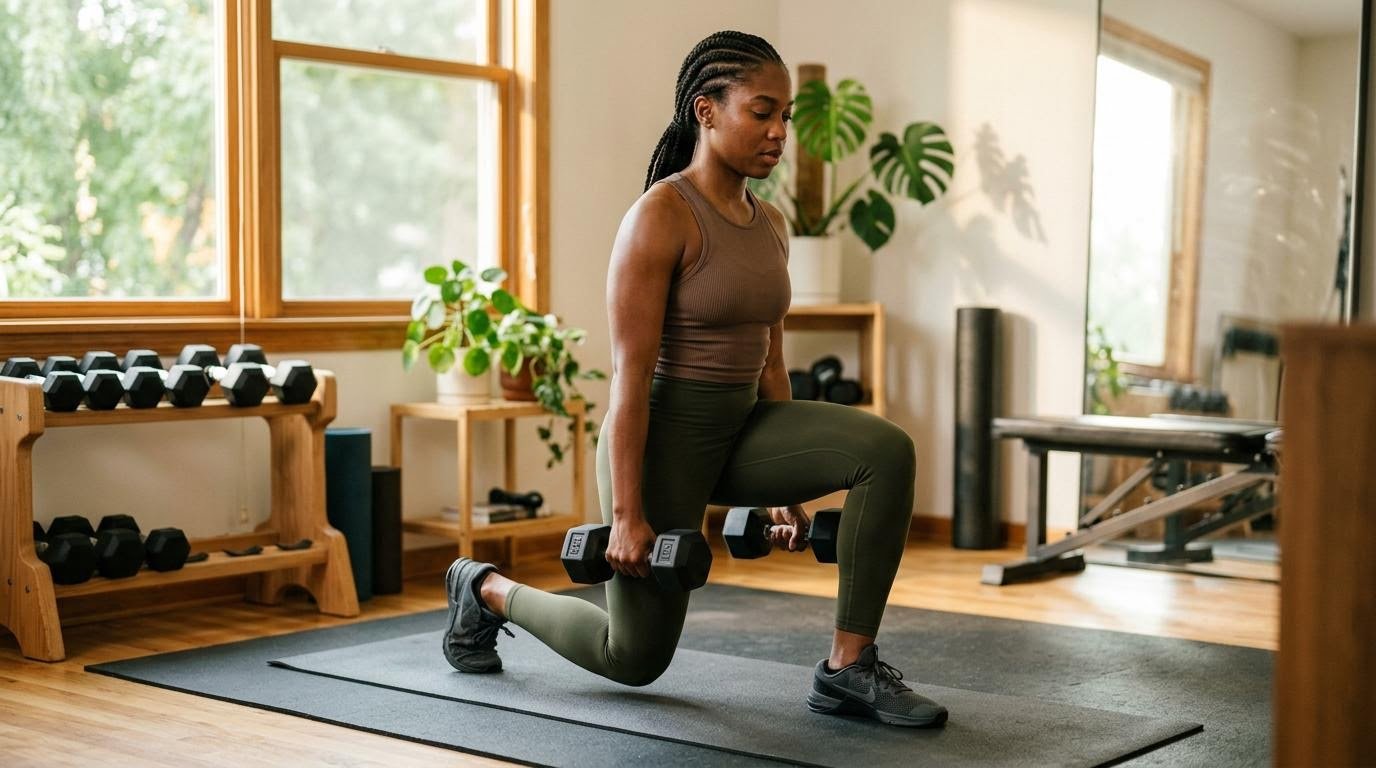


Grab a granola bar twenty minutes before leg day, or skip food entirely and hope for the best? The gap between what you eat and when you eat it changes your workout more than most people realize. If you've searched how long before a workout should I eat carbs, you've probably found a dozen different answers ranging from thirty minutes to four hours. The truth sits somewhere in between, and it depends on what you're about to do with your body. This guide breaks down the actual research behind carb timing, not gym-bro guesswork, so you can stop guessing and start fueling with intention.

How Long Before a Workout Should You Eat Carbs ? The Short Answer
If you're eating a full meal, aim for two to four hours before you train. That gives your stomach enough time to digest without leaving you sluggish or bloated mid-set. If you're closer to your workout, thirty to sixty minutes out, a smaller, easily digested carb source works better than a heavy plate. Mayo Clinic notes that carbohydrates eaten or sipped before exercise can help you work out longer and at a higher intensity, and that skipping food entirely before a session can leave you feeling lightheaded or slow.
The window shrinks as the food gets simpler. A banana or a slice of toast with honey digests fast enough to eat fifteen to thirty minutes out. A bowl of oatmeal with fruit needs closer to an hour. A full plate of chicken, rice, and vegetables wants two to three hours minimum. Get the window wrong in either direction and you'll feel it, either as a flat, low-energy set or as a stomach that's still working on breakfast while you're trying to squat.
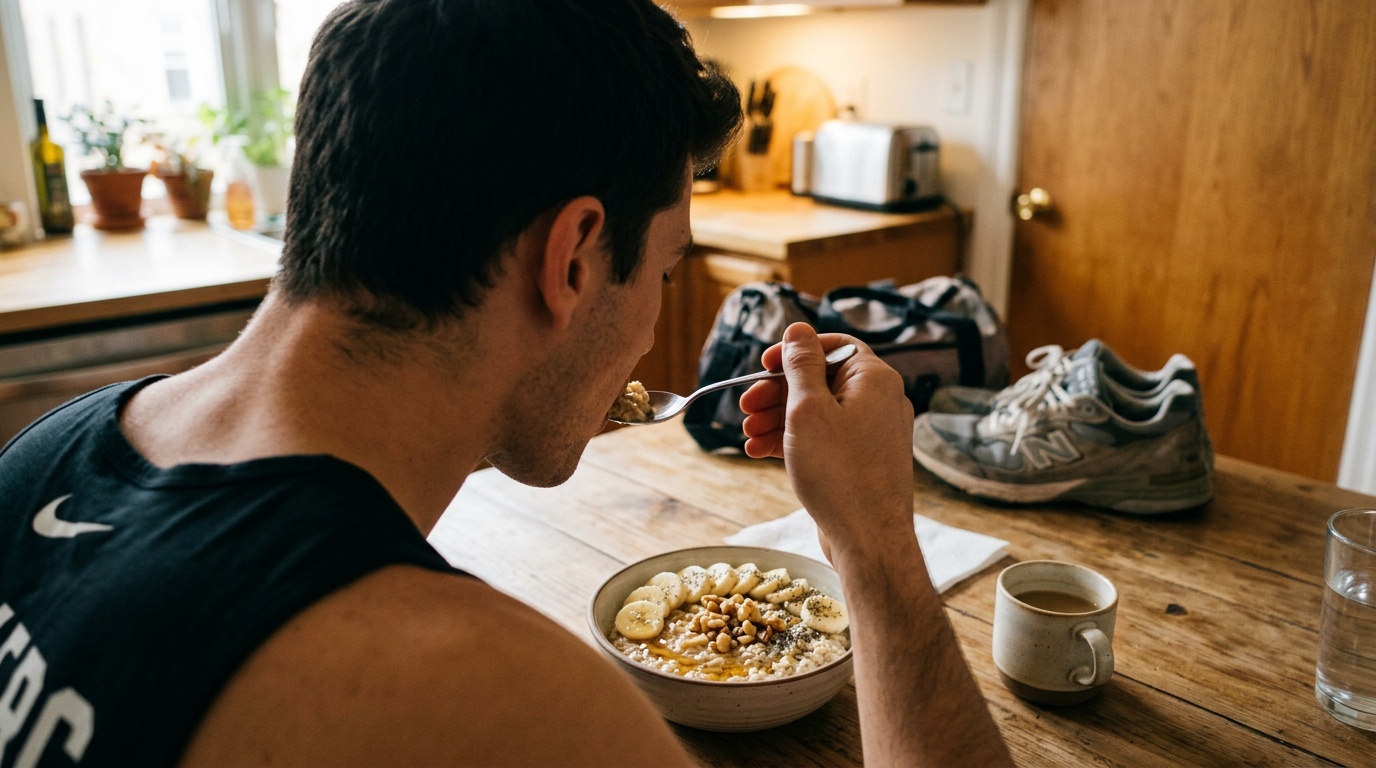
Why Carb Timing Affects Your Workout More Than You'd Guess
Your muscles run on glucose, and they store a reserve of it as glycogen. During anything above light-intensity movement, your body pulls from that glycogen reserve first, before it switches over to burning fat for fuel. A National Institutes of Health review on glycogen metabolism explains that once exercise intensity climbs past roughly 60% of your maximum oxygen consumption, blood glucose and stored muscle glycogen become the primary fuels your body burns, largely because your muscles recruit more fast-twitch fibers as effort increases, and those fibers lean hard on carbohydrate for energy.
Here's the part most people miss: your glycogen stores aren't unlimited, and they're not instantly refillable mid-workout. Depending on how depleted you are going in, you might have somewhere close to a day's worth of stored energy available across your liver and muscles combined, but only a fraction of that is accessible fast enough to matter during a single training session. If you walk into the gym already running low, no amount of willpower fixes that gap once you're thirty minutes into a heavy session.

What the Research Actually Says About Pre-Workout Carb Timing
The science on this isn't a single neat rule, it's a range of findings that point toward "it depends on the workout." A 2014 review in the journal Nutrients found that carbohydrate feedings before endurance exercise generally enhance performance, even though they also raise insulin levels and temporarily reduce fat oxidation. The same review noted that the glycemic index of the carb source matters, lower-glycemic-index carbs and modified starches can blunt some of that insulin spike while still supplying usable fuel.
What this means practically: if your session is short, low-to-moderate intensity, or under about an hour, tight carb timing probably isn't doing much heavy lifting for your performance. Where it actually shows up is in longer or higher-intensity work, an hour-plus run, a heavy lifting block, a HIIT circuit that leaves you gasping. That's a mildly contrarian point worth sitting with: most people worrying about the exact minute-count before a casual 30-minute walk or an easy mobility session don't need to. The clock matters far more once you're pushing duration or intensity past that hour mark.
The Academy of Nutrition and Dietetics frames the timing question around digestion, not just fuel. Their guidance is straightforward: it's best not to eat immediately before a workout, because your stomach is trying to digest food at the same time your muscles are demanding blood flow and effort, and those two processes compete for resources.
Carb Timing Windows and What to Eat
Use this as a starting point, then adjust based on how your own stomach handles each window. Everyone digests slightly differently.
| Time Before Workout | Approx. Carb Guidance | Example Foods |
|---|---|---|
| 3-4 hours | ~1-4 g carbs per kg body weight, full balanced meal | Chicken, rice, roasted vegetables |
| 1-2 hours | Smaller meal, moderate carbs with some protein | Oatmeal with fruit, turkey sandwich |
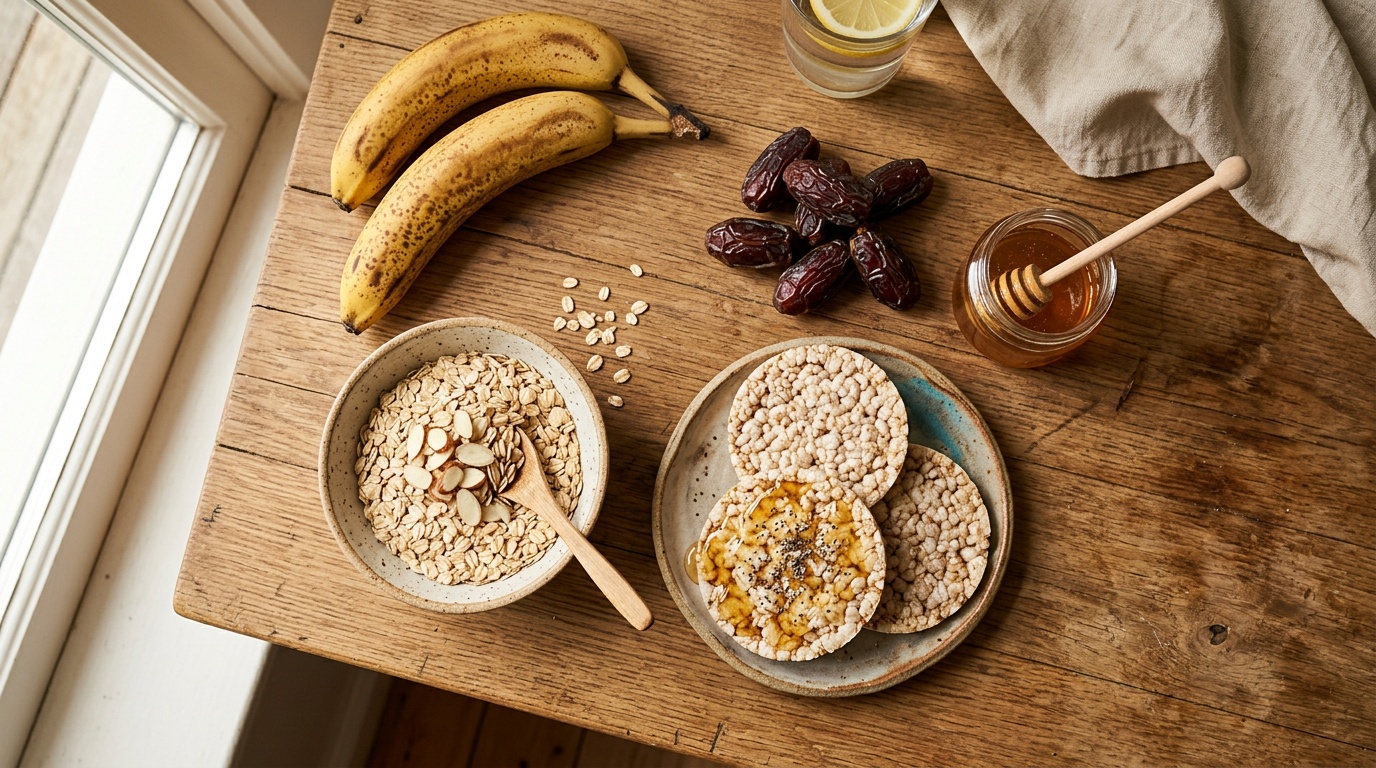
| 30-60 minutes | Light, fast-digesting carbs, minimal fat or fiber | Banana, toast with honey, rice cake |
| Under 30 minutes | Very small, simple sugar source or skip if not hungry | A few dates, small glass of juice |
Source: Academy of Nutrition and Dietetics, 2019

What Happens When You Get the Timing Wrong
Picture two versions of the same person heading into the same 45-minute strength session. In the first, she eats a large pasta dinner twenty minutes before walking into the gym. Her stomach is still full when she starts her warm-up sets, and by the third exercise she's dealing with cramping and a heavy, sluggish feeling that has nothing to do with how strong she actually is. In the second, she eats that same meal three hours earlier and has a banana on the way out the door. She feels loose, energized, and finishes her working sets without the stomach drama.
Same food, same person, same workout, different outcome entirely because of timing. On the other end of the spectrum, someone who trains fasted for a long or intense session often hits a wall partway through, not because they lack fitness, but because their glycogen tank ran dry and their body hasn't switched efficiently to fat-burning yet at that intensity. Neither mistake is about willpower. Both are about the clock.
Carb Timing for Different Types of Workouts
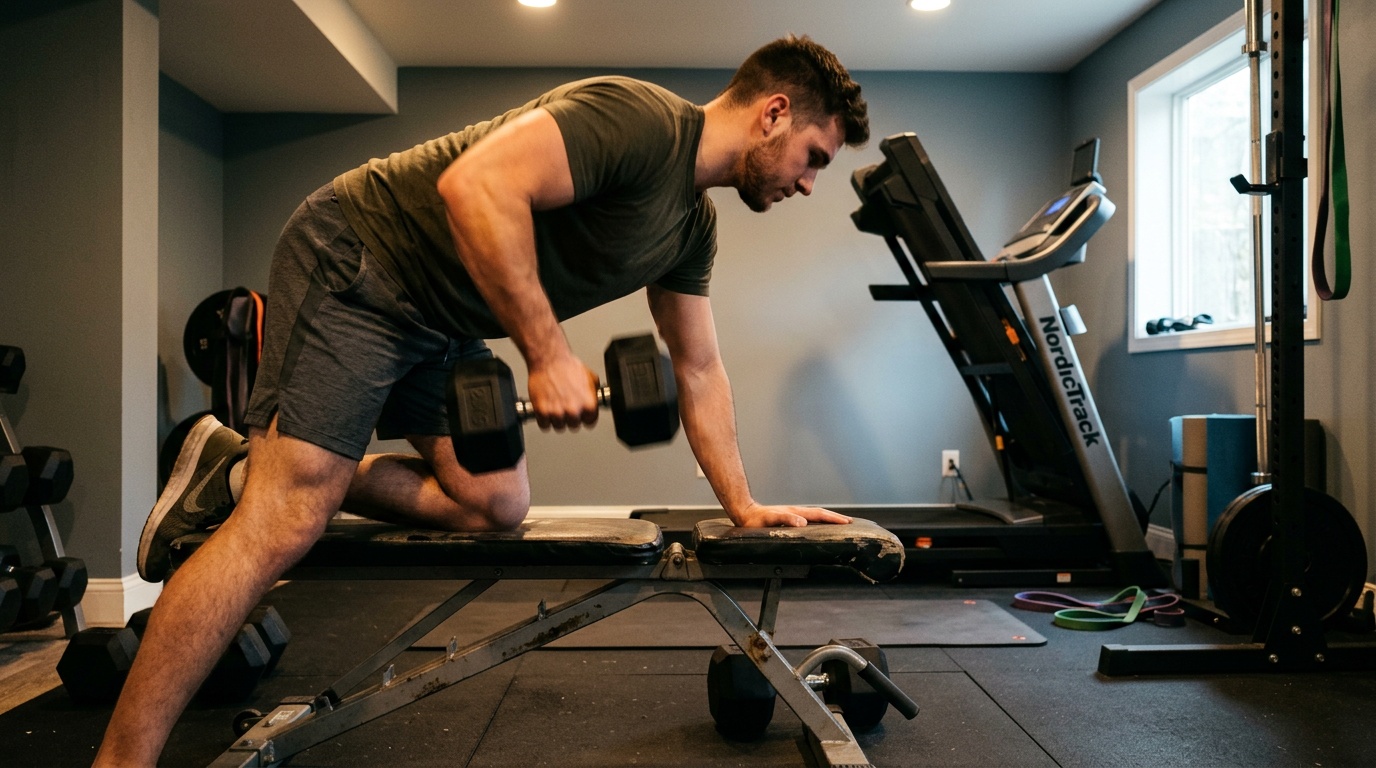
Not every workout needs the same fueling strategy, and this is where a lot of generic advice falls apart. A 20-minute mobility session or an easy walk doesn't draw down glycogen the way an hour of intervals does, so the pre-workout carb window matters far less there. Save the careful timing for the sessions that actually demand it.
- Strength training under 60 minutes: A light carb snack 30-60 minutes out is usually enough. Your primary fuel source for shorter resistance work comes more from stored ATP and creatine phosphate systems than from a big glycogen draw.
- Endurance training over 60 minutes: This is where timing earns its keep. A full meal 2-4 hours out, plus a smaller carb top-up closer to start time, helps you avoid the mid-session energy crash.
- High-intensity interval training: Short bursts at near-maximal effort burn through glycogen fast. A moderate carb meal 1-2 hours before gives you a fuller tank without leaving food sitting undigested during sprints.
- Fasted morning training: Some people train fasted by choice and adapt over time, but for most beginners, the Cleveland Clinic recommends a small carb-and-protein snack beforehand, since your body's overnight fast already lowers liver glycogen by morning.
If your training routine includes short bursts of intense effort at home, a no-equipment cardio routine is a good example of the kind of session where a light pre-workout carb snack makes a real difference.
Health disclaimer: This article offers general nutrition guidance and isn't a substitute for individualized advice. If you have diabetes, a history of disordered eating, or a digestive condition, talk to a doctor or registered dietitian before changing your pre-workout eating pattern, since blood sugar and GI sensitivity vary significantly from person to person.

Common Carb-Timing Mistakes to Stop Making
A few patterns show up again and again in people who feel randomly good or bad in the gym without knowing why:
- Eating a heavy, high-fat meal too close to training. Fat and fiber slow digestion, which means food is still sitting in your stomach when you start moving.
- Training completely fasted for long or intense sessions. This works for some experienced athletes, but for most people it's a fast track to an early energy crash.
- Confusing pre-workout timing with pre-workout supplements. A caffeine-and-amino-acid powder isn't a substitute for actual carbohydrate fuel, the two solve different problems.
- Never adjusting the plan by workout type. The same pre-workout snack that's perfect for a 20-minute walk won't cut it before a 90-minute endurance session, and understanding how carb intake affects endurance performance makes this distinction clearer.
- Ignoring your own gut response. Guidelines are a starting point. If a food consistently upsets your stomach at a certain window, that data point matters more than the general recommendation.
Timing also connects to a bigger question worth asking yourself: when in the day you actually train shapes how much runway you have to plan meals around it. If mornings, afternoons, or evenings each come with different scheduling constraints, the best time of day to work out is worth thinking through alongside your carb timing, since the two decisions influence each other.
See how a sports dietitian breaks down pre- and post-workout eating in this short explainer:
The bottom line: there's no single magic number of minutes that applies to everyone or every workout. What matters is matching the size and speed of your carb source to how much time you actually have, and being honest about what kind of session you're walking into. Get that match right consistently, and the guesswork mostly disappears.
Frequently Asked Questions
How long before a workout should I eat carbs?
For a full meal, eat two to four hours before training. For a light, fast-digesting carb snack like a banana or toast, thirty to sixty minutes is usually enough. The heavier or more fibrous the food, the more time your body needs to digest it before you start moving.
How many carbs should I eat before a workout?
A common guideline is roughly 1 to 4 grams of carbohydrate per kilogram of body weight, adjusted for how far out you're eating and how long or intense your session will be. Shorter, lighter workouts need less; long or high-intensity sessions benefit from the higher end of that range.
What are the best carbs to eat before a workout?
Easily digested, moderate-to-low fiber carbs work best close to training time, think bananas, rice cakes, toast with honey, or a small bowl of oatmeal. Save heavier, fiber- or fat-rich carb sources for meals eaten further out from your session.
Should I eat carbs before or after a workout?
Both matter, but for different reasons. Pre-workout carbs fuel the session itself. Post-workout carbs, ideally paired with protein, help replenish the glycogen you just burned through and support muscle recovery.
Can I work out without eating carbs first?
You can, and some people train fasted regularly without issue, especially for shorter or lower-intensity sessions. For longer or high-intensity workouts, though, skipping carbs beforehand often leads to earlier fatigue, lightheadedness, or a noticeable drop in output partway through.
What happens if I eat carbs too close to my workout?
Eating a large or high-fat meal right before training can leave food sitting undigested in your stomach while you move, which often shows up as cramping, sluggishness, or nausea. Smaller, simpler carb sources tend to sit better the closer you get to start time.
References
- Mayo Clinic — Eating and exercise: 5 tips to maximize your workouts
- Cleveland Clinic — Should You Eat Before or After a Workout?
- Academy of Nutrition and Dietetics — Timing Your Pre- and Post-Workout Nutrition, 2019
- National Institutes of Health (PMC) — Fundamentals of Glycogen Metabolism for Coaches and Athletes
- National Institutes of Health (PMC) — Pre-Exercise Nutrition: The Role of Macronutrients, Modified Starches and Supplements on Metabolism and Endurance Performance, 2014