

Most people don't quit a weight loss plan because the plan was wrong. They quit because the habits inside it were never built to survive a bad week. If you've bounced between diets, apps, and "get back on track Monday" resets, this guide is about something different: sustainable weight loss habits that actually stick even when your schedule falls apart, your motivation dips, or life gets in the way. No 21-day challenges, no all-or-nothing rules. Just habits engineered to survive contact with a real life.

Why Most Weight Loss Habits Fail Within the First Month
Here's the pattern almost every dieter recognizes: week one feels great, week two gets harder, and by week four the habit has quietly disappeared. That's not a willpower problem. It's a design problem. Most weight loss habits are built around motivation, and motivation is the least reliable resource you have. It's high on a Sunday when you meal prep and gone by Wednesday night when you're exhausted.
The Centers for Disease Control and Prevention notes that people who lose weight at a gradual, steady pace of about 1 to 2 pounds a week are more likely to keep it off than people who lose weight quickly. That single fact explains most failed habits: they're calibrated for speed, not durability. A habit that demands two hours at the gym, a completely rebuilt kitchen, and zero exceptions isn't a habit. It's a short-term project wearing a habit's clothing.
The CDC also points out that even modest weight loss carries real benefit — a 5% reduction for someone who weighs 200 pounds is just 10 pounds, and that alone can meaningfully improve blood pressure, cholesterol, and blood sugar. Habits that stick are usually the ones sized for that kind of modest, compounding progress, not the ones sized for a dramatic before-and-after photo.
The habit isn't the goal — the trigger is
I know what you're thinking: you've heard "start small" a hundred times. Here's the part usually left out: small only works if the habit is attached to something that already happens automatically in your day. A habit floating in open time (like "exercise sometime today") competes with everything else on your to-do list and usually loses. A habit anchored to an existing routine doesn't have to compete with anything.

The Habit-Stacking Method: Pairing New Behaviors With Ones You Already Have
Habit stacking means attaching a new behavior to a routine you already do without thinking — brushing your teeth, making coffee, sitting down at your desk. Instead of "I will drink more water," it becomes "after I start the coffee maker, I fill a glass of water and drink half of it before my coffee is ready." The cue is specific, it's already wired into your day, and it doesn't rely on remembering.
This works especially well for the habits that quietly move the needle on weight: a short walk after dinner, a protein-forward breakfast instead of skipping the meal, or laying out gym clothes the night before instead of deciding in the morning. None of these require extra willpower once they're stacked onto something automatic. They just become the next domino.
If you're just starting out and want a broader set of starter habits before you specialize into stacking, our guide on weight loss tips that actually work is a useful companion piece, since it covers the foundational choices — like meal timing and portion awareness — that habit stacking builds on top of.
Start with one stack, not five
A common mistake is stacking three or four new habits onto one trigger at once. That overloads the cue and the whole chain collapses the first time you're rushed. Pick one habit, attach it to one trigger, and let it run on its own for a few weeks before adding a second.
A few real examples make this easier to picture. Someone who struggles to eat breakfast might stack it onto the moment they unlock their phone: "after I check my phone in bed, I get up and eat something with protein before I open any apps." Someone who wants to move more after work might stack it onto changing out of work clothes: "after I take off my work shoes, I put on walking shoes instead of house slippers." Neither example asks for extra time in the day. They just reroute a moment that was already happening.
The specificity matters more than most people expect. "I'll eat better" is not a stackable habit because there's no clear trigger and no clear action. "After I pour my morning coffee, I add a piece of fruit to my plate" is stackable because it's unambiguous — there's no decision left to make in the moment, which is exactly where most habits fall apart.

Protein and Fiber First: The Two Food Habits With the Biggest Payoff
If you only change two things about how you eat, make them these: put a protein source and a fiber source on your plate before anything else. Both slow digestion, both blunt the hunger spike that leads to snacking two hours later, and both are far easier to sustain than cutting entire food groups.
A systematic review published in the journal Nutrients found that higher protein intake was one of the few dietary strategies with a statistically significant effect on preventing weight regain after initial weight loss, unlike several other popular strategies tested in the same review of weight loss maintenance research. That's a meaningful distinction — plenty of diet strategies help you lose weight initially, but far fewer have solid evidence for helping you keep it off, and protein is one of the few that does.
Fiber works alongside protein rather than instead of it. Vegetables, legumes, and whole grains add volume and slow gastric emptying, which is a clinical way of saying they keep you full on fewer calories. The habit here isn't a rule ("no carbs after 6pm") — it's a sequencing trick. Eat the protein and vegetables on your plate first, then the rest. It's a five-second decision that doesn't require tracking anything.
| Weekly Pace | Approach | Likelihood of Keeping It Off |
|---|---|---|
| 1–2 lbs per week | Gradual habit changes (nutrition + activity + sleep) | Higher — associated with longer-term maintenance |
| 3+ lbs per week | Rapid, restrictive short-term diets | Lower — more commonly followed by regain |
| 5% of body weight | Modest, sustained reduction | Meaningful improvement to blood pressure, cholesterol, blood sugar |
Source: Centers for Disease Control and Prevention, 2025

Sleep and Stress: The Overlooked Habits Sabotaging Your Progress
Nobody wants to hear that the missing habit might be going to bed earlier, but the research keeps pointing there. Sleep isn't a "nice to have" layered on top of diet and exercise — it's a variable that directly affects the hormones controlling hunger and fat storage.
A 2024 study highlighted by the National Heart, Lung, and Blood Institute found that adults with overweight or obesity who regularly ignored their body's natural signal to fall asleep showed measurable negative metabolic effects, including higher abdominal fat in men in the study. The mechanism isn't mysterious: short or misaligned sleep disrupts the hormones that regulate appetite, so you're hungrier the next day for reasons that have nothing to do with willpower.
The habit-stacking approach applies here too. Rather than "sleep more," which is vague and hard to act on, try a specific trigger: dim the lights and put the phone in another room at a set time each night. It's a tiny behavior with an outsized downstream effect on the habits you're trying to build during the day.

Movement Habits That Don't Require a Gym Membership
The habits people actually maintain for years are rarely the ones requiring a gym, a subscription, or a specific 90-minute window. According to CDC research on people who successfully maintained weight loss over time, most engaged in 60 to 90 minutes of moderate-intensity activity most days — but critically, that total didn't have to happen all at once. It could be three 20-minute walks spread across a day: one in the morning, one at lunch, one after dinner.
That reframing matters because it removes the biggest barrier to consistency: the belief that movement only "counts" if it's a structured workout. A 15-minute walk after lunch, taking the stairs, or a bodyweight circuit in your living room all count toward the same total. If you're just starting to build these habits and want more foundational starting points, our guide on weight loss tips for beginners covers no-equipment options that fit into small pockets of time rather than demanding a dedicated hour.
Here's the non-obvious part: breaking activity into smaller chunks throughout the day isn't a lesser version of one long workout. For habit formation specifically, it's often the stronger approach, because it creates more repeated cues throughout your day rather than one fragile appointment that a busy schedule can wipe out entirely.
If you're deciding where to start, anchor movement to transitions you already make during the day rather than trying to carve out a brand-new block of time. Parking further from the entrance, standing up during phone calls, or walking to a coworker's desk instead of messaging them are all small additions to movement you're already doing, not new appointments competing for a slot in your calendar. Over a few weeks, these additions accumulate into real activity minutes without ever feeling like "exercise" in the way a gym session does, which is exactly why they tend to survive busy stretches that would otherwise derail a formal workout plan.
How Long It Actually Takes to Build a Habit That Sticks
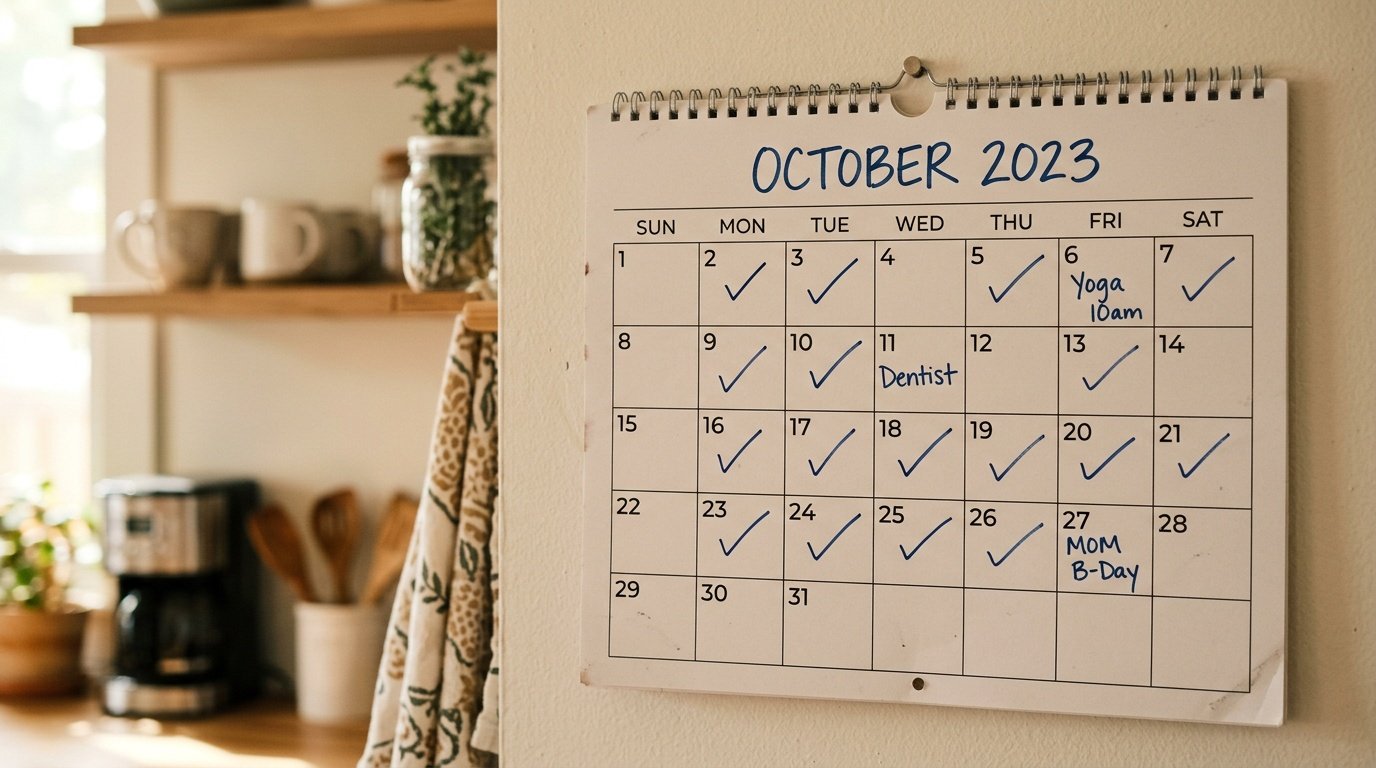
The "21 days to build a habit" claim gets repeated constantly, and it's not accurate for most health behaviors. A systematic review and meta-analysis of health behavior habit formation, published through the National Institutes of Health, found that self-reported habits like healthy eating typically took a median of 59 to 66 days to form, with individual variability ranging from under a month to well over six months depending on the behavior and the person.
That number matters because it resets expectations. If you give up on a new eating habit after two weeks because it doesn't feel automatic yet, you're quitting before the process has had time to work — not because the habit failed. The same research found that missing a single day here or there didn't materially derail the process, which is a useful thing to know before you catastrophize one skipped morning walk into "starting over."

What to Do When a Habit Breaks: Setback-Proofing Your Plan
A habit is going to break. You'll travel, get sick, have a brutal week at work, or simply forget. The difference between people who build sustainable weight loss habits that actually stick and people who don't isn't that one group never slips — it's that one group has a plan for what happens after the slip.
The most useful rule here is the "never miss twice" approach: if you miss a habit once, that's just life. If you miss it twice in a row, the pattern starts to reset itself, and that's the moment to actively intervene — even with a scaled-down version of the habit. A 10-minute walk instead of 30 minutes still counts. A handful of vegetables at dinner instead of a full plate still counts. The goal on a recovery day isn't perfection, it's continuity.
It also helps to separate the habit from the outcome. Weight can fluctuate day to day for reasons that have nothing to do with whether your habits are working — water retention, sodium intake, hormonal cycles, even how much you ate the night before a weigh-in. Judging a habit by a single morning on the scale is one of the fastest ways to abandon something that was actually working.
One non-obvious insight worth sitting with: the people who keep weight off long-term are rarely the ones with the most impressive early results. Fast initial loss often comes from aggressive restriction, which is precisely the pattern most likely to be abandoned once life gets busy again. Slower, habit-driven progress looks less exciting in month one, but it's the version that's still running in month twelve, which is the only timeline that actually determines whether the change was worth making.
Health disclaimer: Rapid or extreme weight loss, prolonged very-low-calorie eating, or skipping meals to "make up" for a setback are not recommended and can be unsafe. If you notice signs of disordered eating patterns forming around weight loss goals, talk with a healthcare provider or registered dietitian.
Real behavior change rarely looks like the straight line in a before-and-after photo. It looks more like a slightly wobbly upward trend with a few flat weeks and the occasional dip — and that's completely normal for anyone building sustainable weight loss habits that actually stick for the long run.
For a closer look at how habit-based behavioral strategies play out in practice, this short session from Mayo Clinic on behavioral approaches to weight loss is worth watching.
Frequently Asked Questions
What are sustainable weight loss habits that actually stick?
They're small, specific behaviors — like eating protein first at meals, taking a short walk after dinner, or going to bed at a consistent time — that are attached to an existing routine rather than requiring extra willpower. The CDC's own guidance on gradual, steady weight loss reflects this: changes sized to survive a bad week tend to outlast changes sized for maximum short-term results.
How long does it take to build a habit that actually sticks?
Research on health-related habits found a median of about 59 to 66 days, though the range varies widely by person and behavior, sometimes stretching to several months. Expect it to take longer than three weeks, and don't judge a habit as "not working" before the two-month mark.
What's the difference between a diet and a weight loss habit?
A diet is usually a temporary set of rules with an end date. A habit is a behavior repeated in a stable context until it requires little conscious effort. Diets tend to end when motivation runs out; habits are designed to keep running without it.
How many new habits should I try to build at once?
One, or at most two. Trying to overhaul your eating, sleep, and exercise routines simultaneously overloads your attention and increases the odds that all three collapse together. Build one habit stack, let it run for several weeks, then add the next.
What should I do if I miss a habit for a few days?
Restart with a scaled-down version rather than an all-or-nothing restart. Missing once is normal; the "never miss twice in a row" rule is a simple way to catch the slip before it becomes a longer break.
Can I lose weight sustainably without counting calories?
Yes, for many people. Habit-based approaches — prioritizing protein and fiber, moving throughout the day, sleeping consistently — can produce meaningful, sustained results without formal calorie tracking, though some people find tracking useful as a short-term awareness tool rather than a permanent requirement.
References
- Centers for Disease Control and Prevention — Steps for Losing Weight, 2025
- Centers for Disease Control and Prevention — Tips for Keeping Weight Off
- National Institutes of Health (PMC) — Time to Form a Habit: A Systematic Review and Meta-Analysis of Health Behaviour Habit Formation and Its Determinants, 2024
- National Institutes of Health (PMC), Nutrients journal — Dietary Strategies for Weight Loss Maintenance, 2019
- National Heart, Lung, and Blood Institute (NIH) — Study Highlights Importance of Good Sleep Habits in Adults With Overweight, Obesity, 2024