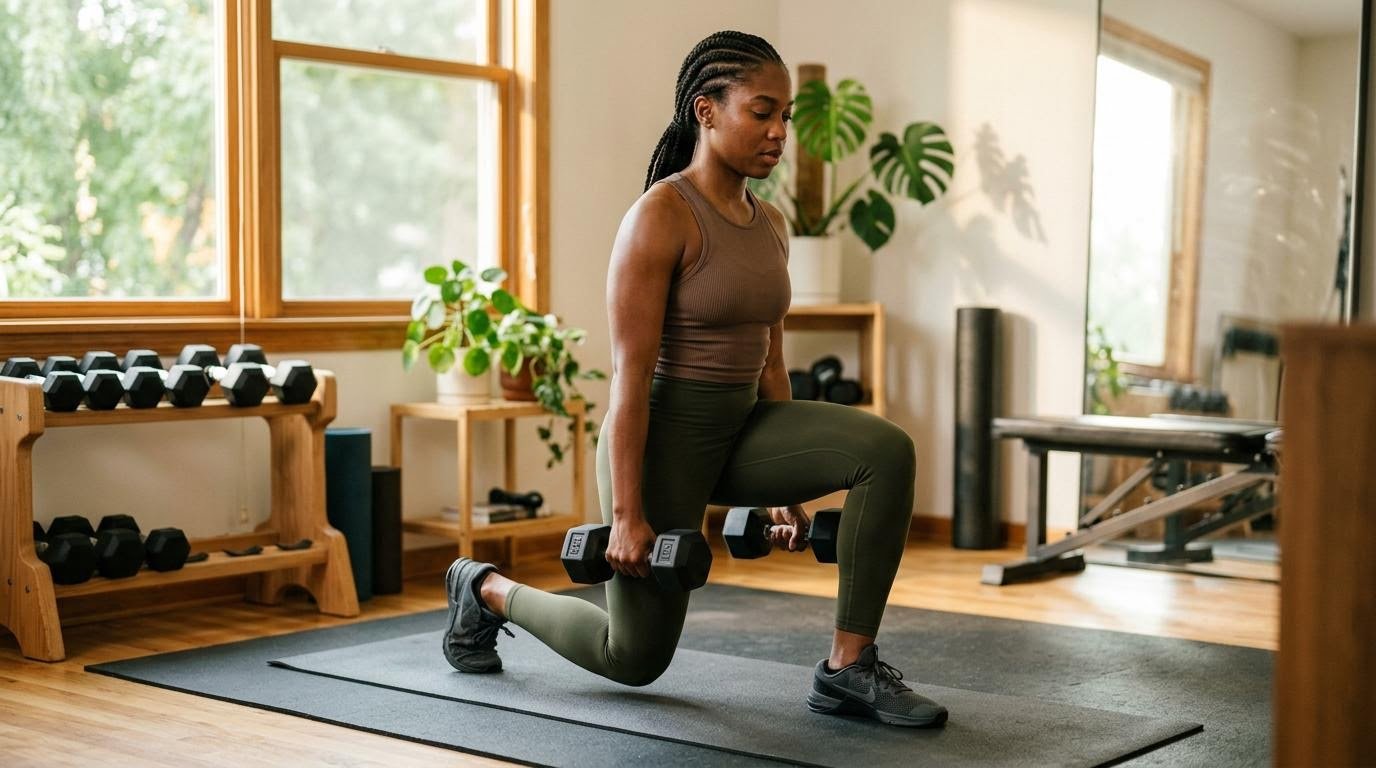


Your knees hurt at the thought of running. Your building doesn't have a gym. You've got twenty minutes between waking up and getting the kids ready, and every workout video you've tried online looks like it was choreographed for someone who's been training for a decade. If that's where you're starting, good news: cardio for beginners at home doesn't require any of that. It requires a clear floor, a few minutes, and a plan that doesn't assume you're already fit.
Most beginner cardio advice fails for one reason. It's written by people who forgot what week one actually feels like. This guide isn't that. It's built around the version of cardio that a genuinely new exerciser can start today, stick with next week, and still be doing in three months.
Why Cardio for Beginners at Home Actually Works Better Than You Think
There's a quiet assumption that home cardio is the consolation prize, something you settle for until you can afford a gym membership. That's backwards. For a true beginner, home cardio removes almost every barrier that causes people to quit in the first two weeks: the intimidation of a crowded gym floor, the commute, the cost, the need to time your workout around someone else's schedule.
According to the CDC's Physical Activity Guidelines for Americans, adults need at least 150 minutes of moderate-intensity aerobic activity a week, and that target doesn't specify where it happens. Brisk walking in a hallway counts exactly as much as brisk walking on a treadmill. The guideline was written around effort and consistency, not location.
There's also a practical training reason home cardio suits beginners specifically. When you're new to exercise, your limiting factor usually isn't your muscles, it's your confidence and your habit-forming window. Removing planning time and travel time from the equation is one of the most reliable ways to protect a new habit during its first few fragile weeks. Home cardio removes both. You're not deciding whether today is a gym day. You're just moving, in the space you already occupy.
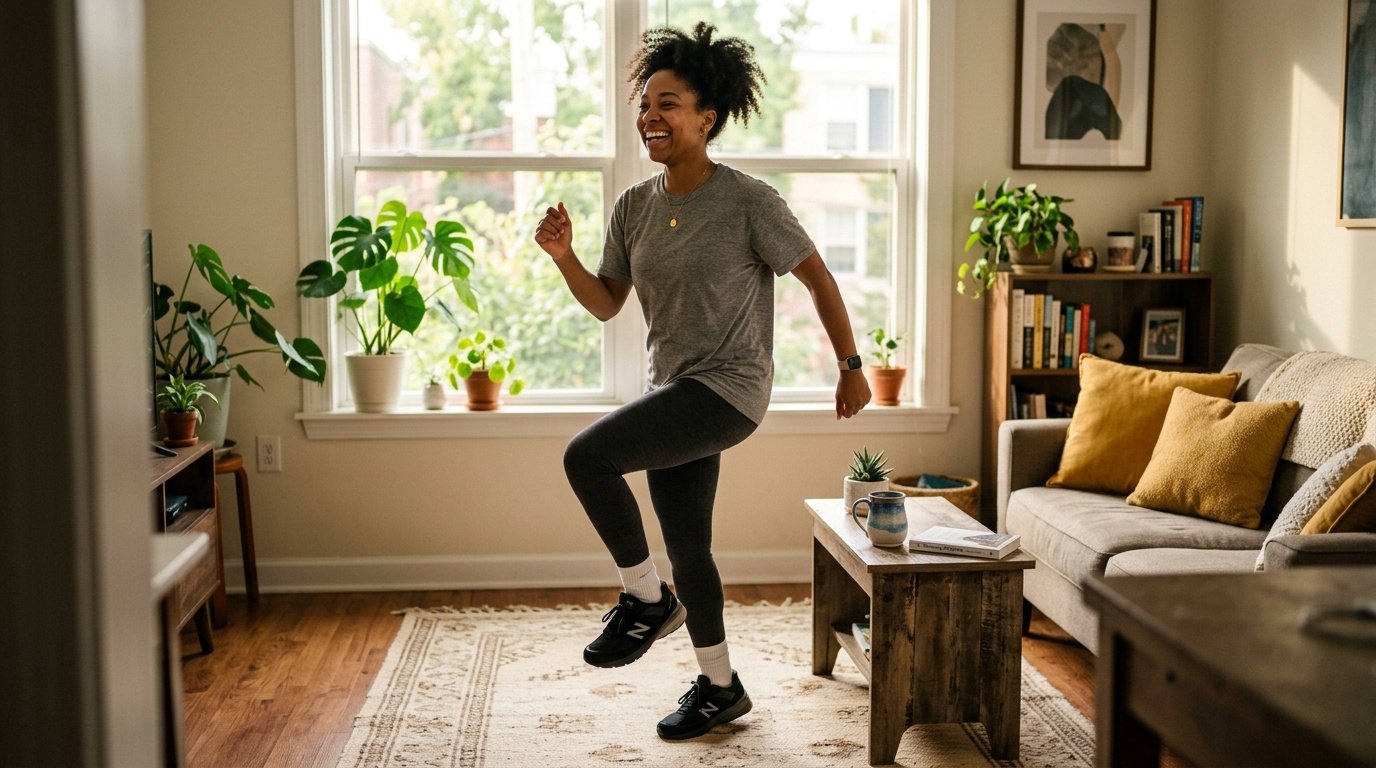
None of this means home cardio is easier in the sense of less effective. A brisk 20-minute walk around your apartment, up and down a hallway, or in place in front of the TV raises your heart rate the same way a treadmill session does. The equipment isn't what makes cardio work. Sustained effort against gravity and your own body weight is.
Think about the difference between two people starting the same week. One signs up for a gym membership, drives fifteen minutes each way, and treats every missed drive as a failed workout. The other clears a six-foot square of carpet and does ten minutes before their coffee finishes brewing. Six months later, the second person has a far higher chance of still being active, simply because there was never a logistical excuse standing between them and the workout.
I know what you're thinking: surely real fitness requires more than marching around a living room. It doesn't, not at the beginner stage. Your cardiovascular system responds to a sustained, higher heart rate, not to the specific equipment producing it.
Why "Cardio for Beginners" Doesn't Mean "Watered Down"
There's a common misconception that beginner-level cardio is a diluted version of real training, something you graduate out of once you're serious. That framing does more harm than good. The moves in this guide aren't a lesser version of a "real" workout; they're the correct dose for where your cardiovascular system currently is.
Progressive overload, the principle behind almost every legitimate fitness program, applies just as much to a beginner marching in place as it does to a marathon runner adding mileage. The scale is different, the underlying mechanism is identical: apply a manageable stress, let the body adapt, apply slightly more.
How to Start Cardio for Beginners at Home Without Burning Out in Week One
The single biggest mistake new exercisers make isn't choosing the wrong move. It's choosing the wrong intensity on day one, feeling wrecked for three days afterward, and never coming back. Building this the right way means starting smaller than your motivation wants you to.
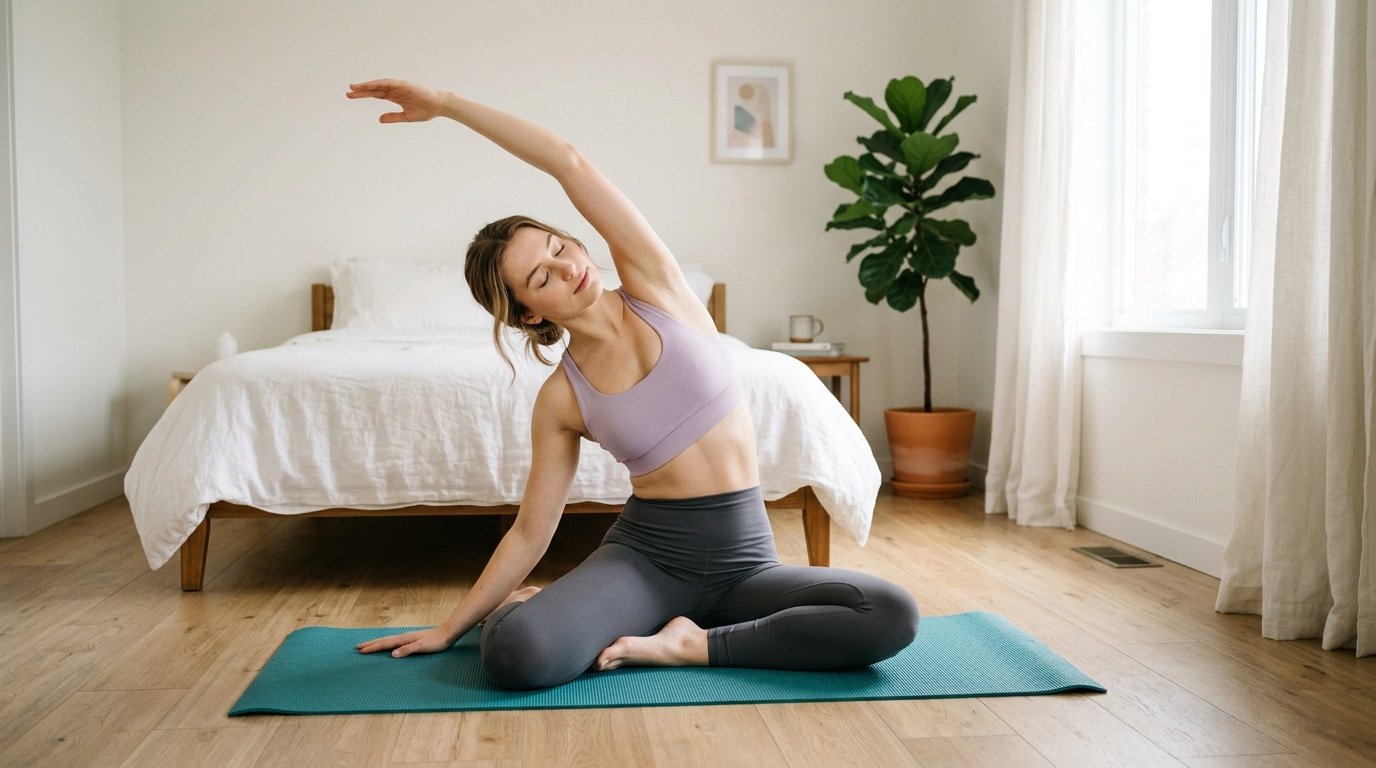
Warm Up Before You Move, Even for Five Minutes
Skipping the warm-up is the most common beginner shortcut, and it's the one that causes the most early injuries and soreness that kills momentum. The American Heart Association recommends warming up for 5 to 10 minutes before moderate or vigorous activity, doing the same movement you're about to do but at a slower pace, to gradually raise your heart rate and loosen your muscles before you ask more of them.
In practice, that means: if your plan is marching in place, warm up by marching slower for two minutes first. If your plan is stepping side to side, do it gently before you add arm movement or speed. This isn't optional polish. It's the difference between a joint that's ready to work and one that gets strained on the first fast movement.
The 10-Minute Starting Point Beats the 45-Minute Plan You'll Quit
Here's the thing nobody tells beginners: a 10-minute session done consistently for two weeks builds more real fitness than a 45-minute session done once and abandoned. Your cardiovascular system adapts to repeated moderate stress, not to occasional heroic effort.
Start with 10 minutes of continuous, low-impact movement, three to four times in your first week. That's it. Once ten minutes feels genuinely easy, not just tolerable, add five more. This slow build is exactly what keeps beginners from the injury-and-quit cycle that derails most New Year's resolutions by February.
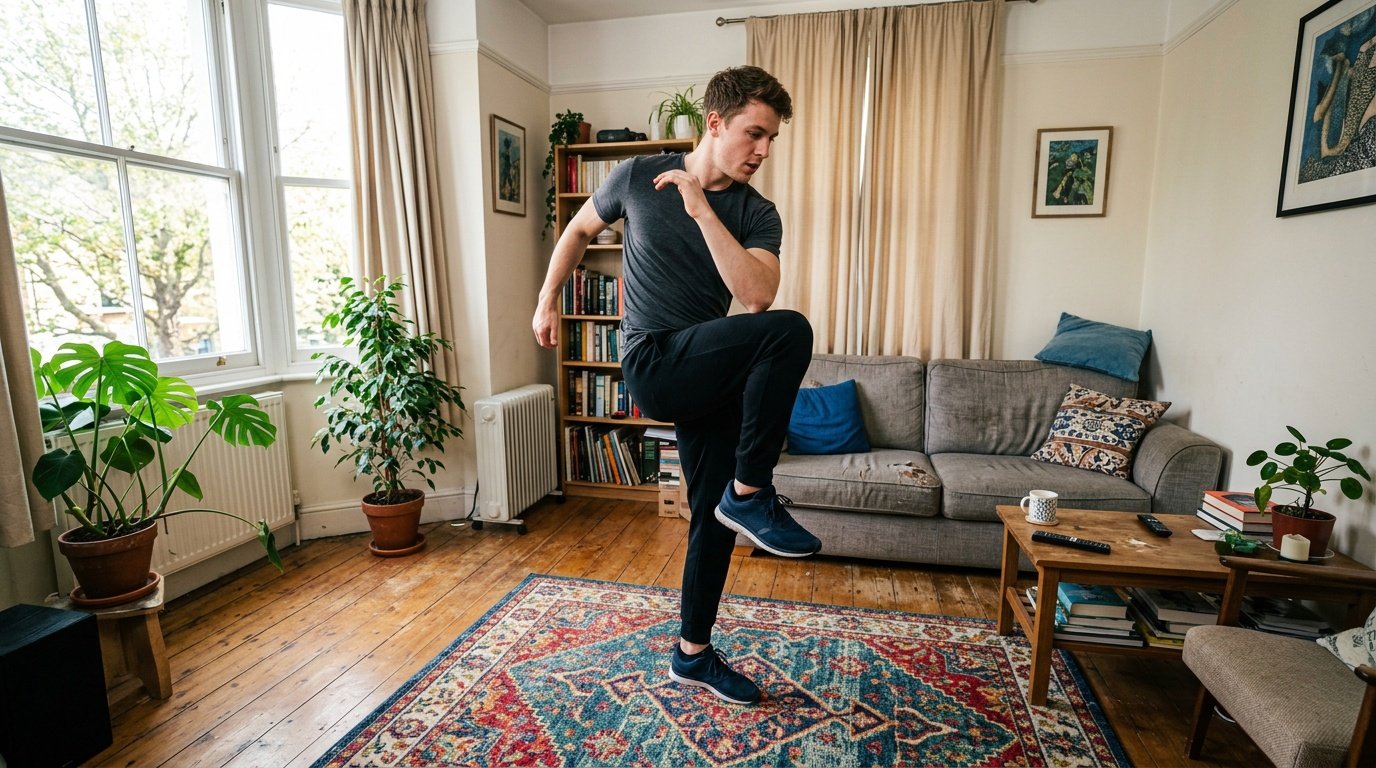
5 Low-Impact Moves You Can Do Without Leaving Your Living Room
None of these require equipment, a mat, or more space than a bathroom rug. Each one can be done for 30 to 60 seconds, rotated through in a circuit, or done individually as its own short session.
- Marching in place. Lift your knees to hip height, swing your arms naturally. The simplest, safest starting move for anyone, at any fitness level.
- Step-touches. Step your right foot out to the side, tap your left foot to meet it, then reverse. Low-impact, but it raises your heart rate faster than marching once you add arm swings.
- Standing knee-to-elbow twists. Bring your right knee up toward your left elbow, alternate sides. Works your core along with your heart rate.
- Wall push-off jacks. A gentler version of a jumping jack, tapping your feet out to the sides instead of jumping, with your arms raising overhead. Kind to the knees.
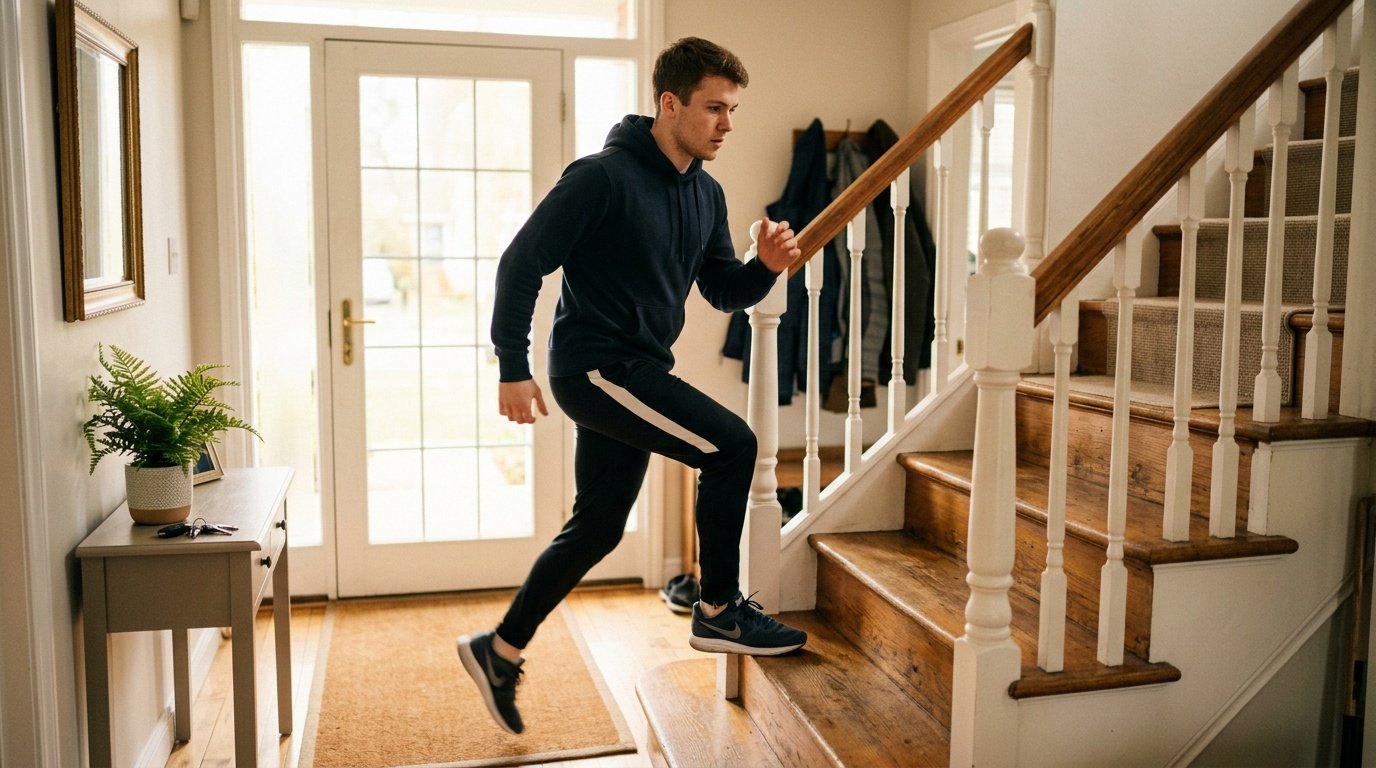
- Stair step-ups (if you have even two steps). Step up with your right foot, bring your left up to meet it, then step back down. One of the most efficient calorie-per-minute moves you can do without leaving the house.
Low-impact aerobic movement, done consistently, builds the same underlying cardiovascular adaptation as higher-impact routines in someone who was previously sedentary, with far less injury risk along the way. For a true beginner, that injury-risk difference matters more than the extra calorie burn of a harder move you can't sustain.
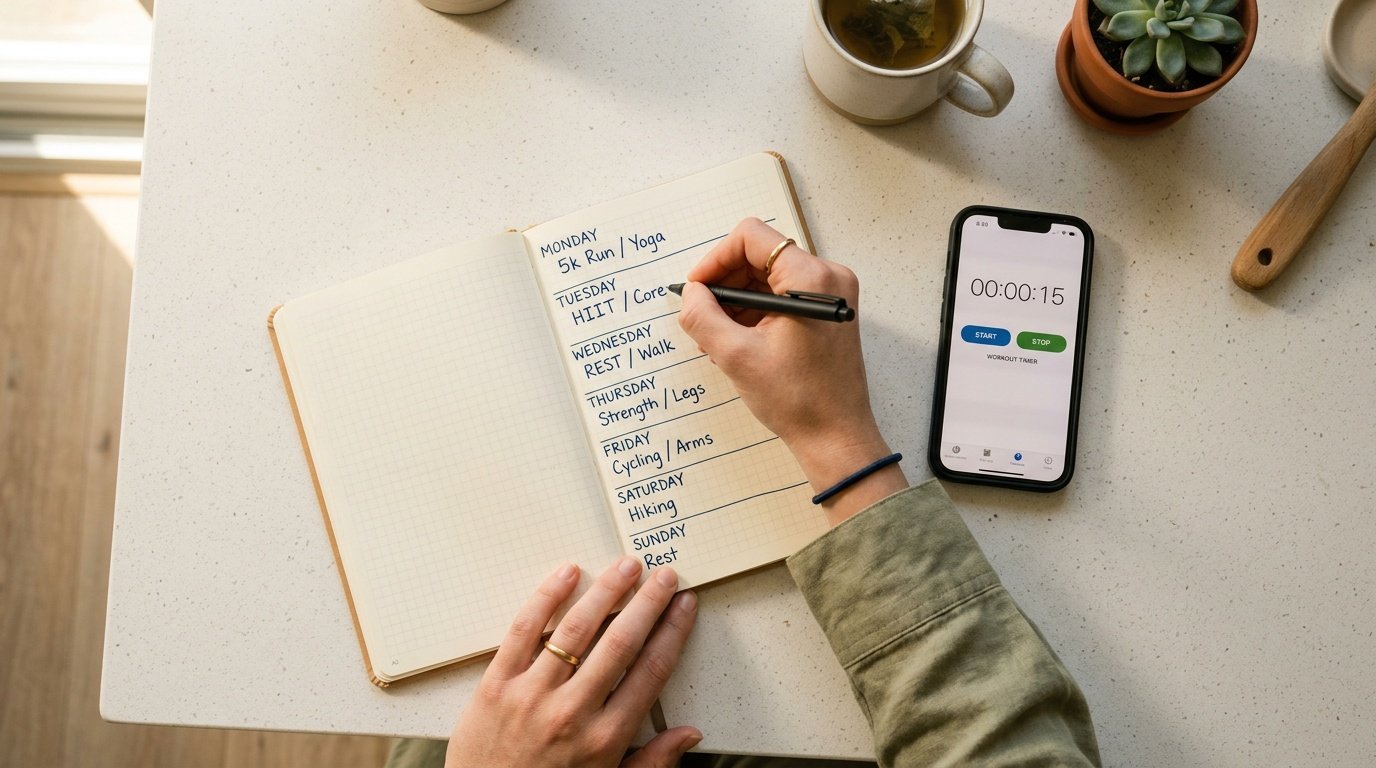
Building a Weekly Home Cardio Schedule That Actually Sticks
A schedule only works if it survives contact with a bad week. Here's a structure built to bend without breaking.
How Many Days a Week Beginners Really Need
Three to four sessions a week, 10 to 20 minutes each, is a realistic and effective starting cadence. The Mayo Clinic notes that aerobic activity improves heart and lung fitness progressively as your body adapts, and that no matter your age, weight, or current fitness level, consistent aerobic movement produces measurable gains over time. You don't need daily sessions to see that adaptation, you need regular ones.
A workable first-month pattern: Monday, Wednesday, Friday, and Saturday, 10 to 15 minutes each. That leaves recovery days built in without leaving three or four days between sessions, which is often long enough for beginners to lose momentum entirely. Writing that pattern down as an actual specific, measurable fitness target rather than a loose intention to "do more cardio" makes it far easier to notice when you're on track.
Knowing When You're Ready to Add Intensity
The clearest signal you're ready to progress isn't a calendar date, it's how a session feels. If you can hold a light conversation throughout your current routine without gasping, you have room to add either time (five more minutes) or intensity (faster pace, bigger arm movements) before your next progression. If you're breathless within the first two minutes, hold your current level for another week rather than pushing forward.
Health disclaimer: This article is general information, not personalized medical advice. If you're new to exercise, pregnant, managing a heart or lung condition, recovering from injury, or over 50 and previously sedentary, talk to a doctor before starting any new cardio routine, including a low-impact one at home.
A Realistic 4-Week Progression You Can Actually Follow
Picture someone who hasn't done structured exercise in over a year, works a desk job, and has fifteen spare minutes most mornings before the day takes over. That's the person this progression is built for, not someone easing back into a sport they used to play.
Week 1: Three sessions, 10 minutes each, marching in place and step-touches only. The goal isn't to feel challenged, it's to build the habit of showing up. If a session feels genuinely easy, resist the urge to add more; consistency this week matters more than intensity.
Week 2: Four sessions, still 10 minutes, but add the standing knee-to-elbow twist and wall push-off jack into the rotation. This is where most beginners notice their recovery time between exercises shortening.
Week 3: Four sessions, extended to 15 minutes, with stair step-ups added if stairs are available. Arm movement gets bigger, pace picks up slightly. The talk test from earlier in this guide is the check here: if a full sentence is still comfortable mid-session, the intensity is right.
Week 4: Four to five sessions, 15 to 20 minutes, rotating through all five moves in a circuit with 30 to 45 seconds per move. By this point, the person who could barely finish 10 minutes in week one is often surprised at how much easier the same moves feel.
Nothing about this progression is dramatic, and that's the point. Programs built around small, weekly increases in duration consistently outlast programs that jump straight to a full-length session, because the body and the habit both get time to catch up with the intention. Slow and boring beats fast and abandoned, every time.
The Mistakes That Quietly Stall Beginner Cardio Progress
Most beginners don't fail because of laziness. They fail because of small, fixable errors that compound over weeks.
Going too hard, too soon. Full intensity on day one leads to soreness so severe that day three becomes a rest day, which becomes a rest week. Progressive load beats maximum effort every time for a beginner.
Measuring success only in pounds. Cardiovascular fitness improves before the scale moves. Resting heart rate, how quickly you recover after climbing stairs, and how a 10-minute session feels are all earlier and more honest indicators than weight in week two.
Doing the exact same routine every single time. Your body adapts to repeated identical stress within two to three weeks. Rotating between the five moves above, or changing the order, keeps the stimulus fresh without needing new equipment. Pairing this circuit with a couple of simple bodyweight strength moves on alternating days also protects the joints that pure cardio alone doesn't strengthen.
Skipping the cool-down. Stopping abruptly after raising your heart rate can leave you lightheaded and makes next-day soreness worse. A slow two to three minute wind-down, walking in place at a fraction of your working pace, helps your heart rate come down gradually.
Tracking Progress Without a Gym Membership or Fancy Gear
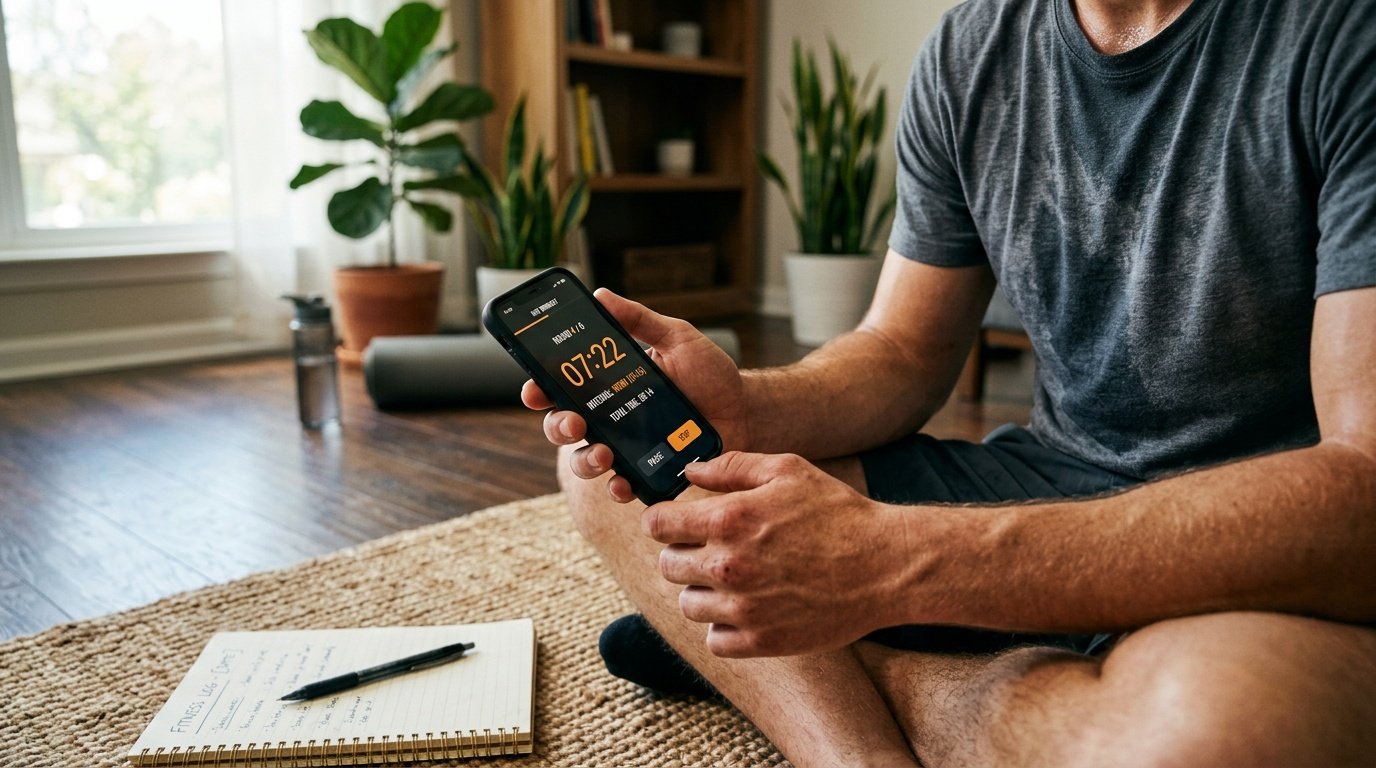
You don't need a smartwatch to know if cardio for beginners at home is working. A phone timer and a notebook cover almost everything you need.
| Metric to track | How to measure it at home | What progress looks like |
|---|---|---|
| Session duration | Phone timer, logged after each session | Same intensity feels manageable for longer |
| Recovery time | How long until your breathing returns to normal after finishing | Recovery gets shorter week over week |
| Talk test | Can you speak a full sentence mid-session? | You can hold conversation at a pace that used to leave you breathless |
| Weekly consistency | Simple tally on a calendar or notes app | Meeting 150 minutes a week, per current physical activity guidelines |
Source: CDC, 2023
The National Heart, Lung, and Blood Institute points out that physical activity lowers blood pressure, raises HDL cholesterol, and helps manage blood sugar, benefits that show up in bloodwork long before they show up on a scale. That's worth remembering on a week where the number on the scale doesn't move but your energy at 3pm clearly has.
If bodyweight cardio in your living room starts to feel too easy after several weeks, walking is a natural next progression that still requires no equipment. Harvard Health recommends starting a walking routine with a safe, familiar route and comfortable shoes, then gradually adding distance or pace once the current level feels easy, the same progressive principle that applies to every move in this guide. For a second no-equipment option to rotate in once marching and step-touches feel easy, this 15-minute fat-burning cardio circuit for beginners uses a different move sequence but follows the same low-impact logic.
Frequently Asked Questions
How long should a beginner do cardio at home each session?
Start with 10 minutes of continuous, low-impact movement. Once that feels comfortably manageable, not just bearable, add five more minutes rather than jumping straight to 30. Most beginners can build to 20 to 30 minutes over four to six weeks by adding time gradually instead of all at once.
Can I actually lose weight with cardio for beginners at home?
Yes, when it's combined with a reasonable eating pattern. Cardio at home burns calories the same way cardio anywhere else does, the deciding factor is consistency and total weekly volume, not the location or the equipment. Three to four sessions a week sustained over months produces real results; one intense session followed by two weeks off does not.
Is marching or walking in place actually good cardio, or is it too easy?
For a true beginner, marching in place is genuinely effective cardio, not a placeholder move. It raises your heart rate into the moderate-intensity range recommended by national guidelines, and it's low-risk enough to sustain daily. As your fitness improves, you can add arm movement, speed, or knee height to keep it challenging.
How many days a week should beginners do cardio at home?
Three to four days a week is a sustainable starting point, with rest or light-activity days between sessions. This spacing lets your body adapt without long enough gaps to lose the habit you're building. You can move toward daily light activity later, but it isn't necessary to start.
Do I need any equipment for cardio for beginners at home?
No. Every move in a solid beginner routine, marching, step-touches, standing twists, modified jacks, stair step-ups, uses only your body weight and whatever floor space you already have. Equipment becomes optional once you want more variety or resistance, not a requirement to start.
References
- CDC — Physical Activity Guidelines for Adults, 2023
- American Heart Association — Warm Up, Cool Down, 2024
- Mayo Clinic — Aerobic Exercise: Top 10 Reasons to Get Physical
- National Heart, Lung, and Blood Institute — Physical Activity and Your Heart: Benefits
- Harvard Health Publishing — 5 Tips for Getting Started With a Walking Program