

You’ve probably tried “just breathe” advice from someone who never sat through finals week, a double shift, or a group chat that won’t stop buzzing. It doesn’t land when the stress is real and constant. Stress management activities work better than generic advice because they give your body something concrete to do with the tension it’s already carrying, not just a mood to aim for. This guide walks through the techniques that hold up under actual pressure, not just in a wellness ad, plus how to fit them into a week that’s already full.

Why Generic “Just Relax” Advice Falls Apart Under Real Pressure
Most advice about stress assumes you can simply decide to feel calmer. That framing misses what’s actually happening. Stress is a physical event before it’s a mood: your heart rate climbs, your breathing shortens, and your muscles brace for something that, most days, never arrives. Telling someone in that state to “just relax” is a bit like telling someone with a fever to just cool down. The instruction is correct in theory and useless without a mechanism.
This is where a specific plan beats a vague intention. According to the Centers for Disease Control and Prevention, learning to cope with stress in a healthy way, through small, repeatable daily steps rather than one dramatic fix, is what actually reduces the odds that ordinary stress turns into the chronic kind. That distinction matters: occasional stress is a normal, even useful, part of a demanding week. Chronic stress, the kind that never fully resets between triggers, is the version that starts showing up in sleep, digestion, and mood over time.
The non-obvious part most articles skip: you don’t need to eliminate your stressors to feel the benefit of a good stress management activity. A rough exam schedule or a chaotic work week doesn’t disappear because you did five minutes of breathing. What changes is how quickly your body comes back down afterward, and how much of the day gets swallowed by the aftereffects of a spike that’s already passed.
A specific example makes this concrete. Picture two people getting the same terse email from a manager. One has a rehearsed, ninety-second breathing technique they run through automatically. The other has no tool at all and just sits with the tension. Both feel the same initial jolt, since the trigger is identical. But the first person is usually back to focused work within a few minutes, while the second can spend the rest of the morning half-distracted, replaying the email, and snapping at the next small inconvenience that comes along. The stressor was the same size. What differed was how long it was allowed to keep running in the background.

What Chronic Stress Actually Does to Your Body Before You Notice It
Stress isn’t just uncomfortable, it’s cumulative. When your brain reads a situation as threatening, real or not, it triggers a release of cortisol and adrenaline that prepares you to fight or flee. That response is genuinely useful in short bursts: it sharpens focus and gets you through a deadline. The problem starts when the trigger never fully lets up, and the same hormonal cascade fires again and again without a real recovery window in between.
A 2023 review from the National Center for Complementary and Integrative Health analyzed data from more than 12,000 participants across 142 groups and found that structured mindfulness approaches performed as well as established treatments like cognitive behavioral therapy for people managing anxiety and depression symptoms. That’s a meaningful result, because it means the gap between “doing something” and “doing the clinically supported thing” is smaller than most people assume, as long as the technique is practiced consistently rather than tried once and abandoned.
Here’s a specific example worth picturing: a college student who pulls three all-nighters in a row for midterms usually notices the sleep debt immediately. What they don’t notice as quickly is that their baseline stress threshold has dropped, so a minor annoyance on day four, a slow Wi-Fi connection, a missed bus, triggers a reaction that would barely have registered on day one. That’s chronic stress lowering your tolerance, not the new trigger being objectively worse.
Breathing and Grounding Stress Management Activities You Can Do in Under Five Minutes
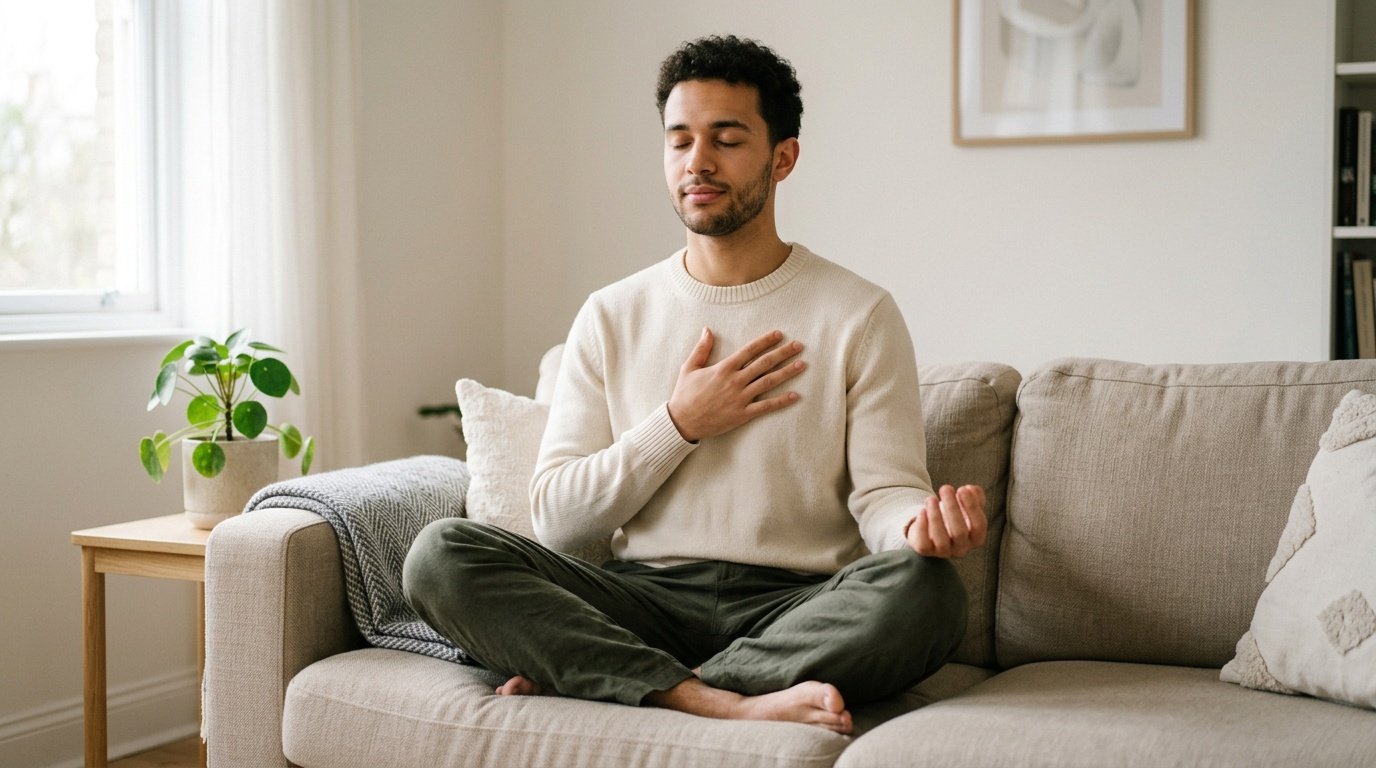
Breathing techniques are the fastest lever available because they act directly on your nervous system instead of routing through conscious effort first. Box breathing is one of the simplest to learn: inhale through your nose for a count of four, hold for four, exhale for four, hold again for four, then repeat for six to eight rounds. The equal counts matter more than hitting exactly four seconds each, so scale it down to a count of three if four feels like a stretch at first.
A quieter option for when you can’t step away completely is extended-exhale breathing: inhale for a silent count of four, exhale for six or seven. A longer exhale specifically activates the parasympathetic branch of your nervous system, the part responsible for calming rather than alerting, and you can do it while still sitting in a meeting or standing in line without anyone noticing.
If breathing alone feels too abstract, pair it with a grounding technique. Pick one physical point of contact, your feet on the floor, your hands around a mug, and bring your attention fully to that sensation for thirty seconds. You’re not trying to think your way out of the stress, just interrupting the spiral long enough for your body to catch up with your intentions. This one takes a little practice to trust, mostly because it feels almost too small to matter. It doesn’t need to erase the anxious feeling to be useful, it just needs to keep you present enough to get through the next thirty seconds, and then the thirty after that. For a fuller walkthrough of grounding and breathing techniques specifically built for the panic-level version of this, our guide on breathing exercises for panic attacks breaks down box breathing, the physiological sigh, and diaphragmatic breathing step by step. If the anxiety you’re managing shows up specifically around other people, our piece on stress reduction skills for social anxiety goes into techniques built for that exact trigger.

Movement as a Stress Management Activity Most People Underrate
Exercise doesn’t get filed under “relaxation” in most people’s heads, which is exactly why it’s underused as a stress tool. Harvard Health Publishing explains that exercise reduces stress hormones and stimulates endorphin production, and that using large muscle groups in a rhythmic, repetitive way, walking or jogging being the clearest examples, produces a calming effect some researchers describe as “muscular meditation.” You don’t need a structured workout plan for this to count. A twenty-minute walk around the block does real physiological work.
The American Heart Association makes a similar case from the cardiovascular side: regular physical activity is one of the more reliable ways to relieve tension, anxiety, and low mood, with many people noticing a “feel good” sensation immediately after a session, not weeks into a new habit. That immediacy is part of why movement belongs on any real list of stress management activities rather than being treated as a separate fitness goal.
If a full workout feels like too much on a hard day, the bar is lower than you think. A short walk, a few sets of bodyweight squats between tasks, or ten minutes of stretching all count. The goal isn’t burning a specific number of calories, it’s giving your body somewhere physical to put the charge that a stress response generates, instead of letting it sit in your shoulders and jaw all day.
Timing matters more than most people think, too. A short walk taken right when tension starts building, rather than saved for the end of a bad day, tends to blunt the spike before it fully takes hold. Waiting until you’re already overwhelmed to go move your body still helps, but it’s working against a bigger physiological hill than a walk taken earlier would have been.
| Stress Management Activity | What It Primarily Targets | Typical Time to Notice a Difference |
|---|---|---|
| Box or extended-exhale breathing | Heart rate and nervous system activation | 30 to 90 seconds |
| Brisk walking or bodyweight movement | Stress hormone levels (cortisol, adrenaline) | 20 to 30 minutes |
| Mindfulness meditation | Racing or repetitive thoughts | A few minutes acutely, weeks for lasting change |
| Talking with someone you trust | Emotional load and isolation | Immediate, with lasting benefit |
| Consistent sleep schedule | Baseline stress resilience | Several days to a couple of weeks |
Source: Centers for Disease Control and Prevention, Managing Stress

Stress Management Activities for Students and Packed Schedules
If your calendar is genuinely full, from back-to-back classes to a part-time job to whatever’s left of a social life, the idea of adding “one more thing” can feel counterproductive. The fix isn’t finding more time, it’s attaching a technique to time you’re already spending. Stress management activities for students work best when they’re stacked onto an existing routine instead of scheduled as a separate block, since a separate block is the first thing that gets cut during a busy week.
A few examples that don’t require carving out new time: box breathing while your laptop boots up before a study session, a five-minute walk between back-to-back classes instead of scrolling your phone, or extended-exhale breathing during the walk from the parking lot into a shift. None of these need a quiet room or a meditation app. They need a cue that already exists in your day, plus a technique short enough to fit into the gap without feeling like a chore.
Group study sessions can double as a stress management activity too, not just an academic one. Positive social contact triggers oxytocin release, which measurably eases physical tension, and having people around who understand exactly what you’re dealing with, the same exam, the same deadline, makes the load feel less isolating even when the workload itself hasn’t changed. If you want a printable version of the quickest techniques from this guide to keep in a binder or pinned above a desk, jotting the box-breathing count and the five-point grounding steps onto an index card works just as well as a formal stress management activities pdf.

Building a Stress Management Activities Routine That Actually Sticks
Most people don’t fail at stress management because the techniques don’t work. They fail because they only reach for a technique mid-spiral, decide a single round of breathing didn’t solve everything, and quietly stop trying. These tools work best as a rehearsed routine built during calm moments, so your body already recognizes the pattern by the time you actually need it under pressure.
Pick one technique and attach it to something that already happens automatically: box breathing while you brush your teeth, a gratitude note while your coffee brews, a short walk right after you close your laptop for the day. A single technique practiced consistently outperforms four tried once and abandoned after the first time it didn’t erase the stress completely. Give a new habit two to three weeks before judging whether it’s working, since the early sessions are mostly your nervous system learning the pattern, not the technique itself failing.
Variety helps too, but not the way most people assume. You don’t need five different stress management activities running at once. You need one or two that fit your actual life, plus a backup for the days when your usual option isn’t available, no privacy for breathing exercises, no time for a walk. Having a second option ready means a bad day doesn’t become a day with zero coping tools, just a day using plan B.
Tracking counts as part of the routine, too, even in a loose form. A quick note in your phone, one line about which technique you used and whether it helped, builds a record you can actually look back on instead of relying on vague memory. After a few weeks, patterns tend to surface on their own: maybe breathing works better for work stress but a walk does more for the tension after a hard conversation. That kind of specific, personal data is more useful than any general ranking of techniques, including the ones in this article.
Health disclaimer: The activities in this article are general stress-management tools and are not a substitute for diagnosis or treatment. If stress is interfering with your sleep, relationships, work, or school on a regular basis, or if you experience panic attacks, chest pain, or thoughts of self-harm, talk to a doctor or licensed mental health professional. If you are having thoughts of harming yourself, seek immediate help from a crisis line or emergency services.

When Stress Management Activities Aren’t Enough on Their Own
None of the techniques in this article are meant to replace professional support when stress has moved past what self-directed tools can handle. Cleveland Clinic notes that effective stress management typically combines several approaches, mindfulness, movement, and relaxation techniques, alongside professional support when needed, specifically because chronic stress affects the body as much as the mind. Two people can try the exact same breathing technique and get very different results, and the difference often comes down to whether the rest of their daily structure, sleep, movement, connection, is supporting the work or working against it.
There’s a clear signal for when it’s time to bring in more support than a breathing exercise can offer: if stress is interrupting sleep most nights, showing up as physical symptoms like chest tightness or stomach issues, or pushing you toward drinking, scrolling, or eating as your primary coping method, that’s past the point where self-management alone is likely to be enough. If that sounds familiar, our deeper look at stress management psychotherapy covers what a structured therapy approach actually treats, what it doesn’t, and how to pair it with the daily-habit side of stress management rather than treating it as an either-or choice.
Here’s a short Mayo Clinic explainer on how stress physically affects your body, useful context for why these activities work at the level they do.
Stress isn’t going away, and no single item on this list of stress management activities will make your workload lighter or your inbox shorter. What changes is how much of your day gets hijacked by the aftermath of a stress spike that’s already passed. Start with one technique that fits into a moment you already have, box breathing before class, a walk after work, a gratitude note before bed, and give it a real few weeks before deciding whether it earns a permanent place in your routine.
Frequently Asked Questions
What are the best stress management activities for beginners?
Start with box breathing and a short daily walk. Both require no equipment, no privacy, and no prior practice, and both produce a noticeable physical effect within minutes, which makes them easier to stick with than techniques that take longer to show results.
How often should I do stress management activities to see results?
Daily practice, even in short bursts, produces more reliable results than occasional longer sessions. Most people notice their nervous system responding faster to a familiar technique within two to three weeks of consistent use, though the physical relief from a single session can be immediate.
Can stress management activities replace therapy?
For everyday, situational stress, self-directed activities are often genuinely sufficient. For chronic stress that’s disrupting sleep, relationships, or daily functioning, these techniques work best as a supporting layer alongside professional support rather than a full replacement for it.
What are quick stress management activities for a busy day?
Box breathing during a two-minute break, a short walk between tasks, and a thirty-second grounding exercise using your immediate surroundings all fit into gaps that already exist in a packed schedule without requiring a separate block of time.
Are group stress management activities more effective than doing them alone?
Group activities add a social-connection benefit that solo techniques don’t provide on their own, since positive social contact triggers oxytocin release that eases physical tension. Neither format is strictly better; the most effective choice is whichever one you’ll actually keep doing.
What stress management activities work well for students?
Techniques that attach to an existing routine tend to work best for students specifically, box breathing while a laptop boots up, a walk between classes, or extended-exhale breathing during a commute, since they don’t require finding new time in an already packed schedule.
References
- Centers for Disease Control and Prevention — Managing Stress
- National Center for Complementary and Integrative Health, NIH — Meditation and Mindfulness: Effectiveness and Safety
- Harvard Health Publishing — Exercising to Relax
- American Heart Association — Working Out to Relieve Stress
- Cleveland Clinic — Stress Management: Meditation, Relaxation, Health Benefits