
Your calendar says one thing and your body says another. You've got a call in ten minutes, a kid who needs a ride, and a chest that's been tight since breakfast. Somewhere along the way someone told you to just breathe, and it did nothing, because the advice never accounted for how much you're actually carrying. Real stress management techniques for women work differently, not because women are more fragile, but because research increasingly shows that women's bodies process stress hormones on a different pattern than men's, and most generic stress advice was never written with that pattern in mind. This guide walks through what actually holds up, backed by research instead of a wellness ad.
Why Women's Bodies Carry Stress Differently Than Men's
The "just relax" advice fails for a specific, documented reason: it treats stress as a mood problem when it's a physical one first. Your body doesn't know the difference between a deadline and a genuine threat. It releases the same cascade of cortisol and adrenaline either way, and that cascade shows up differently depending on who's carrying it.
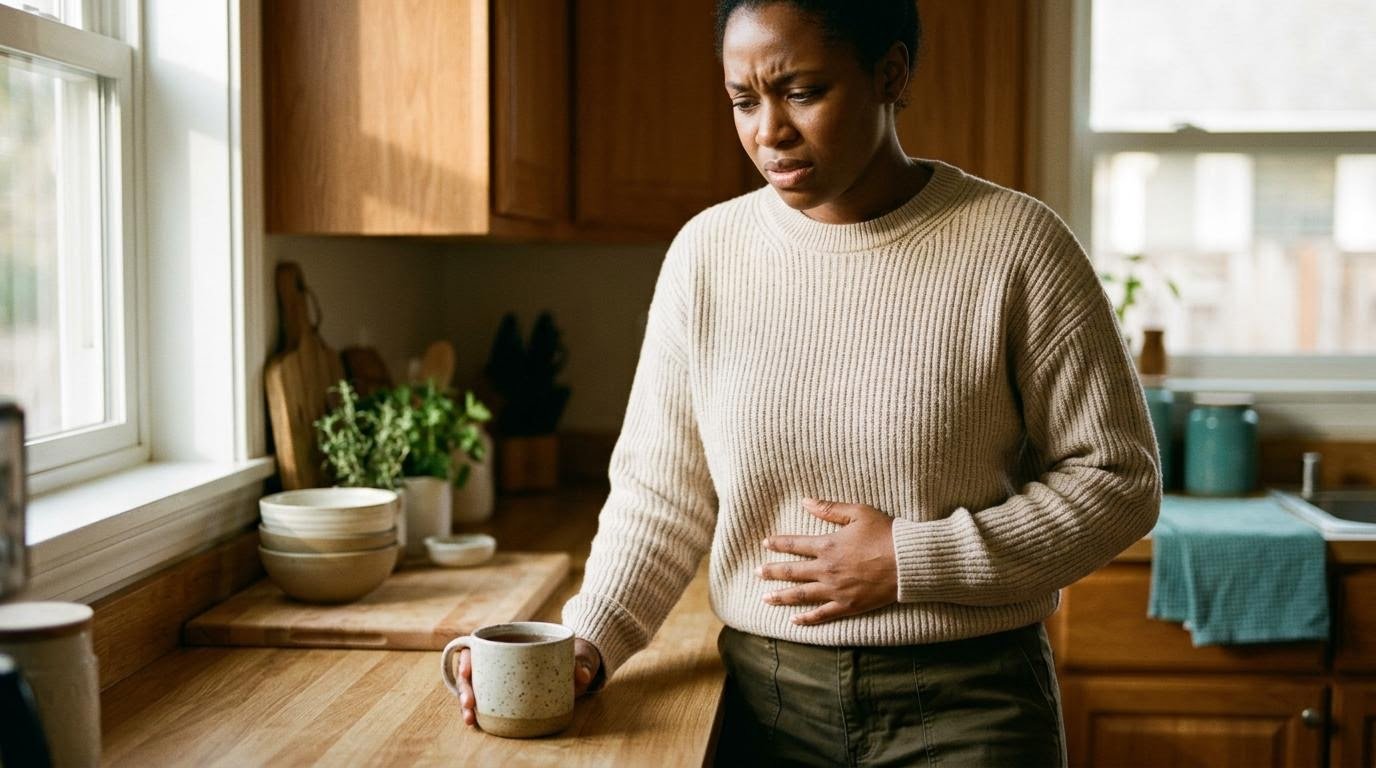
According to the Office on Women's Health at the U.S. Department of Health and Human Services, women are more likely than men to report physical symptoms of stress, including headaches and upset stomach, and are also more likely to have mental health conditions, such as depression or anxiety, that stress makes worse. Women were found to be almost twice as likely as men to report symptoms of depression in the past year. That gap isn't a personality difference. It's a documented physiological pattern that most one-size-fits-all stress content simply skips.
Here's the part that rarely gets said out loud: the same symptom set that gets waved off as "just stress" in women, tension headaches, stomach issues, a shorter fuse, is often the body's most reliable early-warning signal, arriving before mood changes are even noticeable. Treating those physical symptoms as background noise instead of data is one of the more common reasons stress goes unmanaged until it's chronic instead of occasional.
A specific example makes this concrete. Picture a working mother getting the same terse email from her manager as a colleague without kids at home. Both feel the identical jolt, since the trigger is identical. But she's also managing a household calendar, a partner's schedule or lack of one, and the mental load of remembering things nobody asked her to track. The stressor was the same size. What differs is the baseline she's absorbing it into, and that baseline is exactly what generic stress advice never accounts for.
There's a cyclical piece to this too that rarely makes it into mainstream stress content. The Office on Women's Health notes that women who experience chronic or long-term stress may have more severe premenstrual symptoms or irregular periods, which means the same technique that felt like plenty two weeks ago can feel thin during a different phase of the cycle. That's not a sign a technique stopped working. It's a sign the baseline shifted again, and pairing a lighter stress week with a slightly heavier one, rather than expecting identical results from identical effort every single day, tends to be a more realistic way to plan.
The Fastest Stress Management Techniques for Women You Can Use in Under Five Minutes
Breathing techniques are the fastest lever available because they act directly on your nervous system instead of routing through willpower first. Stress management techniques for women that work under real pressure tend to share one trait: they take less time than the stressor itself.
Box breathing is one of the simplest to learn. Inhale through your nose for a count of four, hold for four, exhale for four, hold again for four, then repeat for six to eight rounds. The equal counts matter more than hitting exactly four seconds each, so scale down to a count of three if four feels like a stretch at first.
A quieter option for when you can't step away is extended-exhale breathing: inhale for a silent count of four, exhale for six or seven. A longer exhale specifically activates the parasympathetic branch of your nervous system, the part responsible for calming rather than alerting, and you can do it while still sitting in a meeting or standing in a checkout line without anyone noticing.
If breathing alone feels too abstract, pair it with a grounding technique. Pick one physical point of contact, your feet on the floor, your hands around a mug, and bring your full attention to that sensation for thirty seconds. You're not trying to think your way out of the stress, just interrupting the spiral long enough for your body to catch up. This one takes a little practice to trust, mostly because it feels almost too small to matter. For a deeper walkthrough of grounding and breathing built specifically for the panic-level version of this, our guide on breathing exercises for panic attacks breaks down box breathing, the physiological sigh, and diaphragmatic breathing step by step.
According to Mayo Clinic, almost any form of physical activity can act as a stress reliever, and even a brief walk can pump up feel-good endorphins and refocus your mind away from whatever's causing the day's irritation. That's the mechanism behind a two-minute walk to the mailbox doing more than five minutes of doom-scrolling, even though scrolling feels like the break.
Self Care for Women Isn't a Luxury — It's Preventive Maintenance
Self care for women gets dismissed as bubble baths and candles, which is exactly why so many women quietly opt out of it. Real self care is closer to preventive maintenance on a car: unglamorous, easy to skip, and expensive to ignore. It's the sleep you protect, the meal you don't skip, the boundary you actually hold, not the spa day you're waiting to earn.
A 2018 NCCIH-supported analysis reviewed by the National Center for Complementary and Integrative Health at NIH examined 142 groups of participants with diagnosed anxiety or depression, more than 12,000 people total, and found that mindfulness-based approaches worked as well as established treatments like cognitive behavioral therapy and antidepressant medication for treating those conditions. That's a meaningful result, because it means a five-minute daily practice isn't a lesser substitute for real treatment, it's genuinely in the same performance range for many people, as long as it's practiced consistently rather than tried once during a crisis.
Self care for women over 40 tends to look different than the wellness-ad version, and that's normal rather than a failure. Sleep gets harder to protect with perimenspausal changes. Recovery from a hard week takes longer than it used to. The techniques that worked at 25, pushing through on caffeine and adrenaline, tend to stop working, not because willpower dropped but because the underlying hormonal landscape shifted. Building in a genuine wind-down window before bed, keeping protein at breakfast instead of skipping it, and treating a short walk as non-negotiable rather than optional tend to matter more in this decade than any single "hack."
The non-obvious insight worth sitting with: self care that only happens after you've already hit a wall isn't self care, it's damage control. The version that actually reduces stress load is scheduled before the wall, on the calm Tuesday, not the chaotic Thursday.
Movement as One of the Most Underused Stress Management Techniques for Women
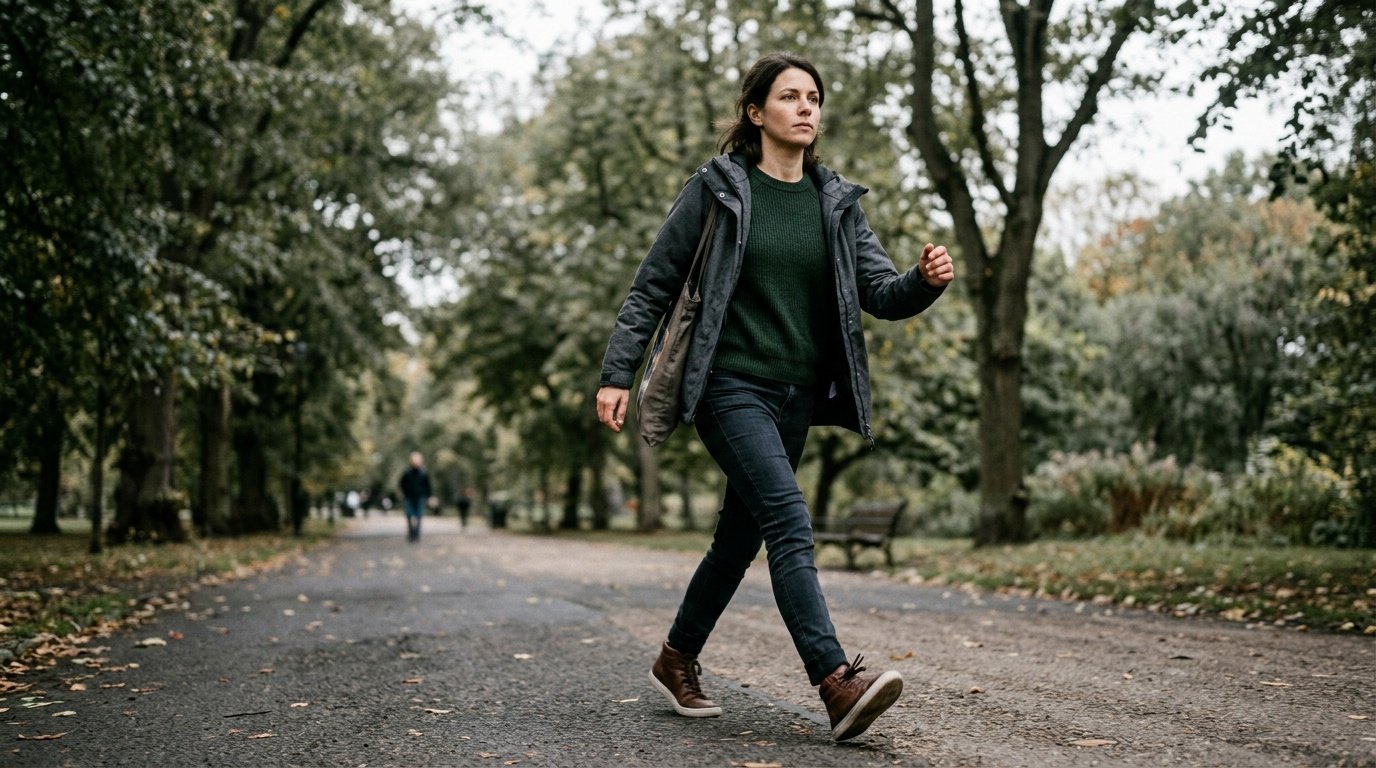
Exercise rarely gets filed under "relaxation," which is exactly why it's underused as a stress tool. Harvard Health Publishing explains that exercise reduces stress hormones and stimulates endorphin production, and that using large muscle groups in a rhythmic, repetitive way, walking or jogging being the clearest examples, produces a calming effect some researchers describe as "muscular meditation." You don't need a structured workout plan for this to count. A twenty-minute walk around the block does real physiological work.
Timing matters more than most people think. A short walk taken right when tension starts building, rather than saved for the end of a bad day, tends to blunt the spike before it fully takes hold. Waiting until you're already overwhelmed to move still helps, but it's working against a bigger physiological hill than a walk taken earlier would have been.
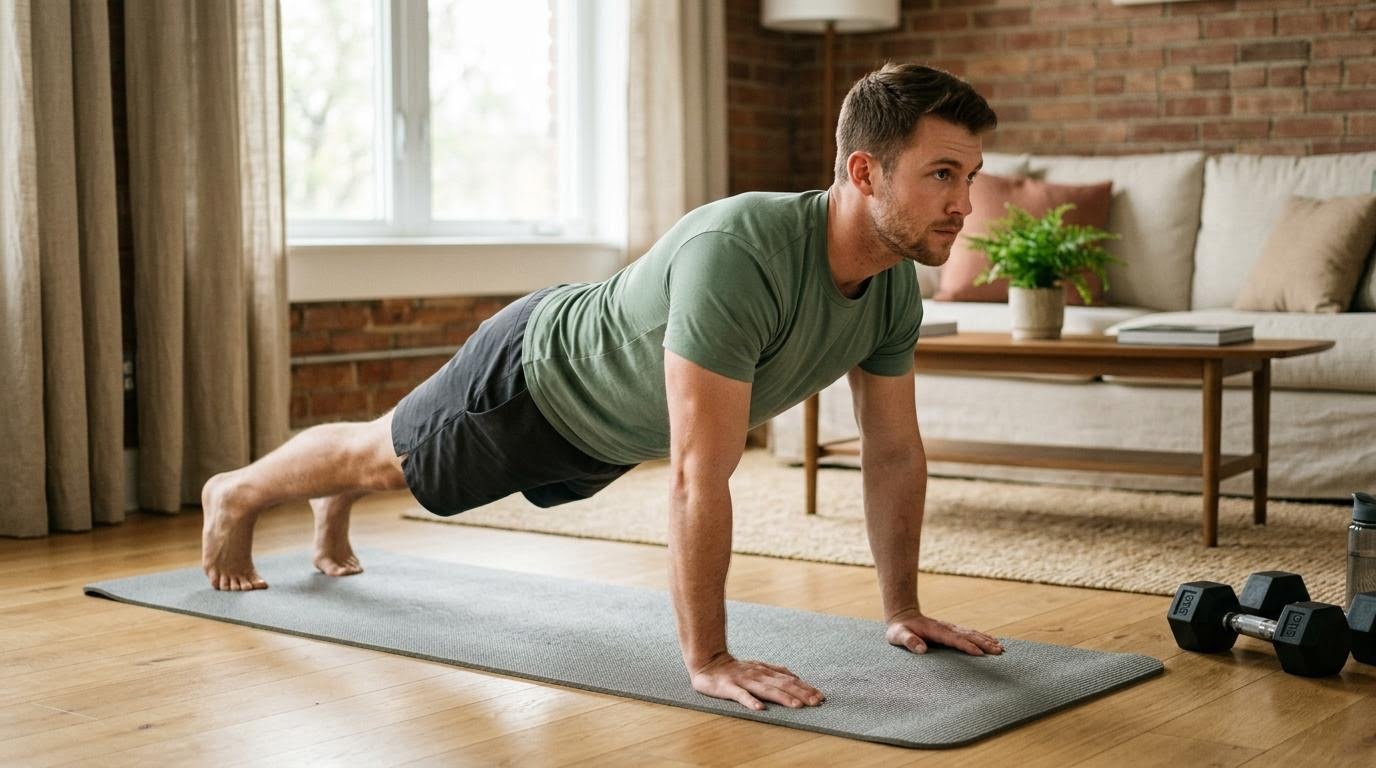
Strength training deserves a specific mention here, since it's the piece most stress guides skip in favor of cardio. Resistance work doesn't just build muscle, it gives your body a controlled outlet for the same fight-or-flight energy a stressful day generates, and the recovery period afterward tends to leave people feeling steadier rather than wired. You don't need a gym membership or a complicated program. Two twenty-minute bodyweight sessions a week, squats, push-ups, and a plank, cover most of the benefit for someone using movement primarily as a stress tool rather than training for a specific athletic goal.
The table below compares a few common approaches by how fast they typically produce a noticeable shift, so you can match the tool to the actual moment you're in rather than guessing.
| Stress Effect on Women | How It Commonly Shows Up | Why It's More Pronounced in Women |
|---|---|---|
| Headaches and migraines | Muscle tension leading to tension-type headaches | Tension-type headaches are documented as common specifically in women |
| Depression and anxiety | Persistent low mood, excessive worry | Women report symptoms of depression at nearly twice the rate of men |
| Weight and cortisol | Increased appetite, fat storage | The stress-to-weight-gain link is stronger for women than for men |
| Digestive symptoms | Bloating, irregular digestion, IBS flares | Irritable bowel syndrome is roughly twice as common in women as in men |
Source: U.S. Department of Health and Human Services, Office on Women's Health, 2025
Health disclaimer: The techniques in this article are general stress-management tools and are not a substitute for diagnosis or treatment. If stress is interfering with your sleep, relationships, or daily functioning on a regular basis, or if you experience panic attacks, chest pain, or thoughts of self-harm, talk to a doctor or licensed mental health professional. If you are having thoughts of harming yourself, seek immediate help from a crisis line or emergency services.
When Stress Crosses Into Something More: Recognizing the Line
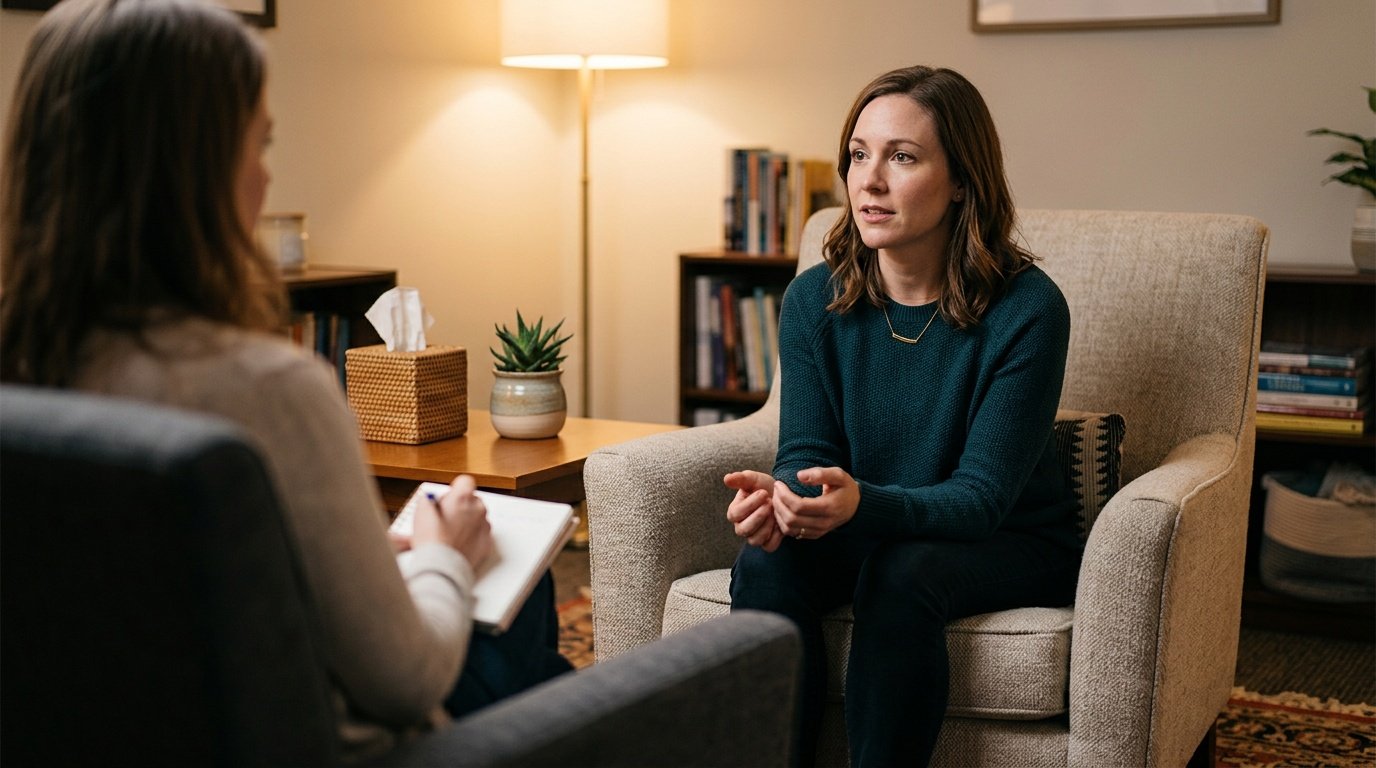
None of the techniques in this article are meant to replace professional support when stress has moved past what self-directed tools can handle. According to the Centers for Disease Control and Prevention, healthy coping strategies like deep breathing, connecting with people you trust, and stepping away from constant negative input are meant to work alongside professional support for chronic stress, not instead of it.
There's a fairly clear signal for when it's time to bring in more support than a breathing technique can offer: if stress is interrupting sleep most nights, showing up as physical symptoms like chest tightness or ongoing stomach issues, or pushing you toward drinking, overeating, or scrolling as your primary coping method, that's past the point where self-management alone is likely to be enough. Depression and anxiety coping strategies that work for everyday tension don't always scale to a clinical mood disorder, and that's not a failure of the technique, it's a different problem needing a different tool.
If any of that sounds familiar, our deeper look at stress management psychotherapy covers what a structured therapy approach actually treats, what it doesn't, and how to pair it with the daily-habit side of stress management instead of treating it as an either-or choice. You also don't have to start with a specialist. A primary care doctor can screen for related issues and refer you onward, and workplace Employee Assistance Programs often offer several free sessions before cost becomes a factor.
Here's a short Mayo Clinic video on reducing stress through mindful living, useful context for why these techniques work at the level they do.
Building a Stress Management Routine That Survives an Actual Week
Most women don't fail at stress management because the techniques don't work. They fail because they only reach for a technique mid-spiral, decide a single round of breathing didn't solve everything, and quietly stop trying. These tools work best as a rehearsed routine built during calm moments, so your body already recognizes the pattern by the time you actually need it under pressure.
Pick one technique and attach it to something that already happens automatically: box breathing while the coffee brews, a five-minute walk right after you close the laptop, a gratitude note before bed. A single technique practiced consistently outperforms four tried once and abandoned after the first time it didn't erase the stress completely. Give a new habit two to three weeks before judging whether it's working, since the early sessions are mostly your nervous system learning the pattern, not the technique itself failing.
For a broader look at holding a routine together beyond any single technique, our guide on stress management activities covers how to stack a new coping skill into a habit that survives a genuinely bad week, not just a calm one. And if the version of stress you're managing is tied specifically to other people rather than a general workload, our piece on stress reduction skills for social anxiety goes into tools built for that exact trigger.
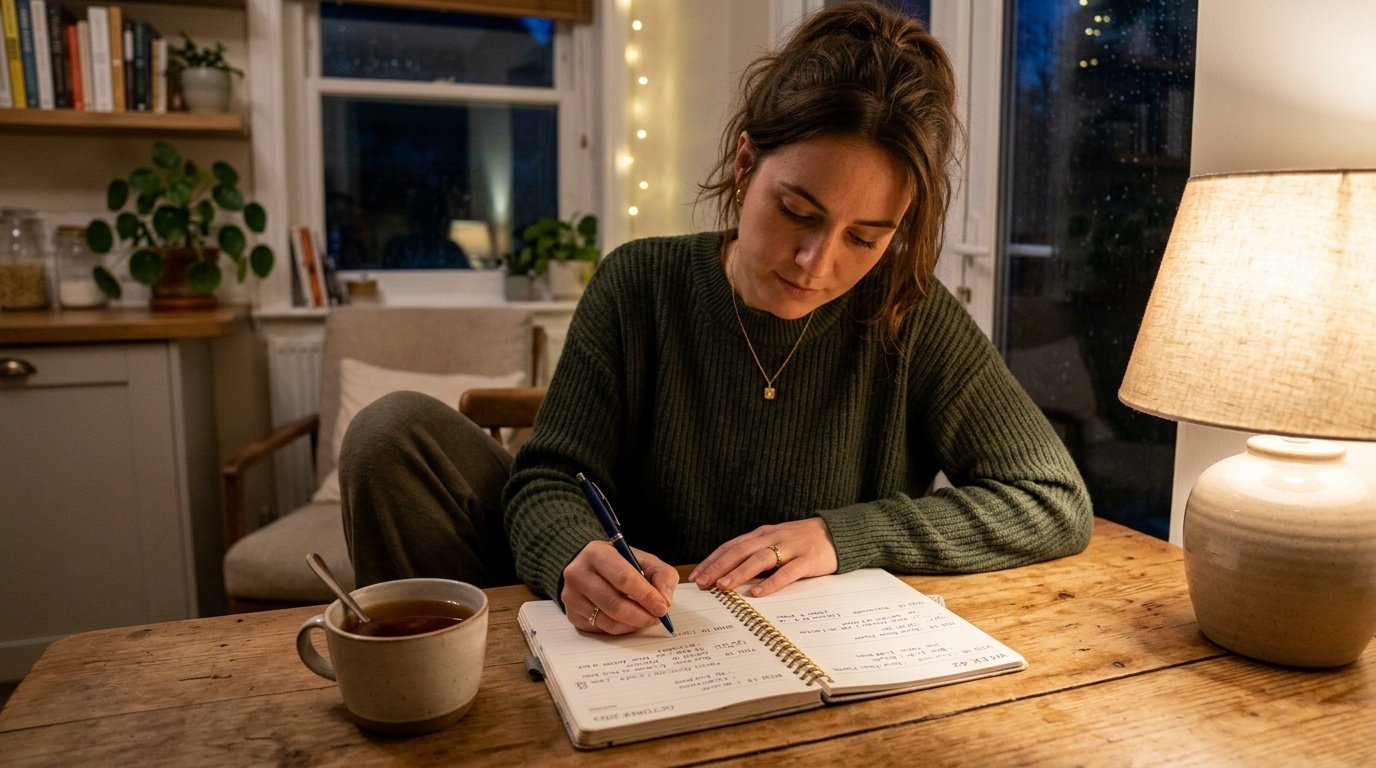
Tracking counts as part of the routine too, even in a loose form. A quick note in your phone, one line about which technique you used and whether it helped, builds a record you can actually look back on instead of relying on vague memory. After a few weeks, patterns tend to surface on their own: maybe breathing works better for work stress but a walk does more for the tension after a hard conversation.
What this looks like varies more by schedule than by personality. A woman working a full-time job with a commute might attach box breathing to the drive home, since it's a slot that already exists every single day regardless of how the day went. A student between classes might use the five-minute walk instead, since the commute slot doesn't exist for her but a gap between lectures does. Neither version is more disciplined than the other. The one that survives is simply the one built around a moment that was already happening, not a moment you have to manufacture from scratch on top of an already full day.
Stress isn't going away, and no single item on this list will make your inbox shorter or your calendar less full. What changes is how much of your day gets hijacked by the aftermath of a spike that's already passed. Start with one technique that fits into a moment you already have, and give it a real few weeks before deciding whether it earns a permanent place in your routine.
Frequently Asked Questions
What are the most effective stress management techniques for women specifically?
Breathing techniques like box breathing and extended-exhale breathing tend to work fastest because they act directly on the nervous system. Movement, even a short walk, and a consistent self-care routine built during calm moments rather than mid-crisis round out the approaches with the most research support for everyday stress.
How is stress different for women than for men?
Research from the Office on Women's Health shows women are more likely than men to report physical stress symptoms like headaches and stomach issues, and are more likely to have depression or anxiety made worse by stress. The exact mechanism isn't fully settled, but it may relate to how differently male and female bodies process stress hormones over time.
What is self care for women over 40 supposed to look like?
It tends to shift away from the pushing-through-on-caffeine approach that works in your twenties toward protecting sleep, keeping consistent meals, and treating movement as non-negotiable. The hormonal landscape changes with age, so recovery from a hard week often takes longer, which makes the daily maintenance version of self care more useful than the occasional splurge version.
Can breathing techniques alone manage chronic stress?
For everyday, situational stress, breathing techniques are often genuinely sufficient on their own. For chronic stress disrupting sleep, relationships, or daily functioning, they work best as a supporting layer alongside professional support such as therapy, not a full replacement for it.
How long does it take to notice results from a new stress management routine?
A single breathing or grounding session can produce a noticeable physical shift within one to two minutes. Building enough familiarity that the techniques work faster under real pressure typically takes two to three weeks of consistent practice, ideally rehearsed during calm moments rather than only during a spike.
References
- U.S. Department of Health and Human Services, Office on Women's Health — Stress and Your Health, 2025
- National Center for Complementary and Integrative Health, NIH — Meditation and Mindfulness: Effectiveness and Safety, 2022
- Mayo Clinic — Stress Relievers: Tips to Tame Stress, 2023
- Centers for Disease Control and Prevention — Managing Stress, 2026
- Harvard Health Publishing — Exercising to Relax, 2020