

Why Generic Stress Advice Fails When the Anxiety Is Specifically Social
Most stress management content is written for a single stressor, an exam, a deadline, a difficult conversation with one specific person. Social anxiety doesn't work that way. It shows up before you've even confirmed the plan is happening, spikes again in the parking lot, and often lingers for hours after the event ends in the form of a mental replay reel. A technique built for calming down before one predictable event doesn't map cleanly onto a stressor that starts early, peaks unpredictably, and refuses to end when the situation does. I know what you're thinking: isn't anxiety just anxiety, regardless of the trigger? Not quite. Social anxiety carries a specific fear that other stress doesn't, the fear of being watched and judged in real time by people whose opinion you can't control or predict. That's a different psychological target than "I'm nervous about this test," and it needs tools that address anticipation, in-the-moment performance pressure, and post-event rumination as three separate problems rather than one generic wave of stress. Here's the part most generic advice skips entirely: the goal isn't to eliminate the nervousness before you walk into a room. Even people with no social anxiety at all feel some activation before a group setting. The goal is keeping that activation from tipping into the kind of spiral that makes your voice shake, your mind go blank, or your feet want to turn around at the door. That's a narrower, more achievable target than "stop being anxious," and it's the one every technique in this article is actually built to hit.
The Physical Stress Response Behind Why a Room Full of People Feels Like Danger
Social anxiety isn't only a thought pattern, it's a measurable physical state. Your sympathetic nervous system reads a room full of unfamiliar people the same way it might read an actual physical threat, and it responds accordingly: heart rate climbs, breathing goes shallow, muscles tighten, and blood shifts away from digestion and toward your limbs. According to Mayo Clinic, physical symptoms of social anxiety disorder can include a fast heartbeat, trembling, sweating, an upset stomach, trouble catching your breath, and the specific sensation of your mind going blank mid-sentence. That last one is the non-obvious piece worth sitting with. Going mentally blank in a conversation isn't a sign you're unprepared or bad at talking to people, it's a documented physical symptom of an activated stress response diverting resources away from working memory. Once you know that's what's happening, the blank-mind moment stops feeling like proof you're broken and starts feeling like a predictable, manageable glitch you can plan around. This matters for choosing which stress reduction skill to reach for. A technique that only addresses your thoughts won't touch a racing heart or a locked jaw, because those are physiological, not cognitive. That's why the strongest stress reduction skills for social anxiety work at the body level first, calming the physical alarm, and only then move to the thought level, since a nervous system still in fight-or-flight mode can't process a calm reframe no matter how logical it sounds.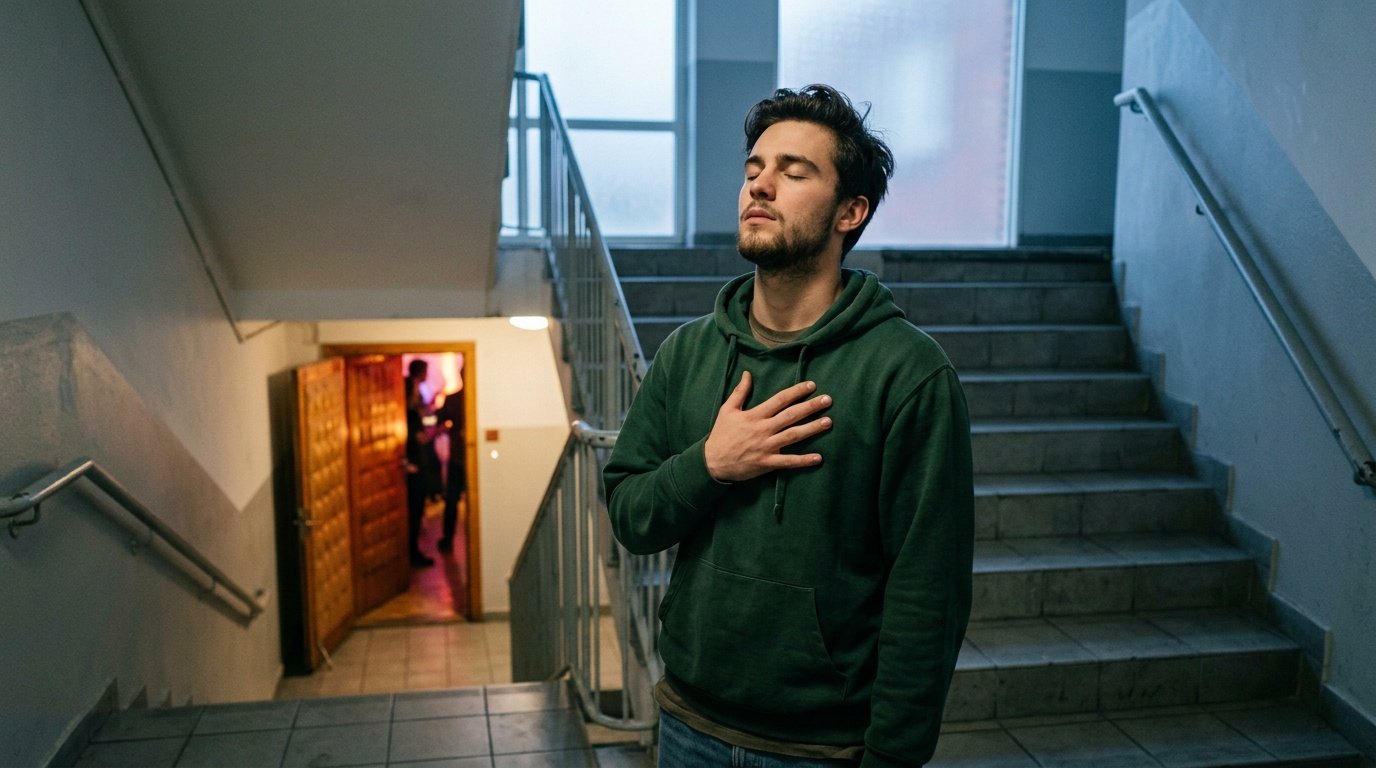
Breathing-Based Stress Reduction Skills for Social Anxiety You Can Use Before You Walk In
Breathing techniques are the fastest lever available, because they act directly on your autonomic nervous system rather than routing through conscious thought first. That's why they're the right starting point when you're standing outside a door, not the last resort.Box breathing for the two minutes before you walk in
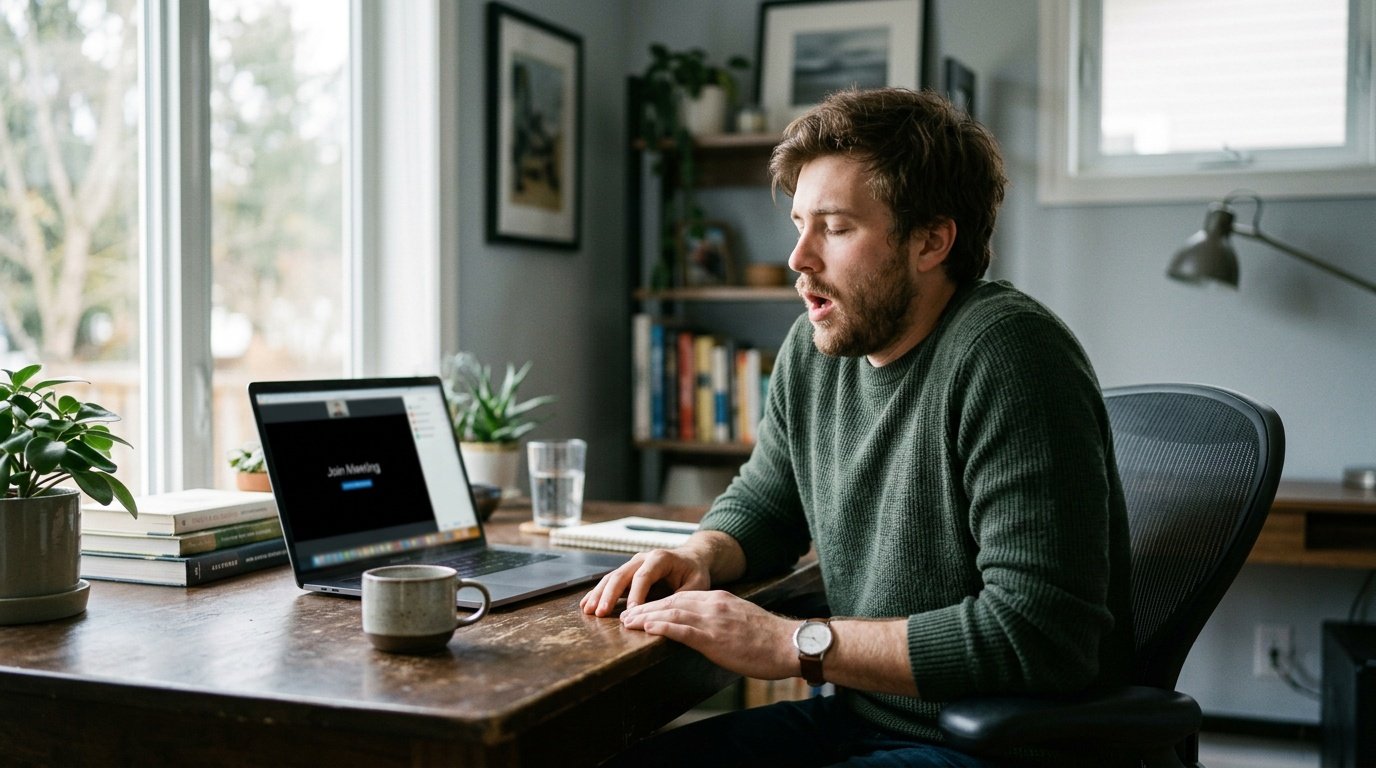
Inhale through your nose for a count of four, hold for four, exhale for four, hold again for four, then repeat the pattern for six to eight rounds. This is the same technique military and emergency personnel use to stay functional under acute pressure, and it works through a mechanism called vagal stimulation. According to Harvard Health Publishing, slow, controlled belly breathing stimulates the vagus nerve, which runs from your brainstem through your chest and signals your body to downshift out of fight-or-flight. If a four-count feels like a stretch the first time, drop to a count of three on each side of the box and build from there. The equal counts matter more than hitting exactly four, and forcing a pace that leaves you gasping defeats the purpose.Extended exhale breathing for the middle of a conversation
Box breathing needs a private moment, but a room mid-conversation rarely offers one. For that setting, lengthen your exhale relative to your inhale, in for a silent count of four, out for a silent count of six or seven. A longer exhale specifically activates the parasympathetic branch of your nervous system, the part responsible for calming rather than alerting, and you can do it while still nodding along and appearing to listen normally. A specific example worth picturing: someone standing near a snack table at a work mixer, unsure how to break into a nearby conversation, can run three or four rounds of extended-exhale breathing while pretending to check their phone. By the time they look up, the physical edge of the spike has usually dropped enough to make the first sentence easier to get out.Health disclaimer: The breathing and grounding techniques in this article are general stress-regulation tools, not a substitute for diagnosis or treatment. If social anxiety is interfering with your work, school, relationships, or daily functioning on a regular basis, or if you experience panic attacks, talk to a doctor or licensed mental health professional. If you are having thoughts of harming yourself, seek immediate help from a crisis line or emergency services.

Grounding-Based Stress Reduction Skills for Social Anxiety You Can Run Mid-Conversation
Grounding techniques work by anchoring your attention to something physical and present, which interrupts the anticipatory spiral your brain runs when it's scanning a room for signs of judgment. Unlike breathing techniques, grounding is built for moments when you can't step away at all.The five-point contact scan
Pick one physical point of contact, your feet flat on the floor, your hand around a drink, the chair against your back, and bring your attention fully to that sensation for thirty seconds. You're not trying to think your way out of the anxiety, just noticing the physical sensation and staying with it. When your attention drifts back to the anxious thought, gently return to the contact point, the same way you'd redirect a wandering conversation back on topic. This one takes practice to trust, mostly because it feels almost too small to do anything. But it doesn't need to eliminate the anxious feeling to be useful. It just needs to keep you present enough to get through the next thirty seconds, and then the thirty after that.Naming what's actually in the room
If your mind starts running worst-case scripts about how the conversation is going, silently name three neutral, factual details in your immediate surroundings, the color of someone's jacket, the pattern on the tablecloth, the specific song playing. This pulls your processing bandwidth away from the imagined judgment and back toward what's actually, verifiably happening around you, which is rarely as dramatic as the story your anxiety is telling. Our related guide on anxiety mindfulness exercises you can do in under five minutes breaks down a fuller sensory grounding sequence if you want more structure than the quick version above, including the classic five-four-three-two-one scan for moments when anxiety has already spiked past what a single grounding point can manage.
Cognitive Reframing for the Replay Loop That Follows a Social Moment
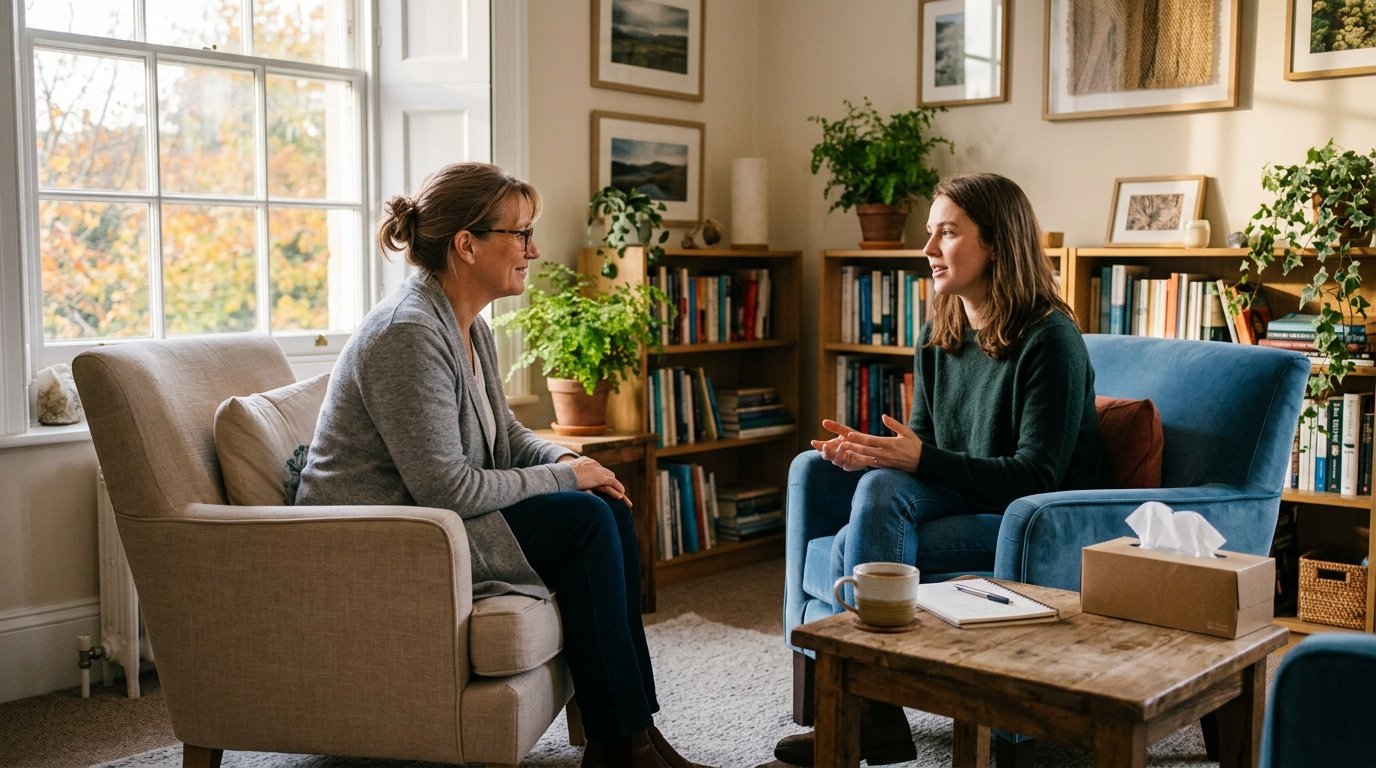
Breathing and grounding manage the moment. They don't stop what happens two hours later, when you're replaying a thirty-second exchange on a loop, certain you said something wrong. This post-event rumination is one of the more specific hallmarks of social anxiety, distinct from most other anxiety types, and it needs a cognitive tool rather than a physical one, since the physical spike has usually already passed by the time the replay starts.Separating the memory from the story attached to it
Write down, as plainly as possible, exactly what happened, not your interpretation of it. "I paused for two seconds before answering a question" is the memory. "Everyone noticed and thought I looked stupid" is the story your anxiety attached to it afterward, usually without any actual evidence that anyone else registered the pause at all. Separating the two on paper makes the gap between them visible in a way it never is when the thought is just looping silently in your head. The non-obvious insight here: your brain treats vivid imagined scenarios almost the same way it treats real memories, which is exactly why a replayed worry can feel as convincing as something that actually happened. Writing the neutral facts down breaks that illusion of certainty, because the story has to survive being read back to you in plain language instead of just replaying on autopilot.The evidence-check question
Ask yourself one specific question: what would I need to see or hear to actually confirm this story is true, rather than just assume it? Usually the honest answer is "nothing, I made it up from a two-second pause," which is a more useful realization than trying to argue yourself out of the feeling directly. Our piece on anxiety reduction techniques backed by real research goes deeper into thought-labeling and worry-scheduling if the post-event replay is a recurring pattern rather than an occasional one.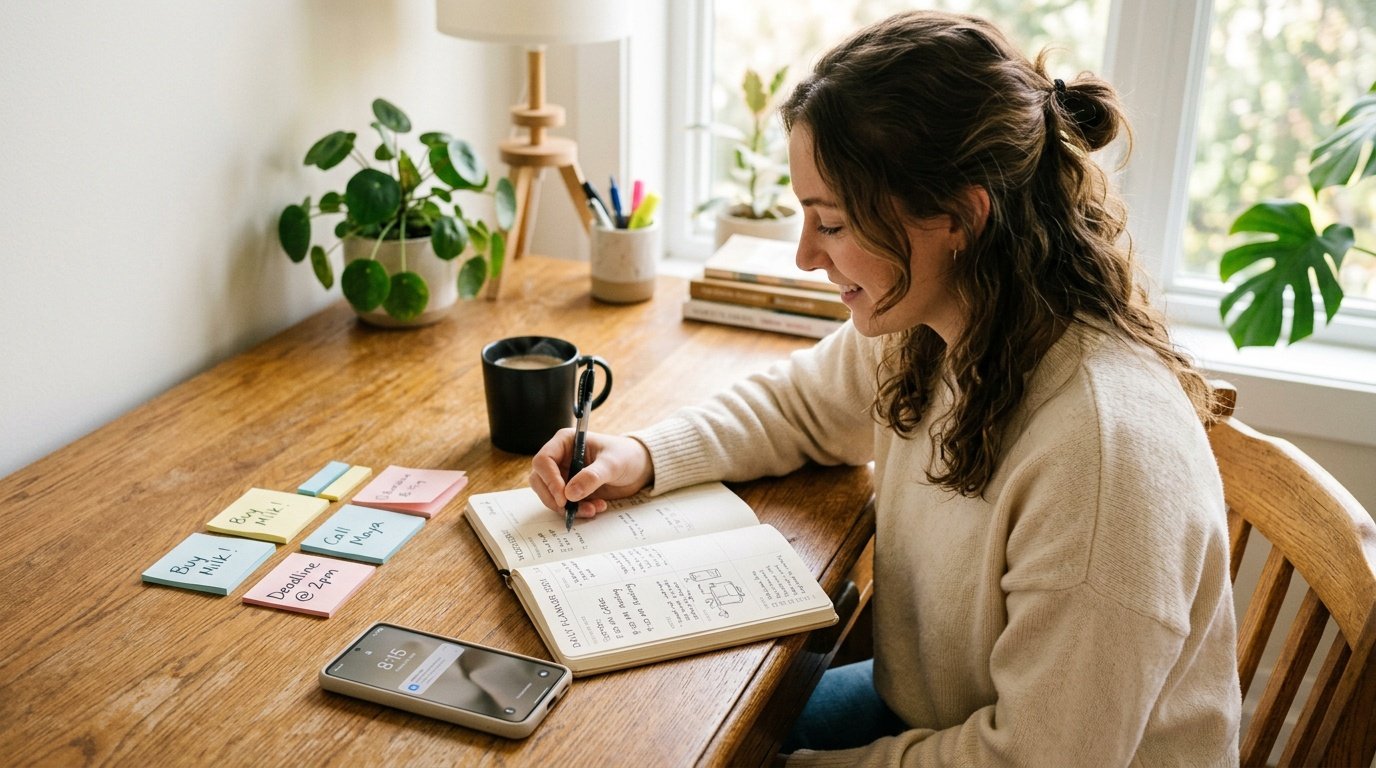
Building a Pre-Event Routine So These Skills Are Ready Before You Need Them
The mistake most people make is only reaching for these tools mid-spiral, then deciding they don't work because a single round of box breathing in the middle of a full anxiety wave feels like too little, too late. These skills work best as a rehearsed routine built during calm moments, so your nervous system already recognizes the pattern by the time you actually need it under pressure. The table below compares the techniques from this article by how fast they typically work and where they fit best, so you can match the tool to the specific moment instead of guessing.| Technique | Typical Time to Relief | Best Used For |
|---|---|---|
| Box breathing | 90 seconds | Private moment before walking in |
| Extended-exhale breathing | 30 to 60 seconds | Mid-conversation, no privacy needed |
| Five-point contact scan | 30 seconds | Sudden spikes while seated or standing in place |
| Cognitive reframing | 5 to 10 minutes | Post-event rumination and replay loops |
Source: National Center for Complementary and Integrative Health, NIH
Pick one technique and attach it to something that already happens automatically before a social event, doing box breathing while you tie your shoes, or running the contact scan the moment you sit down. A single technique practiced consistently outperforms four tried once and abandoned after the first time it didn't erase the anxiety completely. A 2018 analysis funded by the National Center for Complementary and Integrative Health reviewed 142 groups of participants, more than 12,000 people total with diagnosed anxiety or depression, and found mindfulness-based approaches matched the results of cognitive behavioral therapy and antidepressant medication in several of the included trials. That's a strong result for a set of tools that cost nothing and take less than two minutes to run. For a broader routine that holds up beyond social settings specifically, our guide on mental health practices backed by real evidence covers how to stack any new coping skill into a habit that survives a genuinely bad week, not just a calm one. Here's a short video from Mayo Clinic Health System on when anxiety has moved past what self-directed tools can manage and it's time to loop in a professional.
When Stress Reduction Skills for Social Anxiety Aren't Enough on Their Own
These tools are genuinely effective for everyday social nervousness and as a supporting layer alongside therapy or medication for a diagnosed social anxiety disorder. What they aren't is a standalone cure for a clinical condition. If you find yourself avoiding normal activities entirely, canceling plans specifically because of the anxiety rather than genuine scheduling conflicts, or if the anxiety has lasted most weeks for several months, that's a signal to bring in a licensed professional rather than expecting five breathing patterns to carry the full weight. According to the CDC, healthy coping strategies like deep breathing, connecting with people you trust, and stepping away from constant negative input are meant to work alongside professional support for chronic stress, not instead of it. Cognitive behavioral therapy specifically has a strong evidence base for social anxiety disorder, and a therapist can offer a structured, second perspective on thought patterns that are genuinely difficult to see clearly from inside your own head. You also don't have to start with a specialist. A primary care doctor can screen for related issues and refer you onward, and if you're a student or employed, campus counseling centers and workplace Employee Assistance Programs often offer several free sessions before cost becomes a factor. None of the stress reduction skills for social anxiety in this article require special equipment, a subscription, or a block of quiet time you don't actually have. Pick the one that matches the moment you're actually in, a ninety-second breathing pattern in the car before you walk in, or a five-minute reframe exercise the morning after, and give it a real few weeks before deciding whether it earns a permanent place in your routine. Small, repeatable tools tend to outlast the more dramatic fixes that sound impressive but never actually get used.Frequently Asked Questions
What is the fastest stress reduction skill for social anxiety in the moment?
Box breathing and the five-point contact scan tend to work fastest, usually within thirty to ninety seconds, because they give your nervous system a specific physical task instead of asking your mind to calm down directly. Extended-exhale breathing is the best option when you don't have privacy, since it works while you're still visibly present in a conversation.
Can stress reduction skills alone fix social anxiety?
For everyday social nervousness, yes, they're often genuinely sufficient on their own. For a diagnosed social anxiety disorder, these skills work best as a supporting layer alongside therapy or medication rather than a standalone treatment. If avoidance is affecting your daily functioning, a licensed mental health professional can offer tools beyond what self-directed techniques provide.
How is social anxiety different from general shyness?
Shyness is a personality trait that varies in intensity and doesn't necessarily interfere with daily life. Social anxiety disorder involves a persistent fear of judgment intense enough to disrupt relationships, work, or school, along with physical symptoms like a racing heart or an upset stomach that can show up before the social situation has even started.
How long does it take to notice a difference from these techniques?
Breathing and grounding skills can produce a noticeable physical shift within one to two minutes of a single session. Building enough familiarity that the techniques work faster under real pressure typically takes two to three weeks of regular practice, ideally rehearsed during calm moments rather than only during a spike.
Should I combine stress reduction skills with therapy for social anxiety?
If your social anxiety is mild and occasional, self-directed skills alone may be enough. If it's disrupting your daily life, relationships, or opportunities, combining these techniques with cognitive behavioral therapy tends to produce better and faster results than either approach used alone, since therapy addresses the underlying thought patterns these quick tools can only interrupt in the moment.
Can breathing techniques stop a social anxiety spiral once it's already started?
They can shorten the intensity and duration of a spike by giving your body a concrete physical signal to downshift out of fight-or-flight, but they work better as prevention than as a full stop button once anxiety has peaked. Starting a breathing technique at the first sign of tension, rather than waiting until the spiral is in full swing, produces noticeably better results.
References
- National Institute of Mental Health — Social Anxiety Disorder
- Mayo Clinic — Social Anxiety Disorder (Social Phobia): Symptoms and Causes
- Harvard Health Publishing — Ease Anxiety and Stress: Take a (Belly) Breather
- National Center for Complementary and Integrative Health (NIH) — Meditation and Mindfulness: Effectiveness and Safety
- Centers for Disease Control and Prevention — Managing Stress