


You've probably tried building a healthy lifestyle routine before. Maybe it lasted five days. Maybe it lasted three weeks and fell apart the first time work got busy or a friend's birthday landed on your "no drinking" night. That's not a willpower problem. Most routines fail because they're built as a list of rules instead of a system that bends without breaking.
This guide walks through what actually holds a routine together: the order you build habits in, how much sleep and movement genuinely move the needle, and how to structure a week so one bad day doesn't wreck the other six. None of it requires a 5 a.m. wake-up or a supplement cabinet.

Why most healthy lifestyle routines collapse before day ten
The typical routine attempt front-loads everything: new diet, new gym schedule, new sleep time, new meditation app, all starting Monday. Behavioral researchers who study habit formation have found this pattern is consistent: habits form through repetition of a small, specific action, not through a sweeping overhaul of your entire day. The practical takeaway is identifying one or two anchor habits first, then layering on more once those feel automatic.
Here's the non-obvious part: the habit that fails first usually isn't the hardest one, it's the one with the least visible payoff. Flossing loses to sleeping in. A 6 a.m. run loses to five more minutes under the blanket. A meal-prepped lunch loses to a coworker suggesting takeout. The habits that survive are the ones tied to something you already do daily, stacked onto an existing anchor rather than floating on their own.
The habit-stacking method
Instead of "I will meditate every morning," try "After I pour my coffee, I will sit for two minutes before checking my phone." The existing habit (making coffee) becomes the trigger for the new one. This removes the decision-making step, which is where most routines quietly die.
The same logic applies to almost any habit you're trying to add. Want to stretch more? Attach it to brushing your teeth. Want to drink more water? Keep a bottle next to your keys so leaving the house triggers picking it up. The trigger doesn't need to be dramatic, it just needs to already be a fixed part of your day, something you do without deliberating.
Why willpower alone isn't a strategy
It's tempting to think the people who "stick to it" simply have more discipline. What the research actually shows is closer to the opposite: people with strong routines have removed as many decision points as possible, so willpower barely gets used. If your gym clothes are laid out the night before, you're not relying on 6 a.m. motivation to get dressed for a workout, you're just following a preset sequence. Design the environment, and the routine survives days when your motivation is genuinely low.
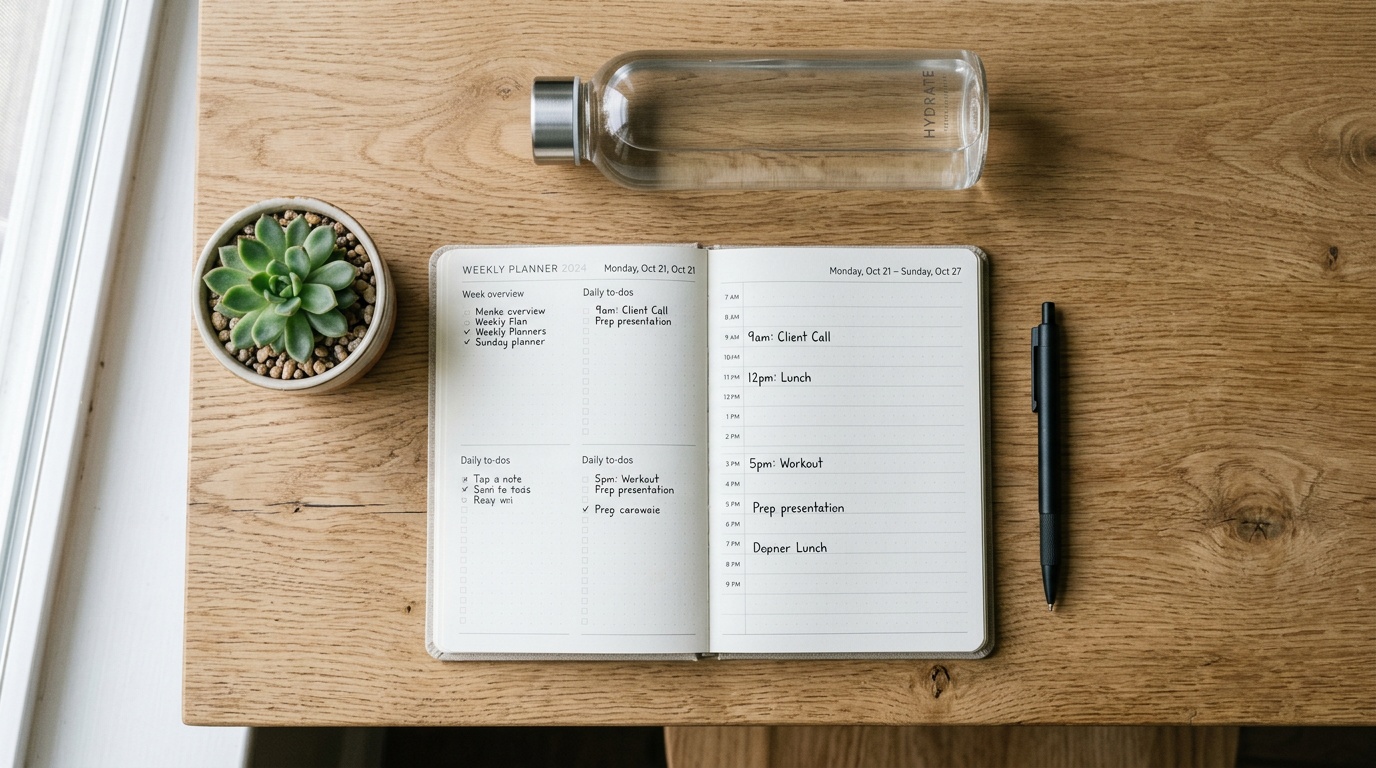
The five-anchor framework that actually holds a routine together
A sustainable healthy lifestyle routine rests on five anchors: sleep, movement, nutrition timing, stress recovery, and a weekly review. Skip one and the other four start compensating, usually badly. Poor sleep drives cravings that undo a good diet. Chronic stress raises cortisol and interferes with the very recovery that exercise depends on. They're not separate boxes to check, they're one interconnected system.
A widely cited 2018 analysis from Harvard T.H. Chan School of Public Health, published in the journal Circulation and covered by NIH Research Matters, found that adults who maintained five low-risk lifestyle factors together, not eating well alone or exercising alone, lived meaningfully longer than adults with none of them. The women in the study who kept all five factors lived an estimated 14 years longer on average than women with none, and men gained roughly 12 years. That's the case for building a routine, not a single resolution.
What makes that finding interesting isn't just the headline number, it's that the factors reinforced each other. Regular exercise made it easier to sleep well. Better sleep reduced the stress-driven snacking that undermined the diet piece. None of the five factors worked in isolation nearly as well as they worked together, which is the whole argument for treating a routine as a system instead of five separate to-do items competing for the same 24 hours.

Sleep is the anchor most people cut first, and it's the wrong one to cut
When a routine gets tight, sleep is usually the first casualty. It's the easiest to steal from, since nobody notices you're doing it in the moment. But sleep debt shows up everywhere else in the routine: it blunts appetite regulation, saps motivation for movement, and makes minor stressors feel bigger than they are.
The CDC recommends adults get at least 7 hours of sleep per night, with needs shifting slightly for older adults. If your current routine treats sleep as whatever's left over after everything else is scheduled, flip the order: block the sleep window first, then build the rest of the day around it.
A realistic wind-down, not a 90-minute ritual
You don't need a candlelit bath and a sound machine. A 15-minute wind-down that reliably happens beats an elaborate one you skip half the time. Dim the lights, put the phone on the other side of the room, and pick one low-stimulation activity, reading, stretching, journaling. Consistency matters more than elaborateness here.
Weekend sleep is where most routines quietly fall apart. Staying up two or three hours later on Friday and Saturday, then trying to snap back to a weekday schedule on Sunday night, creates a pattern researchers sometimes call social jet lag, and it can leave you groggy well into Monday. Keeping wake-up time within about an hour of your weekday schedule, even on days off, protects the rest of the routine far more than an extra hour of sleep-in ever compensates for.

Movement doesn't need a gym membership to count
A lot of people stall out on the exercise piece of their routine because they're picturing an hour-long gym session they don't have time for. The bar is lower than that. The American Heart Association recommends 150 minutes of moderate-intensity activity per week, which breaks down to about 22 minutes a day, or three brisk 30-minute walks and one rest day, however you want to split it.
Walking counts. Taking the stairs counts. A 15-minute bodyweight circuit in your living room counts. The specific research finding worth internalizing: it's total weekly volume that predicts most of the cardiovascular benefit, not whether the movement happened in a gym.
If 150 minutes still sounds intimidating, work backward from the smallest viable version. Ten minutes after breakfast, ten at lunch, ten in the evening adds up to 30 minutes a day without ever blocking off a dedicated "workout session." This matters most in the first few weeks of a new routine, when the goal isn't fitness gains yet, it's proving to yourself the habit can survive a normal week. Once that's established, intensity and duration are easy to add. Skipping straight to an ambitious training plan before the habit itself is stable is one of the more common reasons a movement routine collapses by week three.
| Routine anchor | Recommended target | Easiest way to hit it |
|---|---|---|
| Sleep | At least 7 hours per night | Fixed lights-out time, 7 nights a week |
| Movement | 150 minutes moderate activity per week | Three 30-minute walks plus two shorter sessions |
| Nutrition rhythm | Consistent meal timing, not skipping meals | Same three eating windows most days |
Source: American Heart Association; Centers for Disease Control and Prevention

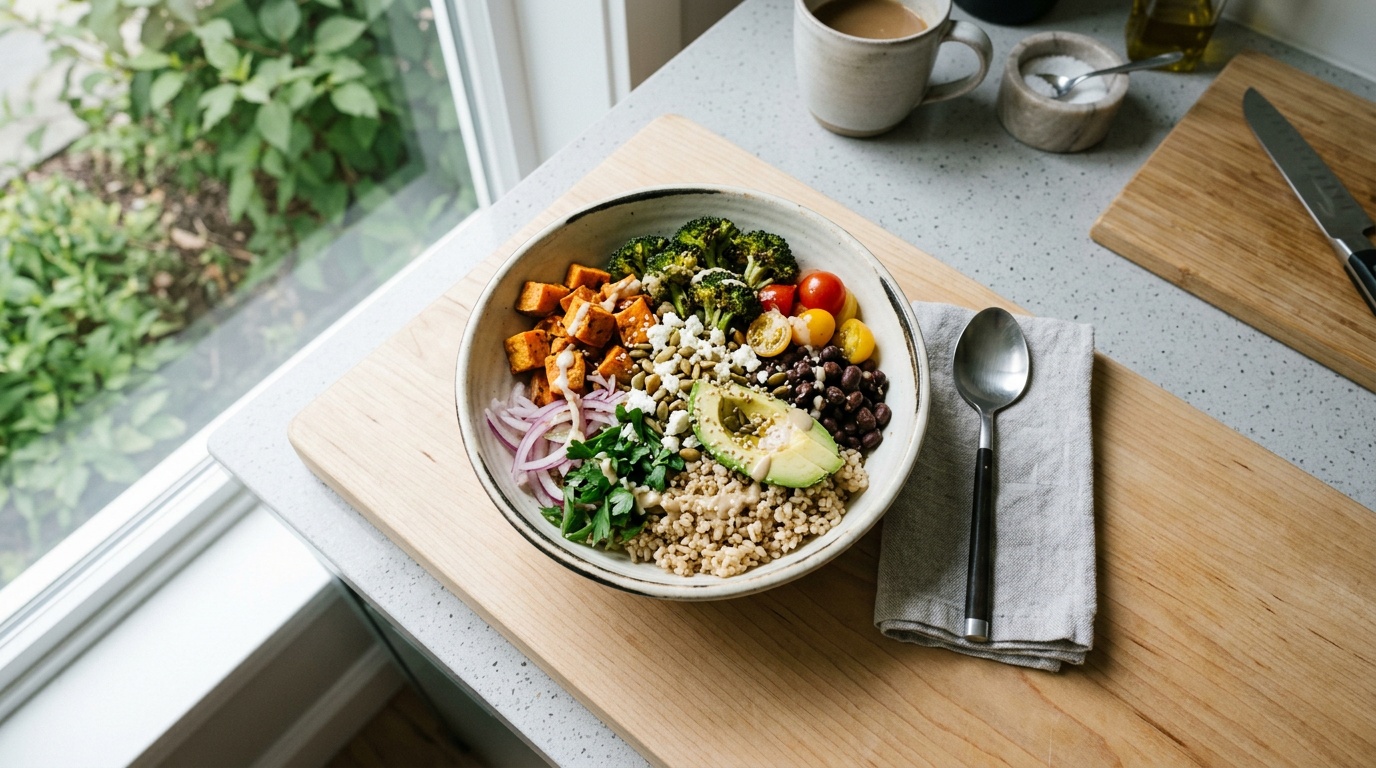
Eating on a rhythm beats another meal-prep Sunday you won't repeat
Elaborate meal prep is the routine element people abandon fastest, mostly because it takes hours and the food gets boring by Wednesday. What actually sustains itself is eating at roughly the same times each day. The Academy of Nutrition and Dietetics notes that regular meal patterns support steadier energy and easier hunger regulation than skipping meals or eating erratically throughout the day.
Think of this in terms of anchors, not menus. Breakfast within an hour of waking. Lunch around midday. Dinner a few hours before bed. Fill those windows with whatever fits your schedule and preferences, the timing consistency is doing more work than any specific food choice.
Health disclaimer: This article offers general lifestyle guidance and isn't a substitute for individualized medical advice. If you have a diagnosed health condition, are pregnant or breastfeeding, or take medication affected by meal timing, sleep changes, or exercise intensity, talk with your doctor before adjusting your routine.

Stress recovery is the anchor that protects the other four
A routine can have perfect sleep, movement, and meal timing and still fall apart under chronic stress, because stress hormones interfere with sleep quality, spike cravings, and drain the motivation needed for movement. Harvard Health researchers point to a combination of adequate sleep, regular movement, and brief daily relaxation practices as the most reliable way to build stress resilience, rather than trying to eliminate stress triggers entirely.
You don't need a 30-minute meditation practice. A 5-minute breathing break between meetings, a short walk after a stressful call, or even just stepping outside for fresh air counts as a real intervention. The goal isn't a stress-free life, it's a nervous system that resets faster after a spike.
The Sunday reset that keeps the whole week honest
Set aside 15 minutes once a week to look at what actually happened versus what you planned. Did sleep slip on weeknights? Did movement only happen on days you had extra energy? This isn't about guilt, it's data. Adjust the coming week's plan based on what your actual life looked like, not the idealized version you wrote down.

Common mistakes that quietly sabotage a healthy lifestyle routine
A few patterns show up again and again in routines that don't survive past the first month. Recognizing them ahead of time is easier than untangling them after the fact.
Treating a missed day as a failed routine
One skipped workout or one late bedtime doesn't undo a routine, but the story people tell themselves about it often does. The "well, I already broke it" mindset turns a single missed day into a missed week. A routine with a built-in buffer day, discussed below, removes the moral weight from an off day and treats it as expected rather than exceptional.
Copying someone else's exact schedule
A routine built around someone else's 5 a.m. gym session and green smoothie doesn't automatically transfer to a different job, sleep chronotype, or set of responsibilities. The five anchors, sleep, movement, nutrition timing, stress recovery, weekly review, are universal. The specific clock times and activities that fill them should be yours, not copied from an influencer's morning routine video.
Measuring the routine by how it feels in week one
New habits often feel awkward and effortful before they feel automatic, and that discomfort gets misread as evidence the routine "isn't working." Most of the friction in the first two weeks is simply the cost of building a new neural pathway, not a signal to abandon the plan. Give any single new anchor at least three weeks before judging whether it fits.

Adjusting the routine for your actual life stage
A healthy lifestyle routine designed for a college student living in a dorm looks different from one designed for someone working a rotating shift schedule, and both look different from a routine for a new parent. The five anchors stay the same, but how you hit them changes.
Students juggling irregular class schedules often do better anchoring movement to a consistent time between classes rather than a fixed clock hour, since the clock hour keeps shifting by semester. Shift workers benefit from treating their personal "morning" as whatever hour they wake up, even if that's 3 p.m., and building the wind-down and meal-timing anchors around that instead of the standard 24-hour clock. If your schedule doesn't look like a typical 9-to-5, don't force a routine built for one, adapt the same five anchors to the day you actually have.
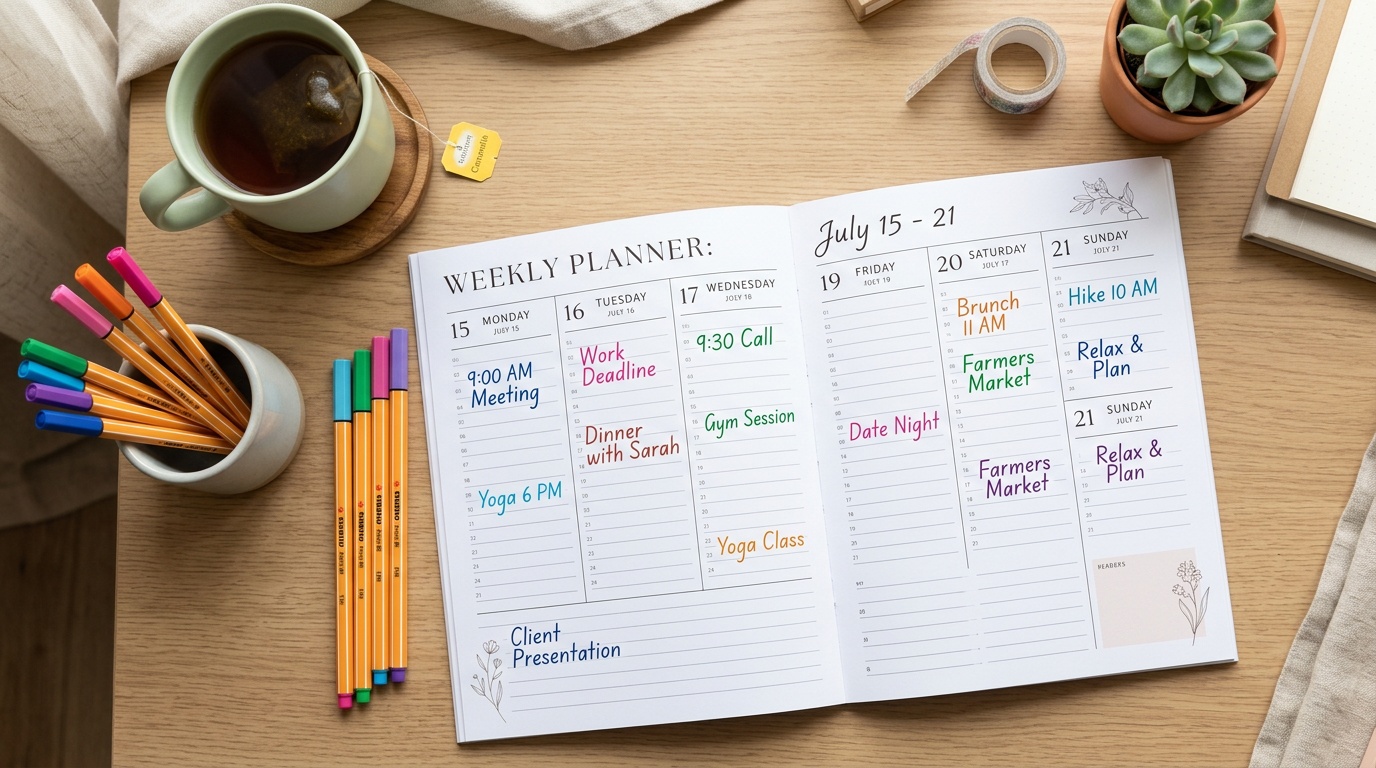
Building your own seven-day routine template
Here's a starting structure you can adapt. It's intentionally loose, since a routine that survives contact with a busy week beats a rigid one that only works in theory.
- Fixed anchor: Same wake time and same lights-out time, seven days a week, weekends included.
- Movement: Three 30-minute sessions and two 10 to 15-minute sessions, spread across the week.
- Meals: Three consistent eating windows, flexible on content.
- Stress reset: One 5-minute break built into the workday, plus a 15-minute Sunday review.
- Buffer day: One day per week with no fixed movement target, so a missed session doesn't feel like failure.
A specific, real-world way this plays out: someone starting from zero might commit to only two anchors in week one, a fixed bedtime and a 20-minute walk after dinner, then add the meal-timing anchor in week three once the first two feel automatic rather than effortful. Layering habits this way, instead of launching all five at once, is what separates a healthy lifestyle routine that lasts from one that quietly disappears by February.
Here's a short video from Mayo Clinic on building sustainable daily habits for a healthier life.
Frequently Asked Questions
How long does it take to build a healthy lifestyle routine that sticks?
Most people notice a habit feeling automatic somewhere between three and ten weeks, depending on the habit's complexity and how consistently it's repeated. Simple habits like a fixed bedtime tend to stick faster than habits with more decision points, like meal planning.
What's the single best habit to start a healthy lifestyle routine with?
A fixed sleep and wake time. It's the anchor that most directly affects the other four, since poor sleep undermines appetite regulation, movement motivation, and stress tolerance all at once.
Can I still have a healthy lifestyle routine if I work irregular hours or shifts?
Yes. The specific clock times matter less than the consistency of the pattern relative to your own schedule. Anchor sleep and meals to a fixed point in your personal day, even if that day starts at 4 p.m. instead of 6 a.m.
How much exercise do I actually need for a healthy lifestyle routine?
The American Heart Association recommends at least 150 minutes of moderate-intensity activity weekly, which can be broken into shorter sessions across the week rather than done all at once.
What should I do if I fall off my routine for a week?
Restart with the single anchor habit, not the full list. Trying to relaunch all five anchors at once after a lapse is the most common reason people abandon the routine entirely instead of just picking back up.
References
- NIH Research Matters — Healthy habits can lengthen life, 2018
- Centers for Disease Control and Prevention — About Sleep
- American Heart Association — How much physical activity do you need?
- Academy of Nutrition and Dietetics — Meals and Snacks
- Harvard Health Publishing — Top ways to reduce daily stress
- Mayo Clinic — Mayo Clinic Minute: Cardiologist's tips for a healthy life