

Fifty doesn't reset your metabolism to zero, but it does change the rules. If you've tried intermittent fasting for women over 50 and gotten a shrug where you expected results, or worse, felt wired and exhausted at the same time, the problem usually isn't willpower. It's that most fasting advice online is written for a 28-year-old's hormone profile, not yours.
The good news is that the research on fasting after menopause is more encouraging than the research on fasting before it. Registered dietitian Julia Zumpano at Cleveland Clinic puts it plainly: once estrogen and progesterone settle into their low, steady postmenopausal pattern, fasting stops fighting your cycle the way it can before menopause. That's a real structural advantage. It just comes with a different set of things to get right.

What Makes Intermittent Fasting Different for Women Over 50
Before menopause, your reproductive hormones rise and fall across roughly a month, and fasting can interrupt that rhythm in ways that show up as skipped periods, mood swings, or worse sleep. After menopause, that monthly swing is gone. Estrogen and progesterone settle at a low, stable baseline instead of cycling, which is exactly why fasting tends to behave more predictably for postmenopausal women than for women still cycling.
That doesn't mean fasting becomes a free pass. Three things change at the same time in your fifties: estrogen drops, muscle mass declines faster than it did in your thirties and forties, and cortisol regulation gets a little less forgiving. A fasting plan that ignores any one of those three is a fasting plan that will eventually work against you instead of for you.
Why postmenopausal fasting responds differently than premenopausal fasting
Fasting is, physiologically, a mild stressor. In a body still cycling through fertility hormones, that stressor can nudge gonadotropin-releasing hormone off its rhythm, which cascades into the estrogen and progesterone swings that show up as irregular cycles. In a postmenopausal body, there's no cycle left to disrupt, so that specific downside disappears. What's left is a more straightforward metabolic question: does restricting your eating window help you manage weight, blood sugar, and energy without adding stress your body can't absorb.

How Declining Estrogen Changes the Way Your Body Responds to Fasting
Estrogen does more than regulate reproduction. It influences where you store fat, how sensitive your cells are to insulin, and how quickly you build and hold onto muscle. When estrogen drops after menopause, fat storage shifts toward the abdomen even in women whose overall weight barely moves. A widely cited Mayo Clinic Proceedings review found that visceral fat, the metabolically active fat around your organs, can climb to 15 to 20 percent of total body fat after menopause, compared with roughly 5 to 8 percent before it, even when age and BMI are matched between groups.
The same review noted that women in midlife gain an average of about 1.5 pounds a year during their fifties and sixties, independent of starting weight, largely from the combined effect of aging and a slowing metabolic rate rather than menopause alone. That's a useful reframe: the number on the scale creeping up isn't a personal failure of discipline, it's a predictable physiological shift that fasting can help manage, but won't reverse on its own.
Why the 16:8 window often works better than longer fasts after 50
A moderate 16:8 eating window, meaning 16 hours fasted and an 8-hour window for meals, tends to be the sweet spot for women over 50. It's long enough to trigger the metabolic shift from burning glucose to burning stored fat, without pushing into the extended-fast territory that carries its own risks. NIH-funded fasting researchers have found that people who regularly fast beyond 16 to 18 hours a day face a measurably higher risk of gallstones and gallbladder surgery. For most women over 50, that's a reason to build up gradually rather than jumping straight into an 18-hour or 20-hour protocol because it sounded more aggressive online.

The Real Link Between Intermittent Fasting, Cortisol, and Menopause Weight Gain
This is the part most fasting guides skip entirely, and it's the reason some women over 50 try fasting and end up feeling worse, not better. Cortisol, your primary stress hormone, tends to run less flexibly after menopause because estrogen used to help buffer the stress response. Fasting itself raises cortisol slightly, which is normal and usually harmless. The problem shows up when fasting stacks on top of poor sleep, a demanding job, or an already-stressful stretch of life. Elevated cortisol in that context can raise blood sugar and worsen insulin resistance, which works directly against the metabolic benefits fasting is supposed to deliver.
Here's the non-obvious part: this doesn't mean women over 50 should avoid fasting. It means the fasting schedule needs to bend around the rest of your life instead of adding another rigid demand to it. A woman sleeping five hours a night through a stretch of work deadlines is a poor candidate for a strict 18:6 protocol that week, even if the exact same protocol suited her fine three months earlier when she was sleeping well.
Signs your fasting window is raising cortisol more than it's helping
- Trouble falling asleep despite feeling physically tired
- Cravings that get worse, not better, as the fast progresses
- Feeling wired but foggy rather than clear-headed during the fasted hours
- Weight that stalls or creeps up despite consistent fasting and no change in food quality
If two or more of these show up consistently, shortening the fasting window by two to four hours, or taking a few days off entirely, is usually more productive than pushing through.
Building a Fasting Schedule That Protects Muscle Mass After 50
Muscle loss doesn't wait for menopause to start, but menopause makes it worse. According to NIH News in Health, adults naturally lose roughly 3 to 5 percent of muscle mass per decade starting around age 30, and the hormonal shifts of menopause can accelerate that decline further. Less muscle means a lower resting metabolic rate, which is part of why the same calorie intake that maintained your weight at 35 doesn't necessarily maintain it at 55.
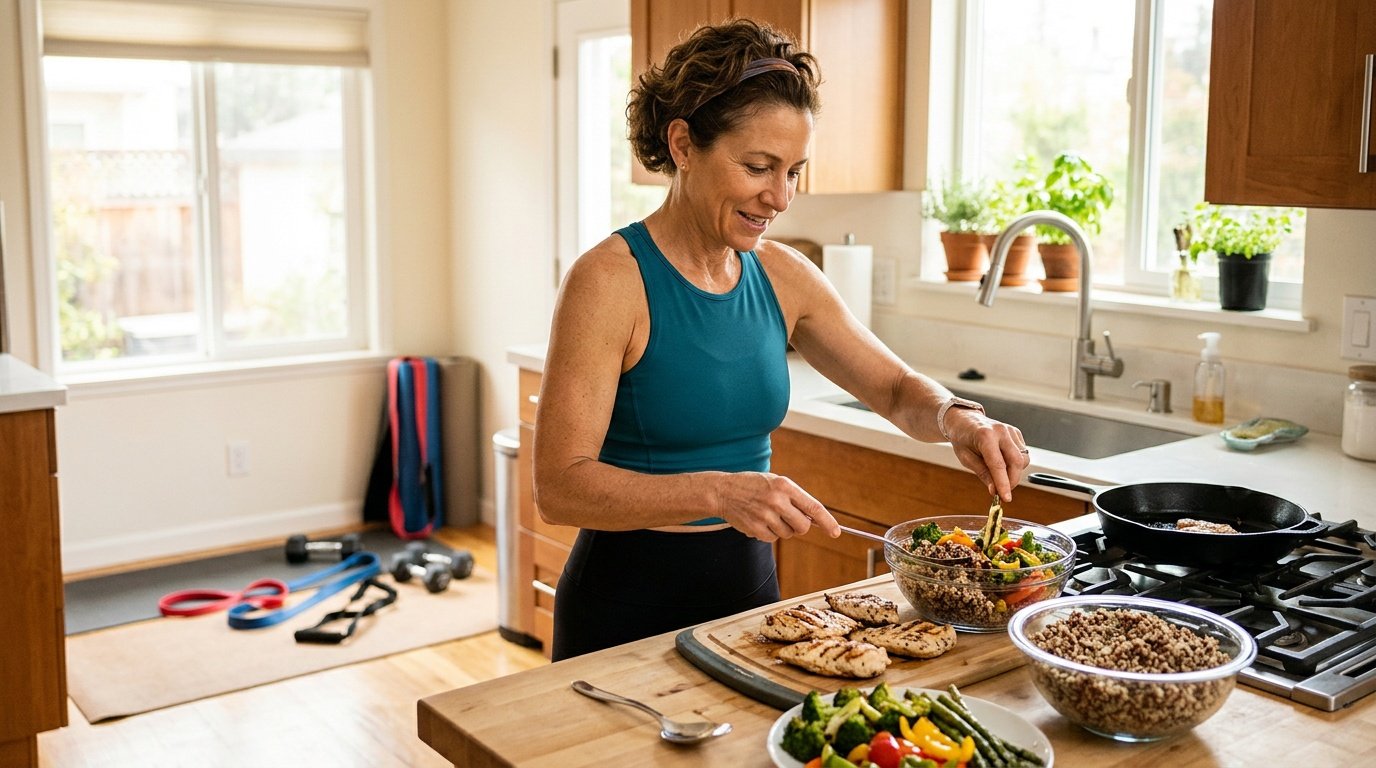
This is exactly where a poorly designed fasting plan backfires. If your eating window is too short to comfortably fit enough protein, or if you're fasting through your strength training sessions without adequate recovery fuel, you can lose muscle right alongside fat, which undermines the whole point.
Why protein timing matters more than fasting length past midlife
NIH researchers studying sarcopenia recommend at least 1.2 grams of protein per two pounds of body weight to actively preserve or rebuild muscle in adults dealing with age-related muscle loss. Inside an 8-hour eating window, that usually means two to three protein-forward meals rather than trying to graze small amounts throughout the day. A realistic approach looks like 25 to 35 grams of protein at your first meal after breaking the fast, a similar amount at your second meal, and resistance training two to three times a week timed for whichever days you feel strongest, not necessarily the days you're fasting the longest.

Intermittent Fasting for Menopause Belly Fat: What the Research Actually Shows
Menopause belly, the shift toward central fat storage discussed earlier, responds to fasting the same way it responds to any calorie-and-composition intervention: gradually, and only when the eating window doesn't just shrink the hours you eat but also improves what fills them. Time-restricted eating on its own, without attention to food quality, tends to produce modest results at best for visceral fat specifically.
What actually moves the needle on menopause belly fat, based on the metabolic mechanisms described in the Mayo Clinic Proceedings review above, is the combination of a consistent fasting window, adequate protein, and resistance training, sustained over months rather than weeks. Women often expect visible change in two to three weeks and get discouraged when the scale barely moves in that window. The honest timeline is closer to eight to twelve weeks before central fat distribution starts to shift noticeably, and that's assuming sleep and stress are reasonably under control at the same time.
| Body Change After 50 | What the Research Shows | What It Means for Fasting |
|---|---|---|
| Visceral fat redistribution | Rises to 15-20% of total body fat postmenopause, vs. 5-8% before | Fasting alone won't reverse this; pair with protein and strength work |
| Muscle mass decline | About 3-5% lost per decade starting at age 30, faster around menopause | Keep eating windows long enough to fit adequate protein daily |
| Bone density | Osteoporosis affects about 1 in 5 women over 50 | Prioritize calcium, vitamin D, and weight-bearing exercise alongside fasting |
Source: Mayo Clinic Proceedings, 2017; NIH News in Health, 2025; National Institute on Aging
A Realistic 7-Day Starting Plan for Intermittent Fasting for Women Over 50
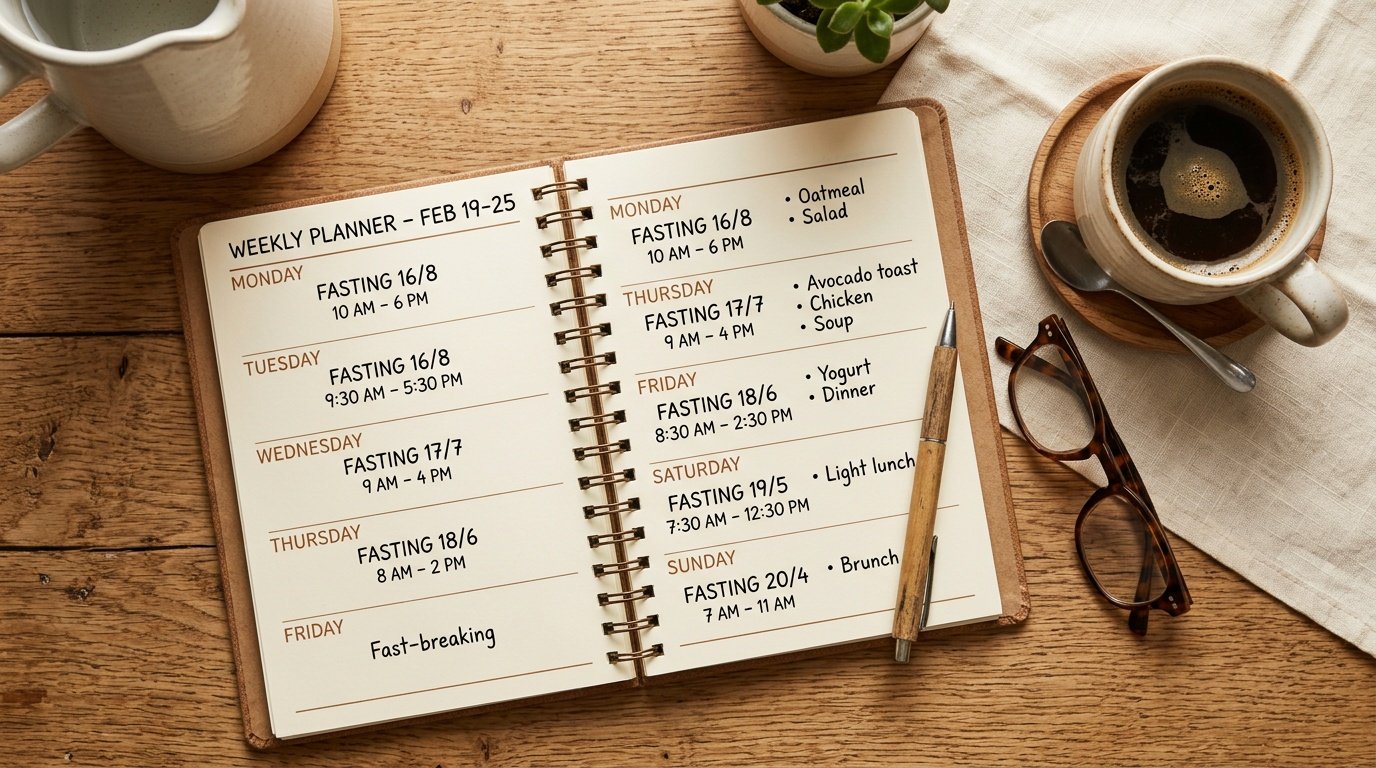
Jumping into a strict 16:8 schedule on day one is where a lot of women stall out before they get any real data on whether fasting works for them. A gradual build gives your body, and your sleep, time to adjust.
- Days 1-2: Start with a 12-hour fast, for example finishing dinner by 7 p.m. and eating breakfast after 7 a.m. This is a low-friction entry point that most people barely notice.
- Days 3-4: Stretch to 13 to 14 hours fasted, pushing breakfast back by an hour or two rather than skipping it entirely.
- Days 5-7: If mornings have felt manageable, extend to a 15 to 16-hour fast. Anchor your eating window around whenever your energy and hunger naturally peak, which for many women in this age group is closer to midday than early morning.
Break each fast with a protein-and-fiber meal rather than something sugary. A high blood sugar spike right after fasting undercuts the insulin-sensitivity benefit you were fasting to get in the first place. If you're still cycling, avoid pushing the fasting window during the week before your period, when cortisol sensitivity is already higher.
Health disclaimer: Intermittent fasting isn't appropriate for everyone. Talk with your doctor before starting if you take insulin or other medications that require food, have a history of disordered eating, are managing osteoporosis or a thyroid condition, or are still in perimenopause with irregular cycles. This article is general guidance, not a substitute for individualized medical advice.

Common Mistakes That Stall Intermittent Fasting Results After 50
A handful of patterns show up again and again in women over 50 who try fasting and quietly abandon it within a month.
Compressing the eating window too far, too fast
Jumping straight to 18:6 or 20:4 without a build-up period often backfires because it doesn't leave enough time to eat sufficient protein, and it adds cortisol stress before your body has adapted. Slower is genuinely faster here.
Fasting through poor sleep instead of around it
Fasting and sleep debt compound each other. A short eating window on a week of five-hour nights is a recipe for the wired-but-exhausted feeling that makes people quit fasting altogether, when the actual fix was fixing sleep first.
Treating fasting as a replacement for strength training
Fasting changes when you eat. It does very little on its own to protect the muscle you already have. Two to three resistance sessions a week, even short ones, matter more for long-term body composition than an extra two hours of fasting.
Ignoring the eating window entirely and just restricting hours
An 8-hour window filled with the same processed, low-protein food you'd eat anyway won't produce meaningfully different results than a 12-hour one. The window is a container, not a strategy on its own.
If you're also working on your broader daily structure, the habit-stacking approach to building a sustainable healthy lifestyle routine pairs well with a fasting schedule, since anchoring your eating window to an existing daily habit removes a lot of the decision fatigue that causes people to abandon fasting within the first two weeks.

Who Should Not Try Intermittent Fasting Without Medical Guidance
Fasting is not automatically safe just because it's popular. Certain groups should talk with a healthcare provider before starting, not after running into a problem. This includes women taking insulin or other medications that must be taken with food, anyone with a history of an eating disorder, women managing diabetes or significant blood sugar swings, and anyone in perimenopause still experiencing irregular cycles, since the hormonal picture there is closer to premenopausal than postmenopausal.
Bone health deserves its own mention here. Osteoporosis, according to the National Institute on Aging, affects about one in five women over age 50, and the years right around menopause are when bone loss accelerates most. Fasting itself isn't known to worsen bone density directly, but a fasting plan that crowds out adequate calcium, vitamin D, and protein intake can compound a risk that's already elevated at this life stage. If you already have low bone density, loop your doctor in before making significant changes to when and how much you eat.
For a look at how the same principles of realistic, sustainable eating apply beyond fasting specifically, this honest breakdown of intermittent fasting weight loss results covers what to expect timeline-wise across a broader age range, and this piece on building healthy lifestyle habits that actually stick is a useful companion if you're rebuilding your whole daily routine rather than just adding a fasting window to an unchanged one.
Here's a short, practical primer from a Cleveland Clinic registered dietitian on how fasting affects your body and what to watch for.
Frequently Asked Questions About Intermittent Fasting for Women Over 50
Does intermittent fasting work differently for women over 50 than for younger women?
Yes. Once estrogen and progesterone settle into a low, stable postmenopausal pattern, fasting no longer interacts with a monthly hormone cycle, which is why fasting tends to be more predictable and often more effective for women over 50 than for premenopausal women. It still needs to account for muscle loss, cortisol sensitivity, and bone density, all of which shift more sharply in this decade.
What's the best fasting window for women over 50 who are new to it?
Most women do best starting with a 12-hour fast and gradually working up to a 15 or 16-hour window over one to two weeks. A 16:8 schedule tends to hit the sweet spot of triggering metabolic benefits without the higher gallstone risk associated with regularly fasting beyond 16 to 18 hours.
Can intermittent fasting raise cortisol or make menopause symptoms worse?
Fasting causes a mild, temporary rise in cortisol, which is normal. Problems tend to show up when fasting is stacked on top of poor sleep or high stress, since elevated cortisol in that context can worsen insulin resistance and blunt the results you're fasting for. Shortening the window during high-stress stretches usually resolves this.
Will intermittent fasting cause muscle loss in women over 50?
It can, if the eating window is too short to fit enough protein or if strength training isn't part of the routine. Aiming for roughly 1.2 grams of protein per two pounds of body weight, spread across two to three meals inside your eating window, combined with resistance training two to three times a week, protects muscle while you fast.
Is intermittent fasting safe for women with osteoporosis or on medication?
Not automatically. Women taking insulin or medications that require food, those managing osteoporosis, and anyone with a history of disordered eating should talk with a doctor before starting. Fasting itself doesn't directly worsen bone density, but a poorly planned eating window that skips calcium, vitamin D, and protein can compound an already elevated risk after 50.
References
- Cleveland Clinic — How Intermittent Fasting Affects Women, 2023
- NIH News in Health — To Fast or Not to Fast, 2019
- Mayo Clinic Proceedings — Weight Gain in Women at Midlife: A Concise Review of the Pathophysiology and Strategies for Management, 2017
- NIH News in Health — Slowing Sarcopenia, 2025
- National Institute on Aging (NIH) — Osteoporosis