
A burn belly fat drink sounds like a shortcut, and that is exactly why it sells. Scroll any short-video feed and you will find a vinegar shot, a green tea blend or a mystery powder promising a flatter stomach by the weekend. The research is less exciting and more useful. Some drinks show small effects in controlled trials. Others show nothing. One of the best-supported options costs nothing and comes out of your tap. This guide walks through what five published studies found, what they did not test, and how to use a drink without asking it to carry weight it cannot.
Think of it as a conversation with a skeptical friend who has read the papers. You will see the numbers, the people who were studied and the limits of each result, so you can decide what is worth a spot in your day.

A burn belly fat drink cannot pick where fat leaves your body
Start with the idea almost every recipe quietly depends on: that something you sip can melt fat from your midsection specifically. Your body does not work that way. When you run an energy deficit, fat comes off from stores all over your body, in an order set by your biology and not by what you drank or which muscles you trained.
The cleanest evidence for this comes from exercise, not drinks. In a randomized trial, 24 healthy but sedentary adults aged 18 to 40 either did seven abdominal exercises, five days a week, for six weeks, or did nothing. Everyone kept an isocaloric diet. The researchers found no significant effect of the ab training on body fat percentage, abdominal circumference or skinfold thickness (Vispute et al., 2011). The group that trained did get better at curl-ups. Their waistlines stayed put.
If direct training of the abdominal muscles did not shrink abdominal fat in that trial, a drink has an even weaker claim to local action. That does not make drinks useless. It changes what you should expect from them: a small nudge to your overall energy balance, not a targeted strike.
Two kinds of belly fat, one realistic goal
Belly fat comes in two forms. Subcutaneous fat sits under the skin and is the part you can pinch. Visceral fat sits deeper, around your organs, and is the type researchers track most closely for metabolic health. Many viral recipes blur the two. The studies below measure different things, so each one gets its own label here: weight, waist size or visceral fat area. If you want the wider medical picture, our guide to losing belly fat without surgery and what doctors recommend covers the options beyond drinks.

Apple cider vinegar cut visceral fat in one 12-week trial, but one trial is not a verdict
Apple cider vinegar is the best-known belly fat drink on the internet, so it deserves a careful look. The study people usually point to is a double-blind trial in obese Japanese adults. Participants were randomly assigned to one of three groups for 12 weeks. Each group drank 500 ml of a beverage every day. One beverage held 15 ml of vinegar, one held 30 ml, and one held none.
After 12 weeks, body weight, BMI, visceral fat area, waist circumference and triglyceride levels were all significantly lower in both vinegar groups than in the placebo group (Kondo et al., 2009). The authors concluded that daily vinegar might help prevent metabolic syndrome by reducing obesity.
That is a real result from a well-designed trial. It is also one trial, in one population, using vinegar diluted in half a liter of liquid. The abstract reports statistical differences, not a promise of how many centimeters you will lose. Treat it as a reason to consider vinegar as one small input, not as proof that a morning shot will change your waistline.
What the vinegar trial did not show
Three limits matter. First, the trial ran for 12 weeks, and the abstract says nothing about what happens when people stop drinking vinegar. Second, every participant was an obese Japanese adult, so the result may not carry over to a healthy 22-year-old in Manchester or Houston. Third, the design was stronger than most: the placebo group drank the same 500 ml of liquid without vinegar. That detail helps separate the effect of vinegar from the effect of simply drinking more fluid, which is why this trial is taken more seriously than a one-off testimonial.
If you try it, keep it boring
The study used 15 ml, which is about one tablespoon, stirred into a large glass of water. Nobody in that trial took vinegar straight. If you have reflux, diabetes, kidney problems or take regular medication, check with your doctor first. Skipping that step is the most common way a trendy drink turns into a trip to the clinic.

Green tea barely moved the scale in studies outside Japan
Green tea has the reputation of a metabolism booster, driven by its catechins and caffeine. A Cochrane review pooled randomized trials of at least 12 weeks in overweight and obese adults to see whether that reputation holds up. The answer depends on where the studies were run.
For six studies conducted outside Japan, covering 532 participants, the pooled difference in weight loss was 0.04 kg less in the green tea groups, with a confidence interval of minus 0.5 to plus 0.4 kg (Jurgens et al., Cochrane review, 2012). In plain terms, that is nothing. The eight studies run in Japan, with 1,030 participants, could not be pooled, and their results ranged from 0.2 kg to 3.5 kg of weight loss in favor of green tea.
What the split tells you
Here is the non-obvious part. The same drink produced very different results depending on the study setting, and the review itself opens by noting that green tea's efficacy for weight loss remains unclear. Differences in diet, habitual tea intake and study design could all plausibly play a part, though the abstract does not say which. The honest reading is that green tea is a fine, low-calorie drink to choose, and a poor bet as the thing doing the work.
Green tea earns its place in a lose belly fat drink routine for a boring reason: it replaces something with calories in it. The flip side is just as practical. Stir two spoons of sugar or a pour of syrup into that cup and you have moved it out of the useful category and into the sweetened-beverage one, which the data later in this article treats very differently. Keep it unsweetened, or lightly sweetened at most, and it does its quiet job.

Plain water before meals is the best-supported burn belly fat drink
The most useful result of the five is also the least glamorous. In a 12-week randomized trial, 48 overweight or obese adults aged 55 to 75 followed a reduced-calorie diet. Half also drank 500 ml of water before each daily meal. The water group lost about 2 kg more, and their rate of weight decline was 44 percent greater over the 12 weeks than the diet-only group (Dennis et al., Obesity, 2010).
Two details matter before you copy this.
- The people were older than you. The study group was middle-aged and older, so the size of the effect in your twenties is not established by this trial.
- Water amplified a diet, it did not replace one. Both groups were on a calorie-restricted plan. The water group simply did better inside it.
The effect on appetite faded, the effect on weight did not
This is the detail most summaries skip. At the start of the trial, a 500 ml water preload cut calories eaten at a test meal from 541 to 498. By week 12 that gap had narrowed to 506 versus 480, and it was no longer statistically significant. Yet the water group still finished ahead on weight. The authors suggested part of the benefit could come from eating less right after drinking, but the data say the mechanism is not fully settled.
How to run the water experiment yourself
The trial used 500 ml, roughly a large glass, before each of the day's main meals. You can copy that exactly. Drink it slowly in the 10 to 15 minutes before you sit down, eat your meal as you normally would, and keep the rest of your day unchanged so you can see what the water alone does. Do not use water to skip meals. The trial participants still ate, they just ate inside a reduced-calorie plan. If your doctor has told you to limit fluids because of a kidney or heart condition, ask before adding about 1.5 liters a day across three meals.
For practical purposes, water before meals is cheap, safe for most people and hard to get wrong. It works best next to a sensible calorie deficit, which is the part no drink can replace.
Sugary drinks add belly fat faster than any recipe removes it
So far we have looked at drinks that might help. The data on the drinks that hurt is stronger. Researchers in the Framingham Heart Study followed 1,003 adults, with an average age of 45, for about six years and measured abdominal fat by CT scan. After adjusting for confounders, including changes in body weight, visceral fat volume rose by 658 cm³ in people who rarely drank sugar-sweetened beverages and by 852 cm³ in daily drinkers (Ma et al., Circulation, 2016). Diet soda showed no such association.
This was an observational study, so it shows an association, not proof that sugary drinks caused the difference. But it points in a consistent direction, and the gap between daily drinkers and non-drinkers is about 194 cm³ of extra visceral fat volume over six years, even after the researchers accounted for changes in body weight. Put differently, the drinks were linked to more deep abdominal fat beyond whatever the scale showed.
The diet soda result deserves a careful reading too. The study found no link between diet soda and visceral fat change. That is not the same as showing that diet soda helps you lose belly fat, and nothing in this article claims it does. It only means that, in this dataset, the sugar-sweetened versions were the ones tied to the worse outcome.
The swap matters more than the sip
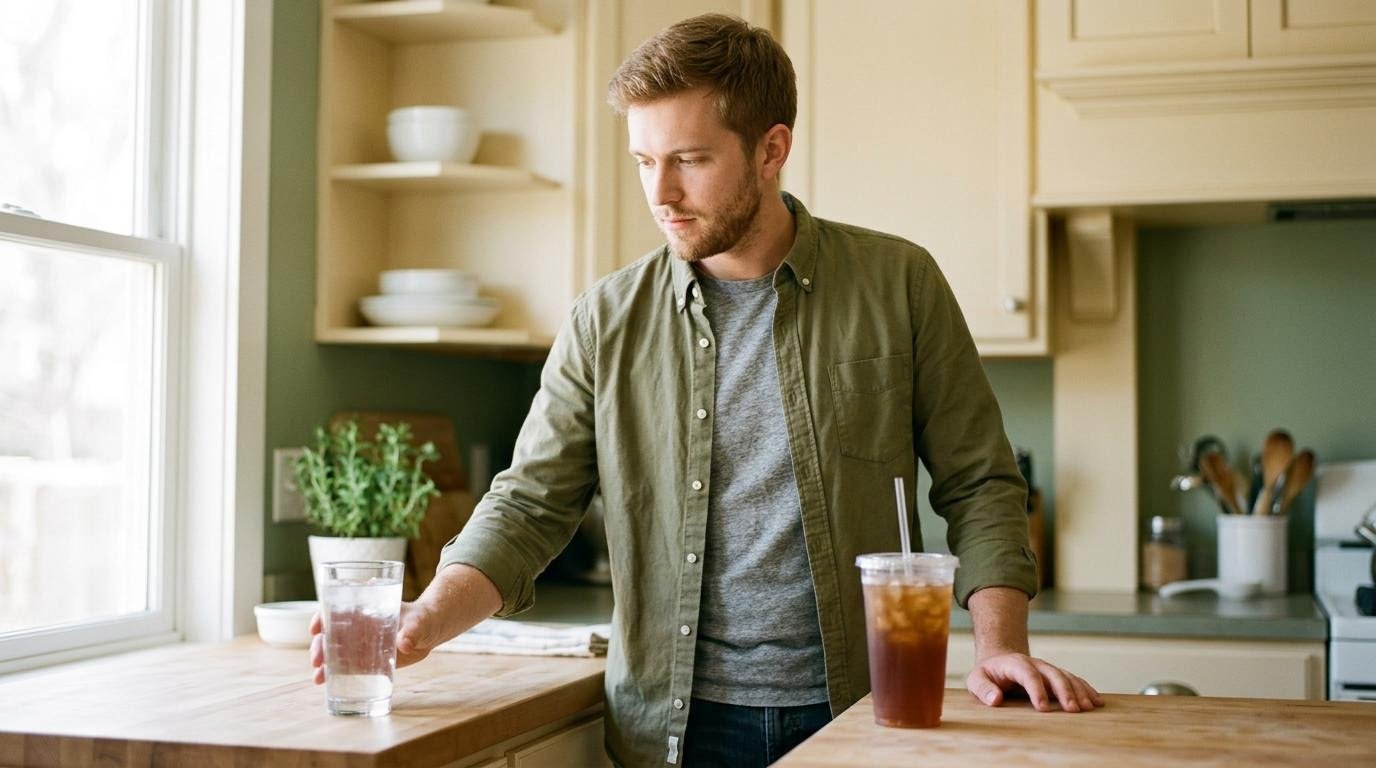
Picture a 22-year-old who starts every day with an apple cider vinegar shot and still orders a large sweetened iced coffee at lunch and a bubble tea after class. The shot is the headline. The sweetened drinks are the story. A realistic upgrade is a water before lunch, an unsweetened tea in the afternoon and the sweet drink kept as an occasional treat.
That swap is the real engine of most successful belly fat drink plans. It removes calories you were already drinking, which is easier than trying to add a magic ingredient on top. It also fits alongside the habits that reduce belly fat without exercise, so you are not building a whole new routine from scratch.

Bottom line: a burn belly fat drink only works inside a calorie deficit
Put the five studies side by side and a pattern appears. Every drink that showed a benefit did so alongside an overall effort to eat and drink less energy, over 12 weeks or longer.
| Drink | Study and who took part | Result |
|---|---|---|
| Diluted apple cider vinegar (15 or 30 ml daily) | Double-blind trial, obese Japanese adults, 12 weeks | Lower weight, BMI, visceral fat area, waist and triglycerides than placebo |
| Green tea (studies outside Japan) | Cochrane review, 6 studies, 532 adults | Weight difference of 0.04 kg, essentially none |
| Green tea (studies in Japan) | Cochrane review, 8 studies, 1,030 adults | 0.2 kg to 3.5 kg weight loss, not pooled |
| Water, 500 ml before each meal | Randomized trial, 48 adults aged 55 to 75, with a reduced-calorie diet, 12 weeks | About 2 kg more weight loss than diet alone |
| Sugar-sweetened beverages (to limit) | Observational, 1,003 adults, about 6 years | Visceral fat rose 852 cm³ in daily drinkers versus 658 cm³ in non-drinkers |
Source: PubMed-indexed studies: Kondo et al. (2009), Jurgens et al., Cochrane review (2012), Dennis et al. (2010), Ma et al. (2016).
So here is the short version for your own routine:
- Drink water before meals. It has the cleanest support and no downside for most healthy adults.
- Cut the sugary drinks first. This is the biggest lever you control.
- Treat green tea as a good choice, not a fix. Enjoy it unsweetened in place of a sweet drink.
- Consider diluted vinegar only if it suits your health. One trial supports a small effect, and your doctor should clear it first.
- Judge progress slowly. Check your waist circumference monthly, not daily, because the trials above ran for 12 weeks or more.
Each of those points rests on gradual change. A burn belly fat drink is a supporting player. Used well, it swaps out calories you did not need and helps you feel full at your next meal. Used as a shortcut, it will disappoint you, and the research says it should.
Health disclaimer: This article is general information, not medical advice. Talk to your doctor or a registered dietitian before you change your diet, add vinegar or any supplement, or start a weight-loss plan, especially if you are pregnant or breastfeeding, under 18, have diabetes, kidney disease or reflux, or take regular medication. Stop and seek care if a drink causes pain, nausea or other symptoms.

Burn belly fat drink: your questions answered
What is the best drink to burn belly fat?
No drink burns belly fat on its own. The best-supported option in this article is 500 ml of plain water before meals, which led to about 2 kg more weight loss than diet alone over 12 weeks in adults aged 55 to 75 who were also on a reduced-calorie diet.
Does apple cider vinegar burn belly fat?
One 12-week double-blind trial in obese Japanese adults found lower visceral fat area and waist circumference in the groups that drank 15 or 30 ml of vinegar daily than in the placebo group. It is a single trial, so it suggests an effect but does not settle the question.
Does green tea burn belly fat?
A Cochrane review found a weight difference of 0.04 kg in six studies outside Japan and results from 0.2 kg to 3.5 kg in eight studies in Japan. Green tea is a reasonable drink choice, and it is not a reliable fat burner.
Is there a burn belly fat drink before bed?
None of the five studies in this article tested a bedtime drink, so no bedtime recipe can be backed here. What the evidence does show is that sugary drinks are linked with more visceral fat, so a sweetened drink at night works against you.
Can a detox belly fat drink shrink my stomach?
The studies cited in this article did not test detox products, so there is no evidence here to support one. The drinks that showed results did so over 12 weeks or more, alongside regular eating habits.
How long does a lose belly fat drink take to work?
The trials covered here ran 12 weeks or longer, and the results were modest differences between groups, not dramatic changes. Expect gradual change and judge it over months, not days.
References
- PubMed (U.S. National Library of Medicine) — The effect of abdominal exercise on abdominal fat, 2011
- PubMed (U.S. National Library of Medicine) — Vinegar intake reduces body weight, body fat mass, and serum triglyceride levels in obese Japanese subjects, 2009
- PubMed (U.S. National Library of Medicine) — Green tea for weight loss and weight maintenance in overweight or obese adults, 2012
- PubMed (U.S. National Library of Medicine) — Water consumption increases weight loss during a hypocaloric diet intervention in middle-aged and older adults, 2010
- PubMed (U.S. National Library of Medicine) — Sugar-Sweetened Beverage Consumption Is Associated With Change of Visceral Adipose Tissue Over 6 Years of Follow-Up, 2016