

Did you know that over 80% of beginners abandon their workout plans within the first month? Simplicity is the secret weapon to lasting fitness success. If you’re struggling with simple workout routines for beginners, you’re not alone—but you’re also not out of options. This friendly, step-by-step guide is designed to help you overcome overwhelm, crush common obstacles like confusion or inconsistency, and build a practical fitness habit that sticks. Whether your fitness goal is weight loss, building strength, or simply feeling more energetic, we’ll break down everything you need, from picking bodyweight exercises to scheduling your weekly routine. Let’s simplify your fitness journey so it becomes something you look forward to—no gym intimidation, no guesswork!
Start Strong: Why Simple Workout Routines for Beginners Matter
Jumping into fitness can feel intimidating, especially when you’re met with complicated plans and unfamiliar jargon. But here’s the truth: simple workout routines are proven to be the most effective pathway for lasting results. When you focus on mastering key movements and creating consistent habits, you’ll increase your odds of sticking with your workout routine for the long run. Unlike advanced day routines that demand special equipment or perfect timing, beginner workout plans are all about making fitness accessible—anywhere and anytime.
Research shows that mastering a few foundational bodyweight exercises not only reduces the risk of injury but also builds the self-confidence necessary to take your routine to the next level. Simple does not mean easy—it means you’re focusing on good form, balanced muscle group activation, and sustainable progressive overload. Whether your goal is fat loss, muscle growth, or improved stamina, starting strong with the basics gives you the power to progress with clarity. Remember, it’s not about doing it all on day one—it’s about turning your commitment into a lifestyle through repetition, smart structure, and a supportive environment.

“Did you know that over 80% of beginners abandon their workout plans within the first month? Simplicity is the secret weapon to lasting fitness success.” — Fitness Industry Study, 2023
What You’ll Learn from This Guide to Simple Workout Routines for Beginners
- How to structure a simple workout routine for beginners
- Differences between full body, upper body, and lower body workouts
- Customizing your beginner workout plan for different goals (fat loss, strength, weight loss)
- Best bodyweight exercises for home workout routines
- Understanding workout terminology (3-3-3 rule, 4 8 12 rule, and more)
- FAQs and pro tips for beginners
Understanding the Basics: Simple Workout Routines for Beginners Explained
As you start to build your own beginner workout plan, it’s helpful to see how other disciplines approach structure and consistency. For example, the world of professional sports offers valuable lessons in strategy and routine—explore how athletes balance training and performance in this deep dive into courtside energy, slam dunks, and strategy for a fresh perspective on building habits that last.
What Defines a Beginner Workout Routine?
A beginner workout routine focuses on mastering simple, foundational movements using your own body weight or minimal equipment. These routines are designed for those new to exercise or returning after a long break, minimizing complexity and emphasizing good form over intensity. Expect to work major muscle groups with moves like squats, push-ups, lunges, and planks—no need for a heavy bench press or complicated gym machinery. The greatest benefit of such routines is their scalability: you can start slow and build up, letting your confidence and abilities grow together. The day routine typically involves 2-4 sessions per week to allow proper recovery and avoid burnout while teaching your body the essentials of heart rate management, muscle activation, and stamina.
Ultimately, your workout plan should be simple enough that you can repeat it consistently, focusing on full body engagement rather than isolating specific muscle groups right away. This method ensures that each exercise routine is approachable and builds a solid foundation for more advanced movements down the line.

How Day Routines Build Habit and Consistency
Creating an effective day routine isn’t just about what exercises you do—it’s about turning your workout routine into a habit. By repeating simple movements at set times during your week, your brain and body start to expect—and even crave—that boost of activity. Science shows that it takes roughly 21 days to make or break a habit. So, a consistent weekly workout plan (3–4 days a week) can transform fitness from a fresh challenge into a stable part of your routine. By starting modestly, you avoid overwhelm, risking less injury, and making that sense of accomplishment stick.
Consistency leads to visible progress, reinforcing your motivation and helping you set new fitness goals. Over time, these repeated, manageable sessions turn what was once an effortful fitness journey into a lifestyle—one you’ll look forward to because you can see and feel your progress. That’s why the best simple workout routines prioritize building habits over intensity or complexity at first.
Key Principles Behind Simple Workout Routines for Beginners
Progressive Overload and Strength Training for Simple Workout Routines
To build muscle and increase strength, your body needs to be challenged gradually. This principle is called progressive overload, and it’s central to all effective beginner workout plans. The idea is simple: as your body adapts to a certain load (like bodyweight squats or push-ups), you slowly increase the reps, sets, or difficulty. Strength training relies heavily on this principle—adding a few more reps, trying a harder push-up variation, or even holding a plank longer each week. This promotes muscle growth and helps build strength without overcomplicating your routine. For beginners, bodyweight exercises provide a perfect introduction to progressive overload, allowing you to master good form and understand how different muscle groups engage with each movement.
At the heart of every simple workout routine for beginners is the goal to make progress at your own pace. Don’t worry about matching someone else’s intensity—listen to your body and add challenge only as you build confidence and strength. Consistent, small increments lead to safer, longer-lasting results than sudden jumps in difficulty.

Balancing Cardio and Weight Training in a Beginner Workout Plan
A truly effective beginner workout plan blends both cardio and strength-building activities. Cardio exercises—like brisk walking, jumping jacks, or jumping rope—boost your heart rate, help with fat loss, and improve cardiovascular health. Weight training, whether with resistance bands, dumbbells, or just your bodyweight, is crucial for building lean muscle and increasing metabolism. Combined, these types of exercise create a balanced foundation, supporting everything from weight loss to improved mood and energy levels.
Finding the right balance is essential—too much cardio and you may sacrifice muscle growth; too much strength without enough movement may limit your stamina or fat loss goals. Experts recommend 3–4 days a week of mixed routines, ensuring you accelerate your results while minimizing risk of overuse injuries. Remember, your fitness journey is a marathon, not a sprint, and the most sustainable routines are those you can stick to comfortably.
Full Body versus Split Routines for Beginners
One of the most common questions is whether to follow a full body or a split (upper and lower body) workout routine. For beginners, full body sessions are typically best. They allow you to train all major muscle groups evenly, reinforcing movement patterns and promoting muscle growth across the board. This approach fits perfectly into a busy week, since you’re targeting multiple areas in each workout, making it easier to stick to a day routine of 3–4 sessions spread out for full recovery.
Split routines—working upper body one day, lower body the next—can be useful once you build up consistency, experience, and a solid mind-muscle connection. They provide more focused attention to each area, which can be beneficial for advanced strength training or when you want to develop a lagging muscle group. As a beginner, though, mastering full body movements first gives you a well-rounded foundation to build on.
How Many Days a Week for Simple Workout Routines for Beginners?
The golden rule: aim for 3 to 4 days a week with your beginner workout plan. This frequency is ideal for establishing consistency without overwhelming your body’s ability to recover. Overexertion is a common trap for motivated beginners, but rest and active recovery are integral parts of any effective workout program. These rest days are when your body rebuilds muscle, prevents injury, and solidifies the gains from each session.
Remember, your recovery is as important as your training—so don’t feel guilty taking a day for walking, stretching, or gentle yoga. These lower-intensity activities improve blood flow, maintain mobility, and refresh your motivation so you’re ready to tackle the next session with energy and purpose.
How to Create a Simple Workout Routine for Beginners: Step-by-Step Process
Step 1: Setting Realistic Fitness Goals for Your Beginner Workout Program
The first step to an effective workout plan is choosing a goal suited to your needs: fat loss, weight loss, building muscle, or improving general fitness. Clarify what you hope to achieve in the next month—this focus will help you select the right exercises and track your progress. Set goals that are specific (e.g., complete three workouts per week for a month), measurable, and realistic for your current lifestyle.
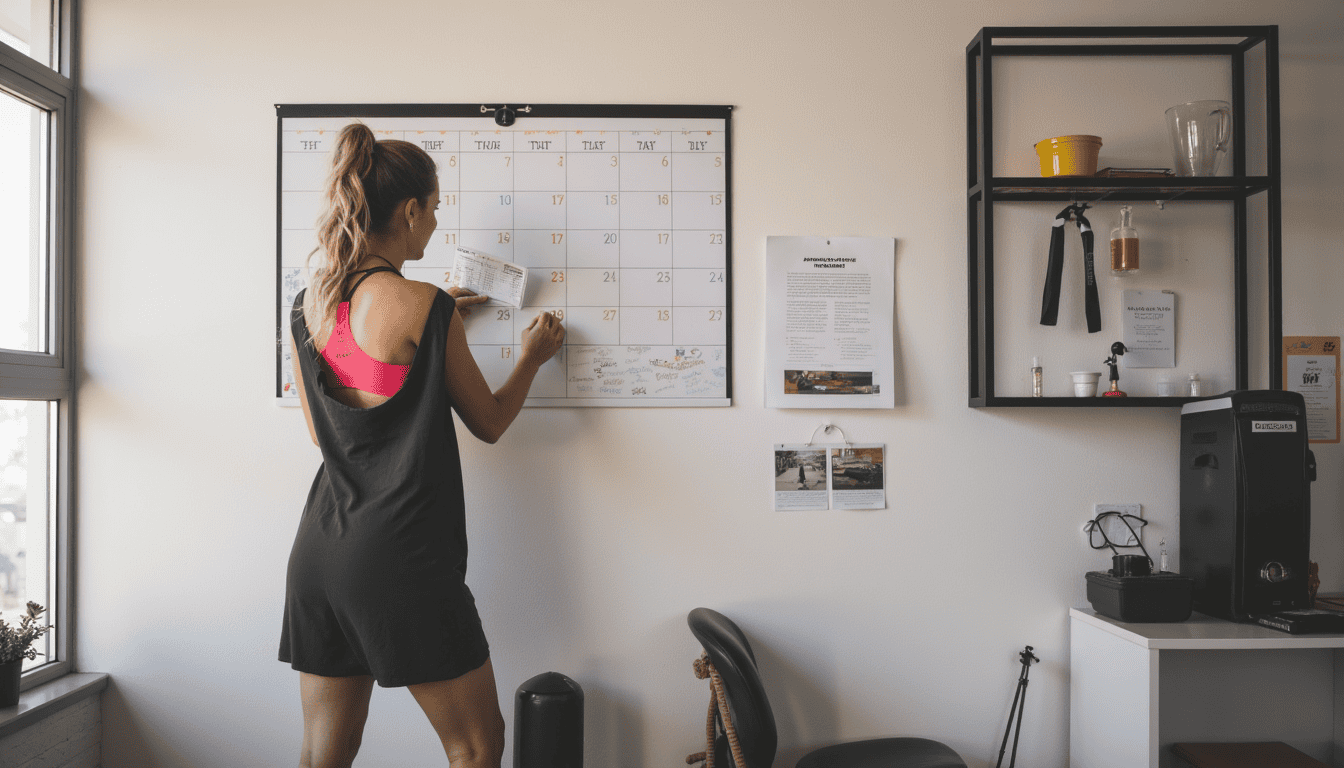
Keep in mind that small, achievable milestones boost your motivation and give you early wins. For example, increasing your push-ups from 5 to 10 in two weeks is far more motivating than vague aspirations. Consistent, simple fitness goals give your day routine a sense of purpose and help you stay invested in your fitness journey. Track your weekly improvements on a calendar or in a journal so you can celebrate how far you’ve come.
Step 2: Choosing Between Home Workout and Gym-Based Routines
One of the beauties of simple workout routines for beginners is flexibility—you can train at home or in the gym. Home workout plans are convenient and cost-effective, requiring little or no equipment beyond perhaps a mat or resistance band. These routines allow you to fit in your workout plan around family, work, or travel, helping crush consistency barriers.
Gym-based routines offer a wider array of equipment and a motivating environment. Some beginners find being around others inspiring, and the variety can help prevent boredom. However, there’s no need to commit to a gym unless you want to—many people see incredible results with home bodyweight exercise routines, especially when starting out. Ultimately, it comes down to which environment helps you stick with your fitness routine consistently.
Step 3: Selecting Core Bodyweight Exercises for Beginners
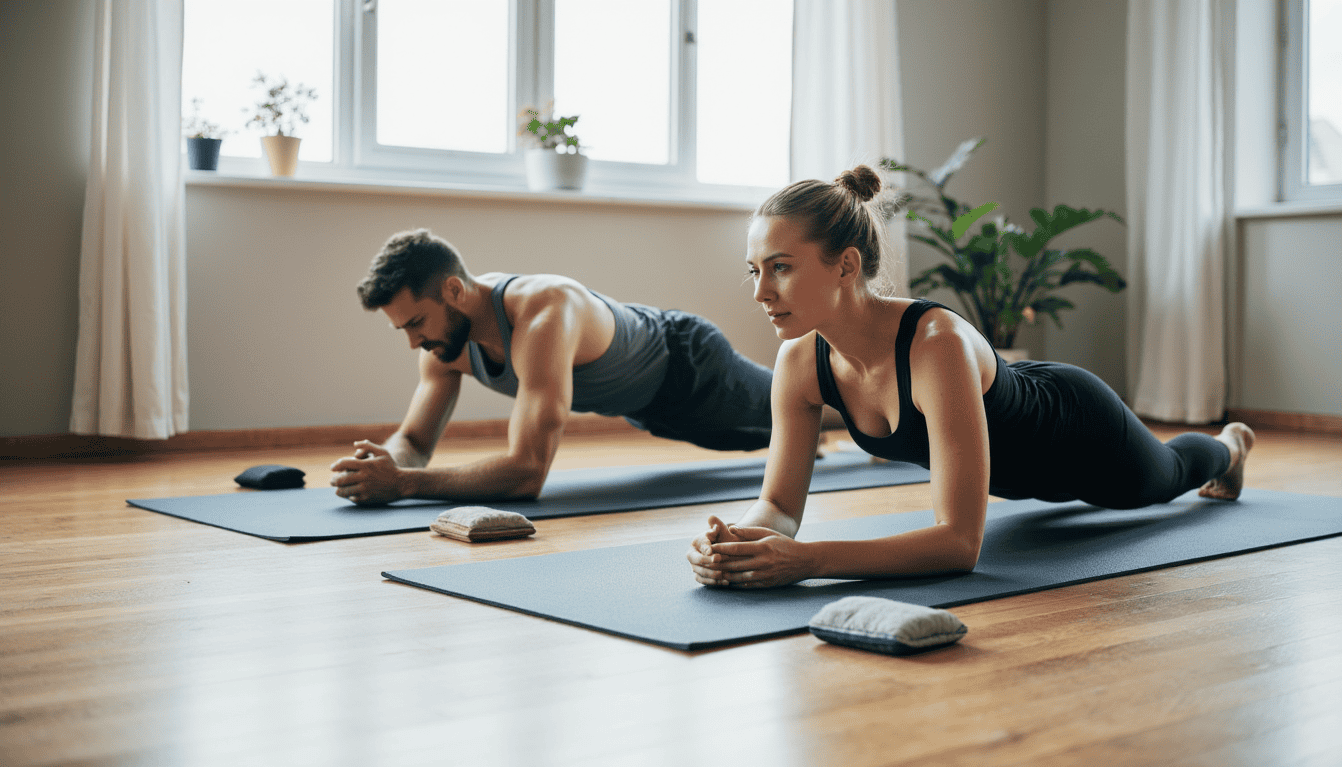
Bodyweight exercises form the backbone of any beginner workout plan. Why? They teach good form, work multiple muscle groups at once, and require no fancy gear. Key moves like squats, push-ups, lunges, and planks build foundational strength, balance, and coordination. These exercises are easily modified for your fitness level, ensuring a safe progression for all ages and abilities.
Don’t underestimate the challenge—bodyweight moves can build serious muscle growth and increase your athleticism when done correctly. Focus on learning perfect technique first, as this will pay off as you advance. For each session, pick 3–5 exercises and perform them in a circuit to keep your heart rate up and maximize calorie burn.
Step 4: Deciding Between Full Body, Upper Body, and Lower Body Workout Focus
Beginner routines can focus on total body or alternate between upper body and lower body days. A full body approach hits all major muscles every session, ideal for training efficiency and developing balanced strength. If you prefer focusing intensively on certain muscle groups, upper/lower splits help maximize attention to each area and can provide extra rest for those muscles between sessions.
If you’re just starting or can only commit to 2–3 days a week, full body routines are recommended. Adding one focused upper body and one lower body day can be a great way to build variety once you’ve mastered core moves and established a consistent workout routine.
Step 5: Building Your Weekly Beginner Workout Plan Schedule
To ensure you hit every muscle group and maximize results, organize your week using a plan like the one below. This structure balances challenge with rest, supporting muscle growth and fat loss while making sure each training day stays fresh and motivating.
|
Day |
Focus | Example Exercises |
|---|---|---|
| 1 | Full Body | Squats, Push-Ups, Planks |
| 2 | Upper Body | Shoulder Press, Bicep Curls |
| 3 | Lower Body | Lunges, Glute Bridges |
| 4 | Active Rest |
Walking, Stretching |
The 3-3-3, 4-8-12, and 5-4-3-2-1 Rules: Making Sense of Popular Workout Programs for Beginners
Breaking Down the 3-3-3 Rule in Simple Workout Routines for Beginners
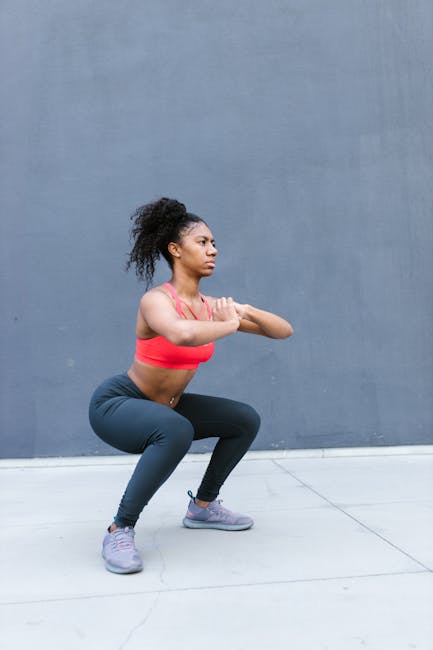
The 3-3-3 rule makes organizing your beginner workout simple and repeatable. Here’s how it works: perform three sets of three different exercises for three rounds. This approach ensures you activate all major areas, keep each session manageable, and allow room for improvement as you progress. For example, choose squats, push-ups, and planks—cycle through each move three times with minimal rest. This strategy maintains your heart rate, fosters strength training habits, and is easy to remember even on a busy day.
Using the 3-3-3 rule in your routine removes guesswork and ensures a full body challenge. It’s scalable; as you get stronger, you can increase the intensity by adding reps or choosing more challenging exercise variations. This simplicity is a core reason why many beginners report greater consistency when using rules-based programming to form new fitness habits.
Understanding the 4-8-12 Rule for Workout Routines
The 4-8-12 rule is all about working your muscles through various rep ranges: four reps (strength emphasis), eight (muscle growth), and twelve (endurance). This progression in your workout program recruits different muscle fibers, ensuring balanced development and challenging every level of your capacity. It keeps the routine engaging and forces your muscles to adapt, which is critical for sustained muscle growth and overall progression.
For a typical session, you might do four reps of a movement with extra focus on good form or added resistance, then eight with a slightly lighter load, followed by twelve at a steady, manageable pace. This structured variability prevents plateaus and helps identify which areas of your fitness need more attention.
The 5-4-3-2-1 Workout Method Simplified for Beginners
The 5-4-3-2-1 workout method offers an efficient, all-in-one simple workout routine for beginners. The structure: five minutes warm-up (light cardio), four minutes high-intensity work, three minutes of strength, two minutes of core, and one minute cooldown. This recipe maximizes your training session without feeling rushed or chaotic.
This method is beginner-friendly because it’s easily timed, covers all fitness bases, and helps you establish a clear routine even on high-pressure days. It introduces you to both cardio and strength training in digestible doses, gradually building your stamina, confidence, and consistency.
Beginner Workout Routines Tailored for Your Goals
Simple Full Body Workout Routines for Beginners
- Squats
- Push-Ups
- Plank
- Dead Bug
This full body routine ensures you engage all major muscle groups—legs, chest, and core—creating a balanced foundation. Focus on mastering these movements with good form, aiming for 2–3 rounds with 10–15 reps each. Each move is simple, scalable, and can be made more challenging as you progress. For best results, include these exercises at least 2–3 days a week in your beginner workout plan, gradually increasing intensity or time as you build strength.

Upper Body Workout Routines for Beginners
- Knee Push-Ups
- Shoulder Taps
- Bicep Curls (dumbbells or cans)
For a focused upper body session, stick with moves that safely work the chest, shoulders, and arms. Knee push-ups are perfect for building foundational strength without risking joint strain, while shoulder taps and curls activate stabilizing and primary muscles alike. Aim for three sets of 8–12 reps, maintaining good form at all times. Upper body work complements full body routines and helps break through plateaus as your day routine evolves.
Lower Body Workout Routines for Beginners
- Lunges
- Wall Sits
- Bodyweight Glute Bridges
Lower body sessions target the powerful muscle groups in your legs and hips. Perform lunges slowly to build balance, wall sits for endurance, and glute bridges for hip and core stability. Each move shapes strength and tones, with minimal risk if you start light and build up. Three sets of 10–15 reps or holds will challenge your muscles and improve overall stability for daily activities.
Fat Loss and Weight Loss: Simple Workout Routines for Beginners to Burn Calories
If fat loss or weight loss is your primary fitness goal, focus on routines that keep your heart rate elevated and activate large muscle groups. Incorporate high-rep circuits, steady-state cardio (like brisk walks), and dynamic bodyweight exercises such as jumping jacks, mountain climbers, and step-ups. Aim to combine these movements 3–4 days a week for 20–30 minutes per session.
Remember, no single fat loss hack works unless paired with consistent effort and proper nutrition. Track your progress, celebrate every pound lost or push-up gained, and keep the long-term benefits in mind. Simplicity in your beginner workout plan is your best ally for ongoing results.

Bodyweight Exercises: The Foundation of Simple Workout Routines for Beginners
Top 10 Bodyweight Exercises for Your Beginner Workout Plan
- Wall Sit
- Plank
- Mountain Climbers
- Jumping Jacks
- Step-Ups
Bodyweight exercises teach control, balance, and good form—core ingredients for a great beginner workout plan. They protect joints, encourage functional movement, and deliver results fast because they’re easy to repeat and progress. Mastering this variety lays the perfect foundation for your fitness journey without risking equipment-based injuries.
Add these to your home workout or gym routine to improve endurance, flexibility, and coordination, all while keeping things simple. Rotate exercises based on your muscle groups and fitness goals for a challenge that feels fresh every session.

Benefits of Home Workout Routines for Beginners
The home environment removes barriers like commute and expense, helping you develop a lasting fitness routine. You’ll have full control over your schedule, be able to customize intensity on the fly, and become self-sufficient in choosing exercises that serve your goals. For many, starting at home removes the intimidation factor and increases enjoyment, both of which are needed for forming a lifelong habit.
Results don’t require a fancy gym—simply following a structured home workout can lead to improved health, confidence, and sustainable weight loss or muscle growth. The most important element is consistency, wherever you choose to train.
“You don’t need a gym membership to see real results. Commitment to simple home workout routines for beginners is the real game-changer.” — Certified Trainer Megan L.
Can You Build Muscle with Simple Workout Routines for Beginners?
Absolutely—progressive overload applies just as much to bodyweight workouts as it does to weight training. Focusing on perfect form, increasing reps or intensity week by week, and sticking to a consistent plan will result in measurable muscle growth, even without heavy weights. The initial phase of any strength program is about teaching your muscles and nerves how to fire in sync—a process called “neuromuscular adaptation.” Once you’ve mastered movement, your muscles begin to adapt and grow, especially if you keep challenging yourself with new rep ranges or exercise variations.
Don’t let the simplicity fool you—bodyweight exercise can provide both the burn and the results, especially for beginners starting their fitness journey.
Tips for Staying Consistent with Simple Workout Routines for Beginners
- Set a specific workout time
- Track progress with a journal or app
- Find an accountability partner
- Celebrate small milestones
Sticking with a fitness routine requires just as much mental practice as physical. Create a dedicated workout slot in your calendar, using alarms or reminders if needed. Recording each accomplishment doubles as motivation—on tough days, flipping through your progress will keep you going. Team up with a friend, family member, or online group for built-in support, encouragement, and shared celebration. Most importantly, treat every small victory—new rep, new exercise, or streak of consistency—as a win.
Sample 4-Week Simple Workout Plan for Beginners
Here’s a beginner-friendly blueprint to follow. This plan gradually increases in difficulty to match your improving skill and confidence, using only bodyweight and minimal equipment.
| Week | Focus | Key Exercises |
|---|---|---|
| 1 | Adaptation | Basic bodyweight moves |
| 2 | Intensity | More reps/sets |
| 3 | Variation | New exercises added |
| 4 | Circuit Training | Combine previous moves |

People Also Ask about Simple Workout Routines for Beginners
What is a good workout routine for a beginner?
A good beginner workout routine includes a mix of full body, upper body, and lower body exercises performed 3–4 days a week, focusing on bodyweight movements and gradually increasing intensity.
What is the 3-3-3 rule for workout?
The 3-3-3 rule means performing three sets of three different exercises for three rounds, ideal for simple workout routines for beginners as it is easy to follow and scalable.
What is the 4 8 12 rule?
The 4-8-12 rule refers to performing sets with 4, 8, and 12 repetitions to challenge different muscle fibers, often used in beginner workout plans for balanced strength building.
What is the 5 4 3-2-1 workout method?
The 5 4 3-2-1 method involves five minutes of warm-up, four minutes of high-intensity work, three minutes strength, two minutes core, and one minute cooldown, streamlining simple workout routines.
FAQ: Simple Workout Routines for Beginners
- Can I do simple workout routines for every day?
While enthusiasm is great, beginners need rest days to allow muscles to recover. Aim for 3–4 sessions weekly and use rest days for gentle movement, like walking or stretching, to avoid burnout or overuse injuries. - Do I need equipment?
No! Bodyweight exercises are highly effective. As you progress, you might add resistance bands or light dumbbells, but many see excellent results without any equipment at all. - How do I stay motivated to complete my beginner workout plan?
Track progress, set small goals, and celebrate every milestone. Find an accountability partner or group, and remember: consistency beats intensity for long-term results. - What if I miss a workout day?
Don’t panic. Life happens! Get back on track the next day. Missing one session won’t derail your fitness journey—quitting will. - When will I start seeing results from my beginner workout routine?
Visible results usually start around 2–4 weeks with regular practice. Remember, progress includes more energy, better sleep, and improved mood—not just physical changes!
Key Takeaways: Simple Workout Routines for Beginners
- Simplicity aids consistency and results.
- Bodyweight exercises and home workouts are effective for beginners.
- Customize your workout plan based on your goals—fat loss, muscle gain, or general fitness.
- Understanding basic workout rules (3-3-3, 4-8-12) helps make routines manageable.
- Track progress and celebrate small wins for lasting motivation.
Start Your Fitness Journey Today
Ready to take the first step? Start your simple workout routine for beginners this week—track your wins, celebrate your efforts, and build a fitness habit for life. Your journey starts now!
If you’re inspired to keep leveling up your approach to routines and personal growth, consider how the principles of discipline and adaptability extend beyond fitness.