


Your hands are sweating on the wheel before you've even left the driveway. Or maybe it's fine until you hit the on-ramp, and then your chest tightens and the merge lane feels like it's closing in. If searching for relief from fear of driving anxiety is what brought you here, you're dealing with something a lot more common, and a lot more treatable, than it probably feels like right now.
This isn't about willpower. It's a specific, well-studied anxiety pattern with a name, known triggers, and a treatment approach that works for the vast majority of people who stick with it. What follows is the actual mechanics of that recovery, not just "take a deep breath and go."
Why "Just Get Behind the Wheel" Advice Fails People With Real Driving Anxiety
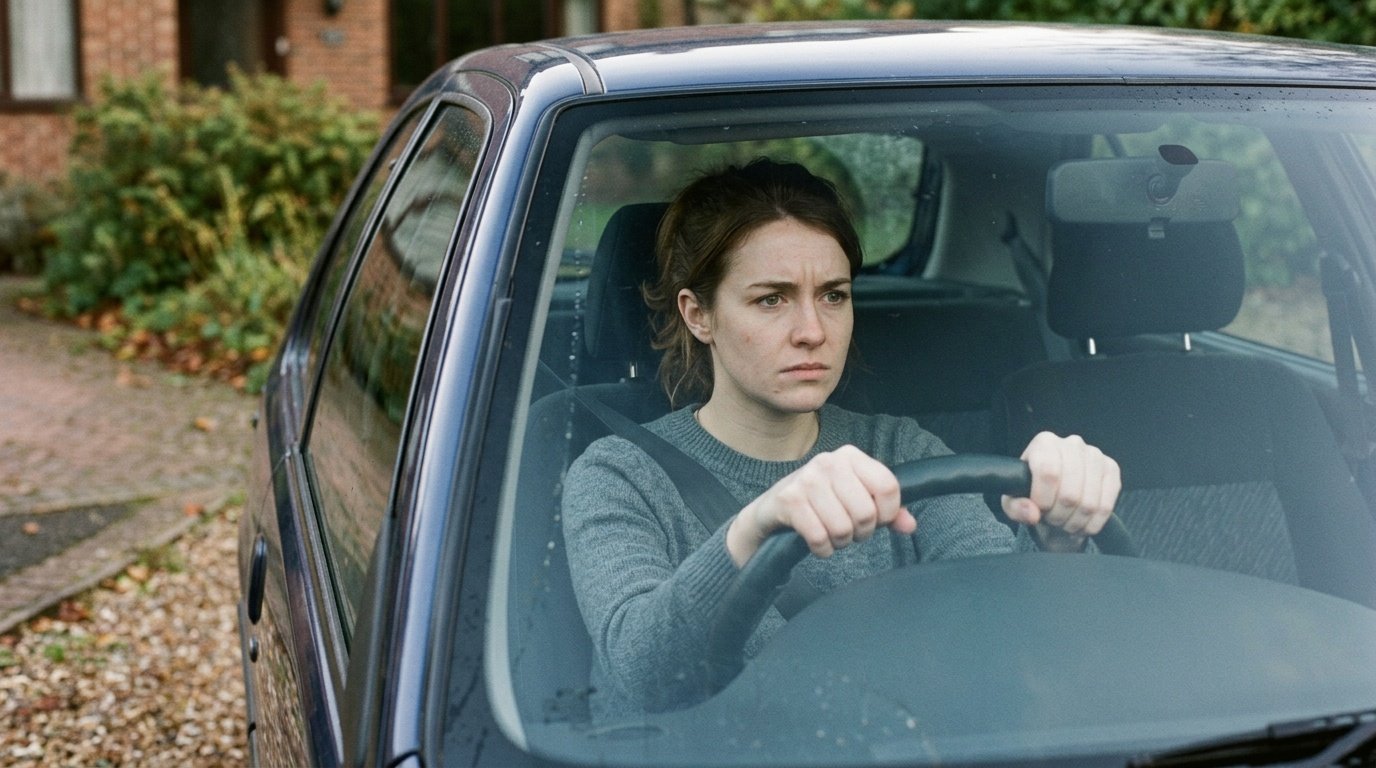
Ask around and you'll get the same three suggestions every time: force yourself to drive more, listen to a podcast to distract yourself, or just white-knuckle it until it stops bothering you. None of these are wrong exactly, they're just incomplete, and incomplete advice for an anxiety disorder often makes things worse rather than better.
Here's the piece that gets skipped: repeated exposure to a feared situation only reduces fear when it's done in a structured, predictable, and gradually escalating way. Random, unplanned exposure, like being forced onto the highway during rush hour because you have no other option, teaches your nervous system the opposite lesson. It confirms the threat was real, because you were overwhelmed and had no control over the pace. That's not a personal failure. It's how the fear response is actually wired.
I know what you're thinking: doesn't avoiding driving just make the fear worse over time? Usually, yes. But the fix isn't "drive more, drive scared." It's driving in a way your nervous system can actually process as safe, one deliberate step at a time. That distinction is the entire foundation of the treatment approach covered further down.
What Amaxophobia Actually Is, and Why the Name Matters
The clinical term for fear of driving is amaxophobia, and according to Cleveland Clinic, it describes a fear of driving, being a passenger in a vehicle, or both, that's significant enough to interfere with work, socializing, or independence. Some people only fear specific conditions, like highways or bridges. Others develop a fear so broad that even riding as a passenger triggers the same response.
Naming it matters for a practical reason, not just a diagnostic one. When something has a recognized name and an established treatment pathway, it stops being a personal defect you're supposed to just muscle through and becomes a condition with documented recovery rates. That reframe alone tends to lower the shame that keeps a lot of people from seeking help in the first place.
An estimated 19.1% of U.S. adults experience an anxiety disorder in any given year, according to the National Institute of Mental Health, and specific phobias, the broader category amaxophobia falls under, are among the most common of these. You are not an outlier. You're dealing with a well-documented pattern that a large share of the adult population also lives with.
The Physical Symptoms That Turn a Drive Into a Full-Body Alarm
Fear of driving isn't just a thought pattern, it's a physiological event. Your sympathetic nervous system reads the driving situation as a threat and prepares your body accordingly, whether or not the actual road conditions warrant it.
The most commonly reported symptoms include a racing or pounding heart, shallow or rapid breathing, sweaty palms, tunnel vision, a lump in the throat, muscle tension in the shoulders and jaw, and in more severe cases, a full panic attack with dizziness or a feeling of unreality. According to Mayo Clinic, specific phobias produce strong physical, mental, and emotional responses that can persist untreated for years, and unlike everyday nervousness, they don't fade on their own without some form of intervention.
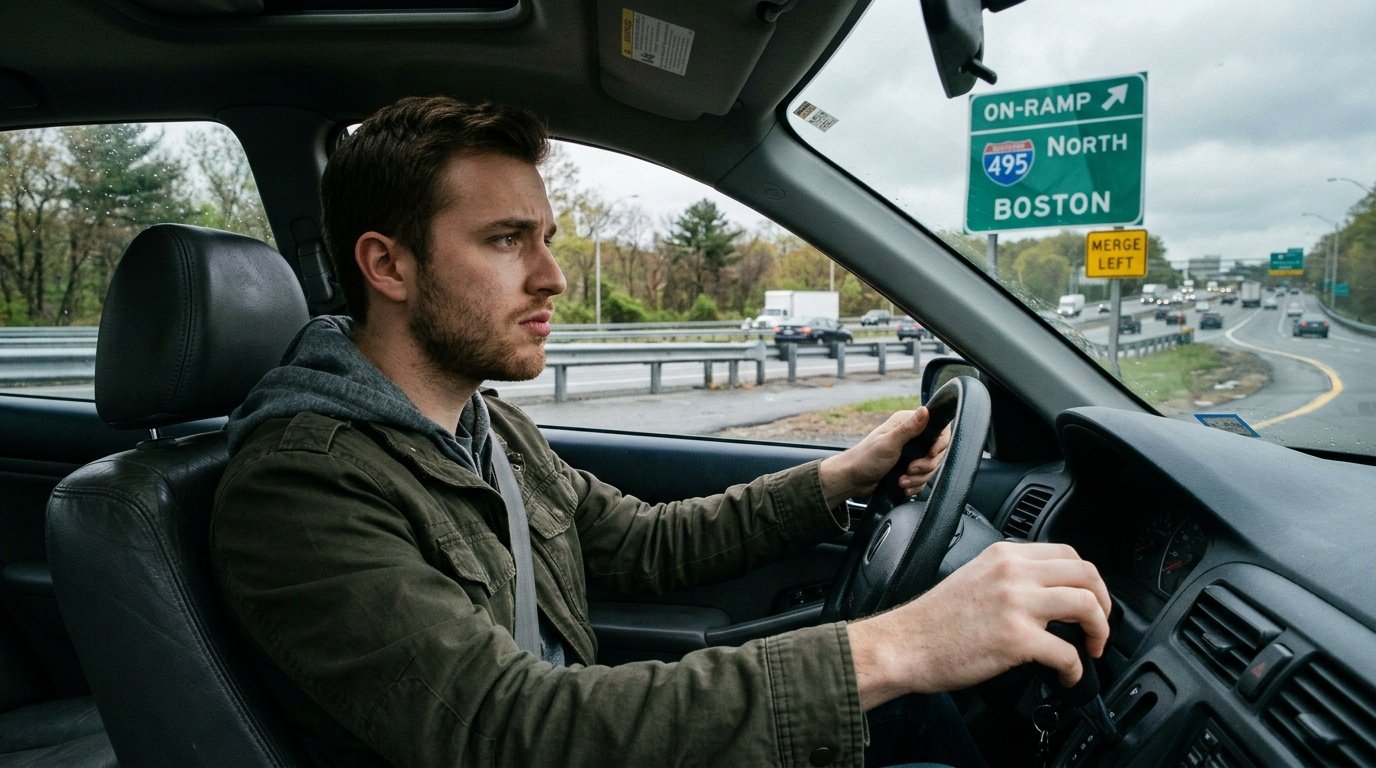
A specific example: a driver with amaxophobia might feel completely fine on familiar residential streets, then experience a full spike in heart rate and shaking hands the moment a highway on-ramp sign comes into view, sometimes a full mile before actually merging. The body starts reacting to the anticipated threat, not the actual driving conditions, which is exactly why avoidance behavior spreads so easily from "I don't like highways" to "I avoid highways entirely" to, eventually, broader driving avoidance.
Common Driving Anxiety Triggers: Highways, Bridges, Night Driving, and Sudden Onset
Not every case of driving anxiety looks the same. Recognizing which trigger pattern fits you is useful because it shapes where you'll start your recovery plan.
Highway and freeway driving
Speed, merging, and the inability to simply stop the car if anxiety spikes are the core issues here. This is one of the most commonly reported triggers, largely because highway driving removes the option of pulling over immediately, which increases the sense of being trapped.
Bridges and overpasses
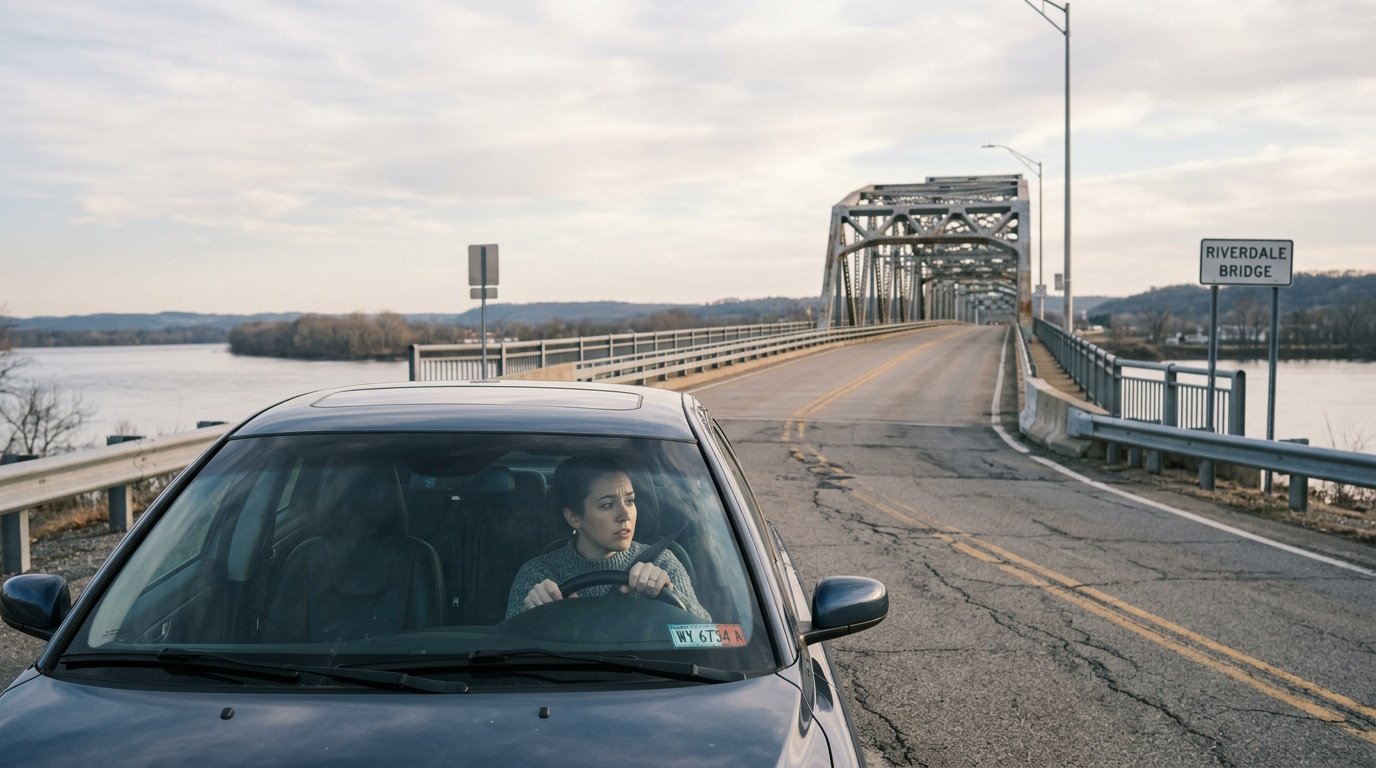
The combination of height, enclosed guardrails, and, for some, water visible below can trigger a fear response that's more about the environment than the act of driving itself. People who fear bridges sometimes drive comfortably everywhere else.
Night driving
Reduced visibility, glare from oncoming headlights, and a heightened sense of unpredictability make night driving a distinct trigger for many people, even those who feel fine during the day.
Sudden-onset fear after years of comfortable driving
This is the pattern that confuses people most, since it doesn't follow the "I was always nervous about this" script. A car accident, a near-miss, a panic attack that happened to occur while driving, or even an unrelated life stressor can trigger sudden driving anxiety in someone who drove without issue for years. The fear didn't come from nowhere; it's a learned association your brain formed quickly, often after a single alarming event.
Exposure Therapy: The Treatment With the Strongest Evidence Behind It
Exposure therapy is the treatment most consistently recommended for specific phobias, including amaxophobia, and it's worth understanding what it actually involves before you rule it out as "just forcing yourself through it," because that's a common but inaccurate assumption.
According to Cleveland Clinic, exposure therapy for amaxophobia typically begins with learning breathing and relaxation techniques to use before and during exposure, then progresses to viewing images or videos of driving situations, and finally moves into gradual real-world exposure, starting with low-stress conditions and slowly increasing difficulty as your nervous system adapts. The table below breaks that progression into a clearer sequence.
| Step | What It Involves | Typical Focus |
|---|---|---|
| 1. Preparation | Learning breathing and relaxation techniques before any driving exposure begins | Building a physical coping tool you can use on demand |
| 2. Imaginal exposure | Viewing images or videos of driving situations that trigger symptoms | Introducing the fear stimulus at low intensity, without real-world risk |
| 3. Low-stress in-vivo exposure | Sitting in a parked car, then driving short, familiar, low-traffic routes | Real-world practice at the lowest achievable difficulty |
| 4. Graduated real-world exposure | Gradually increasing distance, traffic, and trigger-specific conditions (highways, bridges, night driving) | Building tolerance across the specific situations that trigger you |
Source: Cleveland Clinic, 2022
The non-obvious part most people miss: the goal of each step isn't to feel calm. It's to stay in the situation long enough for your nervous system to register that nothing catastrophic happened, even while feeling anxious. That's what actually rewires the fear response, not the absence of anxiety in the moment.
Building Your Own Graduated Driving Exposure Ladder
An exposure ladder is a personal list of driving situations ranked from least to most anxiety-provoking, and it's the practical tool that turns the general concept of exposure therapy into something you can actually schedule and track.
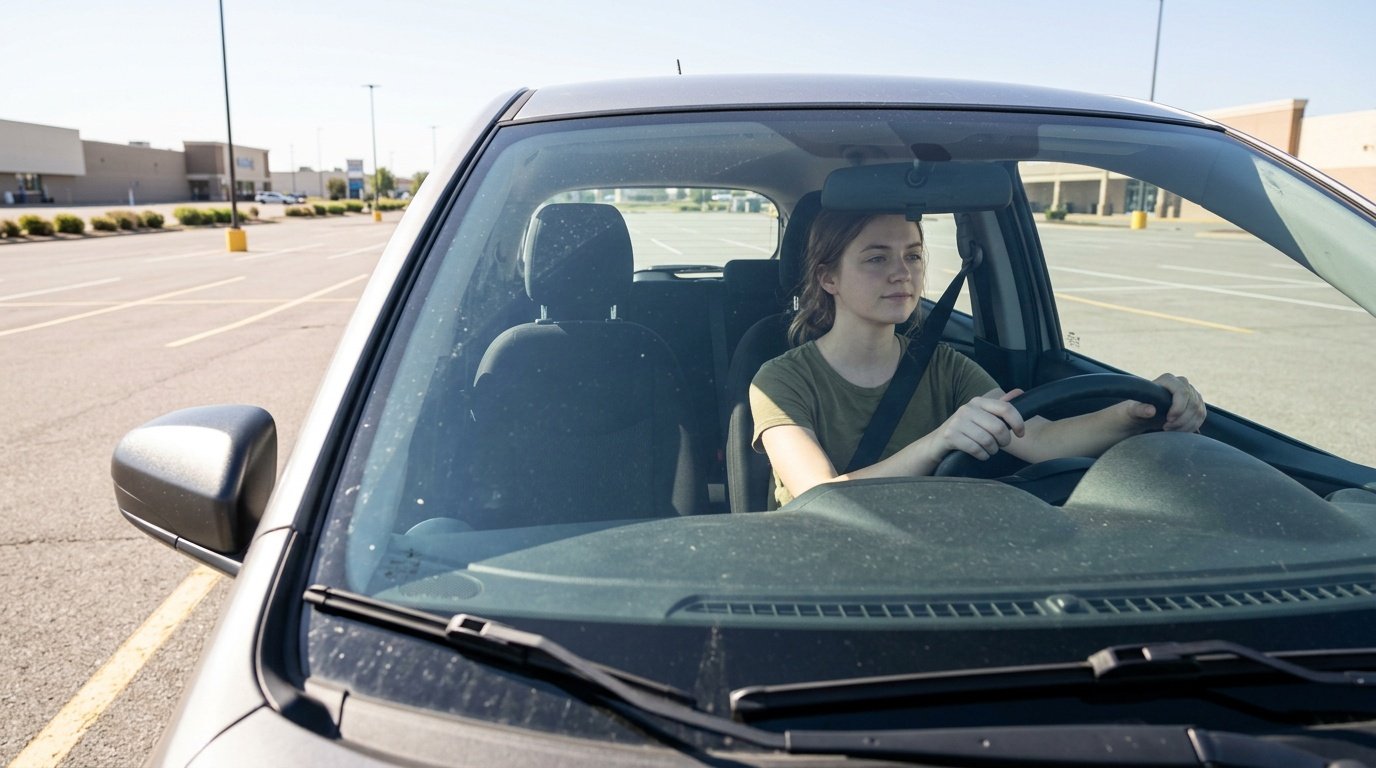
Start by listing every driving situation that triggers you, from mild to severe. That might look like: sitting in a parked car with the engine off, sitting with the engine running, driving around an empty parking lot, driving a familiar quiet street during the day, driving that same street at night, driving to a nearby store on a moderately busy road, and finally, merging onto the highway during low-traffic hours.
Assign each step a rough anxiety rating from 1 to 10, then work through them in order, repeating each step multiple times until your anxiety rating for that specific step drops noticeably before moving to the next one. This is slower than most people expect, and that's the point. Rushing the ladder to "prove" you're not scared anymore tends to backfire, because it reintroduces the overwhelming, uncontrolled exposure pattern that made the fear worse in the first place.
If your fear of driving anxiety is severe enough that even sitting in a parked car spikes your heart rate, that's a completely valid starting point, not a sign you're doing it wrong. The ladder works because every rung is achievable, not because it starts hard.
Timing your practice sessions matters more than most self-guided plans account for. Trying to work through a new rung on the ladder when you're already tired, running late, or dealing with an unrelated stressful day stacks the odds against you before you've even started the car. Pick low-pressure windows, a weekend morning, a quiet weekday afternoon, where you're not racing a deadline and can end the session early if your anxiety climbs higher than expected without any real-world consequence. A practice drive that gets cut short because you chose to stop is still progress. It's not a failure, and treating it as one is one of the fastest ways people abandon the ladder altogether before it's had a chance to work.
In-the-Moment Techniques for When Anxiety Spikes Behind the Wheel
Exposure therapy handles the long-term rewiring. You still need something for the moment your chest tightens at a red light or your hands start shaking on the highway, and the tools that work here are physical, not motivational.
Box breathing, inhaling for four counts, holding for four, exhaling for four, holding again for four, is one of the fastest ways to interrupt a physical anxiety spike, because it directly engages your vagus nerve. According to Harvard Health Publishing, slow, controlled breathing lowers heart rate and blood pressure and helps convert a stress response into a relaxation response, which is exactly the physiological shift you need before continuing to drive safely. If you want a broader set of options beyond breathing, our guide on anxiety reduction techniques that actually work covers grounding and cognitive tools that pair well with driving-specific practice.
Health disclaimer: If anxiety while driving ever causes you to feel disoriented, lose focus on the road, or become unable to safely operate the vehicle, pull over in a safe location as soon as possible and wait until you feel stable. These techniques support driving anxiety management, but they are not a substitute for professional evaluation, and they should never be relied on in place of pulling over when your safety, or anyone else's, is at risk.
Naming what's happening out loud or silently, "this is anxiety, not danger," can also help create distance from the panic without requiring you to fully talk yourself out of it mid-drive. If a full panic attack does hit while you're a passenger or safely stopped, our breakdown of breathing exercises for panic attacks walks through several more structured options in detail.
When to See a Professional About Fear of Driving Anxiety
Self-directed exposure work genuinely helps a large share of people, but it isn't the right fit for everyone, and knowing when to loop in a licensed provider matters as much as the techniques themselves.
Consider professional support if your driving avoidance is limiting your job, relationships, or independence; if panic attacks are becoming more frequent rather than less; if you've tried a self-guided exposure ladder consistently for several weeks without any reduction in anxiety; or if the fear developed suddenly after a traumatic event like a serious accident, which sometimes involves a trauma response that benefits from more structured clinical support than self-guided exposure alone.
According to the CDC, healthy coping strategies like structured practice and connecting with others are meant to work alongside professional support for anxiety, not instead of it when the anxiety is significantly disrupting daily life. A licensed therapist trained in exposure-based treatment, sometimes alongside cognitive behavioral therapy, can also personalize your exposure ladder and troubleshoot plateaus that are hard to identify on your own. If the driving anxiety is tangled up with broader chronic stress from work, family, or health, our guide on stress management psychotherapy covers what therapy adds that self-directed tools generally can't.
Recovery from fear of driving anxiety is rarely a straight line. Some weeks will feel like real progress, others will feel like you've slipped back a rung on the ladder, and both are a normal part of the process rather than evidence it isn't working. What matters most is that the approach itself, structured, gradual, physically-grounded exposure, has a strong track record, and that you don't have to choose between "force yourself through it" and "avoid driving indefinitely." There's a middle path built specifically for this, and it starts with whichever rung on your ladder feels achievable today.
Frequently Asked Questions
What is the fear of driving called?
The clinical term is amaxophobia, sometimes also called vehophobia or driving phobia. It's classified as a specific phobia and can involve fear of driving, being a passenger, or both.
What causes sudden fear of driving?
Sudden driving anxiety often follows a car accident, a near-miss, a panic attack that occurred while driving, or a period of unrelated high stress. The brain can form a strong fear association quickly, sometimes after a single alarming event, even in people who previously drove without any issue.
How long does it take to get over fear of driving?
There's no fixed timeline, since it depends on the severity of the fear and how consistently you work through a graduated exposure plan. Many people notice meaningful improvement within several weeks of consistent practice, while more severe or trauma-related cases may take longer and benefit from professional guidance.
Can medication help with fear of driving?
Medication isn't typically the first-line treatment for a specific phobia like amaxophobia, but a healthcare provider may recommend it alongside exposure-based therapy in certain cases, particularly when anxiety symptoms are severe or co-occurring with another condition. Never start or adjust medication without consulting a licensed provider.
Is fear of driving the same as agoraphobia?
No. Amaxophobia is a specific phobia focused on driving or riding in vehicles. Agoraphobia is a broader anxiety disorder involving fear of situations where escape might be difficult, which can sometimes overlap with driving fears but is a distinct diagnosis with its own criteria.
What is exposure therapy for fear of driving?
Exposure therapy is a structured treatment approach that starts with breathing and relaxation preparation, moves to viewing driving-related images or videos, and progresses to gradual, real-world driving practice, beginning with low-stress situations and slowly increasing difficulty as your tolerance builds.
References
- National Institute of Mental Health — Any Anxiety Disorder, 2024
- Cleveland Clinic — Amaxophobia (Fear of Driving), 2022
- Mayo Clinic — Specific Phobias: Symptoms and Causes, 2023
- Harvard Health Publishing — Ease Anxiety and Stress: Take a (Belly) Breather
- Centers for Disease Control and Prevention — Managing Stress, 2026