


Your gut has somewhere between 300 and 500 species of bacteria living in it, and what you eat today changes that population within about 24 hours. That's the part most wellness content leaves out when it tells you to "just eat more probiotics." Fermented food and gut health interact in specific, measurable ways, and the difference between a routine that actually shifts your microbiome and one that just adds a jar of kimchi to your fridge comes down to which foods, how much, and how consistently.
This isn't a trend piece. Fermentation is one of the oldest food preservation methods humans have used, and the science connecting it to digestive and immune health has grown fast over the last decade. Here's what the research actually supports, what it doesn't, and how to build a routine that fits a normal week instead of a wellness influencer's schedule.

Why Fermented Food And Gut Health Are More Connected Than Most Diets Admit
Most people hear "gut health" and picture bloating relief. That's part of it, but the gut microbiome does far more. It helps regulate immune response, produces certain vitamins, influences mood through the gut-brain axis, and affects how your body processes nutrients from everything else you eat. A 2021 study published in Cell found that a high-fermented-food diet increased microbiome diversity and decreased markers of inflammation over a 10-week period, while a high-fiber diet without fermented foods did not produce the same inflammation drop in that timeframe. That single finding reframed a lot of nutrition advice, because fiber alone had been treated as the primary lever for years.
What Actually Happens To Your Microbiome When You Eat Fermented Food
Fermented foods contain live microorganisms, usually strains of Lactobacillus, Bifidobacterium, or various yeasts, depending on the food. When you eat them consistently, these microbes can temporarily colonize sections of your gut, compete with less beneficial bacteria for resources, and produce short-chain fatty acids like butyrate that feed the cells lining your colon. According to the National Institute of Diabetes and Digestive and Kidney Diseases, a healthier, more diverse gut microbiome is associated with better digestion and a stronger gut barrier, which is the lining that keeps undigested food particles and toxins from leaking into your bloodstream.
Here's the part that surprises people: most fermented-food bacteria don't permanently move in. They pass through, doing their work along the way, and your gut resets closer to baseline within days if you stop eating them. That's exactly why consistency matters more than any single "detox" serving.
The Difference Between Probiotic Foods And Prebiotic Foods
I know what you're thinking: aren't probiotics and prebiotics the same category of gut-health buzzword? They're not, and mixing them up is the most common mistake people make when trying to fix digestion through diet.
- Probiotic foods contain live bacteria. Fermented foods like yogurt, kefir, and sauerkraut fall here.
- Prebiotic foods contain fiber that feeds the bacteria already living in your gut. Garlic, onions, oats, and bananas fall here.
You need both. Probiotics without prebiotic fiber are like introducing new employees to a company with no supplies to work with. The Harvard T.H. Chan School of Public Health notes that a diverse, fiber-rich diet is one of the strongest predictors of a healthy, resilient microbiome, and fermented foods work best layered on top of that foundation, not as a replacement for it.
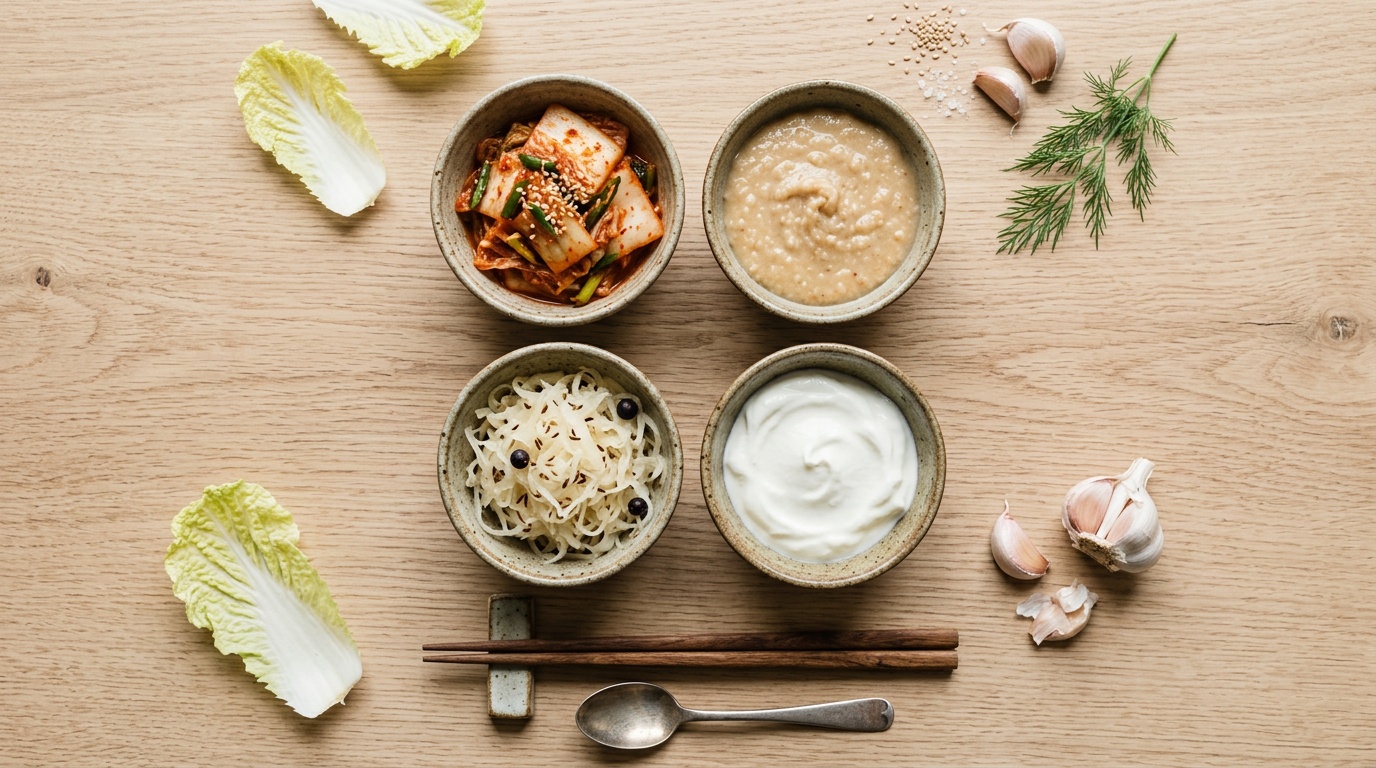
The Fermented Foods With The Strongest Evidence Behind Them
Not every fermented food carries the same weight for gut health. Some are pasteurized after fermentation, which kills the live cultures, and others are fermented specifically to preserve them. Here's what's actually worth prioritizing.
Yogurt And Kefir
Look for "live and active cultures" on the label. Kefir generally carries a broader range of bacterial and yeast strains than yogurt, sometimes 30 or more, compared to yogurt's typical 2 to 5. Both are solid entry points if you're new to fermented food and gut health work, since they're widely available, mild in flavor, and easy to fold into a normal breakfast.
Sauerkraut And Kimchi
Both are fermented cabbage, but kimchi typically includes garlic, ginger, and chili, which adds prebiotic fiber alongside the probiotic bacteria, effectively doing double duty. Choose refrigerated versions over shelf-stable ones. Shelf-stable sauerkraut is usually pasteurized for a longer shelf life, and pasteurization kills the live cultures you're buying it for in the first place.
Miso, Tempeh, And Natto
These are fermented soy products, common across a lot of Asian cuisines, and they're worth knowing if you're building a plant-forward routine. Miso works well stirred into soup once the liquid has cooled slightly, since high heat can reduce the live culture count. Natto has an intense, sticky texture people either love or can't get past. Tempeh, by contrast, is fermented and then typically cooked, so its live-culture content is lower, but it's still a strong source of gut-friendly fiber and plant protein.
Kombucha (And Why It's Overhyped)
Kombucha gets marketed harder than any food on this list, and it deserves a more measured take. It is fermented and does contain live cultures, but many commercial brands are high in added sugar to offset the tartness, and the live-culture count varies widely by brand and batch. It's a fine addition, not a foundation. If gut health is the actual goal, a cup of kefir or a serving of sauerkraut delivers more reliable value per calorie than a bottle of kombucha.
| Fermented Food | Typical Serving | Strain Diversity | Best Paired With |
|---|---|---|---|
| Kefir | 1 cup | High (30+ strains) | Oats, berries |
| Yogurt | 1 cup | Moderate (2-5 strains) | Fruit, flaxseed |
| Kimchi | 2-4 tbsp | Moderate to high | Rice, eggs |
| Sauerkraut (refrigerated) | 2-4 tbsp | Moderate | Sandwiches, grain bowls |
| Miso | 1-2 tbsp | Moderate | Soup, dressings |
Source: NIDDK, National Institutes of Health

How Much Fermented Food You Actually Need For A Measurable Gut Health Shift
The Serving Range Backed By Research
The Stanford study referenced earlier used roughly 6 servings a day across a 10-week period to produce measurable diversity increases and inflammation reduction. That's a research protocol, not a daily requirement, and it's a higher bar than most people need or want to hit. A more realistic, sustainable target for fermented food and gut health benefits is 1 to 3 servings a day, spread across different foods rather than repeating the same one, since variety in bacterial strains matters more than volume of any single strain.
Why More Isn't Automatically Better
This is where people overcorrect. Jumping from zero fermented food to 6 servings a day in week one is a fast route to bloating, gas, and a strong urge to quit the whole thing. The Mayo Clinic notes that probiotic foods and supplements can cause mild digestive side effects, especially when introduced quickly, and recommends starting slow and increasing gradually. Build up over 2 to 3 weeks instead of front-loading everything on day one.

What Happens To Your Gut In The First Few Weeks Of Eating Fermented Food Daily
Common Side Effects Nobody Warns You About
Bloating, mild gas, and slightly looser stools are common in the first 1 to 2 weeks as your gut adjusts to a new bacterial population and a fiber increase, if you're also adding prebiotic foods alongside. This isn't a sign something's wrong. It's a sign something's changing. Most people find these effects settle within two to three weeks as the microbiome stabilizes.
Health disclaimer: If you have a compromised immune system, are pregnant, or have a diagnosed digestive condition like IBD or SIBO, talk to a doctor before significantly increasing fermented food intake, since live bacteria can affect these conditions differently than they affect a typical healthy gut. Fermented foods are also generally not recommended for infants under 1 year old due to added salt and sugar content in many products.
When To Slow Down Or Stop
Mild bloating that eases within a couple of weeks is normal. Persistent pain, diarrhea that doesn't resolve, or a rash after eating fermented foods is not, and any of those warrant a step back and a conversation with a healthcare provider rather than pushing through. Fermented foods can also be high in histamines, and some people are more sensitive to that than others, showing up as headaches or flushing rather than digestive symptoms.

Building A Realistic Fermented Food Routine You'll Actually Stick To
A Sample Week
You don't need a meal plan overhaul. Small swaps compound faster than most people expect:
- Swap your usual breakfast yogurt for one with "live and active cultures" listed on the label
- Add 2 tablespoons of kimchi or sauerkraut to one lunch or dinner, 3 to 4 times a week
- Stir a spoon of miso into soup or a salad dressing once or twice a week
- Try kefir as a smoothie base instead of regular milk
- Keep kombucha occasional, not a daily habit, given the sugar content in most brands
Store-Bought Vs Homemade
Store-bought is completely fine, and for most people it's the more sustainable option. Just check for "live and active cultures" or "unpasteurized" on the label, and store products in the refrigerated section, not the shelf-stable aisle. Homemade fermentation gives you more control over sugar and salt content and can be more cost-effective over time, but it comes with a learning curve and a real food-safety responsibility, since improperly fermented food can grow harmful bacteria alongside the beneficial kind. If you're new to this, start with store-bought and consider homemade later once the habit is established.
Frequently Asked Questions
How long does it take to see gut health benefits from fermented foods?
Most people notice digestive changes, like reduced bloating or more regular bowel movements, within 2 to 4 weeks of consistent intake. Measurable shifts in microbiome diversity, the kind researchers track in studies, typically take 8 to 10 weeks of daily consumption.
Can I eat too much fermented food?
Yes. Excess intake, especially introduced quickly, can cause bloating, gas, and in people sensitive to histamines, headaches or flushing. There's no established upper limit, but 1 to 3 servings a day covers what most research supports without pushing into discomfort territory.
Is kombucha as good for gut health as yogurt or kefir?
Not consistently. Kombucha does contain live cultures, but strain diversity and count vary widely between brands, and many commercial versions carry significant added sugar. Kefir and refrigerated, unpasteurized sauerkraut generally offer more reliable bacterial content per serving.
Do fermented foods help with bloating, or make it worse?
Both can be true depending on timing. In the first 1 to 2 weeks, fermented foods can temporarily increase gas and bloating as your gut adjusts. Past that adjustment period, consistent intake is more commonly associated with reduced bloating as gut function improves.
What's the difference between probiotics in food versus a probiotic supplement?
Fermented food delivers live bacteria alongside real nutrients, fiber, and in many cases prebiotic compounds that feed those bacteria, so the food functions as a full package. Supplements deliver a more concentrated, specific strain count, which can be useful for a targeted concern but doesn't replicate the same food-matrix effect. Neither replaces the other; they serve different purposes.
Should I eat fermented food every day?
Daily intake is where most of the research benefit shows up, but it doesn't need to be a large amount. A spoonful of kimchi with dinner and a cup of yogurt at breakfast is enough to build consistency without needing to overhaul your entire diet.
References
- National Institute of Diabetes and Digestive and Kidney Diseases (NIDDK) — Digestive Diseases
- Harvard T.H. Chan School of Public Health — The Microbiome
- Mayo Clinic — Probiotics and Prebiotics: What You Should Know
- Cleveland Clinic — The Health Benefits of Fermented Foods
- Academy of Nutrition and Dietetics — Probiotics 101
Building better fermented food and gut health habits isn't about chasing a perfect protocol. It's about picking two or three foods you'll actually eat again next week, adding them consistently, and letting your gut catch up on its own timeline.