

You've probably had someone tell you to cut rice if you want to lose weight, usually with total confidence and zero source attached. Is rice bad for weight loss, or is that claim doing more work than the actual evidence can support? The short version: large population studies and randomized trials haven't found what the rumor suggests. What follows is a walk through what researchers actually measured when they studied rice, weight, and blood sugar directly, why rice gets blamed for a problem it usually didn't cause, and how to build a plate around it that supports the number on the scale instead of working against it.
Is Rice Bad for Weight Loss, or Is That the Wrong Question?
Ask around and you'll hear rice blamed for stalled weight loss, blood sugar spikes, and belly fat, usually in the same breath as bread and pasta. The claim treats rice like a single ingredient with a fixed effect on the body, the same way old diet culture treated fat or sugar as the one villain behind every extra pound. Nutrition science moved past that framing decades ago, but the "cut this one food" habit is stubborn.
Here's the more useful question: does rice, eaten in a normal portion as part of a normal day, independently cause weight gain once you account for everything else on the plate and everything else about the person eating it? That's a testable question, and researchers have actually tested it, repeatedly, in populations that eat far more rice than the average American ever will.
Take someone like a 26-year-old office worker who cut rice completely for two months, convinced it was sabotaging her progress, while leaving her afternoon vending-machine habit untouched. She lost a little weight from the calorie deficit created by dropping an entire food category, then plateaued, and the rice-free noodles and crackers she replaced it with carried a similar or higher glycemic load than the rice she'd eliminated. The rice was never the problem; the framing was.

What Happens When Researchers Actually Study Rice and Weight Gain
One of the largest, longest-running datasets on this question comes from the China Health and Nutrition Survey, which tracked more than 11,500 adults across multiple waves between 1991 and 2015. Researchers built mixed-effect models comparing wheat and rice intake against body mass index and obesity risk, adjusting for activity level, income, smoking, and other confounders. The result surprised anyone expecting rice to come out looking bad: higher wheat intake was linked to a real BMI increase in women, while higher rice intake was not associated with rising BMI at all, and among men, the highest quartile of rice consumption actually showed lower odds of overweight or obesity than eating almost none.
That finding runs against the popular narrative, and it should give you pause before accepting "rice equals weight gain" as settled fact. It doesn't mean rice is magic, and it doesn't cancel out the reality that any food eaten in excess adds calories. It means the specific claim that rice itself independently drives weight gain doesn't hold up against 24 years of tracked data in a population where rice, not wheat, is the dominant staple.
The same pattern shows up in trial data on glycemic index more broadly. A 2023 Cochrane systematic review pooled randomized controlled trials comparing low glycemic index or low glycemic load diets against higher-GI diets in adults with overweight or obesity. Rice sits toward the higher end of the glycemic index scale for some varieties, so if GI genuinely drove weight outcomes, low-GI diets should have produced a clear, consistent advantage. They didn't. The certainty of evidence was rated low to moderate, and differences in body weight and BMI between the groups were small enough that the review couldn't confirm a meaningful advantage either way.
That's the non-obvious part worth sitting with: an entire industry of advice treats glycemic index as a near-moral ranking of carbohydrates, yet the actual randomized evidence on whether low-GI eating produces more weight loss than higher-GI eating is thin and inconsistent. Rice getting singled out because of its GI number is leaning on a mechanism that hasn't reliably shown up in controlled trials.
The Rice Paradox: Why High-Rice-Consumption Countries Aren't the Ones with the Obesity Crisis
If rice itself were a meaningful driver of weight gain at the population level, you'd expect the countries eating the most of it to show the effect clearly. That's not the pattern that shows up in international comparisons. Countries where rice provides a large share of daily calories, several in East and Southeast Asia among them, have historically reported lower average obesity rates than countries where rice barely registers as a dietary staple.
This doesn't prove rice protects against obesity, and it would be sloppy to claim that. Genetics, activity levels, meal timing, food processing, and portion norms all differ across these populations, and any one of them could explain part of the gap. What the pattern does prove is that heavy rice consumption is clearly compatible with low population-level obesity, which flatly contradicts the idea that rice itself is inherently fattening. If rice caused weight gain the way sugar-sweetened soda does, a diet built around it as the primary calorie source should show that effect unmistakably. It doesn't.
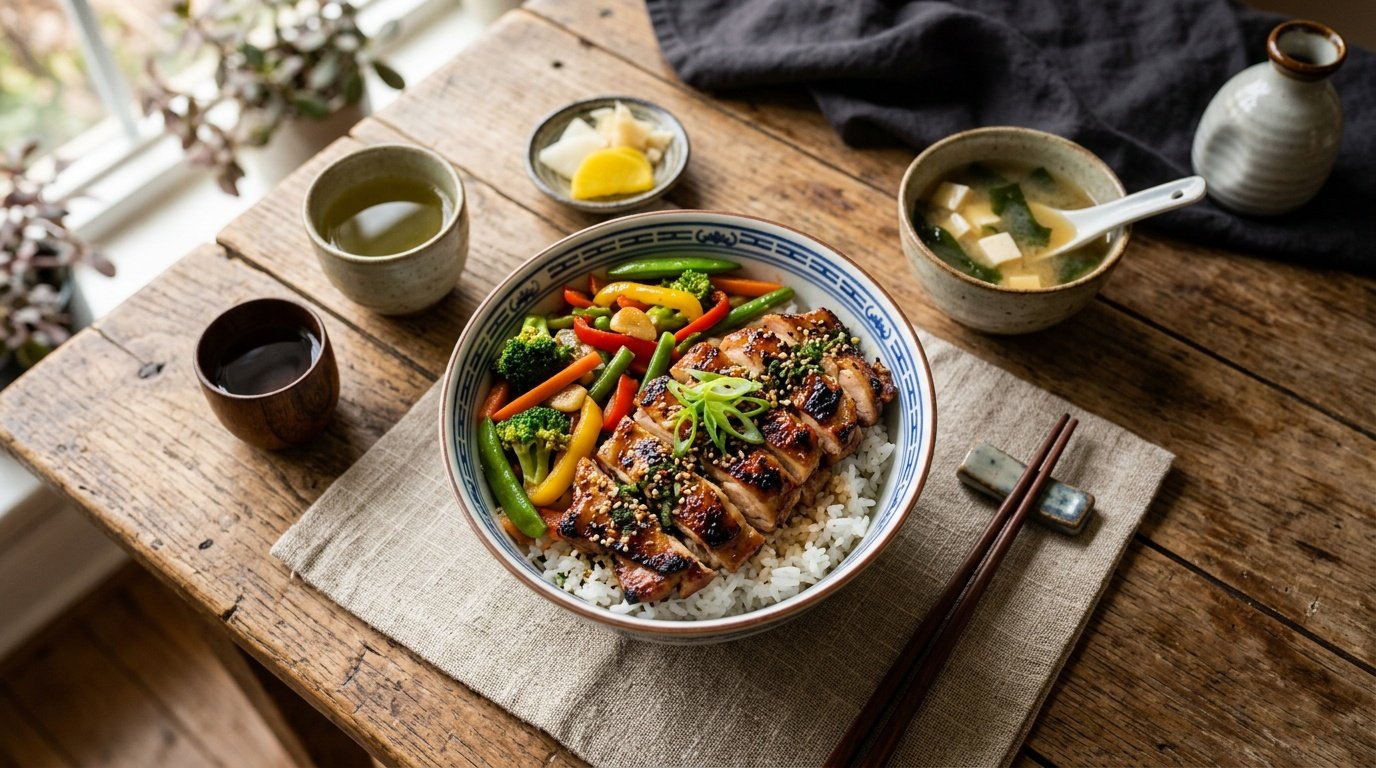
What differs isn't the rice, it's usually everything around it: smaller absolute portions per meal, more frequent smaller meals rather than one large one, vegetable and protein pairing as standard practice rather than an afterthought, and less reliance on ultra-processed snack foods between meals. Swap an American plate's typical rice portion and surrounding foods for a traditional East Asian one, and the calorie and processing gap explains far more than the rice itself ever could.
Basmati Rice and Weight Loss: Does the Amylose Difference Actually Matter?
If you're going to be selective about which rice you buy, the amylose content is the one variable worth knowing. Basmati rice, particularly aged basmati, carries a higher proportion of amylose starch relative to amylopectin than most short and medium-grain white rices. Amylose digests more slowly, which produces a gentler post-meal blood sugar rise than a starch that's mostly amylopectin.
For basmati rice and weight loss specifically, that slower digestion translates into steadier energy and, for some people, better appetite control between meals, since a sharp glucose spike followed by an equally sharp crash tends to trigger hunger sooner than a gradual rise and fall. That's a real, measurable physiological difference, not marketing. It's not, however, a reason to treat basmati as a weight-loss food in its own right; the calorie content per cooked cup is close enough to other white rice varieties that portion size still does more work than the amylose ratio.
Rinsing basmati before cooking removes surface starch and produces separate, distinct grains rather than a sticky clump, and that texture difference alone tends to encourage smaller self-selected portions, since a heaping clumped scoop reads as more food per spoonful than the same weight of fluffy, separated grains. It's a small, unscientific observation compared to the amylose data, but it's worth factoring in if portion creep has been part of the problem.
Red Rice and Weight Loss: The Overlooked Variety Worth Knowing About
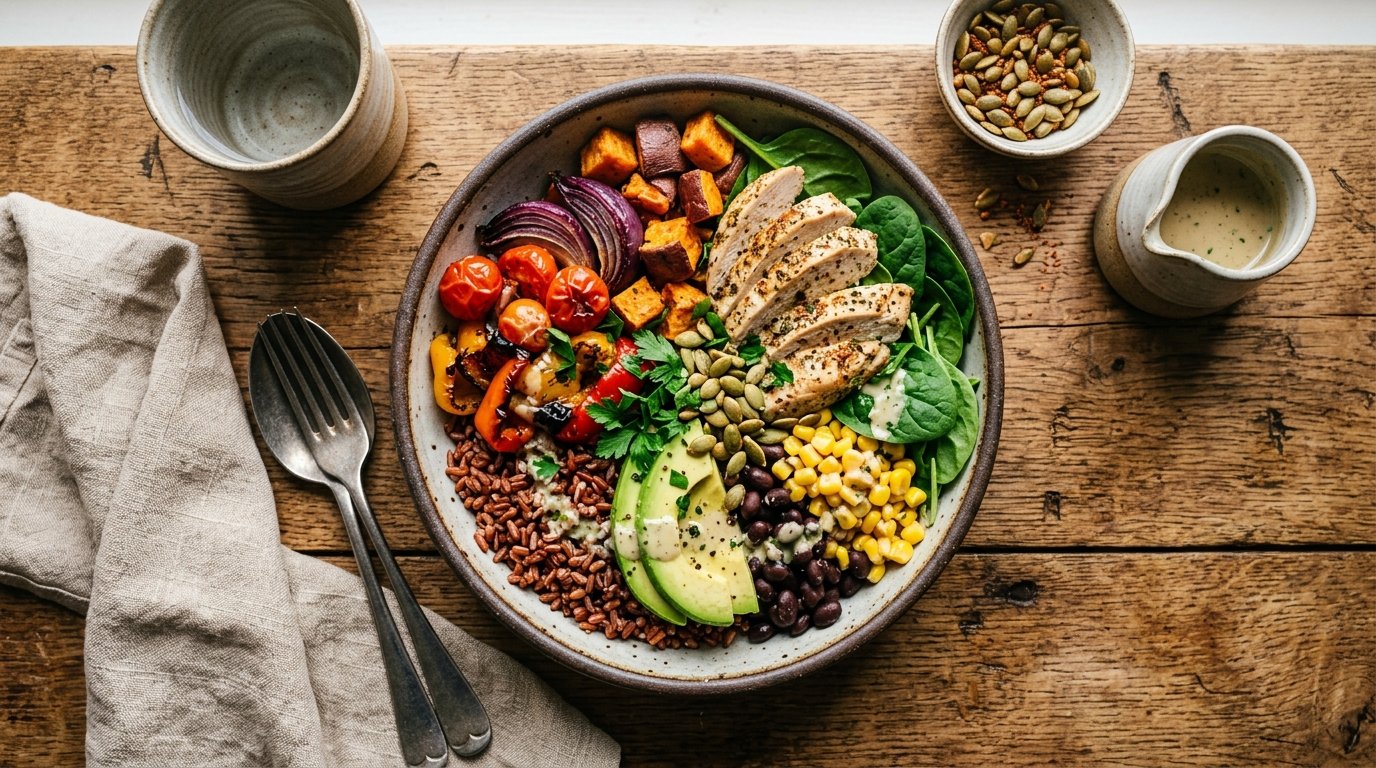
Red rice rarely gets mentioned in the white-versus-brown debate, which is a gap worth closing. Like brown rice, red rice keeps its bran layer intact during milling, which means it carries more fiber and micronutrients than white rice, along with anthocyanin pigments, the same compound family responsible for the color in blueberries and purple cabbage, which give red rice its distinctive husk.
For red rice and weight loss purposes, the practical case is similar to brown rice: more fiber slows digestion, extends satiety on the same portion, and produces a gentler blood sugar response than a fully milled white grain. The texture is chewier and nuttier than white rice, which some people find more filling per bite, a subjective effect that's harder to measure in a lab but shows up consistently in how people describe eating it. It's not a magic swap, and it won't outperform basic calorie and portion discipline on its own, but as a rotation option alongside brown and basmati, it adds fiber variety without asking you to give up rice entirely.
If you've been avoiding rice because you assumed all rice behaves like the fastest-digesting white variety, red rice is worth trying specifically because it doesn't. Cooking it takes slightly longer than white rice and closer to brown rice's timing, so plan meal prep accordingly if you're rotating it into a weekly routine.
The Real Reason Rice Gets Blamed: Portion Creep, Not the Grain Itself
Here's the pattern that actually explains most stalled weight loss blamed on rice: portion distortion, not the food itself. A restaurant serving of rice in the United States frequently runs two to three cups, two to three times the reference serving most nutrition guidance is built around. Eat that portion twice a day without accounting for it, and you've added several hundred extra calories that have nothing to do with rice being uniquely fattening and everything to do with a serving size nobody measured.
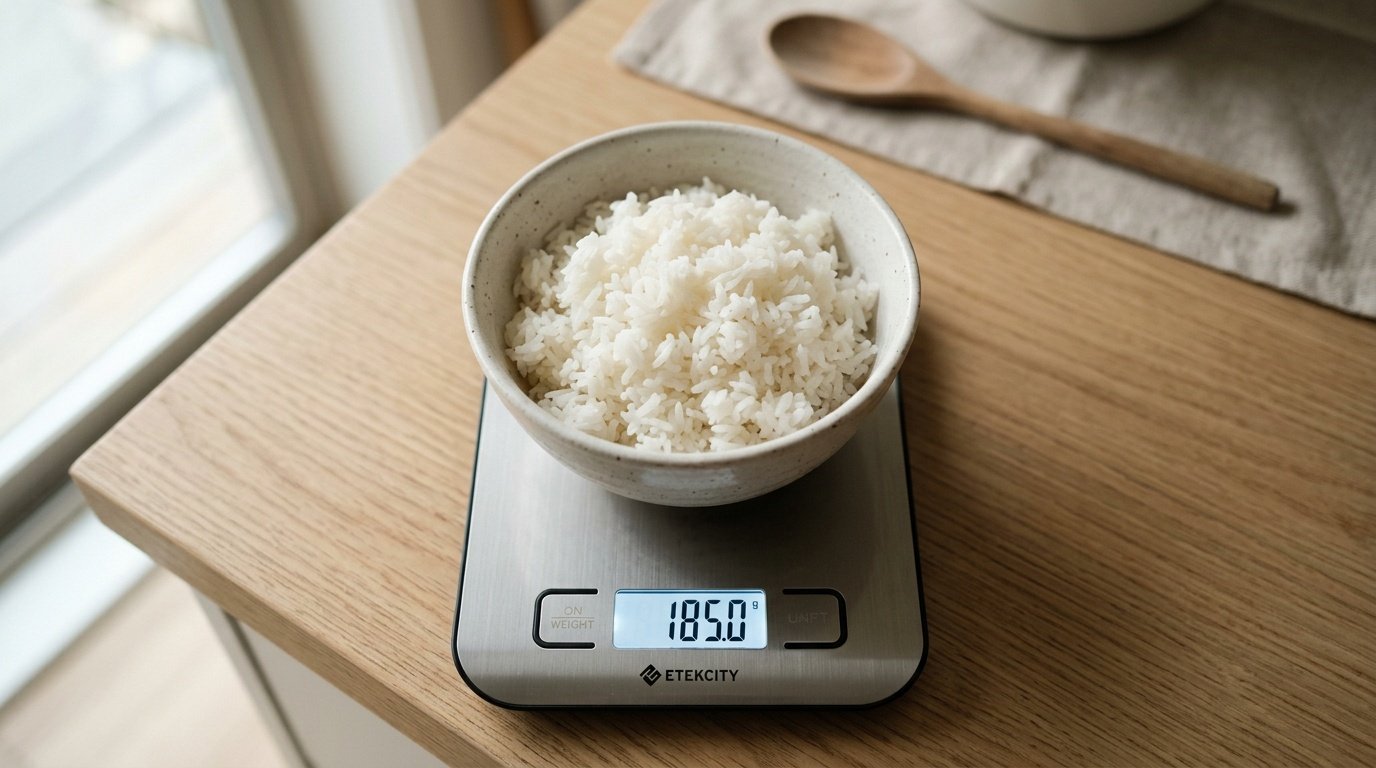
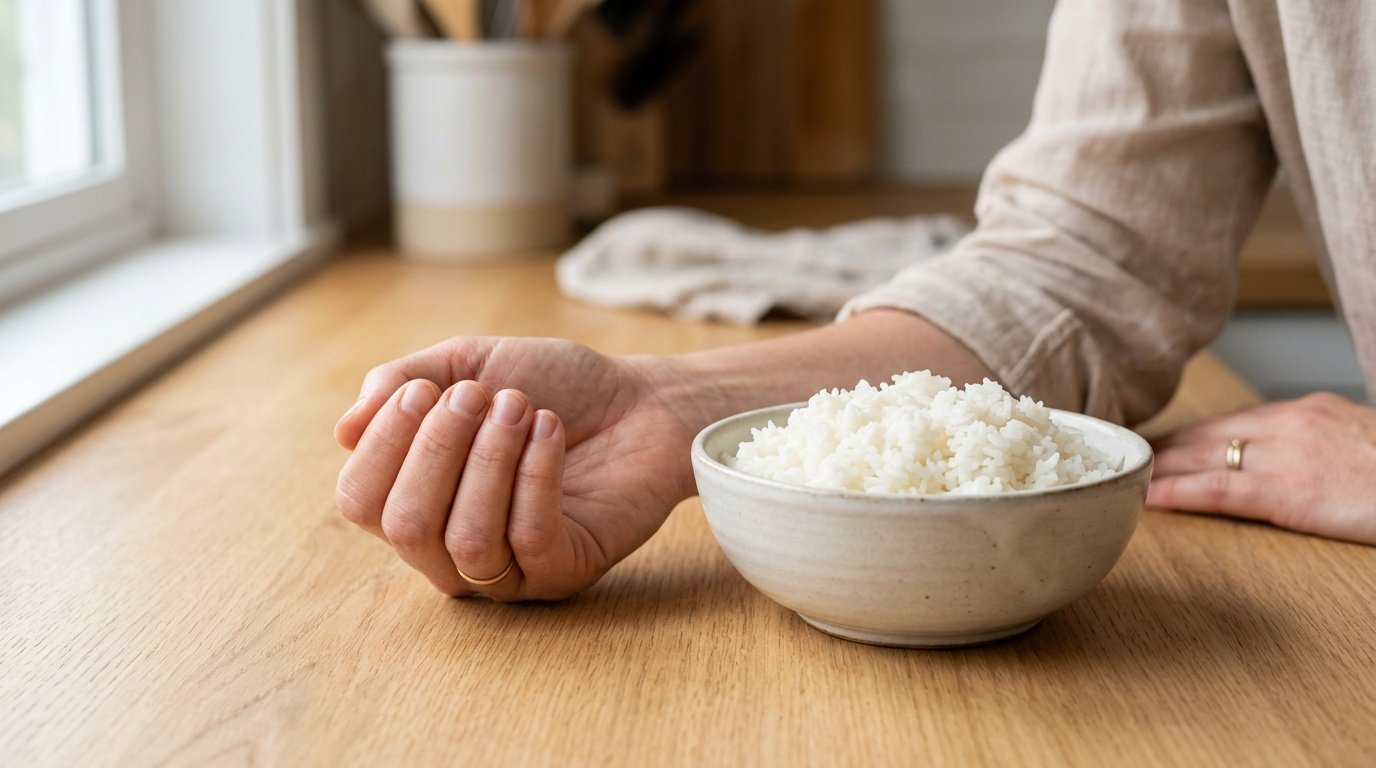
According to NIDDK's guidance on food portions, a reasonable serving of cooked rice, pasta, or similar starches is roughly half a cup, about the size of a rounded handful or a tennis ball, a visual reference that's far easier to remember at a restaurant than a kitchen scale. Most people eating "too much rice" aren't eating an unreasonable amount of rice for a human being to enjoy; they're eating three to four servings' worth while believing it's one.
This is exactly the pattern Mayo Clinic Health System's nutrition team flags when they debunk the single-food-elimination approach to dieting: diets that isolate one food as the villain are restrictive, often miss out on nutrients the food actually provides, and any weight lost tends to come back once the restriction ends, because it was never really about the food. The same logic applies in reverse. Blaming rice specifically, rather than the portion or the plate composition around it, sets you up to eliminate something that was never the actual issue, and to miss the real fix, which is usually portion awareness and what's sitting next to the rice.
CDC's guidance on healthier meals makes a related, practical point: serving food onto individual plates instead of leaving serving dishes on the table measurably reduces how much people take for seconds, and looking at a restaurant menu ahead of time makes it easier to identify a reasonable portion before you're sitting at the table with a heaping plate already in front of you.
How to Build a Rice-Based Meal That Actually Supports Weight Loss
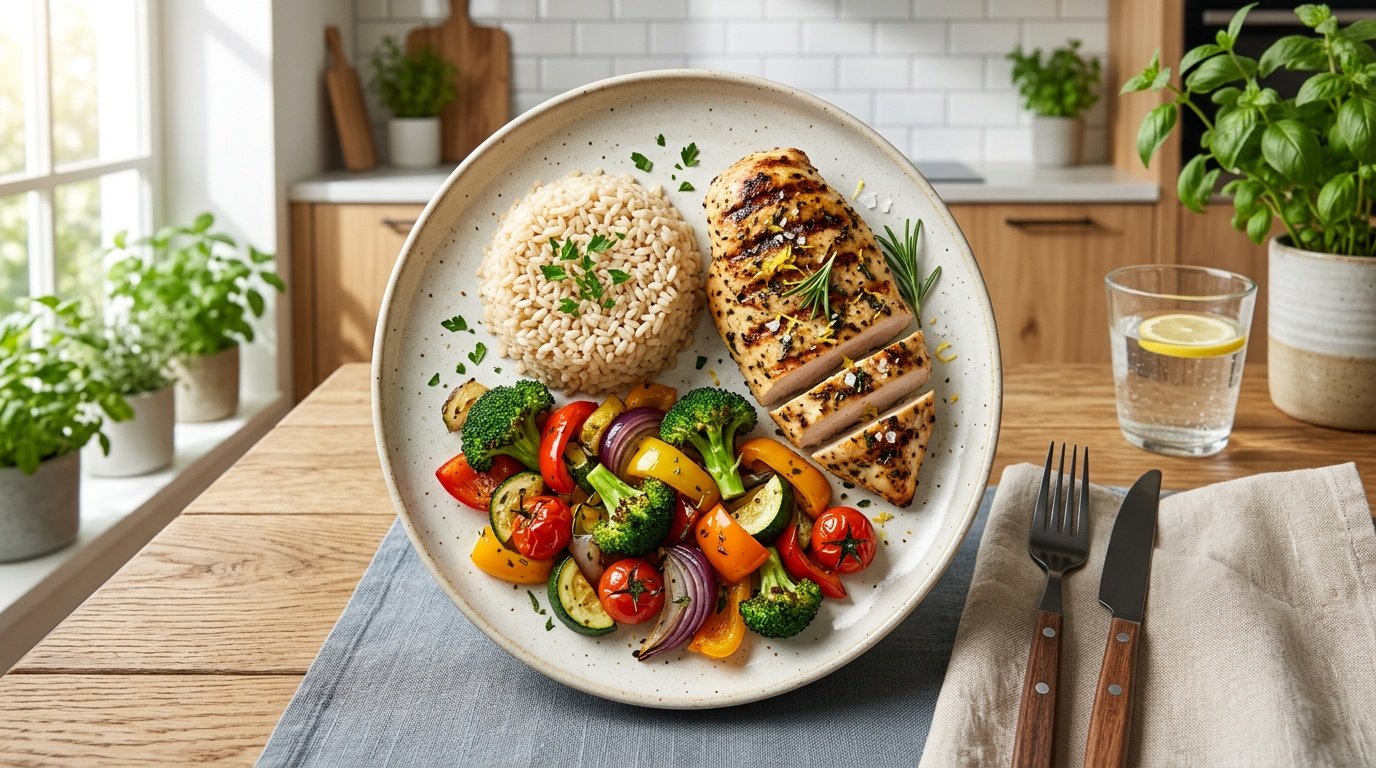
None of the research above says eat unlimited rice, and none of it says avoid rice entirely. It says the food itself isn't the deciding factor, so the strategy that actually moves the needle looks different than "cut rice."
- Measure the first few times. Use a half-cup measuring cup or the tennis-ball visual for a week or two until you can eyeball a reasonable portion without thinking about it.
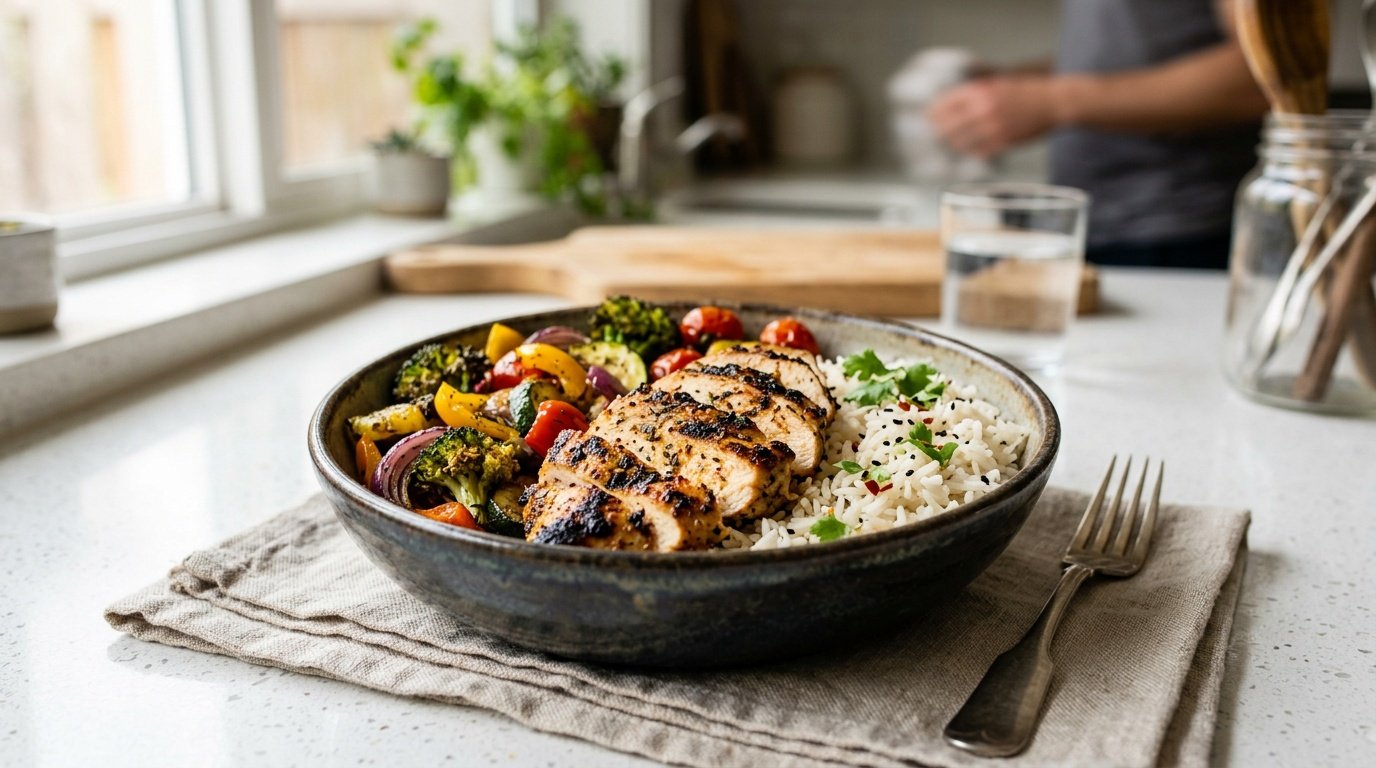
- Build protein and vegetables around it, not the other way around. A palm-sized portion of protein plus a generous vegetable serving turns rice into a supporting player instead of the main event, which changes both the calorie total and the blood sugar response of the whole meal.
- Rotate varieties for fiber, not for magic. Basmati, brown, and red rice each bring something slightly different to the table in terms of digestion speed and fiber, but none of them is a weight-loss shortcut on its own.
- Cook, cool, and reheat when practical. Refrigerating cooked rice for a few hours before reheating increases its resistant starch content, which behaves more like fiber in your gut and produces a gentler blood sugar response than freshly cooked rice, a low-effort trick if you're already meal prepping.
- Watch the restaurant portion specifically. Home-cooked rice is easy to measure. Restaurant rice rarely is, and it's the single biggest source of unplanned extra servings.
If you're also rebuilding the carbohydrate side of your plate more broadly, our guide to a low carb diet sheet walks through exact gram targets and a two-week starting framework that pairs well with the portion strategy here, particularly if rice has felt like the one food you weren't sure how to fit in. And if you want the fuller breakdown of white versus brown versus cauliflower rice specifically, our deeper look at rice weight loss outcomes covers the type-by-type comparison in more detail than fits here.
Health disclaimer: This article is for general education and isn't a substitute for personalized medical advice. If you have diabetes, prediabetes, kidney disease, are pregnant, or take medication that affects blood sugar or insulin, talk with a doctor or registered dietitian before making significant changes to your carbohydrate intake or portion sizes. This is especially important if you use insulin or another glucose-lowering medication, since changes to your rice or overall carb intake can affect your dosing needs.
Understanding basic calorie science helps put all of this in context too: rice isn't metabolically unique among carbohydrate sources, and the math of calories in versus calories out still applies to it the same way it applies to every other food on the plate.
Frequently Asked Questions
Is rice actually bad for weight loss?
Large population studies, including a 24-year Chinese cohort tracking more than 11,500 adults, haven't found rice intake independently associated with rising BMI or obesity risk. Rice can fit a weight loss plan when portioned around half a cup to one cup cooked per meal and paired with protein and vegetables.
Does eating rice cause weight gain?
Eating far more rice than your body needs contributes to a calorie surplus the same way overeating any food does, but rice itself isn't uniquely fattening compared to other carbohydrate sources. Portion size and what surrounds the rice on the plate matter more than the rice being present.
Is basmati rice good for weight loss?
Basmati rice's higher amylose content digests more slowly than many other white rice varieties, producing a gentler blood sugar response. It isn't a weight-loss shortcut on its own, since its calorie content per cooked cup is close to other white rice, but it can support steadier energy and appetite control as part of a portioned meal.
Is red rice better for weight loss than white rice?
Red rice keeps its fiber-rich bran layer, which slows digestion and extends fullness compared to white rice, similar to brown rice. It isn't a magic swap, but rotating it in adds fiber variety without eliminating rice from your meals.
How much rice can I eat and still lose weight?
Most guidance points to roughly half a cup to one cup of cooked rice per meal as a sustainable starting portion, adjusted for activity level and overall calorie needs. Measuring for the first few weeks helps recalibrate what that portion actually looks like on a plate.
Why do countries that eat rice daily have lower obesity rates?
Countries where rice makes up a large share of daily calories have historically reported lower average obesity rates than countries where it's rarely eaten, which contradicts the idea that rice itself drives weight gain. Differences in portion size, meal frequency, and reliance on processed snack foods explain far more of the gap than the rice itself.
References
- National Institutes of Health (PMC) — Differential Association of Wheat and Rice Consumption With Overweight/Obesity in Chinese Adults: China Health and Nutrition Survey 1991-2015
- National Institutes of Health (PMC) — Low glycaemic index or low glycaemic load diets for people with overweight or obesity, 2023
- NIDDK — Food Portions: Choosing Just Enough for You
- Mayo Clinic Health System — 10 Common Nutrition Myths Debunked, 2024
- CDC — How to Have Healthier Meals and Snacks