
You don't need a gym membership, a meal-prep service, or a fresh Monday to start losing weight. Most of the habits that actually move the needle happen in your own kitchen and living room, usually in the five minutes before or after something you already do. If you've been searching for easy weight loss tips at home because the gym-and-meal-plan version of weight loss never quite sticks, that's not a willpower problem. It's a setup problem, and setups are fixable.
This isn't a 47-item checklist. It's six habits, chosen because each one changes something specific about your day rather than adding one more thing to remember. None of them require special equipment, a subscription, or a Tuesday you don't already have. By the end, you'll have a realistic version of these easy weight loss tips at home that survives past the first two weeks, which is where most home routines quietly fall apart.

Easy Weight Loss Tips at Home Start With a 500-Calorie Habit, Not an App
Weight loss comes down to a calorie deficit, but the size of that deficit is where most home routines go wrong. People either cut too little to notice a difference, or cut so hard the plan collapses by Thursday. The CDC's own guidance on losing weight recommends aiming for 1 to 2 pounds of loss per week, since that pace is more likely to stay off than a faster one built on skipped meals or extreme restriction.
NIH nutrition researcher Dr. Alison Brown puts a number on the mechanism: cutting roughly 500 fewer calories a day gets most people to about a pound of loss per week, and pairing that modest cut with regular movement outperforms either strategy on its own. A 500-calorie gap sounds abstract until you translate it into a kitchen: it's roughly the size of skipping one sugary drink, swapping a fried side for a baked one, and serving yourself from the stove instead of a full serving dish left on the table. None of that requires logging a single gram.
The part most home weight loss content skips is that this deficit doesn't need to be constant to work. A day at 400 calories under and a day at 600 under average out the same as two days at exactly 500. Chasing a perfect number daily, and feeling like you failed on the days you miss it, is a reliable way to give up by week two. The goal is a rough weekly average, not a daily scorecard.
It also helps to understand why "eat less, move more" advice keeps failing people at home specifically. It's not wrong, it's just incomplete. It doesn't say how much less, moved how, or what to do on the evening your schedule falls apart and dinner ends up being whatever's fastest to make. A specific number, applied loosely across a week rather than perfectly every day, closes that gap.
Why Your Kitchen Setup Beats Your Willpower Every Time
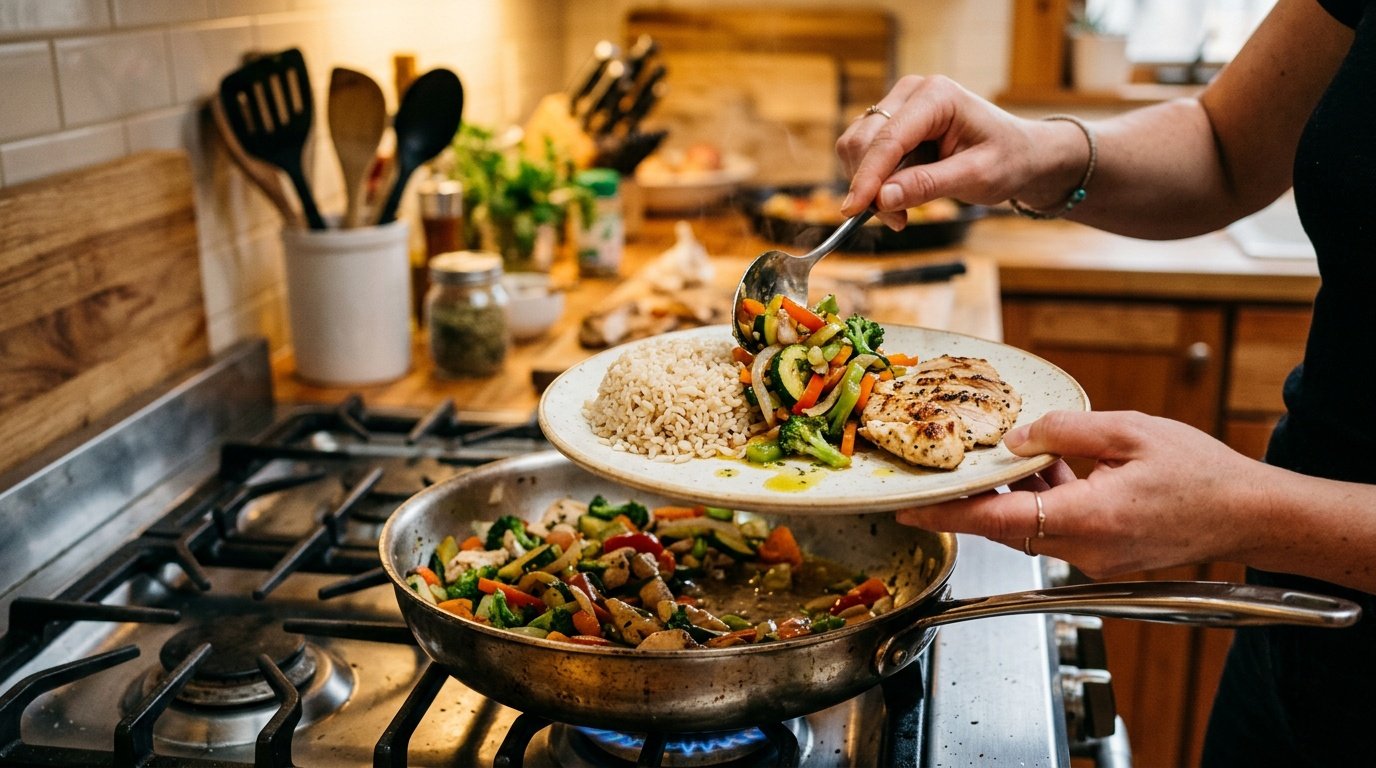
Here's the part nobody wants to hear: the people who keep weight off long-term aren't running on more discipline than everyone else. They've usually just changed their environment so there's less to decide every single day. A smaller plate, food served from the counter instead of the table, and produce kept at eye level in the fridge all quietly shrink portions without a single moment of "should I have seconds?" internal debate.
Take a realistic scenario: someone switches from a 12-inch dinner plate to a 9-inch one and changes nothing else about what they cook. The same meal now fills the plate, looks complete, and gets eaten the same way it always did, just at a smaller volume. Three weeks later, that's roughly a pound of difference with zero tracking involved, and nothing about the actual food changed.
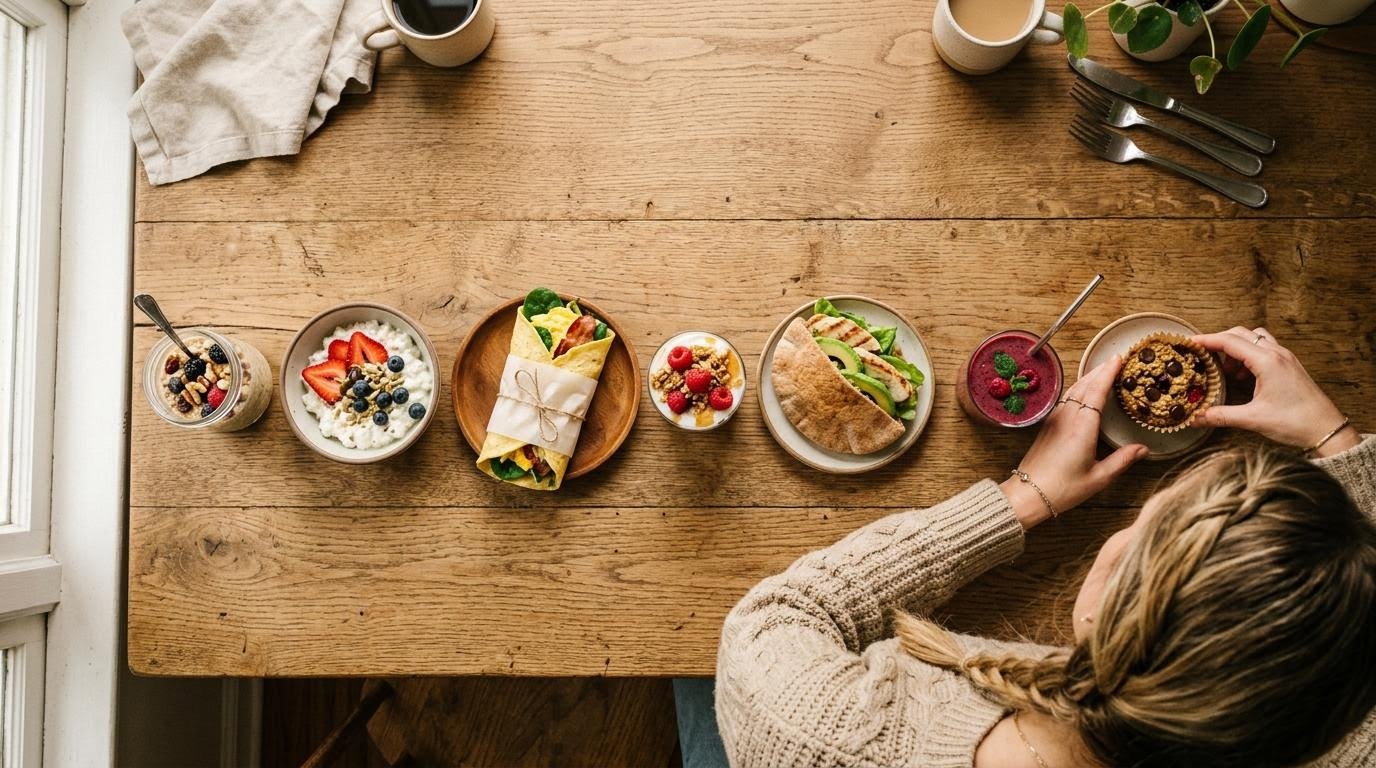
Protein placement works the same way. Harvard Health notes that shifting a meal's balance toward protein and away from refined carbohydrate can meaningfully support weight control, largely because protein takes more energy to digest and holds off hunger longer than refined carbs do. In practice, that's two eggs and Greek yogurt instead of cereal, or beans added to a grain bowl instead of skipped. It's a swap, not a subtraction, which is part of why it survives past week one when a full elimination diet usually doesn't.
Fiber gets buried under flashier advice, but it's one of the few nutrients where most adults are meaningfully off target without noticing. Small swaps close the gap fast without a single gram tracked: steel-cut oats instead of a refined cereal, a piece of fruit with the skin on instead of juice, a scoop of beans added to whatever's already on the plate.
| Home habit | What it changes | Backed by |
|---|---|---|
| 500-calorie daily deficit | Roughly 1 lb loss per week | NIH |
| 9-inch plate instead of 12-inch | Smaller portions, same fullness cue | CDC |
| 150 minutes moderate activity per week | Preserves muscle while losing fat | American Heart Association |
| Sustainable weekly pace | 1 to 2 lbs per week | CDC |
Source: CDC and American Heart Association, 2024–2025.
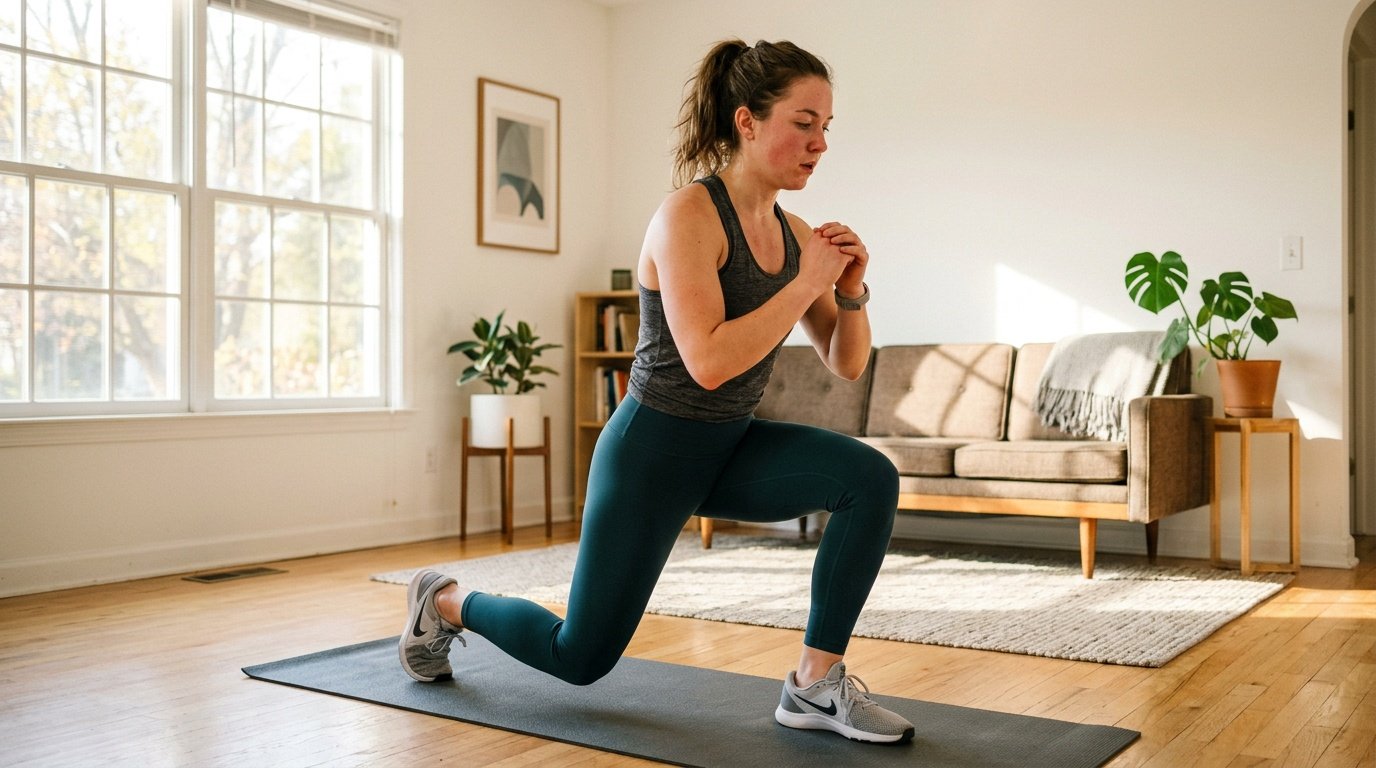
A No-Equipment Movement Routine You Can Actually Fit In
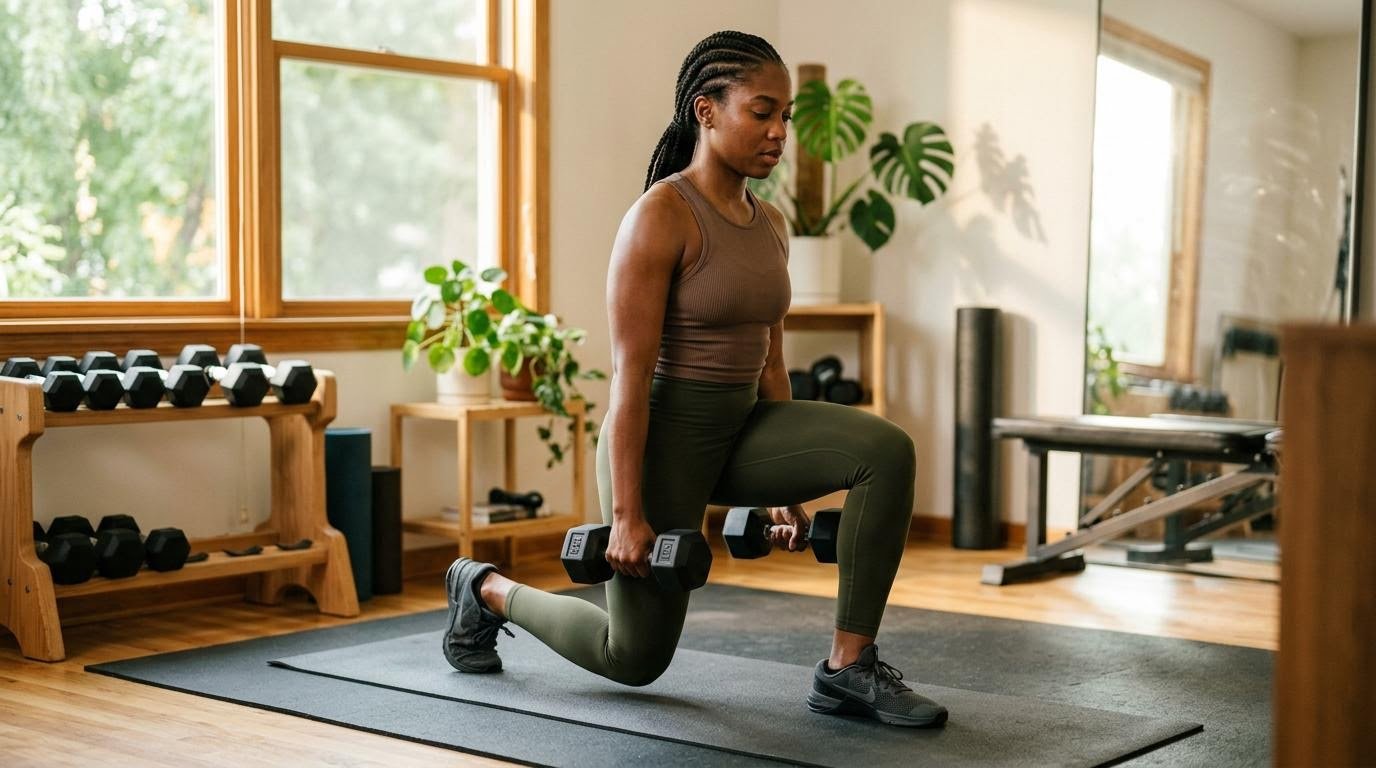
Movement at home doesn't need a treadmill or a squat rack to count. The American Heart Association's guidance on physical activity for adults calls for at least 150 minutes a week of moderate aerobic activity, plus muscle-strengthening work on two or more days, and none of that has to happen in a gym. Bodyweight squats, push-ups against a counter, lunges down a hallway, and a brisk walk around the block all count toward the same total.
If you're rebuilding a movement routine as part of a fuller fitness plan rather than starting cold, our guide on weight loss tips for beginners walks through a more complete beginner structure, including how to sequence strength and cardio across a week.
A realistic version of this at home looks like ten minutes of stairs, hallway lunges, or a living-room circuit before your morning coffee finishes brewing, then a 20-minute walk after dinner most nights. That's already close to the weekly 150-minute target without a single dedicated "workout" block ever showing up on the calendar. The muscle you preserve by pairing movement with your calorie deficit matters more than it sounds: muscle tissue burns more energy at rest than fat does, so keeping it means your metabolism doesn't stall out at the exact moment you need it working for you.
The non-obvious part here is that neither diet nor exercise wins alone, even though most single-lever advice implies one or the other. A moderate deficit paired with regular movement outperforms a bigger deficit run through diet alone, largely because it's easier to sustain and it protects the muscle that keeps your resting metabolism from dropping along with the number on the scale.

The Water-Before-Meals Trick and Other Portion Defaults
Not every effective home habit needs a food scale. A handful of small, repeatable defaults change what happens on your plate without asking you to think harder at every meal:
- Drink a glass of water about 15 minutes before sitting down to eat. Thirst and hunger signals overlap more than people realize, and this filters out the false alarms.
- Fill half the plate with vegetables first, before protein or grains land on it, so the lower-calorie foods aren't an afterthought.
- Serve meals from the stove or counter rather than leaving serving dishes on the table, which quietly cuts down on automatic second helpings.
- Keep a "grab first" shelf in the fridge at eye level stocked with cut fruit, yogurt, or vegetables, so the easiest option is also the better one.
- Eat the first few bites slowly and without a screen, since fullness signals take roughly 15 to 20 minutes to catch up with how much you've actually eaten.
None of these require a rigid meal plan or a tracking app. They're defaults you set up once, and then you stop having to negotiate with yourself about them at every single meal, which is really the whole point. An app asks you to make the right call every time you eat. A smaller plate and a pre-meal glass of water make the right call the automatic one, so there's nothing left to decide by the time dinner rolls around.
Health disclaimer: These tips are general guidance and not a substitute for individualized medical or nutrition advice. If you have a history of disordered eating, a chronic health condition, are pregnant or breastfeeding, or are under 18, talk with a doctor or registered dietitian before changing your calorie intake or starting a new exercise routine.

Sleep and Stress Are Home Habits Too
Almost no home weight loss list mentions sleep, and that's a real gap, because it undercuts everything else on this page. Mayo Clinic's own strategies for weight-loss success start with readiness and stress management before diet ever comes up, noting that talking through stress and setting realistic, reachable goals are among the strongest predictors of lasting success, well ahead of any specific food rule.
Poor sleep pushes hunger hormones in the wrong direction, which is why a rough night often shows up the next day as stronger cravings rather than more willpower to resist them. You don't need a perfect sleep routine to see a difference. A consistent bedtime, even one that's just 30 minutes earlier than your current habit, changes how hungry you feel the next afternoon and how likely you are to reach for something quick and calorie-dense at 4pm.
The habit-stack approach ties sleep, stress, and the rest of this list together: attach one new habit to something you already do without thinking. Pair the water-before-meals tip with brushing your teeth after dinner. Pair a short evening walk with your usual phone scroll wind-down. Once a habit is stacked onto an existing routine, you don't have to remember it, which is exactly where most home plans quietly fall apart, not from lack of motivation but from asking the brain to hold too many new decisions at once.

Common Mistakes That Quietly Undo Easy Weight Loss Tips at Home
A few patterns show up over and over in people who try a handful of these habits, feel like they're doing everything right, and still stall out. The first is stacking too many changes in the same week. Cutting soda, starting a daily walk, and eliminating carbs entirely all at once is a setup for burnout, not because any single change is hard, but because negotiating with yourself over three new rules simultaneously runs out of steam fast. One or two specific habits, applied consistently, beat a five-point overhaul that collapses by week three.
The second is treating a plateau as proof the plan failed. As your weight drops, your body needs fewer calories to maintain itself, so the same 500-calorie gap that worked at your starting weight naturally shrinks over a few months. That's not a sign the habits stopped working, it's a sign your portions need a small recalibration, not a full restart.
The third is skipping sleep and stress entirely, which is the most common gap in home weight loss routines specifically, since gym-based plans at least put movement front and center. A kitchen and living room routine can quietly leave out the two factors that determine whether hunger feels manageable or constant.
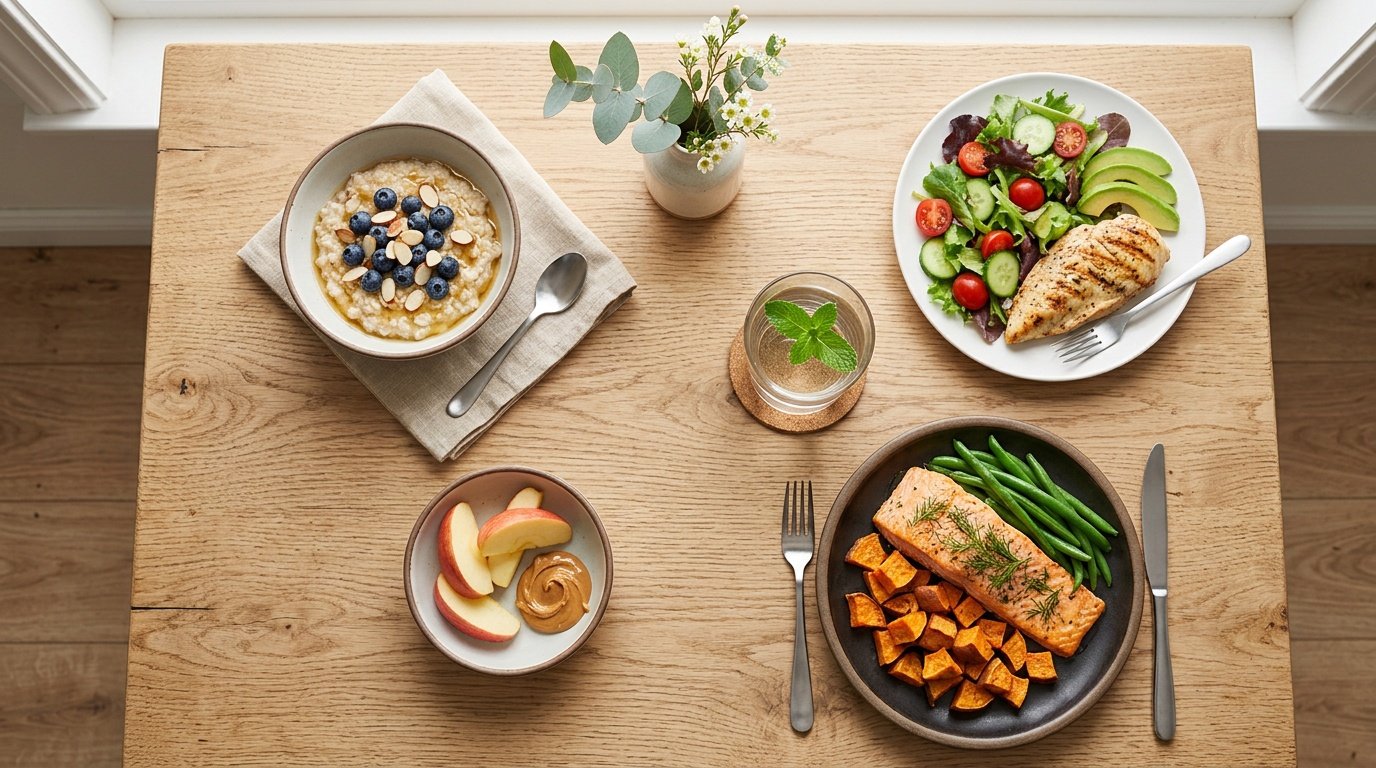
Putting Easy Weight Loss Tips at Home Together Into a Real Day
All of this stays theoretical until it's applied to an actual day, so here's what one realistic day looks like when the pieces above run together instead of being treated as five separate rules to remember.
Breakfast is two eggs and a piece of fruit with the skin left on, quietly covering both the protein-first habit and part of the fiber gap without extra thinking. A glass of water goes down about fifteen minutes before lunch, which is a grain bowl built on the half-plate rule and served on a smaller plate straight from the counter. A ten-minute hallway or living-room circuit happens before the morning coffee finishes brewing, and a 20-minute walk follows dinner most nights. Bedtime lands at roughly the same time each night, even on weekends.
None of this requires logging a gram or owning a single piece of equipment. It requires the same handful of defaults, applied on repeat, which is exactly why it holds up longer than a strict 14-day plan built on perfect conditions that rarely show up in real life. If cutting carbs is more your entry point than counting calories, our companion piece on building a low carb diet sheet walks through exact gram targets you can apply toward the same deficit described above. And if the fasting-and-eating-window approach interests you more than continuous calorie tracking, our breakdown of real intermittent fasting results covers what a realistic first month actually looks like.
These easy weight loss tips at home aren't a dramatic overhaul. They're small enough to stick past the first two weeks, which is the only place any of this actually matters.
Frequently Asked Questions
How fast will I see results from easy weight loss tips at home?
Most people notice their clothes fitting differently within 2 to 4 weeks of consistent habits, even before the scale reflects a dramatic change. Visible weight change tracks the CDC's 1 to 2 pounds per week pace, so a noticeable shift usually shows up around week four to six.
Do I need any equipment for home weight loss to work?
No. Bodyweight movement, a smaller plate, and a consistent bedtime cover most of what matters. Equipment can help later once a routine is established, but it isn't a prerequisite for the habits in this guide to work.
What's the single most effective home habit if I can only start with one?
Building a modest, sustainable calorie deficit through portion changes, roughly 500 calories a day, matters more than any individual food swap. Everything else, protein, movement, sleep, exists to make that deficit easier to hold onto.
Why does home weight loss stall after a few weeks even when I'm consistent?
Plateaus are normal and usually mean your body has adjusted to a lower weight and now needs fewer calories to maintain itself. A deficit that worked at your starting weight can shrink to almost nothing a few months in. Reassess portions and activity every 4 to 6 weeks rather than assuming the plan stopped working.
How much water should I drink before meals for appetite control?
A glass of water about 15 minutes before eating is enough to filter out thirst signals that get mistaken for hunger. There's no need to force large volumes right before a meal, since the goal is a brief pause, not a specific ounce target.
References
- CDC — Steps for Losing Weight, 2025
- NIH News in Health — Healthy Weight Control, 2022
- Harvard Health — Extra Protein Is a Decent Dietary Choice, But Don't Overdo It, 2013
- American Heart Association — Recommendations for Physical Activity in Adults
- Mayo Clinic — Weight Loss: 6 Strategies for Success, 2024