


Weight loss tips for beginners are everywhere, and that's exactly the problem. You've probably read ten lists this week and tried none of them past day three. It's not a willpower problem. Most of that advice is written for someone who already has the basics down, not for someone starting from zero. This piece is built the other way around: fewer tips, more explanation for why the usual ones don't stick, and a plan you can actually run.
Why Most Weight Loss Tips for Beginners Fall Apart in the First Two Weeks

Here's the pattern almost every beginner falls into: a generic tip list says "eat less, move more, drink water," you try to do all of it at once on Monday, and by Thursday you're back to normal because nothing about your actual week changed. The tips weren't wrong. They just weren't sequenced for someone with a full-time job, a family dinner schedule, and zero existing habits to build on.
A 2023 review published in Obesity found that beginners who started with one or two specific behavior changes, rather than a full overhaul, were significantly more likely to still be following their plan at the three-month mark than those who tried to change diet, exercise, and sleep simultaneously. The people who succeeded weren't more disciplined. They just had fewer moving parts to keep track of.
I know what you're thinking: doesn't a slower start mean slower results? A little, in week one. But week one isn't the number that matters. The number that matters is where you are in month three, and that's decided by what you can repeat, not what you can force through once.
Find a Calorie Deficit You Can Actually Live With

Every weight-loss tip eventually comes back to eating fewer calories than you burn. That part isn't controversial. Where beginners get it wrong is the size of the deficit they pick.
A rough starting number, without an app
You don't need to count calories precisely to start. Multiply your current body weight in pounds by 13 to 15 to get a rough daily maintenance number for a moderately active adult, then subtract 500 for a starting deficit. That 500-calorie cut is deliberately conservative. The CDC recommends a 500 to 1,000 calorie daily deficit for a safe, sustainable pace of roughly 1 to 2 pounds a week, and staying at the lower end of that range is what actually holds up over months rather than days.
Why crash-cutting backfires fast
Cutting to 1,200 calories in week one feels like progress on the scale, then stalls hard by week three. This is metabolic adaptation, not a personal failure: the NIH notes that severe calorie restriction slows metabolic rate as the body adjusts to lower intake, which is exactly why the aggressive plans that look best on paper are the ones people abandon first. A moderate deficit protects the muscle mass that keeps your metabolism running, and it's boring enough to actually maintain.
Five Small Mistakes That Quietly Stall Beginner Progress
Most stalls aren't caused by one big mistake. They're caused by small ones that repeat daily without anyone noticing.
Skipping protein at breakfast. A carb-only breakfast (toast, cereal, juice) leaves you hungry again within two hours, which sets up overeating at lunch. Swapping in eggs, Greek yogurt, or a protein shake changes almost nothing about the meal's calorie count but changes everything about how long it holds you. The Academy of Nutrition and Dietetics recommends spreading protein across meals rather than loading it all at dinner, and breakfast is the meal beginners skip most.
Treating exercise as punishment for eating. "I ate badly, so I have to run it off" is a mindset that burns people out inside a month. Exercise for a beginner should build a habit, not settle a debt. Pick something you don't dread, even if it's a 20-minute walk, because the habit that survives is the one you don't need motivation to start.
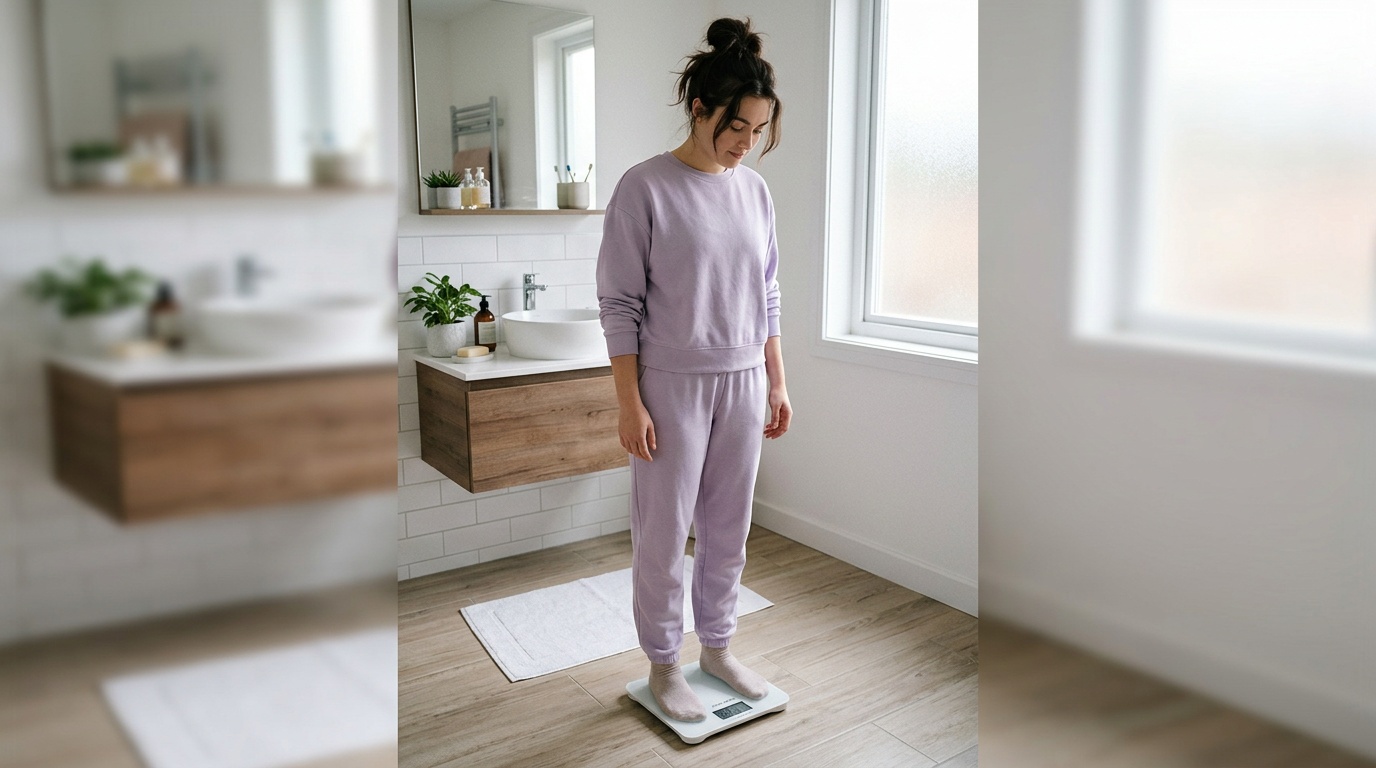
Weighing in every single day. Daily fluctuations from water, sodium, and hormones can swing 2 to 4 pounds and have nothing to do with fat loss. Beginners who weigh daily often quit after a bad reading that wasn't real progress or real regression, just noise. Weekly, same day, same time, tells you far more.
Cutting out entire food groups on day one. Going carb-free, sugar-free, and dairy-free simultaneously in week one is a recipe for a binge by week two. Pick one thing to reduce first.
Not planning for the one meal you can't control. Everyone has a recurring meal outside their control, a work lunch, a family dinner, a Friday night with friends. Beginners who don't plan around it end up either skipping it and feeling deprived, or blowing the whole day and giving up. Deciding in advance what you'll order removes the decision fatigue that causes the overeating.
Build a Routine That Survives a Bad Week

The goal isn't a perfect week. It's a routine flexible enough that one bad day doesn't turn into a bad month.
The 80/20 approach
Aim to hit your targets roughly 80% of the time and give yourself permission for the other 20%. This isn't a loophole, it's what actually gets followed. Rigid all-or-nothing plans have a predictable failure point: the first slip feels like total failure, so people abandon the whole plan instead of just the one meal.
Why sleep moves the scale more than people expect
This is the part most beginner tip lists skip entirely. Harvard Health has reported that insufficient sleep alters hunger hormones, increasing ghrelin (which drives appetite) and lowering leptin (which signals fullness), meaning a poorly slept week can undo a well-eaten one. If you're doing everything else right and still stalling, check your sleep before you touch your diet again.
Health disclaimer: This article offers general, educational information and is not a substitute for personalized medical advice. If you have a diagnosed health condition, take medication, are pregnant or breastfeeding, or are under 18, talk to a doctor or registered dietitian before starting a new weight loss plan.
What a Realistic First 90 Days Actually Looks Like

A moderate, sustainable pace looks unremarkable week to week, which is exactly why it works long-term.
| Timeframe | What's realistic |
|---|---|
| Weeks 1–2 | 1–2 habit changes only (e.g. protein at breakfast, weekly weigh-in). Weight change is mostly water. |
| Weeks 3–6 | Steady loss of 1–2 lbs/week as the calorie deficit takes hold; add movement habit. |
| Weeks 7–12 | Progress may slow slightly as the body adapts; this is normal, not a stall to panic over. |
| By Day 90 | 10–20 lbs total loss for most beginners at a 500-calorie deficit, plus habits that don't require willpower to repeat. |
Source: CDC, 2024
This is the mindset shift that separates people who keep the weight off from people who regain it: the plan isn't something you finish, it's something you keep doing after the "beginner" part is over.
One more resource worth watching if you want this explained by a physician rather than read as text:
FAQ
How fast should a beginner expect to lose weight?
Most beginners can expect 1 to 2 pounds per week at a moderate calorie deficit, per CDC guidance. Faster loss usually comes from water weight and isn't sustainable fat loss.
Do I need to count calories to start losing weight?
No. A rough starting deficit (roughly 500 calories below your estimated maintenance) works for most beginners. Precise tracking helps later if progress stalls, but it isn't required to begin.
What's the single best first step for someone brand new to weight loss?
Pick one habit, usually adding protein at breakfast or a weekly (not daily) weigh-in, and run it consistently for two weeks before adding a second change. One habit done consistently beats five habits done for three days.
Why does the scale go up even when I'm eating less?
Water retention from sodium, hormones, or new exercise-related muscle repair can outweigh actual fat loss on the scale for several days. Weekly weigh-ins, same day and time, smooth this out.
Is it normal for weight loss to slow down after the first few weeks?
Yes. A slowdown after weeks 6 to 8 is a normal metabolic adjustment, not a sign the plan has stopped working. Reassess after four consistent weeks, not after one slow week.
References
- CDC — Losing Weight
- NIH, National Institute of Diabetes and Digestive and Kidney Diseases — Adult Overweight and Obesity
- Academy of Nutrition and Dietetics — How Much Protein Do You Need Every Day?
- Harvard Health — The Link Between Sleep and Weight
- Mayo Clinic — Weight-Loss Basics