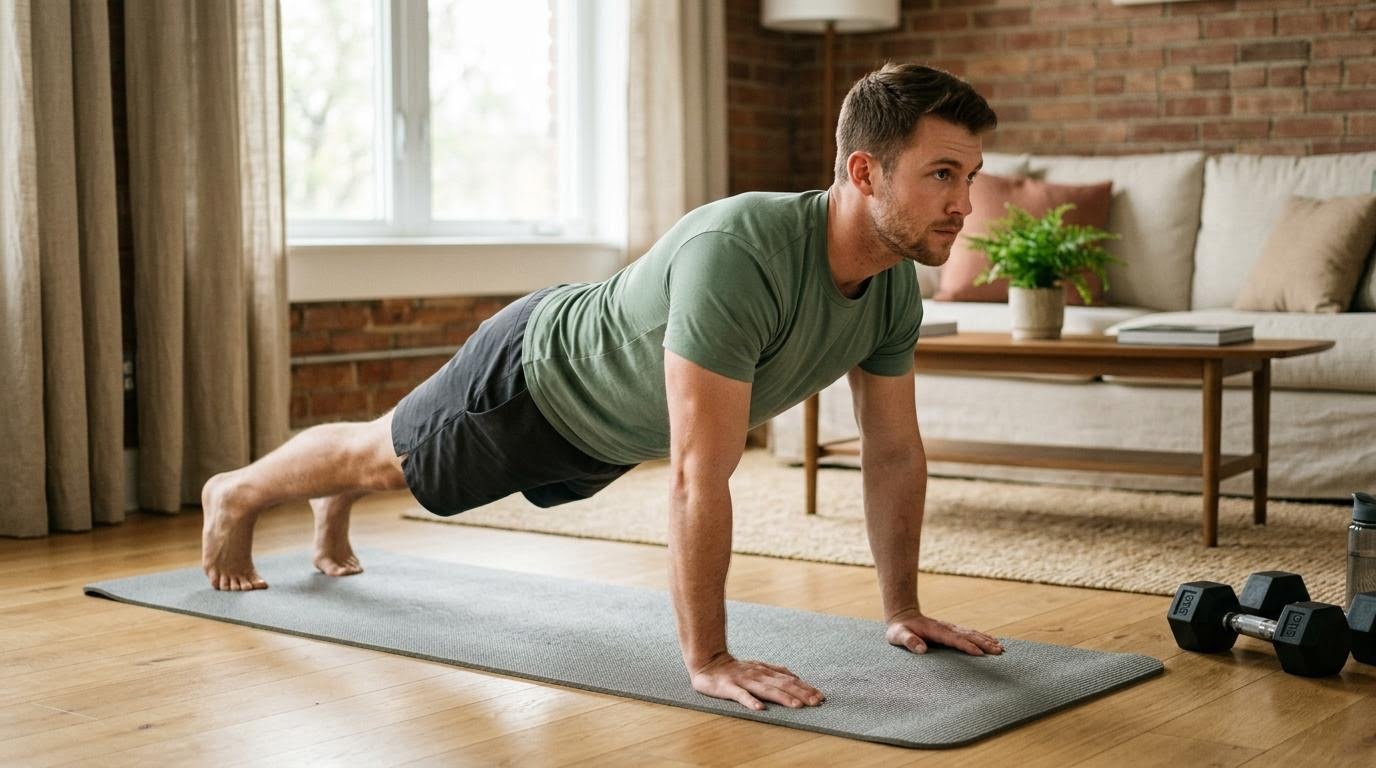

Your therapist tells you to breathe. Your friend tells you to think positive. Neither one touches what's actually happening in your chest when anxiety hits: a tight jaw, a stomach that won't settle, shoulders pulled up around your ears before you've even registered you're stressed. That's the gap somatic coping skills for anxiety are built to close. Instead of asking your mind to talk your body down, these techniques work the other direction, using breath, movement, touch, and temperature to send your nervous system a direct signal of safety, the same system that triggered the tension in the first place.
An estimated 19.1% of U.S. adults experience an anxiety disorder in any given year, according to the National Institute of Mental Health, and that number doesn't include the far larger group managing situational anxiety, exam stress, or a racing mind before a hard conversation. None of what follows requires a diagnosis to be worth trying.

What Somatic Coping Skills for Anxiety Actually Change in Your Body
Cognitive tools ask you to reframe a thought. Somatic tools skip the thought entirely and go straight for the body, on the theory that anxiety is a physiological state first and a mental one second. Your sympathetic nervous system floods your bloodstream with cortisol and adrenaline, your heart rate climbs, your breathing shifts shallow and fast, and your muscles prep for a threat that, most of the time, isn't physically there.
Here's the part most anxiety advice skips: you cannot reason your way out of a physiological state. You have to interrupt it physically first, and the clearer thinking follows afterward, not the other way around. That's why breathing patterns, vagal toning, and movement consistently outperform "just calm down" advice. They're mechanical interventions aimed at the body's alarm system, not motivational pep talks aimed at willpower.
I know what you're thinking, that this sounds like it's replacing therapy with tricks. It isn't. Somatic techniques are a first-response layer, the thing you reach for in the ninety seconds before you can even access calmer thinking. What they change is how fast your body lets you get there.
Why Your Nervous System Reacts Before Your Mind Catches Up
Polyvagal theory, developed by neuroscientist Dr. Stephen Porges, describes your autonomic nervous system as running on a hierarchy rather than a simple on-off switch. At the calmest end sits your ventral vagal state, where you feel socially connected and safe. Under stress, you shift into sympathetic activation, fight-or-flight. Under a threat that feels inescapable, you can drop further into dorsal vagal shutdown, the freeze or collapse response that shows up as numbness, brain fog, or a strange flatness rather than visible panic.
This matters practically because not every anxious moment needs the same tool. A racing, activated anxiety responds well to techniques that discharge energy, like shaking or a brisk walk. A shut-down, foggy anxiety responds better to gentle activation, like humming or a warm object pressed against your chest. Reaching for a calming breath technique when you're actually in freeze can sometimes make the flatness worse, not better, because you're asking an already-underactivated system to slow down further.
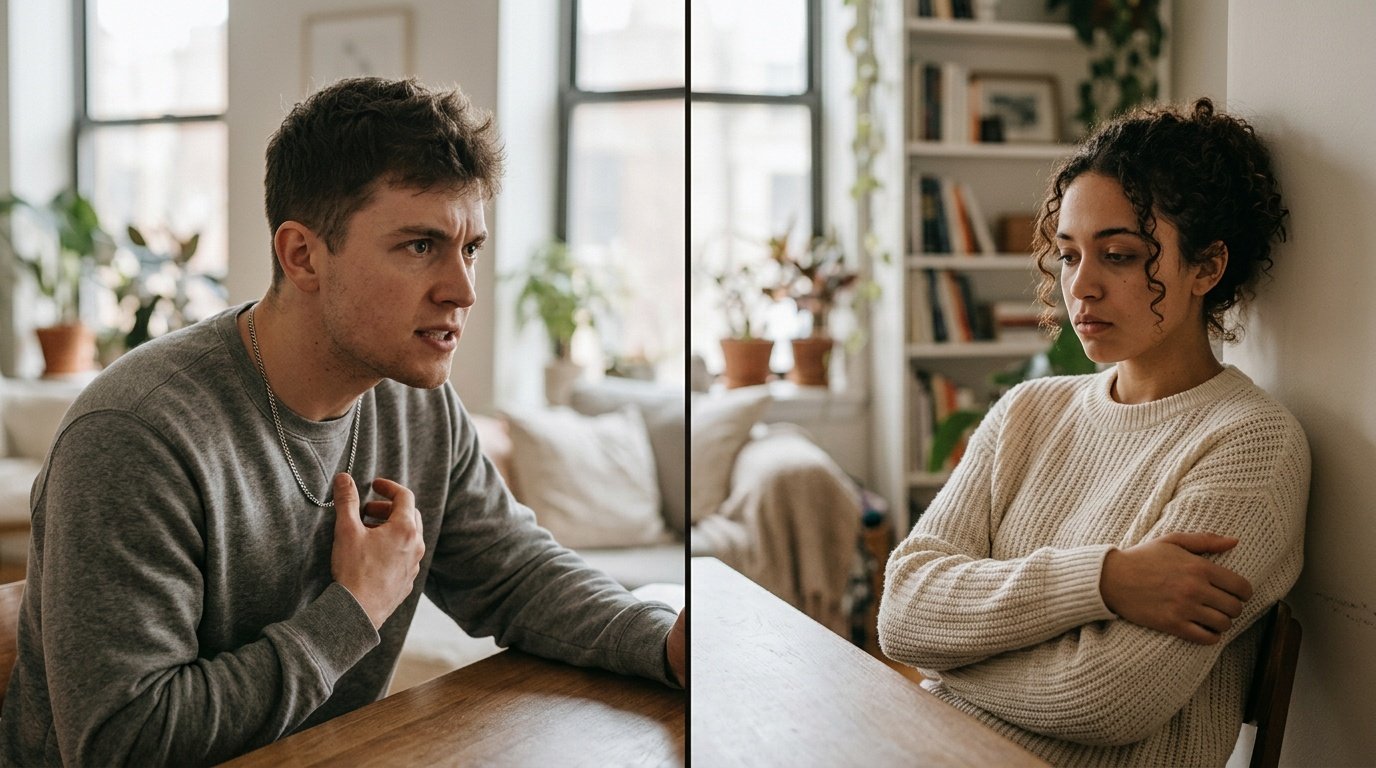
A specific example: someone who goes quiet and can't think clearly mid-argument is usually in a mild freeze response, not a racing panic. Cold water on the wrists or a few rounds of humming, both mildly activating, tend to help them re-engage faster than a slow breathing exercise designed for a racing heart would.
The Physiological Sigh: The Fastest Breath-Based Reset You Have
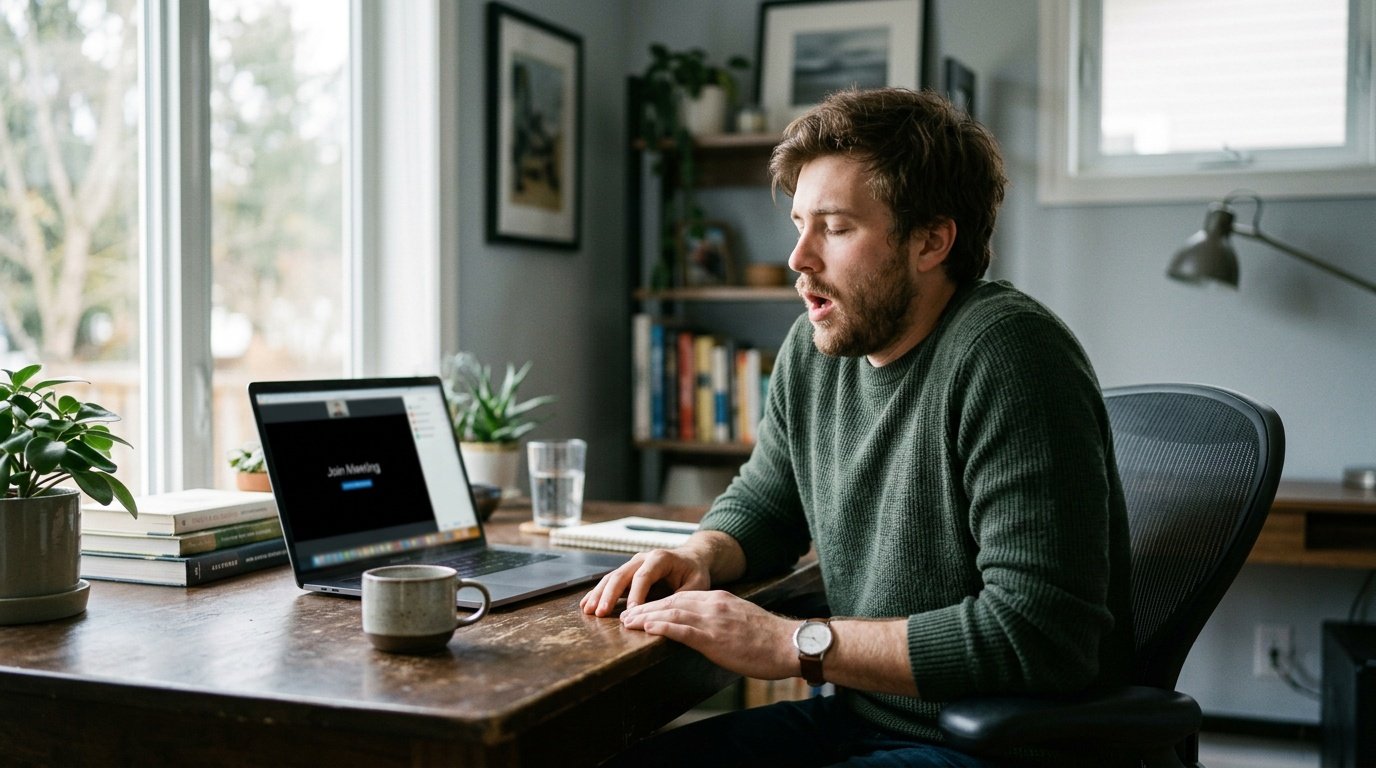
Stanford neuroscientist Dr. Andrew Huberman's physiological sigh technique borrows a pattern your body already uses involuntarily when you cry or fall asleep: two inhales through the nose, the second shorter and sharper than the first, followed by one long, slow exhale through the mouth. Two rounds is often enough to notice a shift; five rounds covers most people fully.
The mechanism is specific. The double inhale pops open collapsed air sacs in your lungs (alveoli), which briefly boosts oxygen exchange, while the extended exhale is what does the real calming work. According to the National Center for Complementary and Integrative Health, slow, controlled breathing modestly lowers blood pressure and reduces circulating cortisol, the primary stress hormone driving the anxious loop. A longer exhale relative to inhale specifically shifts you toward parasympathetic, rest-and-digest activity.
This one is worth learning over box breathing if you only have time for one technique, because it needs no counting, no rhythm to remember mid-panic, and works in a single breath cycle where box breathing needs six to eight.

Vagal Toning: Humming, Cold Water, and the Dive Reflex
Your vagus nerve runs from your brainstem down through your throat, chest, and abdomen, and it's the main highway your parasympathetic nervous system uses to tell your body the danger has passed. Cleveland Clinic notes that vagal tone can weaken under chronic stress or age, and that specific physical actions can help restore your ability to shift back out of fight-or-flight on demand.
Humming, chanting, or gargling vibrate your vocal cords, which sit close enough to the vagus nerve to stimulate it directly. Try a low hum for thirty seconds, long enough to feel the vibration in your chest, not just your throat. Cold exposure works through a different, older pathway: splashing cold water on your face or holding a cold pack against your cheeks triggers the mammalian dive reflex, an involuntary response that slows your heart rate to conserve oxygen, a leftover survival mechanism from before your ancestors ever needed to worry about deadlines.
Here's the non-obvious part: these techniques work faster than most breathing exercises specifically because they bypass conscious effort entirely. You don't have to remember a count or a pattern. Your body reacts to cold or vibration automatically, which makes them useful for the moments when your working memory is too flooded to execute a multi-step technique correctly.
| Technique | Mechanism | Time to Notice Relief |
|---|---|---|
| Physiological sigh | Extended exhale, parasympathetic shift | 1-2 breath cycles |
| Humming or gargling | Direct vagal nerve vibration | 30-60 seconds |
| Cold water on face | Mammalian dive reflex | Under 30 seconds |
| Shaking or movement discharge | Releases stored muscular tension | 1-3 minutes |
| Bilateral touch (butterfly hug) | Cross-body self-soothing, dual attention | 2-3 minutes |
Source: National Center for Complementary and Integrative Health, NIH, 2021
Shaking and Movement to Discharge Stored Tension
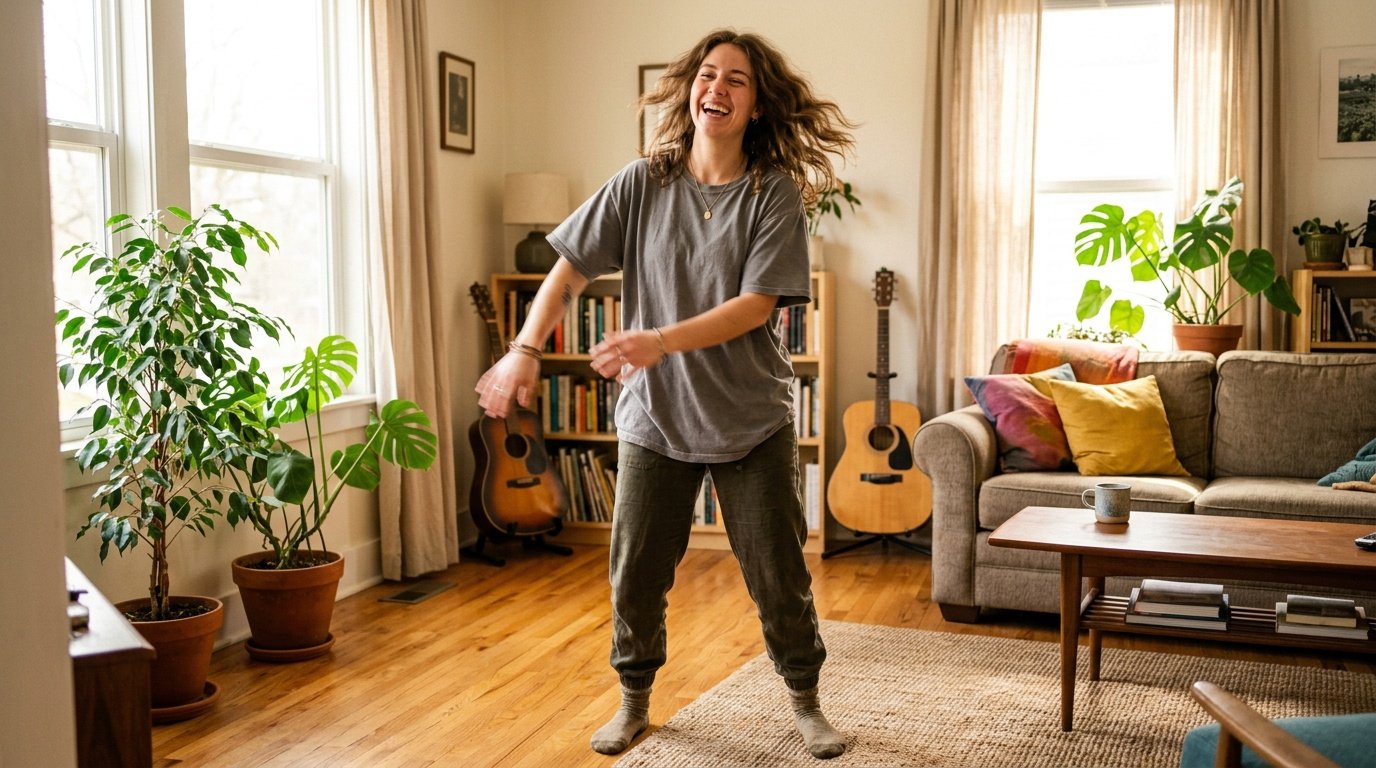
Anxiety doesn't just live in your thoughts, it accumulates in muscle. Wild animals, after escaping a predator, are frequently observed shaking their entire bodies before returning to grazing, a physical discharge of the stress hormones that mobilized their fight-or-flight response. Humans have largely lost this instinct, mostly because shaking visibly in a meeting or classroom feels socially unacceptable, so the tension gets suppressed instead of released.
To try it deliberately: stand with your feet hip-width apart and gently shake your hands, then your arms, then let it travel down through your legs, for sixty to ninety seconds. It should feel loose, not performative or forceful. If a full-body shake isn't available to you in the moment, even a private version, like clenching and releasing your fists rapidly under a desk, discharges some of the same built-up tension.
A useful way to think about this: anxiety is often unspent mobilization energy with nowhere to go. Movement gives it somewhere to go.
Progressive Muscle Release for Tension That Builds Slowly
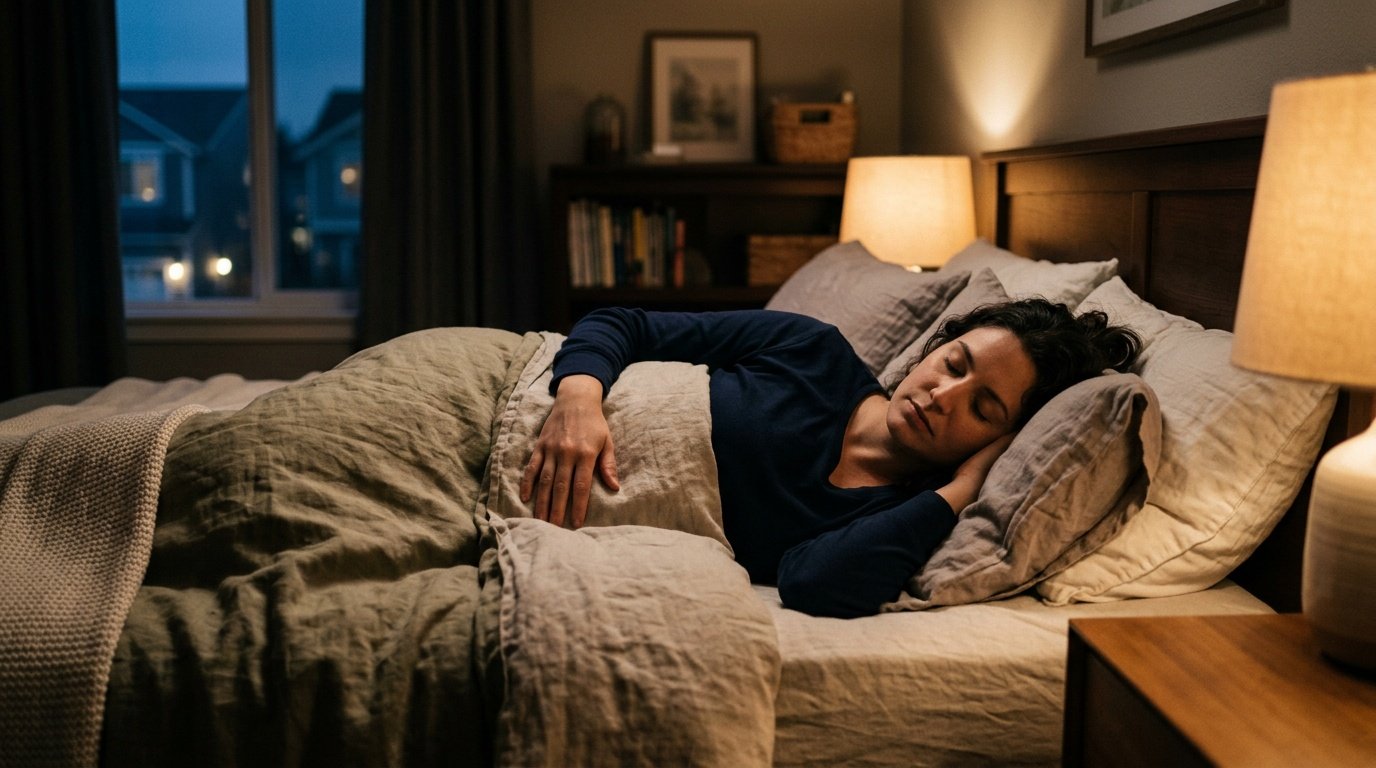
Not every anxious moment arrives as a sudden spike. Plenty of it builds quietly across a day, a clenched jaw during a stressful call, shoulders that creep toward your ears while you're reading emails, a stomach that stays vaguely tight from morning until you finally notice it at 9pm. Progressive muscle relaxation is built for this slower, cumulative kind of tension rather than the acute panic the other techniques on this list target.
The method is simple and mechanical: starting at your feet, tense a muscle group hard for about five seconds, then release it completely and notice the contrast between tension and release. Work upward through your calves, thighs, stomach, hands, shoulders, and jaw. The whole sequence takes three to five minutes done slowly, though even a shortened version focused on just your shoulders and jaw, the two spots that hold anxiety for most people, takes under a minute.
The non-obvious part is that the tensing step isn't optional filler. Deliberately tightening a muscle before releasing it teaches your body what fully relaxed actually feels like, a sensation a lot of chronically anxious people have genuinely lost track of because their baseline tension has crept up so gradually they stopped registering it as tension at all. Skipping straight to "just relax your shoulders" rarely works for the same reason it's hard to hit a target you can't see: without the tense-then-release contrast, your body doesn't have a clear reference point for what the release should feel like.
A practical way to fit this in: run the full sequence lying down right before bed if you notice tension keeping you wired at night, or run the shortened jaw-and-shoulders version at your desk between meetings. Either version works through the same mechanism as the more acute techniques above, it's simply built for tension that accumulates over hours rather than tension that spikes in seconds.

The Butterfly Hug and Bilateral Touch for Fast Self-Soothing
The butterfly hug, developed within EMDR trauma therapy but usable by anyone, cross your arms over your chest, resting each hand on the opposite upper arm or collarbone, then alternate gently tapping left, right, left, right for one to two minutes. The alternating touch is doing the work here, bilateral stimulation appears to help settle nervous system arousal, which is part of why it's built into several trauma-focused therapy protocols beyond just anecdotal self-soothing use.
This one is worth learning specifically because it's invisible from the outside. You can do it seated at a desk, mid-meeting, or in a waiting room, and nobody around you needs to know anything happened. If crossing your arms feels awkward, a simplified version works almost as well: alternately tapping your own knees with your palms while seated.
Building Somatic Coping Skills for Anxiety Into a Routine That Holds Under Real Stress
The mistake most people make with somatic techniques is only reaching for them mid-spiral, then concluding they don't work when a single physiological sigh in the middle of a full panic feels like too little. These tools are most reliable as a daily practice built during calm moments, so your body already knows the pattern by the time you actually need it under real pressure.
Pick one technique and attach it to something you already do. Humming while your coffee brews. A physiological sigh before you open your laptop. The butterfly hug while waiting for a page to load. You don't need every technique running at once, one practiced consistently outperforms five tried a single time and abandoned. If you'd rather start with a broader mix of grounding and breathing tools before narrowing down to a favorite, our related guide on 5-minute anxiety mindfulness exercises breaks down several fast options side by side.
A specific example: a college student who feels their face flush and mind go blank when called on can use a physiological sigh while the professor finishes the question. By the time it's their turn to answer, one or two breath cycles has usually been enough to think clearly again, without anyone in the room noticing.
Watch this short explainer from Cleveland Clinic on the vagus nerve and specific ways to help it recover its ability to shift you out of stress mode.
When Somatic Coping Skills Aren't Enough on Their Own
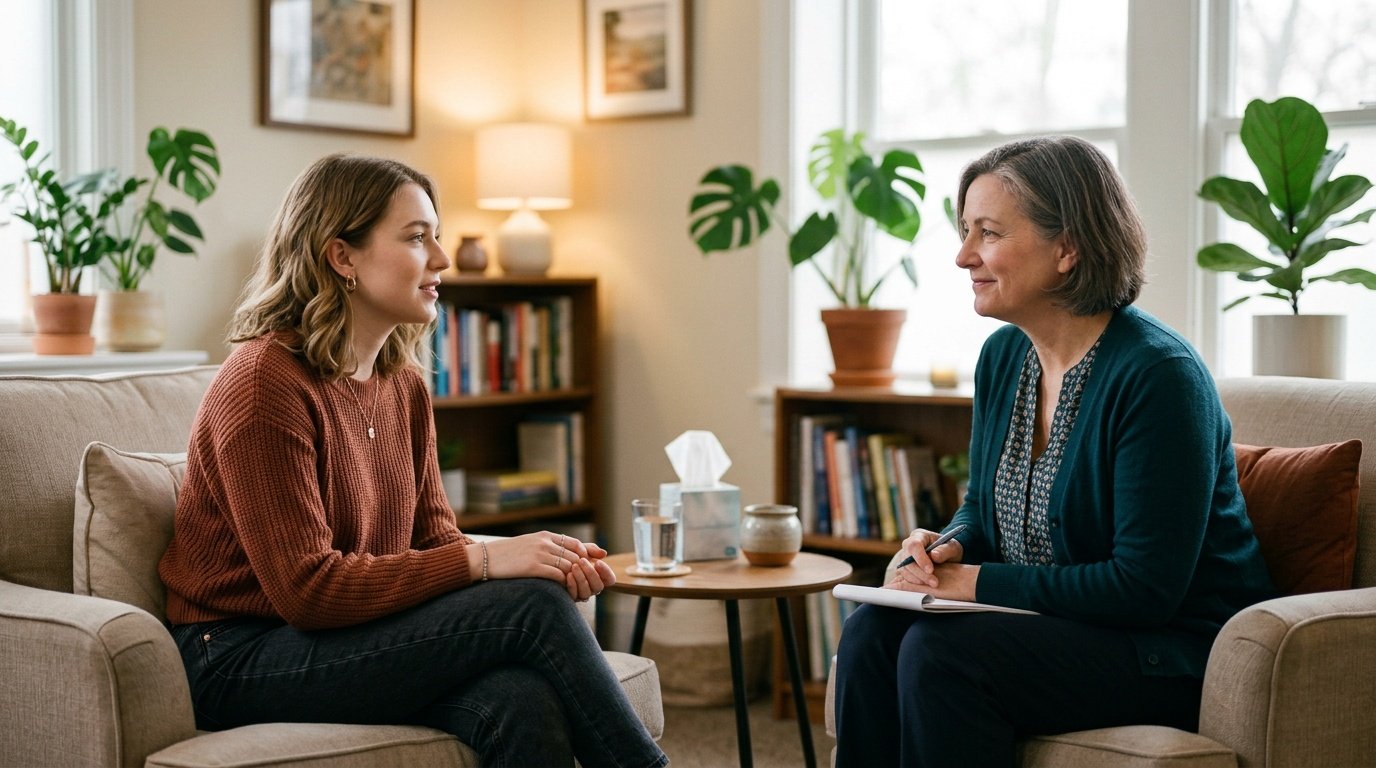
Somatic techniques are genuinely effective for everyday stress, situational spikes, and as a supporting layer alongside therapy or medication for a diagnosed anxiety disorder. What they aren't is a standalone cure for a clinical condition. If you're avoiding normal activities, if panic attacks are becoming more frequent, or if anxiety has lasted most days for several months, that's a signal to loop in a professional rather than expecting a breathing pattern to carry the full weight.
If your anxiety comes with physical symptoms you're not sure how to interpret, whether it's nausea, chest tightness, or a racing heart, our related piece on breathing exercises for panic attacks covers what to do when a somatic reset alone isn't cutting it, and anxiety reduction techniques that actually work walks through pairing body-based tools with cognitive ones for a fuller toolkit.
Health disclaimer: These techniques are self-regulation tools, not a substitute for diagnosis or treatment. If anxiety is interfering with your sleep, work, or relationships on a regular basis, or if you're experiencing panic attacks, talk to a doctor or licensed mental health professional. If you're having thoughts of harming yourself, seek immediate help from a crisis line or emergency services.
According to the CDC, healthy coping strategies like these are meant to work alongside professional support for chronic stress, not instead of it. A body scan is another entry point worth trying if sitting still with just your breath feels agitating; Mayo Clinic notes that even brief daily mindfulness practice, body scanning included, is enough for most people to start noticing a real difference.
None of the somatic coping skills for anxiety above require special equipment, a subscription, or a set-aside block of time you don't have. Pick the one that matches what your body is actually doing right now, racing or shut down, activated or numb, and give it a real week before deciding whether it's the right fit. Small, repeatable physical tools tend to outlast the dramatic fixes that never get done in the first place.
Frequently Asked Questions
What are somatic coping skills for anxiety?
Somatic coping skills are body-first techniques, like breathing patterns, vagal toning, movement, and touch, that interrupt an anxious physiological state directly rather than trying to reason your way out of it with thoughts alone. They work through your nervous system instead of your logic.
How quickly do somatic techniques work for anxiety?
Some techniques, like the physiological sigh or cold water on the face, can produce a noticeable shift within thirty to sixty seconds. Others, like shaking or bilateral touch, typically take one to three minutes. None of them eliminate the underlying anxiety instantly, but they reliably lower the intensity fast enough to think more clearly.
Can I do somatic coping skills without a therapist?
Yes, for everyday stress and situational anxiety, most of these techniques are safe and effective to self-direct. If you're managing a diagnosed anxiety disorder, trauma history, or panic attacks, a somatic-informed therapist can help you apply these tools more precisely and identify which nervous system state you're actually in before choosing a technique.
What's the difference between somatic and cognitive coping skills?
Somatic techniques work on your body first, calming physical arousal through breath, movement, or touch. Cognitive techniques, like thought labeling or reframing, work on your thinking patterns directly. Many people find combining both works better than either alone, since a calmer body makes clearer thinking easier to access.
Are polyvagal exercises backed by real science?
Polyvagal theory itself is an influential clinical framework, though some of its specific claims remain debated among researchers. The individual techniques commonly grouped under it, like slow breathing and vagal stimulation through humming or cold exposure, have more direct research support from bodies like the NIH's National Center for Complementary and Integrative Health for their calming physiological effects.
What if somatic techniques don't calm my anxiety?
If you've given a technique a genuine week of consistent practice and it's not helping, that's useful information, not a personal failure. Different techniques suit different nervous system states, so a racing anxiety and a shut-down anxiety may respond to different tools. If nothing in this category helps, or if anxiety is affecting daily functioning, it's a signal to talk to a licensed mental health professional about a fuller treatment plan.
References
- National Institute of Mental Health — Any Anxiety Disorder, 2024
- Cleveland Clinic — 5 Ways to Reset Your Vagus Nerve
- National Center for Complementary and Integrative Health (NIH) — Relaxation Techniques: What You Need To Know, 2021
- Mayo Clinic — Mindfulness Exercises
- Centers for Disease Control and Prevention — Managing Stress, 2026