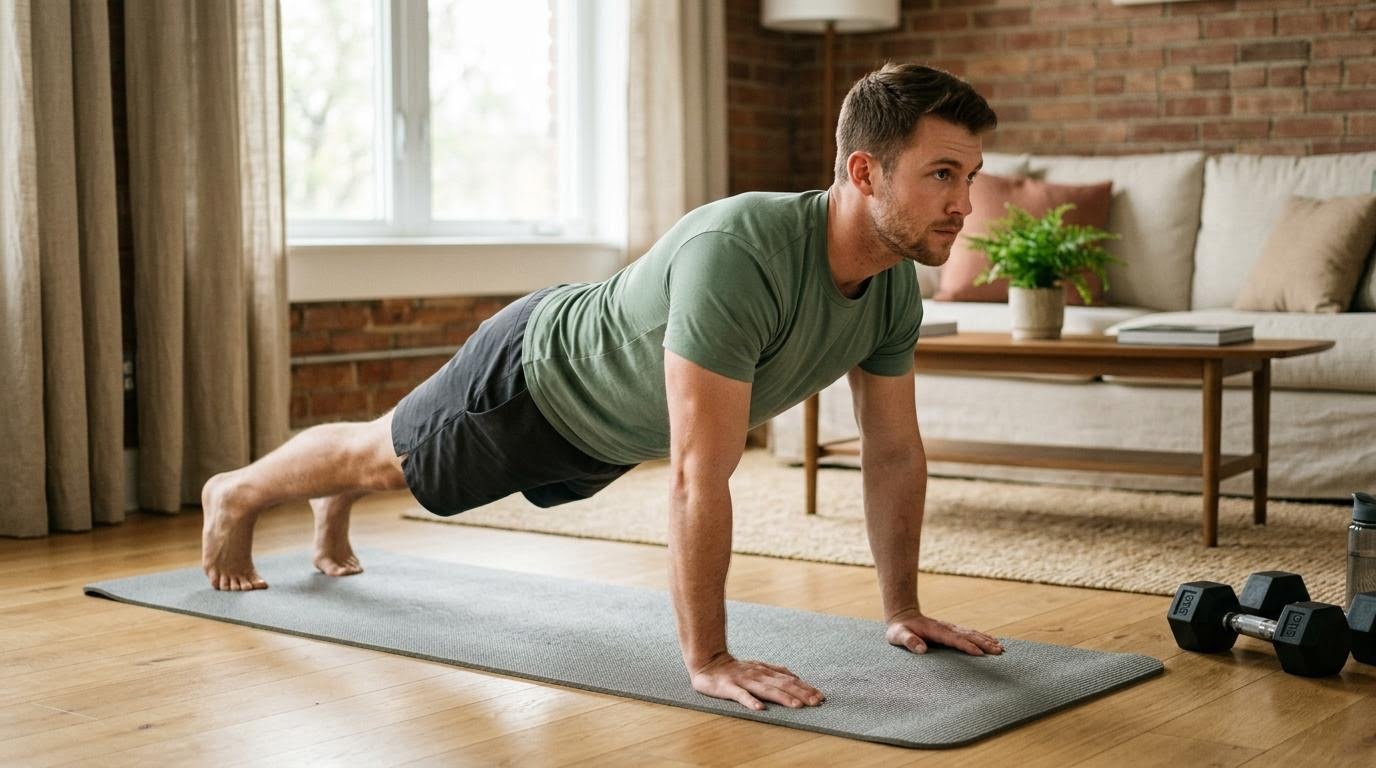


Most people don't fail at fitness because they lack willpower. They fail because they never actually set a fitness target in the first place — they set a mood. "Get in shape." "Be healthier." "Feel better about my body." Those are feelings, not destinations, and you can't measure your way toward a feeling. This is exactly why so many people show up at a gym for two weeks in January and vanish by February: there was never a real target to hit, so there was nothing to notice when they hit it.
Linda Thompson has spent years covering fitness and mental health for readers who are starting from zero, and the pattern repeats itself constantly. The people who stick with training aren't the ones with the most discipline. They're the ones who defined, in specific and boring detail, exactly what they were training toward before they ever laced up a shoe.

Why Vague Fitness Wishes Never Turn Into Results
Here's the thing about "I want to get fit": your brain has no idea what to do with it. It's not a task. It's a direction with no distance and no deadline. Compare that to "I will walk 20 minutes, four days a week, for the next month." That's something you can actually check off a list, and checking things off a list is where motivation actually comes from, not the other way around.
I know what you're thinking — goal-setting sounds like homework, and you already have enough of that in your life. Fair. But the research on this isn't subtle. According to the American Heart Association, people who set a specific, measurable fitness target are far more likely to stay active long-term than those who set a general intention to "exercise more," because a vague goal gives you nothing to measure and nowhere to feel progress. Without a marker of progress, your brain treats the whole project as an open-ended slog, and open-ended slogs are exactly what people abandon.
There's also a timing problem. Most people set their fitness target in the same five minutes they decide to start exercising, usually while lacing up shoes for the first time or standing in a gym parking lot. That's the worst possible moment to define a target, because you're running on motivation, not information. You don't yet know your schedule constraints, your actual fitness level, or what kind of movement you'll tolerate three weeks from now. Define the target first. Start second.
The SMART Framework Turns A Wish Into A Fitness Target
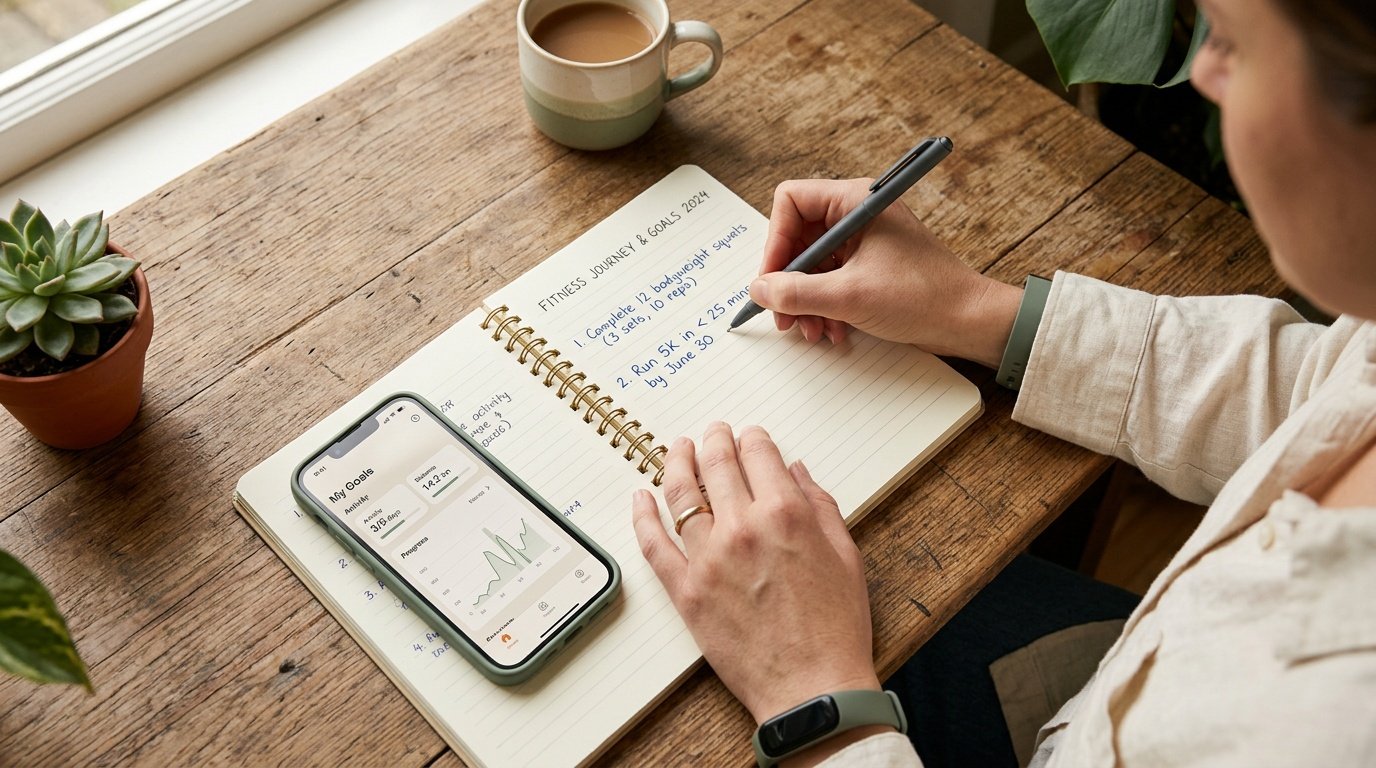
The SMART framework isn't new, and it isn't glamorous, but it's the difference between a wish and a fitness target. Harvard Health Publishing frames it as five checkpoints your goal has to pass before it counts as real: specific, measurable, achievable, relevant, and time-bound, and a goal that skips any one of those five tends to quietly dissolve within a few weeks.
Specific — Name The Exact Outcome, Not The Feeling
"Get stronger" is not specific. "Do 10 push-ups from my knees without stopping" is specific. The test is simple: could a stranger look at your target and know exactly what success looks like, without asking you a single follow-up question? If not, it's still a wish.
Measurable — Numbers You Can Actually Track
Every target needs a number attached to it: minutes, reps, pounds, sessions per week, miles. If you can't put a number on it, you can't tell the difference between progress and standing still, and that ambiguity is what kills momentum around week three.
Achievable — Match The Target To Where You Are Today
This is where most beginner fitness targets go wrong. Someone who hasn't exercised in two years sets a target of running five days a week, hits day four exhausted and sore, and quits by day six feeling like a failure. The target wasn't wrong because it was ambitious — it was wrong because it ignored where the person was actually starting from. A target built off your current baseline, not your ideal future self, is one you can actually sustain.
Relevant — Tie It To A Reason You Actually Care About
"Lose 15 pounds" means very little on its own. "Lose 15 pounds so I can keep up with my nephew at the park without getting winded" means something, because it's tied to a specific outcome you actually want. Relevance is what keeps a target alive on the days your motivation is at zero.
Time-Bound — Give Every Target A Deadline
A target with no deadline just becomes background noise you never quite get to. "Someday I'll get back into shape" isn't a target, it's a hope. "By the end of this month, I will complete three strength sessions per week" is a target, because it has an expiration date that forces a check-in.
Health disclaimer: If you're new to exercise, returning after an injury or long break, pregnant, or managing a chronic condition, talk with your doctor before setting a specific training target or starting a new exercise routine. This article is educational and isn't a substitute for individualized medical advice.

Short-Term Targets Keep You Moving, Long-Term Targets Keep You Aimed
You need both a short-term target and a long-term target running at the same time, because they solve two different problems. A long-term target — say, running a 5K by autumn — gives you a direction to walk in. But a long-term target alone is demoralizing on a random Tuesday, because it's still months away and doesn't tell you what to do today.
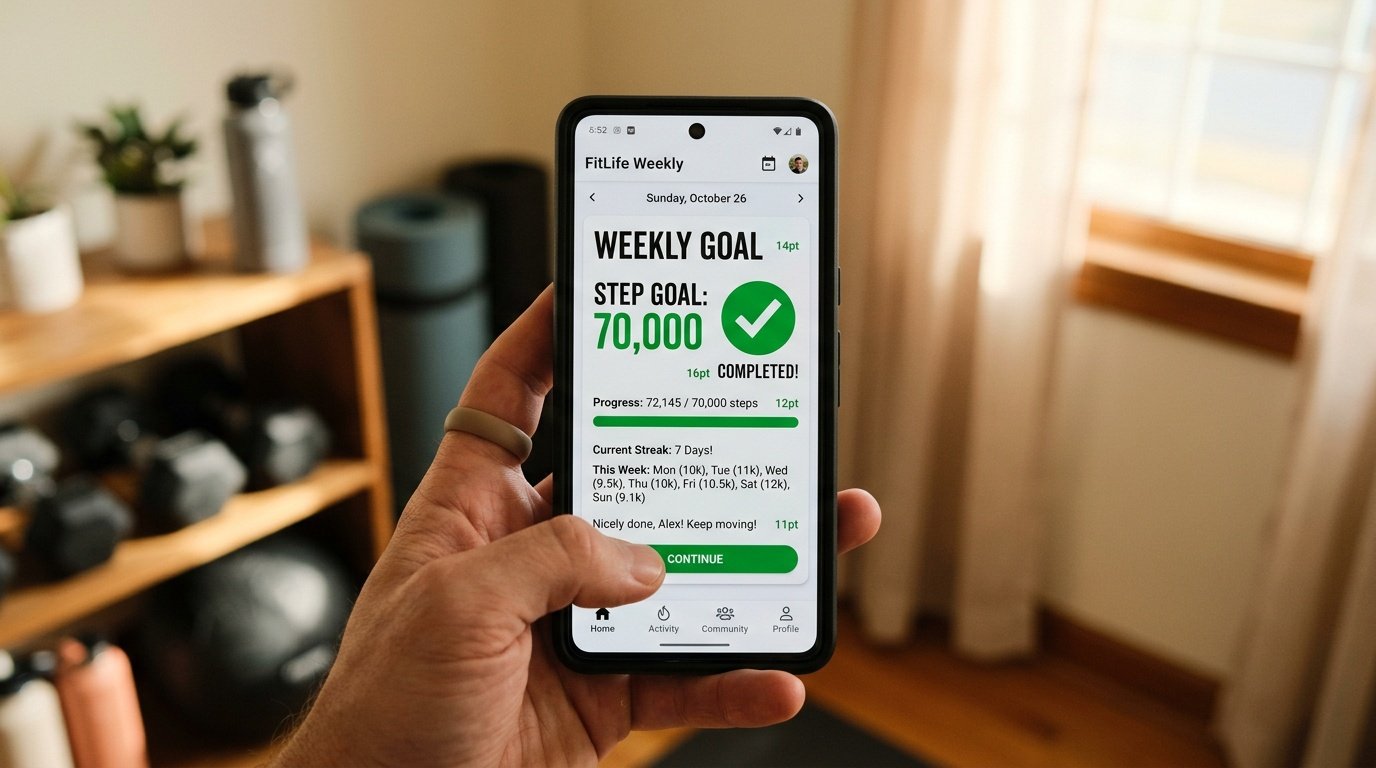
That's where short-term targets come in. A short-term target — three walks this week, or 8,000 steps today — is close enough to feel achievable within days, which gives you the small wins that keep you moving toward the bigger one. Think of the long-term target as the destination on a map and the short-term targets as the turn-by-turn directions. You need the destination to know you're headed somewhere worthwhile, but you follow the turns to actually get there. Even when you schedule those sessions during the day can affect whether you actually hit them, so it's worth locking that in as part of the target itself.
A non-obvious insight most people miss: short-term targets should get slightly harder to hit as you go, not stay flat. If your first-week target and your eighth-week target are identical, you've plateaued without noticing, because the target stopped tracking your actual capacity.

How Many Minutes A Week Actually Count Toward Your Target
One of the biggest sources of confusion when setting fitness targets is not knowing what actually "counts." The good news is that the baseline is well established and doesn't require a gym membership or specialized equipment.
According to the Centers for Disease Control and Prevention, adults should aim for at least 150 minutes of moderate-intensity aerobic activity a week, or 75 minutes of vigorous-intensity activity, plus muscle-strengthening work on two or more days, and any combination of moderate and vigorous activity that adds up to that total counts toward the goal. That number is a useful anchor for your own long-term target, even if your starting short-term target is far smaller. If home cardio is more realistic for your schedule right now, home cardio workouts that don't require any equipment is a good place to start counting minutes.
| Activity type | Weekly target | Example |
|---|---|---|
| Moderate aerobic activity | 150 minutes | Brisk walking, 30 min, 5 days |
| Vigorous aerobic activity | 75 minutes | Jogging, 25 min, 3 days |
| Muscle-strengthening | 2+ sessions | Bodyweight or resistance training, all major muscle groups |
Source: Centers for Disease Control and Prevention, 2025
If you're nowhere near this number right now, that's fine, and it's not a reason to abandon the target. It's a reason to set your short-term target well below it and build toward the full 150 minutes gradually.
Turning "I Want To Get Fit" Into A Target You Can Write Down Today
Let's make this concrete. Take the wish "I want to get fit" and run it through the framework:
- Vague wish: I want to get fit.
- SMART target: I will walk 20 minutes, four days a week, for the next four weeks, and add one bodyweight strength session by week three.
Notice what changed. The new version has a number, a frequency, a duration, and a checkpoint. You could hand this target to another person and they'd know instantly whether you hit it or not.
Mayo Clinic frames the same idea as the very first step of starting any fitness program, ahead of picking a routine or joining anything: think about your fitness target before you think about the workout itself, because clear goals give you a way to measure progress and stay motivated once the initial enthusiasm fades. That order matters more than most people assume — the target comes first, and the workout plan gets built to serve it, not the other way around.
Write your own version down right now, on paper or in your phone. A target that only exists in your head is one you'll quietly renegotiate the first time you're tired.

Tracking Progress Without Getting Obsessed Over The Scale
The scale is the worst way to measure a fitness target, and it's the one most people default to. Weight fluctuates daily from water, sodium, hormones, and digestion, none of which reflect whether you're actually getting fitter. If your target is tied only to a number on a scale, you'll misread normal fluctuation as failure and quit over noise, not signal.
Better tracking markers include: minutes of activity completed each week, number of sessions hit versus planned, reps or weight lifted on a specific exercise, or how you feel doing a task that used to wind you (climbing stairs, carrying groceries, playing with a kid on the floor). These markers move in one direction over time and don't lie to you the way daily weight can.
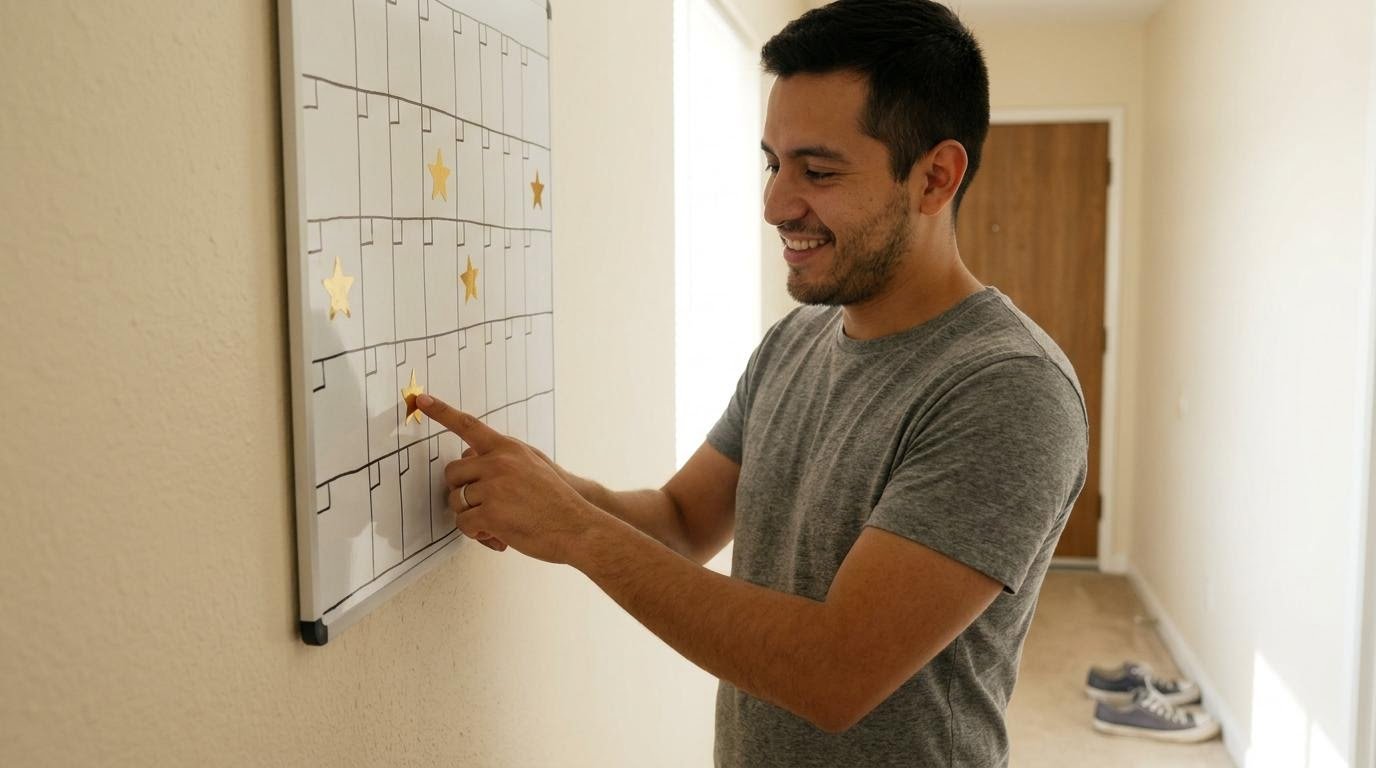
A simple habit-tracking method works well here: a printed calendar or basic notes app where you mark an X on any day you hit your short-term target. It sounds almost too simple, but seeing a row of X's builds its own momentum, separate from how your body looks or feels that particular day. Building this into how to build a workout habit that survives a bad week makes the tracking feel like a natural part of the routine rather than an extra chore.

What To Do When You Miss A Target Or Hit A Plateau
You will miss a target eventually. That's not a prediction, it's a near-certainty, and the difference between people who keep going and people who quit isn't whether they miss a target — it's what they do the day after.
The instinct most people have is to treat one missed session as proof the whole plan failed. That's a distortion, not a fact. One missed walk doesn't erase three completed ones. The useful move is to simply resume the next scheduled session as planned, without adding a punishment workout or trying to "make up" the missed time, since bolting on extra intensity after a miss is a common way people injure themselves or burn out entirely.
Plateaus are a different problem and usually mean your target has stopped matching your current fitness level — either because you've improved and the old target is now too easy, or because life circumstances changed and it's now too hard. Reassess the target itself every four to six weeks rather than assuming something is wrong with you. A target isn't meant to be fixed in stone; it's meant to be adjusted as you actually change.
If you've had a longer break — illness, travel, a rough patch — resist the urge to jump back in at your old target level. Restart closer to where a true beginner would, and rebuild the number from there. Your fitness target should always reflect where you are now, not where you used to be or where you hope to be in six months.
Fitness Targets: Your Questions Answered
What's the difference between a fitness goal and a fitness target?
In practice, the terms are used interchangeably, but "target" tends to imply something more precise — a specific number, date, or milestone you're aiming to hit, rather than a general direction like "get healthier." Treating your fitness goal as a target with a number attached makes it far easier to track.
How do I set a SMART fitness target?
Run your goal through five checkpoints: make it specific (name the exact outcome), measurable (attach a number), achievable (match it to your current fitness level, not your ideal one), relevant (tie it to a reason you care about), and time-bound (give it a deadline). If any one of those five is missing, tighten it before you start training toward it.
Why do most people quit before reaching their fitness targets?
Usually because the target was set in a moment of high motivation rather than realistic assessment, and it didn't survive contact with a normal week. A target that's too large for your current schedule or fitness level creates repeated small failures, which erode motivation faster than slow, steady progress toward a smaller target ever would.
How often should I revisit or adjust my fitness targets?
Every four to six weeks is a reasonable rhythm for most people. That's enough time to see whether a target is too easy, too hard, or about right, without constantly moving the goalposts before you've given the current target a fair shot.
What's a realistic weekly exercise target for a complete beginner?
Starting with two to three sessions of 15 to 20 minutes of moderate activity, like brisk walking, is a realistic entry point for someone who hasn't exercised regularly in a while. You can build gradually from there toward the general recommendation of 150 minutes a week, rather than trying to hit that number in your first week.
Should I track my fitness targets by the scale or something else?
Body weight is one of the least reliable single markers, since it fluctuates daily for reasons unrelated to fitness. Tracking minutes completed, sessions hit, reps or weight lifted, or how daily tasks feel gives you a more accurate picture of whether your target is actually working.
Mayo Clinic covers how physical activity guidelines apply when you're just starting out in this short explainer:
References
- American Heart Association — What's Your Endgame?, 2024
- Harvard Health Publishing — Get SMART About Your Fitness Goals, 2021
- Centers for Disease Control and Prevention — What You Can Do to Meet Physical Activity Recommendations, 2025
- Mayo Clinic — Fitness Program: 5 Steps to Get Started, 2023
- Mayo Clinic — Mayo Clinic Minute: New Fitness Guidelines for the New Year, 2018