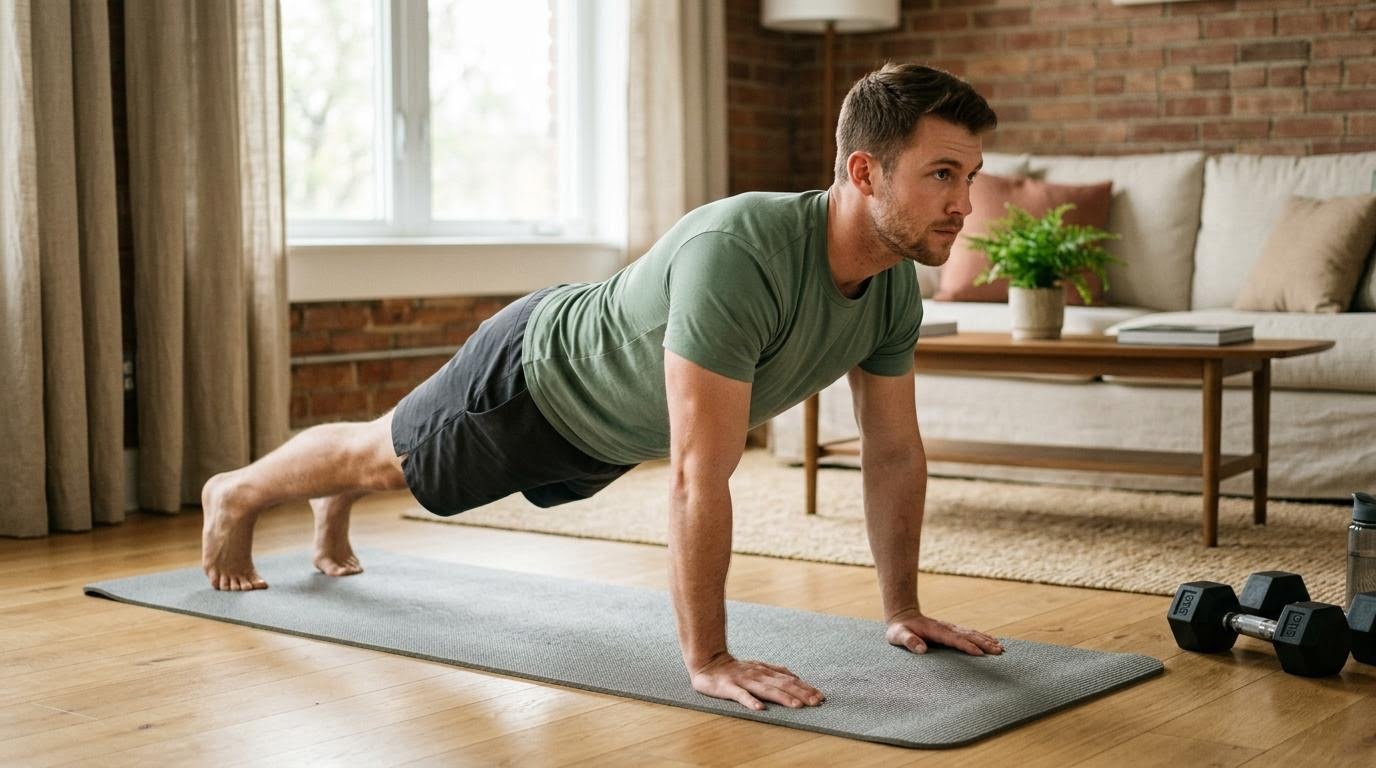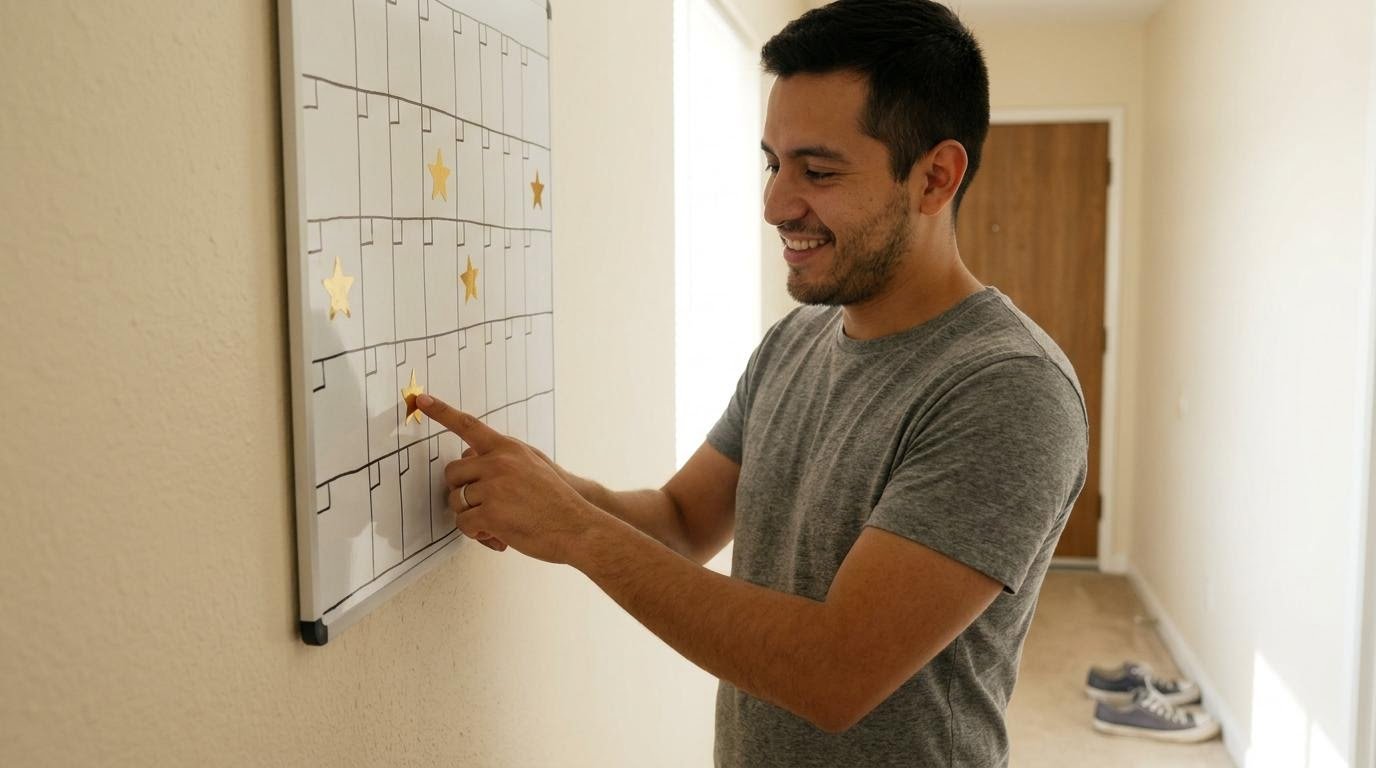


You've got 15 minutes before the day swallows you whole. Kids need breakfast, the group chat is already blowing up, or your commute starts in half an hour. That's exactly the timeframe this cardio workout at home for beginners is built around. No equipment, no gym membership, no waiting on a video to buffer while a trainer finishes an ad read. Just five moves, done in your living room, that raise your heart rate enough to matter and are simple enough that you won't spend week one just learning the choreography.
I know what you're thinking: fifteen minutes can't possibly do anything. Here's the thing, most of the resistance to starting cardio has nothing to do with fitness level and everything to do with the size of the ask. A 45-minute session feels like a project. A 15-minute one fits between the coffee brewing and your first meeting. That's not a compromise, it's the actual strategy.
This routine assumes you're starting from zero, or close to it. No prior cardio background required, no specific fitness level assumed beyond being able to stand and move for short bursts. Every move has a scaled-down version built in, and the progression plan later in this piece tells you exactly when it's time to push a little harder.
Why 15 Minutes of Cardio Beats a 45-Minute Workout You Never Start
A 2023 Harvard Health review of cardio exercise habits found that people who broke their weekly aerobic target into short, manageable segments were far more likely to hit their totals than people chasing one long session. The Harvard piece points to something specific: the mental barrier isn't the movement itself, it's picturing 45 minutes standing between you and the rest of your day. Fifteen minutes doesn't trigger that same avoidance.
There's also a metabolic case for it, not just a psychological one. The CDC's current physical activity guidelines for adults set the weekly aerobic target at 150 minutes of moderate-intensity activity, and explicitly note it doesn't need to happen in one block. Ten-minute chunks count. Fifteen-minute chunks count more. Do this routine five days a week and you're already at 75 minutes, halfway to the weekly benchmark, without ever touching a treadmill.
None of this means longer sessions are bad. It means beginners specifically do better starting small and consistent than big and abandoned by week two. You're not building an Olympic training block. You're building a habit that survives a bad week.
There's a specific reason short cardio sessions still produce real cardiovascular adaptation, and it comes down to how your heart and lungs respond to repeated bouts of elevated effort, not just total minutes logged. Interval-style work, the kind this circuit uses, asks your cardiovascular system to spike and recover multiple times in a short window. That repeated demand is what drives the adaptation, not the clock running for 45 straight minutes. A short, intentional session with real effort behind it does more than a long session spent mostly at a light jog.
This also matters for a reason nobody markets: consistency compounds, intensity doesn't. A single brutal 45-minute session that leaves you sore for four days and dreading the next one produces less total fitness over a month than four modest 15-minute sessions a week. Your cardiovascular system doesn't know or care how impressive a single workout looked. It responds to the pattern you repeat.
The 5-Move Cardio Workout at Home for Beginners (No Equipment)
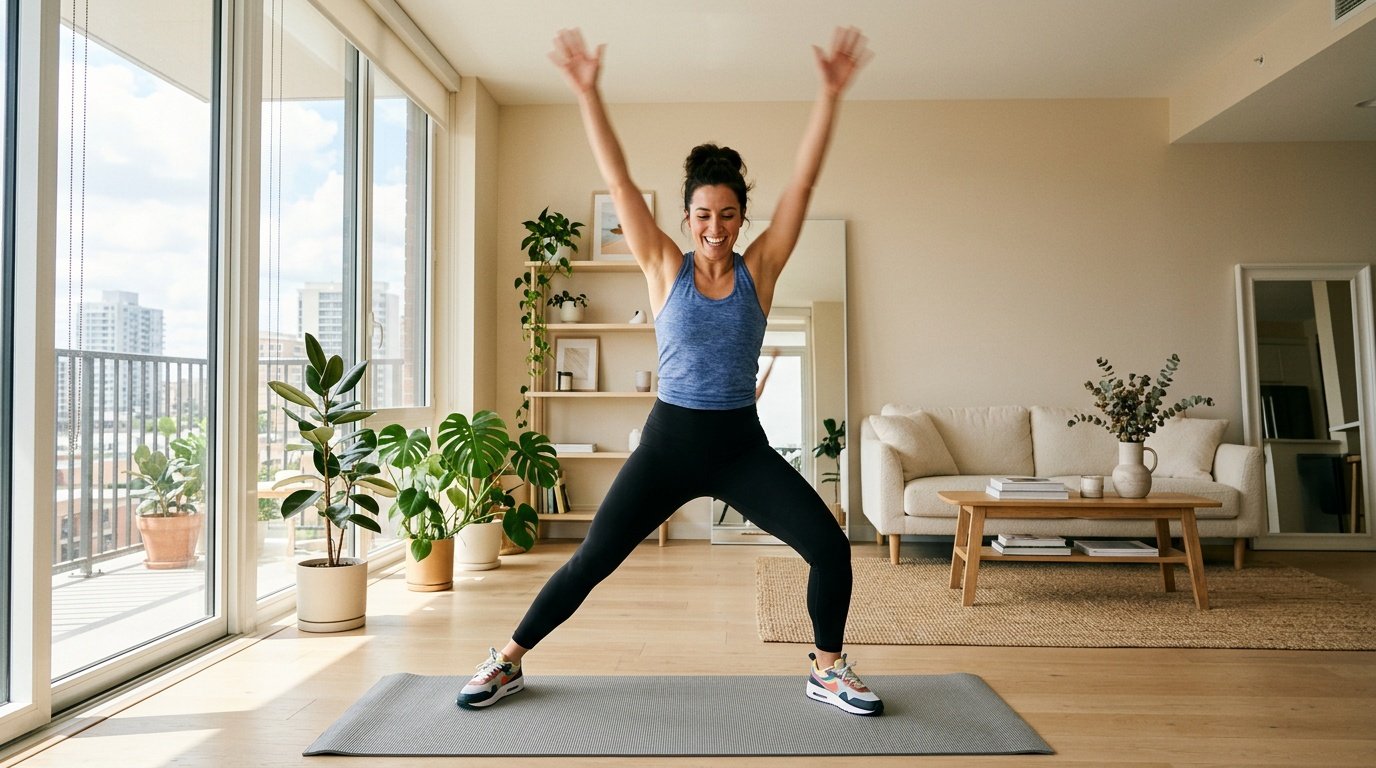
Do each move for 45 seconds, rest 15 seconds, then move to the next. Two full rounds of all five moves lands you right at 15 minutes, including a short warm-up walk in place before you begin. No jump rope, no dumbbells, no resistance bands. Your own bodyweight and about six feet of floor space.
Move 1: March-in-Place With Arm Reaches
Lift your knees to hip height, alternating sides, while reaching your opposite arm overhead each time. This is your warm-up move and your fallback move if anything later feels like too much, too fast. Keep your core braced and your landing soft.
Move 2: Standing Knee Drives
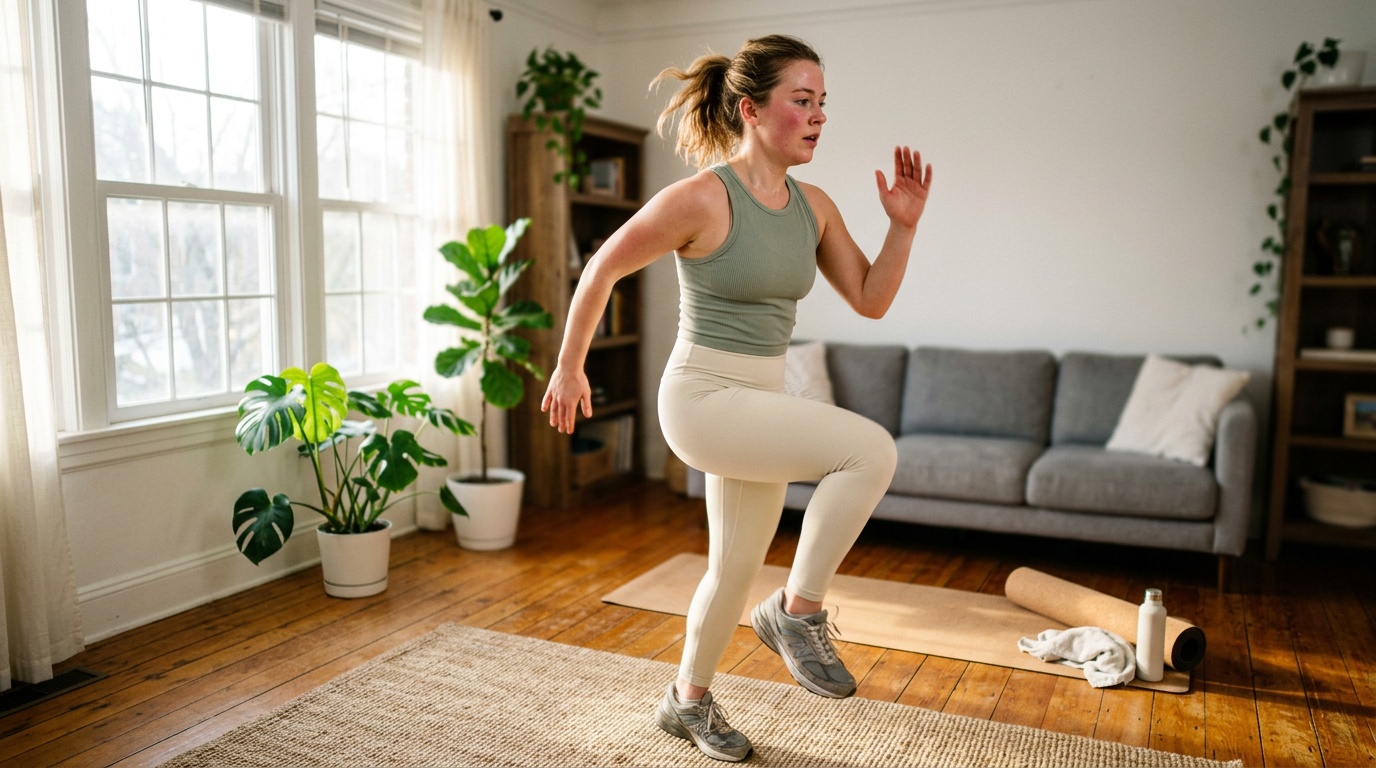
Drive one knee up toward your chest with control, then switch sides. Add a slight hop between switches once your balance feels steady. This is where your heart rate starts to climb out of warm-up territory.
Move 3: Step-Out Jacks
A low-impact version of a jumping jack. Instead of jumping both feet out, step one foot out to the side while raising both arms overhead, then step it back in and switch. Same shape, same cardio benefit, none of the joint impact of a full jump.
Move 4: Squat-to-Reach
Lower into a bodyweight squat, then stand and reach both arms overhead as you rise. This adds a strength-training element into a cardio-dominant circuit, which matters more than it sounds like it should, and we'll get into why in the mistakes section below.
Move 5: Standing Mountain Climbers
Stand tall, place your hands on a countertop or sturdy chair at hip height, and drive your knees up one at a time as if you were doing a floor mountain climber, just upright. This keeps the movement pattern without asking your wrists to bear weight on the ground.
Breathe out on the effort phase of each move (the reach, the drive, the step) and in as you reset. It sounds like a small detail, but beginners who hold their breath through effort tend to fatigue faster and feel more winded than their actual heart rate would suggest. A steady breathing rhythm keeps the 45-second work window feeling manageable instead of frantic.
Two rounds, five moves each, 45 seconds on and 15 off. That's your 15-minute cardio workout at home for beginners, start to finish. If you only have a phone timer, set it to repeat, do the round, and don't overthink the transitions between moves, a few seconds of imperfect footwork while you switch is fine.
How to Scale Every Move to Your Knees, Joints, and Current Fitness Level
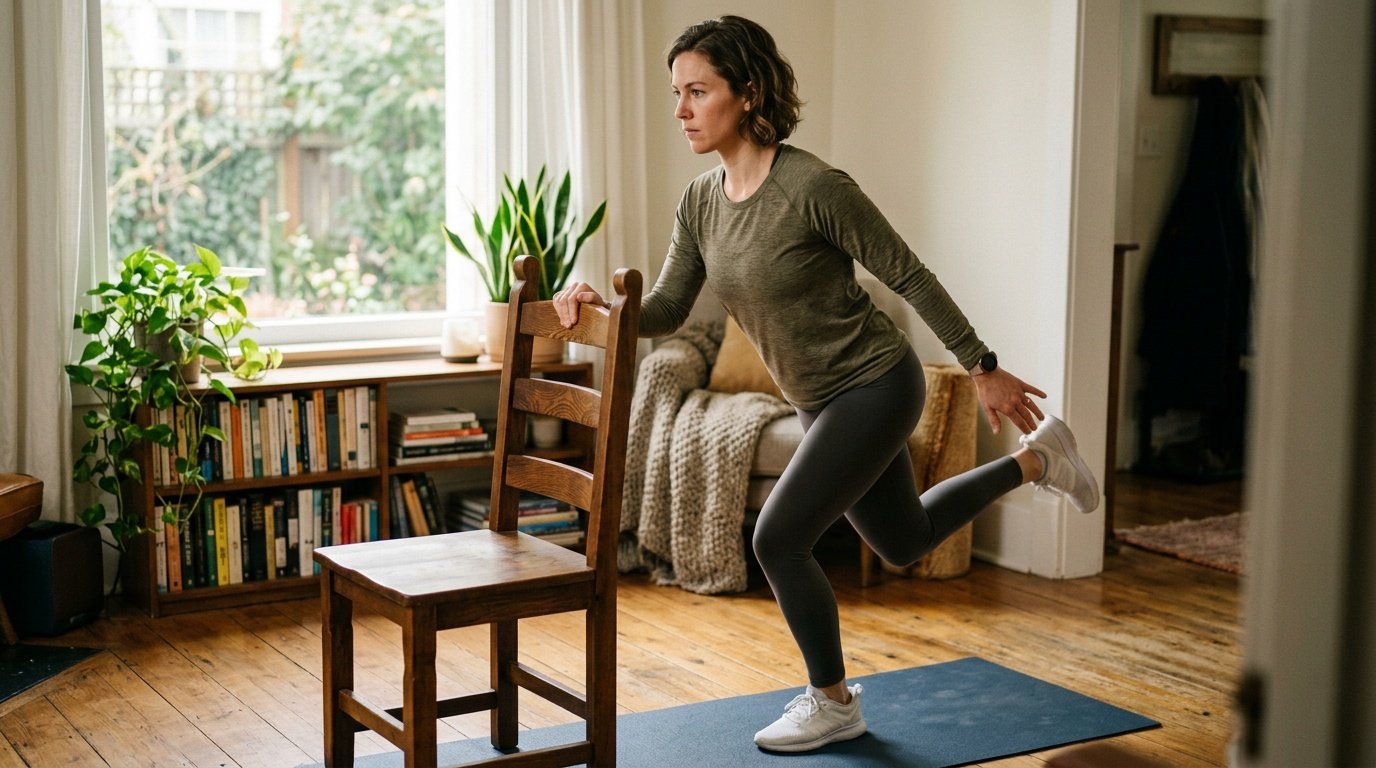
Nobody's first day should look like their thirtieth. If any move above feels wrong for your body, here's exactly how to change it, not skip it.
If Your Knees Are the Concern
Drop the knee drives and mountain climbers to a slower tempo, and stop raising your knee above hip height. The step-out jacks and squat-to-reach stay largely unchanged since they're already low-impact. If a squat causes discomfort past 90 degrees, only go as deep as feels stable, a partial squat still recruits the same muscles.
If Impact of Any Kind Bothers Your Joints
Every move in this circuit already has a low-impact version built in, that's intentional. Keep at least one foot in contact with the floor at all times instead of adding any hop or bounce. You'll still raise your heart rate. The Mayo Clinic's guidance on measuring exercise intensity notes that intensity is about effort and heart rate, not about how much force your joints absorb, so a low-impact version isn't a lesser workout.
If You're Starting From a Very Low Fitness Baseline
Do one round instead of two for the first week. Seven and a half minutes of consistent movement beats fifteen minutes you dread and quit halfway through. The National Institute of Diabetes and Digestive and Kidney Diseases makes a point worth repeating here: physical activity is safe for almost everyone, and the health benefits show up even before visible fitness changes do.
Warming Up Before You Start
Skip the static stretching before this circuit, save that for after. Instead, spend 60 to 90 seconds on the march-in-place move at a gentle pace before your first working interval. A cold muscle asked to move at full effort is where most avoidable strains happen, and a proper warm-up costs you almost nothing against a 15-minute session.
Health disclaimer: If you have a heart condition, joint injury, are pregnant, or haven't exercised in an extended period, talk with a doctor before starting this or any new exercise routine. Stop immediately if you feel chest pain, dizziness, or sharp joint pain, and seek medical attention.
What Your Heart Rate Is Telling You During Those First 15 Minutes
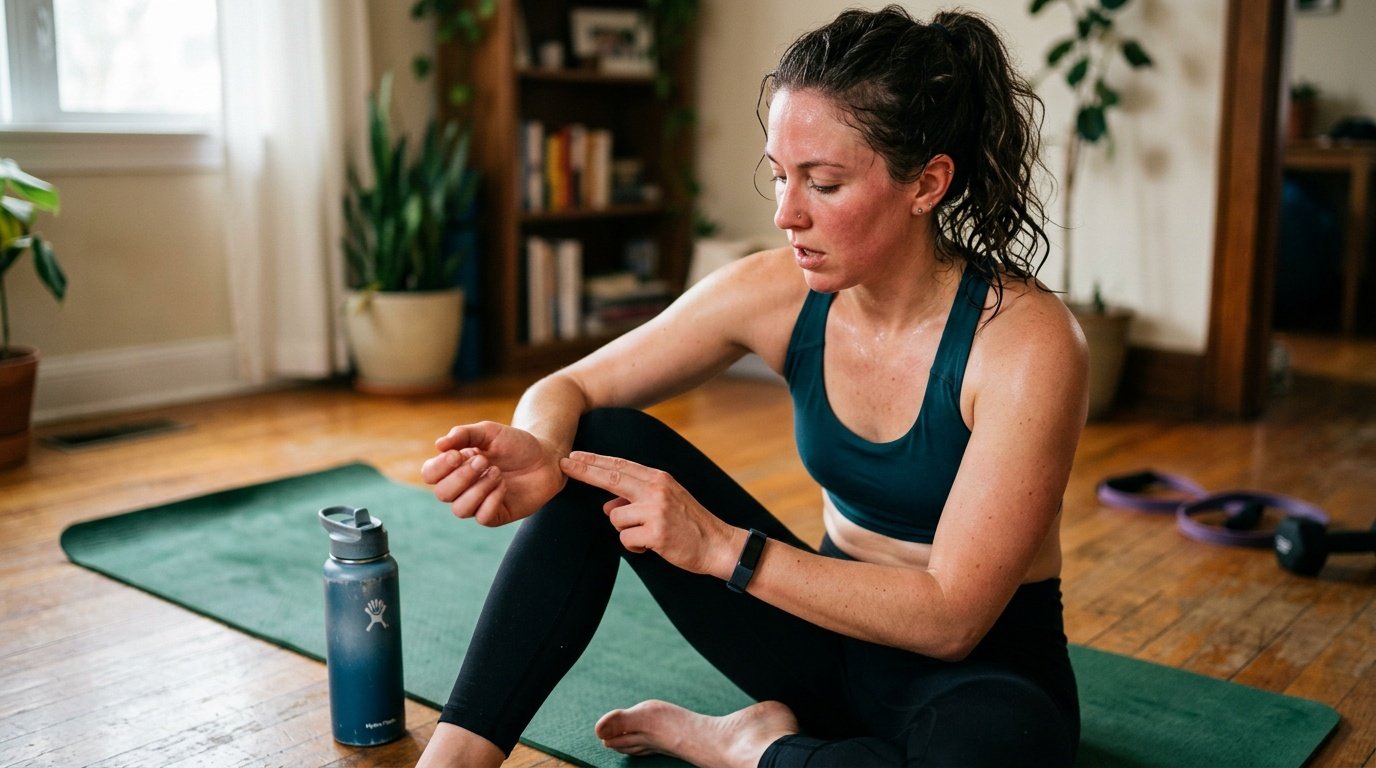
You don't need a chest strap or a $400 watch to know if this circuit is working. The American Heart Association's target heart rate chart puts moderate-intensity exercise at roughly 50 to 70 percent of your maximum heart rate, with maximum estimated as 220 minus your age. For most beginners in their 20s, that's a target zone somewhere around 100 to 140 beats per minute during the working intervals.
Here's a simpler check that doesn't require any math mid-workout: the talk test. If you can hold a full conversation without pausing for breath, you're not working hard enough. If you can't speak in anything longer than a few words, back off slightly. Somewhere in between, breathing hard but still able to answer a question, is exactly where this circuit should sit.
| Intensity Level | Talk Test | % of Max Heart Rate | Where in This Circuit |
|---|---|---|---|
| Light | Full conversation, easy | Under 50% | Warm-up marching, rest intervals |
| Moderate | Talk in short sentences | 50–70% | Step-out jacks, squat-to-reach |
| Vigorous | A few words at most | 70–85% | Knee drives and mountain climbers, second round |
Source: American Heart Association; Mayo Clinic, 2023
Your Realistic First Month: Progressing Without Burning Out
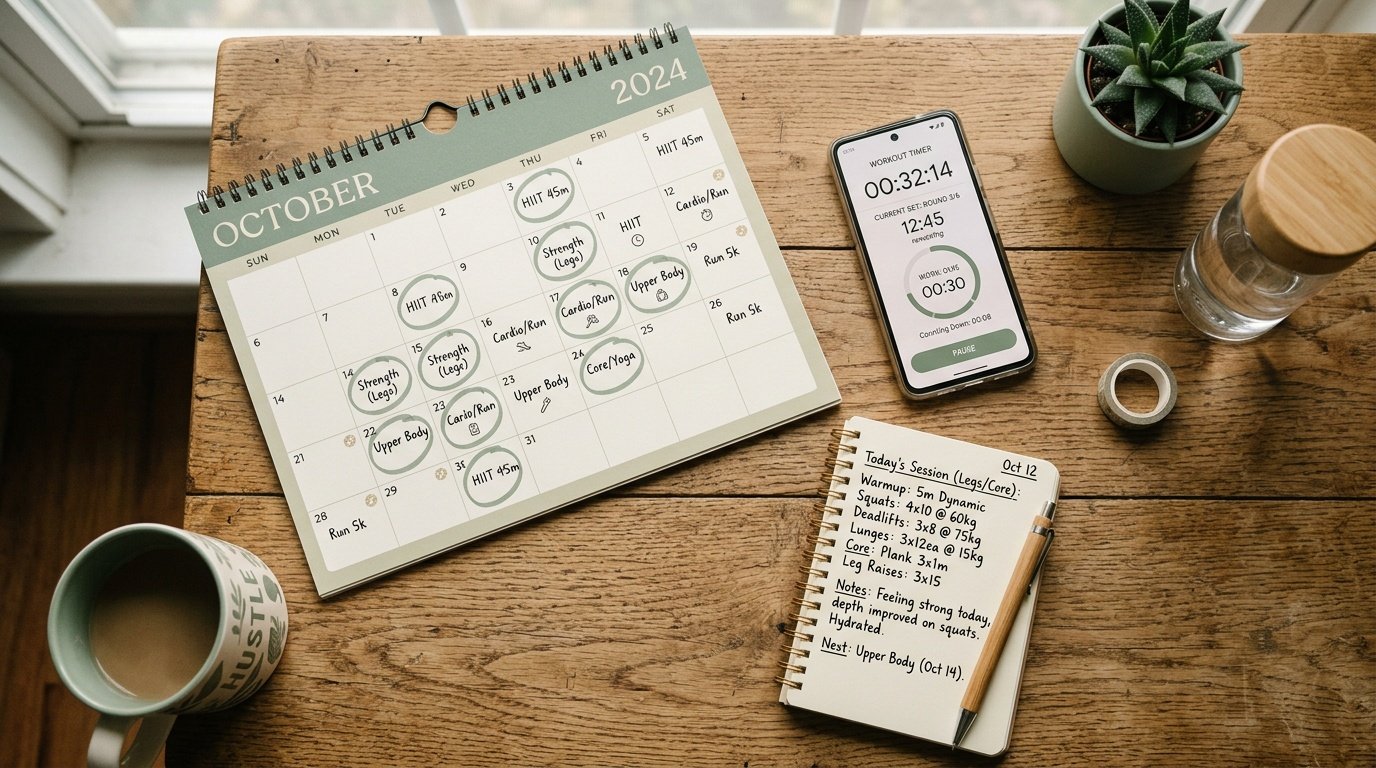
Consistency beats intensity for the first month, full stop. Here's what a sustainable buildup actually looks like, not the inflated version fitness marketing tends to sell.
Weeks 1 to 2
Three sessions a week, one round of the circuit each time, about 7 to 8 minutes of work. Rest days aren't optional here, they're when your body actually adapts to the new demand. If a session feels easy by day five, that's a good sign, not a reason to add a second round yet.
Weeks 3 to 4
Move to four sessions a week and add the second round, bringing each session to the full 15 minutes. This is usually the point where beginners notice they're less winded by the second round than they were by the first round in week one, which is the actual marker of progress, not the scale.
Signs You're Ready for More
You finish both rounds and could realistically do a third. Your resting heart rate the morning after a session feels lower than usual, not still raised. You're recovering between intervals faster than you were three weeks ago. Any of these mean it's time to either add a third round or start looking at slightly higher-intensity variations, not before.
The Mistakes That Quietly Stall Beginner Progress
A few patterns show up over and over with people new to home cardio, and most of them are fixable in a single session. None of these are complicated fixes, they just tend to hide in plain sight because they feel like discipline rather than mistakes.
Skipping the rest intervals because they feel like wasted time. They're not. The 15-second rest is what lets you keep form on the next interval instead of degrading into sloppy movement that's less effective and more likely to cause a strain.
Doing cardio every single day with no rest day. More isn't automatically better, particularly for a beginner's joints and connective tissue, which adapt slower than cardiovascular fitness does. Three to five sessions a week with at least one full rest day is the sustainable range, not seven.
Treating cardio as the only piece of the puzzle. Cardio-only routines improve your heart and lungs, but skip the muscle-strengthening work that protects your joints long-term. That's part of why the squat-to-reach move is in this circuit, it's cardio wearing a strength-training disguise. If you want to go further, the American College of Sports Medicine and most major health bodies recommend pairing aerobic work with two strength sessions a week.
Giving up after a single missed week. A missed week doesn't erase a month of consistency. It resets your motivation, not your fitness. Start back at one round if you need to, rebuilding momentum matters more than proving you didn't lose ground.
Comparing your week one to someone else's month three. Social media fitness content rarely shows the beginning. Someone posting a sweaty, high-intensity session likely has months of the exact progression outlined above behind them. Your only useful comparison is your own session from two weeks ago, not a stranger's highlight reel.
A quick note on equipment, since it comes up often once beginners get a few weeks in: none of it is necessary for this circuit to keep working. If you eventually want to add resistance, a single pair of light dumbbells or a resistance band extends the squat-to-reach and knee-drive moves without changing the rest of the routine. That's a month-three decision, not a day-one requirement.
Watch this brief breakdown on how much exercise your body actually needs, and how the guidelines translate into real weekly habits.
Fifteen minutes, five moves, zero equipment, and a progression plan that doesn't ask you to be a different person by week two. That's the whole system. The hardest part of a cardio workout at home for beginners was never the workout itself, it's getting past the idea that anything under an hour doesn't count. It counts.
Frequently Asked Questions
How long should a beginner do cardio at home?
Start with one 7 to 8 minute round three times a week for the first two weeks, then build to 15 minutes, four to five times a week by week three or four. The CDC's weekly target is 150 minutes of moderate-intensity activity, and this pace gets you there without overloading a body that isn't conditioned yet.
Can I lose weight with just 15 minutes of cardio a day?
Fifteen minutes of daily cardio contributes meaningfully to a calorie deficit, but weight loss depends on total energy balance, meaning nutrition matters at least as much as exercise duration. Fifteen minutes is a strong, sustainable starting point, not a standalone weight-loss solution.
Do I need equipment for a cardio workout at home for beginners?
No. Every move in this routine uses only bodyweight and roughly six feet of floor space. A sturdy chair or countertop is helpful for the mountain climber modification, but isn't required.
Is it okay to do this cardio workout every day as a beginner?
Not recommended for a true beginner. Three to five sessions a week with at least one full rest day allows your joints and connective tissue to adapt at the same pace as your cardiovascular fitness, which reduces injury risk significantly.
What's the difference between low-impact and high-impact cardio for beginners?
Low-impact cardio keeps at least one foot on the ground at all times, like the step-out jacks in this circuit. High-impact cardio includes jumping or both feet leaving the ground simultaneously. Low-impact versions raise your heart rate just as effectively while putting far less stress on your joints, making them the smarter starting point for most beginners.
References
- Harvard Health Publishing — Rethinking Cardio Exercise
- CDC — Adult Activity: An Overview
- Mayo Clinic — Exercise Intensity: How to Measure It
- National Institute of Diabetes and Digestive and Kidney Diseases (NIDDK) — Staying Active at Any Size
- American Heart Association — Target Heart Rates Chart