
You have probably tried the obvious fix already. A week of crunches, a plank challenge that lasted four days, a gym membership that now mostly funds a billing system. If that sounds familiar, this guide is for you. Learning how to reduce belly fat without exercise is a realistic goal with real research behind it, and it starts with a fact most fitness ads skip: the fat around your middle responds to what you eat, how you sleep and how you handle stress at least as much as it responds to workouts.
Here is the plan. You will see why ab exercises alone do not shrink a waistline, how to measure the fat that actually matters for your health, and seven habits that move your numbers without a formal workout routine. Think of this as a small group conversation where nobody gets lectured. We will look at what studies found, what they could not prove, and what you can try this week.
One honest note before we start. Exercise has benefits beyond burning calories, and nothing here argues against it. The point is that you do not have to wait until you feel ready to work out before you start making progress.

How to Reduce Belly Fat Without Exercise Starts With Dropping the Spot-Reduction Myth
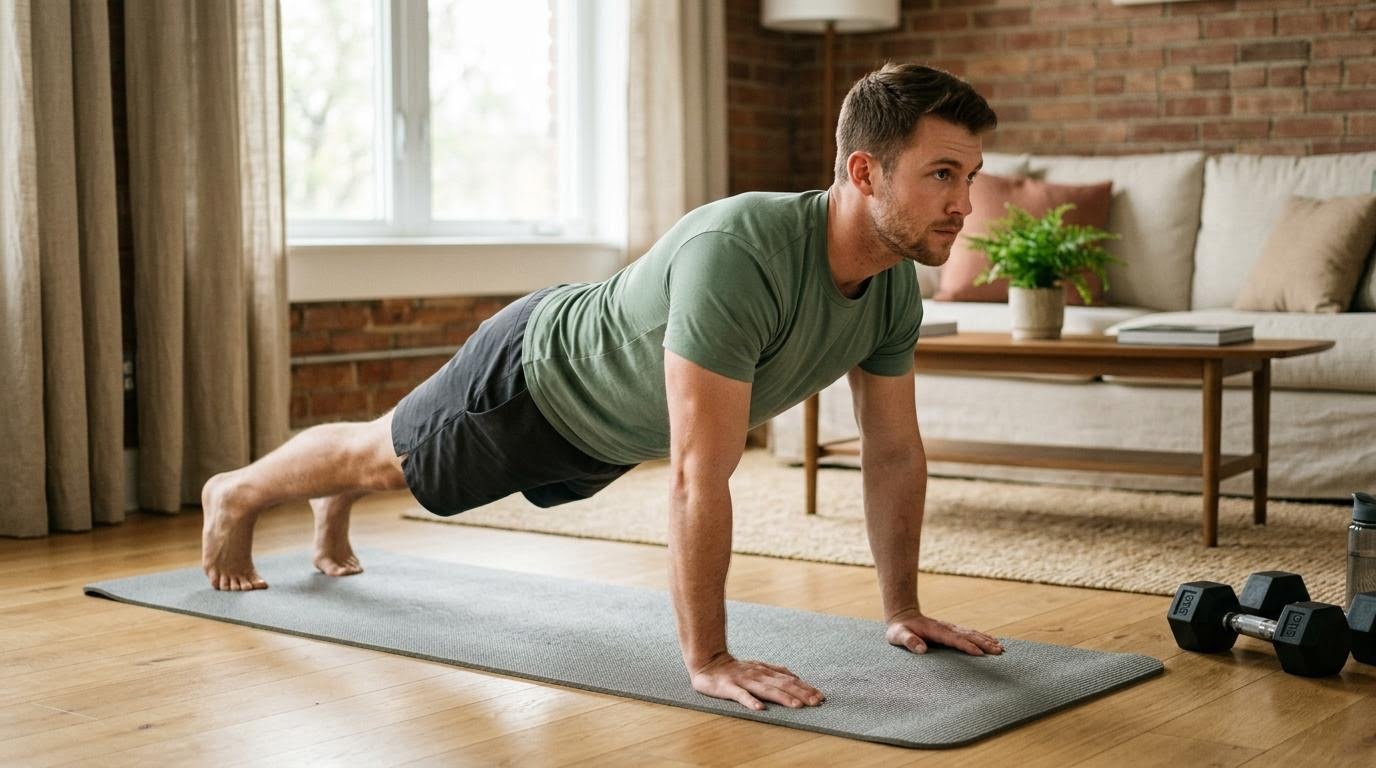
Most people begin with the same instinct: if the belly is the problem, train the belly. It feels logical, and it is wrong. Your body does not pull fat from the area you are exercising, so a thousand sit-ups do not take a thousand calories out of your midsection.
What the six-week trial actually showed
A randomized trial published in the Journal of Strength and Conditioning Research put this to the test. Researchers assigned 24 healthy, sedentary adults to either an abdominal exercise group or a control group. The exercise group did seven abdominal exercises, two sets of 10 repetitions, five days a week for six weeks, while everyone kept an isocaloric diet. After six weeks there was no significant change in body weight, body fat percentage, android fat, abdominal circumference or skinfold measurements. The exercisers did get better at curl-ups, so their muscles improved. Their fat did not move.
Mayo Clinic reaches the same conclusion in its belly fat guidance, noting that ab exercises alone will not remove it. Strong abs can sit under a layer of fat and stay invisible, which is why some people with great core strength still do not see definition.
What this means for your plan
Here is the non-obvious part. If crunches cannot target belly fat, skipping them costs you almost nothing. Fat loss is a whole-body process driven by the balance between the energy you eat and the energy you burn. That means the levers you control in your kitchen, your bedroom and your evening routine matter just as much as anything you do on a mat. Every other habit in this article builds on that idea.
Your Waist Measurement Tells You More Than the Scale
Not all belly fat is the same. Subcutaneous fat is the soft layer you can pinch under your skin. Visceral fat sits deeper, around your organs, and Mayo Clinic explains that excess belly fat, especially the visceral kind, raises the risk of serious health problems even in people whose overall weight looks average. You cannot see visceral fat in the mirror, but your waist circumference gives a useful clue.
The National Heart, Lung, and Blood Institute at NIH links a waist circumference above 35 inches for women or 40 inches for men to a higher risk of heart disease and type 2 diabetes. Use these numbers as a screening signal, not a diagnosis.
| Adult group | Waist measurement linked to higher risk | What to do with the number |
|---|---|---|
| Women | More than 35 inches | Track every two weeks and raise it with your doctor |
| Men | More than 40 inches | Track every two weeks and raise it with your doctor |
Source: National Heart, Lung, and Blood Institute (NIH)
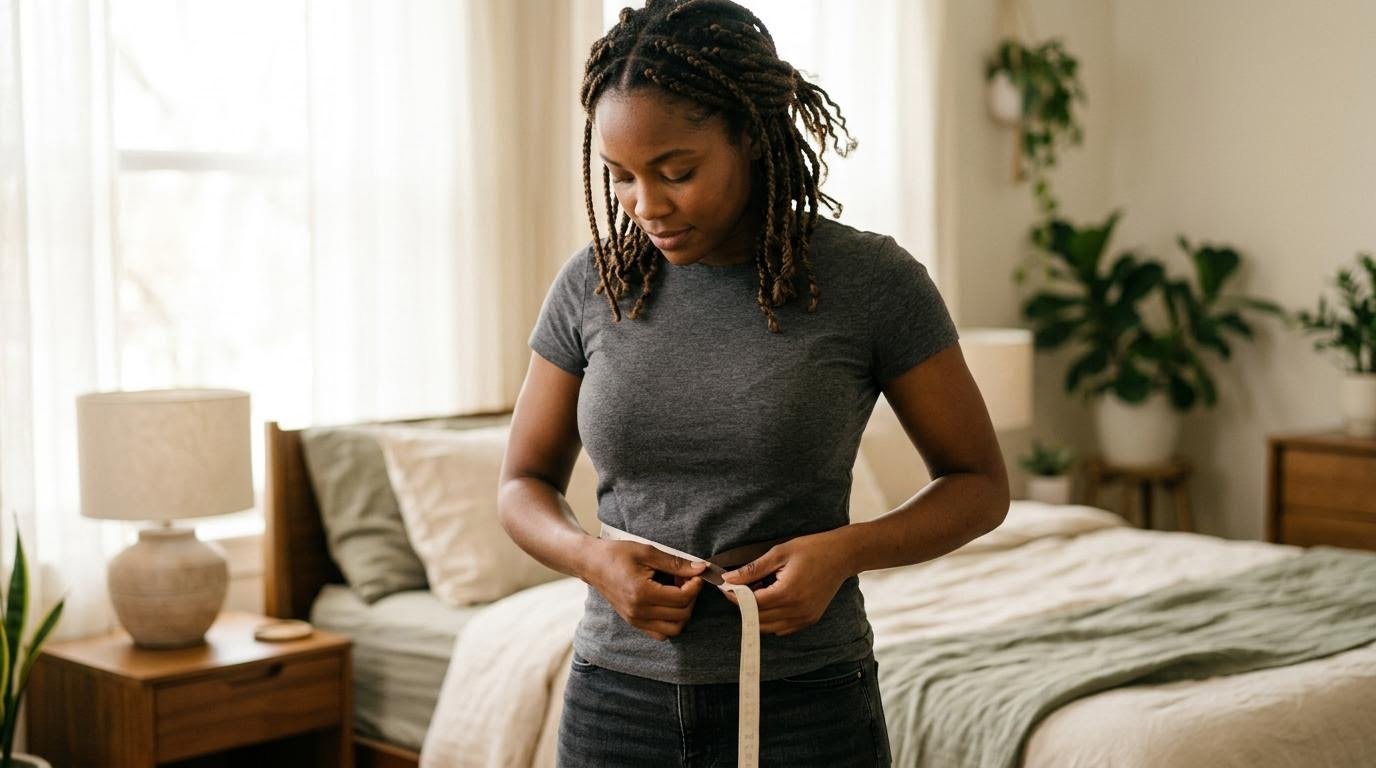
To measure, stand relaxed, wrap a soft tape around bare skin level with your navel, breathe out normally and read the number without pulling the tape tight. Do it at the same time of day, ideally in the morning, so your readings stay comparable.
Picture two friends who weigh the same. One carries most of her weight on her hips and thighs. The other carries it around his middle. Their scales say the same thing, but their waist numbers tell different stories. This is why a tape measure beats a bathroom scale for tracking belly fat, and why a dropping waist can be real progress even when your weight barely moves.
Mayo Clinic also publishes a short video on why belly fat deserves attention. It takes about a minute and covers the same visceral-fat idea in plain language.

A Modest Calorie Gap Beats a Crash Diet for Belly Fat
If you remember one number from this article, make it 5 to 10 percent. NIH guidance recommends aiming to lose 5 to 10 percent of your starting weight over about six months, and notes that even a 3 to 5 percent loss can lower triglycerides and blood glucose. For a 180-pound adult, that means roughly 9 to 18 pounds, or a third to two thirds of a pound per week. That pace sounds slow, and that is the point. It is small enough that you can keep it going on a stressful Tuesday.
The mechanism behind it is a calorie deficit: eating slightly less than your body uses so it draws on stored fat. Your waist shrinks as overall body fat shrinks, which is why a steady, moderate deficit does the job without a single crunch. Aggressive cuts tend to backfire because they are hard to sustain, and the person who quits in week three ends up with nothing to show for it.
Five easy ways to build a small gap
- Shrink one meal, not all of them. Trim the largest meal of the day by roughly a fifth instead of cutting everything at once.
- Use a smaller plate. A standard dinner portion on a 9-inch plate looks full and feels normal.
- Keep a two-week food log. Most people underestimate snacks and drinks, and seeing the pattern is often enough to change it.
- Stop eating in front of a screen. Distracted eating makes it easy to finish a bag without noticing.
- Cook one more meal at home each week. Home cooking gives you control over oil, sauce and portion size.
You do not need to track every gram. A rough, consistent gap beats a perfect plan you abandon. If you want the full mechanics, our guide to how a calorie deficit works walks through it step by step.

Soluble Fiber and Protein Keep You Full So the Calorie Gap Feels Easy
A calorie gap only works if you can live with it, and hunger is where most plans collapse. Fiber and protein are the two nutrients most useful for staying satisfied on fewer calories. One of the clearest findings on fiber and belly fat comes from the Insulin Resistance and Atherosclerosis Family Study. Researchers tracked abdominal fat by CT scan in 1,114 African American and Hispanic American adults over five years and found that each additional 10 grams of soluble fiber per day was linked to a 3.7 percent slower rate of visceral fat accumulation, independent of changes in BMI.
Read that carefully. This was an observational study, so it shows an association, not proof that fiber alone shrinks belly fat. But it fits a pattern: people who eat more soluble fiber tend to feel fuller, eat less and carry less deep abdominal fat.
Where to find soluble fiber
Oats, barley, beans, lentils, apples, citrus fruit and chia seeds are all good sources. Start with one serving in your breakfast and one in your largest meal. Increase slowly over a couple of weeks and drink water with it, because adding a lot of fiber overnight can cause bloating. Our breakdown of why a high fiber weight loss diet often works better than counting calories shows how to build meals around it.
Add protein where you tend to snack
Protein tends to keep you full longer than refined carbohydrates. Put a palm-sized portion in the meal that usually leads to afternoon snacking. For many people that is breakfast. Greek yogurt with oats and fruit, or eggs with beans on toast, covers both protein and soluble fiber in one plate.

Extending Sleep Cut Daily Calorie Intake by About 270 in One Randomized Trial
Sleep is the habit people skip because it does not feel like a diet strategy. The data says it should. In a randomized trial published in JAMA Internal Medicine in 2022, researchers enrolled 80 adults aged 21 to 40 with overweight who normally slept under 6.5 hours a night. Half received two weeks of sleep hygiene counseling aimed at extending their time in bed. That group slept about 1.2 hours more per night and ate roughly 270 fewer calories per day than the control group, with no change in how much energy they burned.
Two hundred and seventy calories is a meaningful chunk of a daily deficit, and the participants got there without being told to diet. The trial was short and limited to adults with overweight who were short sleepers, so do not expect the same result if you already sleep well. But if you run on five or six hours, extending your sleep is one of the cheapest ways to shrink your appetite.
A realistic sleep reset
- Pick a fixed wake-up time and protect it, even on weekends.
- Move your bedtime earlier by 15 minutes every few nights instead of forcing an hour at once.
- Keep caffeine to the morning and early afternoon.
- Dim the lights and put your phone on a charger across the room an hour before bed.
Most adults need seven or more hours. If you fall short, treat sleep as a weight-loss tool and not as a reward you earn after everything else is done.

Stress Eating and Liquid Calories Quietly Rebuild What You Lose
You can eat well all day and undo it between 9 and 11 p.m. Stress, boredom and tiredness drive late-night snacking, and the calories hide in places that do not feel like eating: a sweetened coffee, an energy drink, two glasses of wine, a smoothie that is mostly juice. Researchers link chronic stress to changes in appetite and food choices, although the evidence tying stress hormones directly to belly fat in otherwise healthy adults is mixed. What is not in dispute is the behavior: tense, tired people reach for quick, calorie-dense food.
Three swaps that remove calories without feeling like dieting
- Water for sugary drinks. Mayo Clinic lists replacing sugary beverages with water among its basic belly fat strategies.
- One planned evening snack. A portioned snack at a set time beats grazing from the bag.
- A five-minute pause before seconds. Cravings often fade if you wait, and a short breathing break gives them time to.
If stress is the main trigger, build one calming habit into the evening. It does not need to be a workout. A short walk, a shower, ten minutes of reading or slow breathing all lower the pressure that sends people to the kitchen. Small, repeatable pauses matter more than an ambitious routine you drop after two nights.

A Simple Plan: How to Reduce Belly Fat Without Exercise This Week
If you searched for how to burn belly fat without exercise, the honest answer is that you do not burn it. You shrink it gradually by creating a small calorie gap and protecting the habits that keep it going. Here is a plan you can start this week without a gym, a tracker or a rule book.
- Day 1: Measure your waist and write it down. Weigh yourself once if you want, but treat the tape as your main metric.
- Day 2: Add one soluble fiber food to breakfast, such as oats with apple or a bean-based side.
- Day 3: Swap every sugary drink for water, unsweetened tea or sparkling water.
- Day 4: Set a wake-up time that gives you seven or more hours and move bedtime earlier by 15 minutes.
- Day 5: Serve your largest meal on a smaller plate and put a protein source on it.
- Day 6: Choose one calming evening ritual and write down your usual snack trigger.
- Day 7: Take a short walk after your biggest meal and re-measure your waist the following week.
Where everyday movement fits
The same fiber study also found that moderately active participants had a 7.4 percent lower rate of visceral fat accumulation than less active ones. You do not need a workout plan to benefit. Taking stairs, walking while you take a call and standing up every hour all count as ordinary movement. Treat it as an add-on to the habits above, not a replacement for them.
If your waist stays above the risk thresholds after a few months of steady effort, talk with your doctor about next steps. Our guide to what doctors actually recommend for losing belly fat without surgery explains the medical options and when each makes sense.
So here is where this leaves you. Learning how to reduce belly fat without exercise comes down to a small calorie gap, enough fiber and protein to stay full, seven or more hours of sleep and a plan for stress. None of it is dramatic and none of it requires a workout. Pick one habit from the list, run it for a week, and measure what your waist says.
Health disclaimer: This article is for general education and does not replace advice from a doctor or registered dietitian. Talk with a healthcare professional before you change your diet, start a supplement or make major lifestyle changes, especially if you are pregnant, breastfeeding, under 18, have diabetes, heart disease or an eating disorder history, or take prescription medication.
Frequently Asked Questions
Is it possible to lose belly fat without exercise?
Yes. Body fat shrinks when you take in fewer calories than you use, and food choices, sleep and stress habits all move that balance without a single workout. You cannot choose where the fat comes off, so your waist will shrink as your overall body fat drops. Regular activity still adds benefits for visceral fat, so treat it as a bonus you can add later rather than a requirement for starting.
What to do to lose belly fat without exercise at home?
Start with three changes this week. Add one source of soluble fiber (oats, beans, lentils or apples) to your two biggest meals, swap sugary drinks for water, and fix a wake-up time that gives you at least seven hours in bed. Measure your waist once a week at the same time of day and write the number down.
How long does it take to reduce belly fat without exercise?
There is no fixed timeline, and anyone promising one is guessing. NIH guidance points to losing 5 to 10 percent of your starting weight over about six months, which is roughly a third to two thirds of a pound per week for someone who weighs 180 pounds. Track your waist every two weeks instead of daily, because day-to-day changes mostly reflect water and digestion.
Do detox teas, apple cider vinegar or belly fat pills work?
No tea, drink or supplement is a reliable shortcut for losing belly fat. Products that claim to melt fat usually rely on a laxative or diuretic effect, which changes the number on the scale without removing fat. Talk with a pharmacist or doctor before taking any supplement, especially if you use prescription medication.
When should I see a doctor about belly fat?
See a doctor if your waist measures more than 35 inches (women) or 40 inches (men), if your belly swells suddenly or hurts, if your weight changes without a reason, or if you have diabetes, heart disease or high blood pressure. A clinician can check for conditions that mimic belly fat, such as fluid retention or hormonal problems, and tell you which options fit your health history.
References
- Mayo Clinic: Belly fat in women: Taking and keeping it off
- Vispute SS et al., Journal of Strength and Conditioning Research: The effect of abdominal exercise on abdominal fat, 2011
- National Heart, Lung, and Blood Institute (NIH): Assessing your weight and health risk
- Hairston KG et al., Obesity: Lifestyle factors and 5-year abdominal fat accumulation in a minority cohort: the IRAS Family Study, 2012
- Tasali E et al., JAMA Internal Medicine: Effect of sleep extension on objectively assessed energy intake among adults with overweight in real-life settings, 2022
- Mayo Clinic (YouTube): Mayo Clinic Minute: Belly Fat Danger Revealed