

You've probably had this exact debate with a roommate or in your family group chat: someone insists rice is why nobody in your generation can lose weight, and someone else swears their grandmother has eaten a bowl of it every single night for sixty years and stayed lean the whole time. Basmati rice gets pulled into that argument more than most rice varieties, since it shows up everywhere from a quick weeknight bowl to a full biryani spread. So here's the direct answer before we get into the mechanics: is basmati rice fattening? Not inherently, and the reason has less to do with the rice itself and more to do with how your body actually processes it compared to the other starches you might reach for instead.
This isn't a "just eat less rice" article. It's a technical breakdown of what the glycemic index data, the calorie math, and the portion research actually say, so you can stop guessing and start making a call based on numbers instead of whatever your feed told you this week.
Is Basmati Rice Fattening? What the Glycemic Index Actually Shows
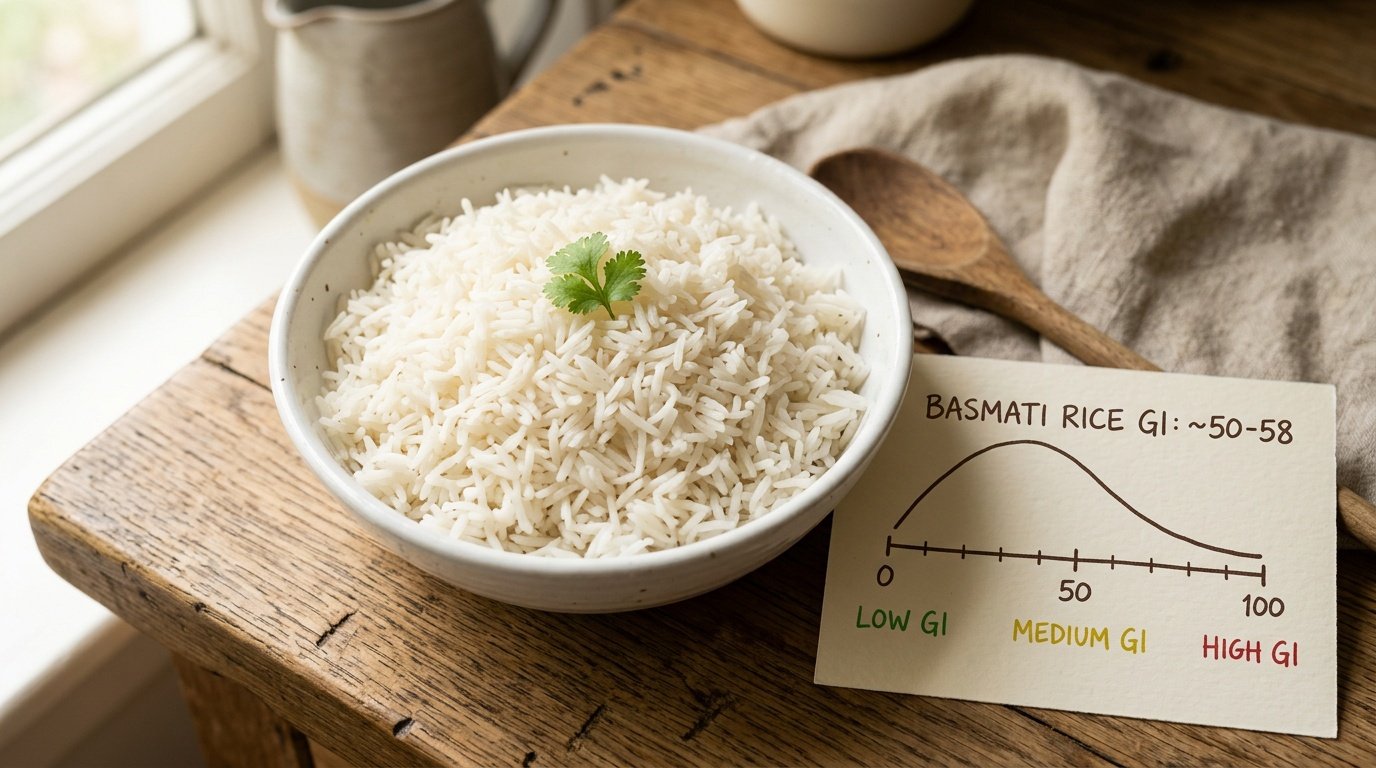
The glycemic index (GI) ranks how fast a carbohydrate food raises your blood sugar on a scale of 0 to 100, with pure glucose set at 100. It matters for weight management because foods that spike blood sugar quickly tend to trigger a faster insulin response, and that faster crash is part of what leaves you hungry again within an hour or two. Basmati rice's structural advantage comes down to one variable: amylose content. Basmati grains carry more amylose starch than short or medium-grain white rice varieties, and amylose digests more slowly than the amylopectin starch that dominates stickier rice types.
What the Glycemic Index Actually Measures
A food's GI isn't a fixed law of nature, it's a lab-measured average from a group of test subjects eating a standardized 50-gram carbohydrate portion. That detail matters because it means GI values for the same food can vary meaningfully between studies depending on the specific variety tested, how it was cooked, and the population sampled. This is exactly why you'll see basmati rice quoted anywhere from the low 50s to the high 50s depending on the source, rather than one single number everyone agrees on.
Where Basmati Lands Compared to Other Rice
According to Harvard Health Publishing's comparison of rice varieties, standard white rice sits at a high glycemic index of roughly 73, while brown rice lands in the medium range around 68. Basmati, by contrast, consistently tests lower than both of those baseline figures because of its amylose profile, which is the entire reason it gets singled out from the generic "rice" category in nutrition conversations rather than lumped in with short-grain white rice.

A 2022 Study Measured Basmati Rice's Real-World Blood Sugar Impact
Lab-table GI numbers are useful, but a 2022 study out of Taylor's University in Malaysia took the question further by testing real people eating real meals instead of an isolated carbohydrate portion. Researchers gave 14 overweight and obese young adults, averaging 22.8 years old, three separate rice-based meals on alternating days: a white rice meal, a brown rice meal, and a parboiled basmati rice meal. Each participant wore a real-time continuous glucose monitor throughout, which tracked their actual blood sugar response rather than relying on a single blood draw.
The Numbers That Came Out of the Continuous Glucose Monitor
The results, published in the journal Foods and indexed through the National Institutes of Health's PubMed Central database, found the parboiled basmati rice meal produced a glycemic index of roughly 45, compared to about 56 for the brown rice meal and 83 for the white rice meal. That's a meaningfully wider gap than the generic textbook numbers usually suggest, and it's a non-obvious point worth sitting with: this specific basmati preparation, in a mixed meal context rather than an isolated lab test, outperformed brown rice on blood sugar impact, not just white rice.
Why This Matters More Than a Lab-Table GI Value
The reason this study matters more than a static GI chart is the mixed-meal design. Most people don't eat 50 grams of pure rice carbohydrate on an empty stomach the way classic GI testing works. They eat rice next to protein, vegetables, and sauce, and that combination changes the glycemic response. A rtCGM study that tracks a realistic meal over 24 hours gets closer to what your body actually does at dinner than a fasting lab test does, which is part of why the researchers flagged that GI values shouldn't be treated as universal across every population or every way of eating the food.
It's worth being upfront about the limits here too, since a study this specific deserves an honest read rather than a headline-friendly one. Fourteen participants is a small sample, and the group was specifically overweight and obese young adults in Malaysia, not a cross-section of every body type or ethnicity that eats basmati rice worldwide. That doesn't make the finding useless, small mechanistic studies like this one are exactly how nutrition science builds toward larger trials, but it does mean treating "45" as a universal, guaranteed number for your own body is more confidence than the data actually supports. Think of it as a strong data point pointing in a consistent direction, not a verdict carved in stone.
The Calorie Math Behind Whether Basmati Rice Is Fattening
Glycemic index explains the blood sugar side of the equation, but weight change ultimately comes down to total calories in versus calories burned. Here's where the "rice is fattening" narrative usually falls apart under actual scrutiny: rice, including basmati, isn't unusually calorie-dense compared to other starches people eat without a second thought.
Cup-for-Cup Comparison
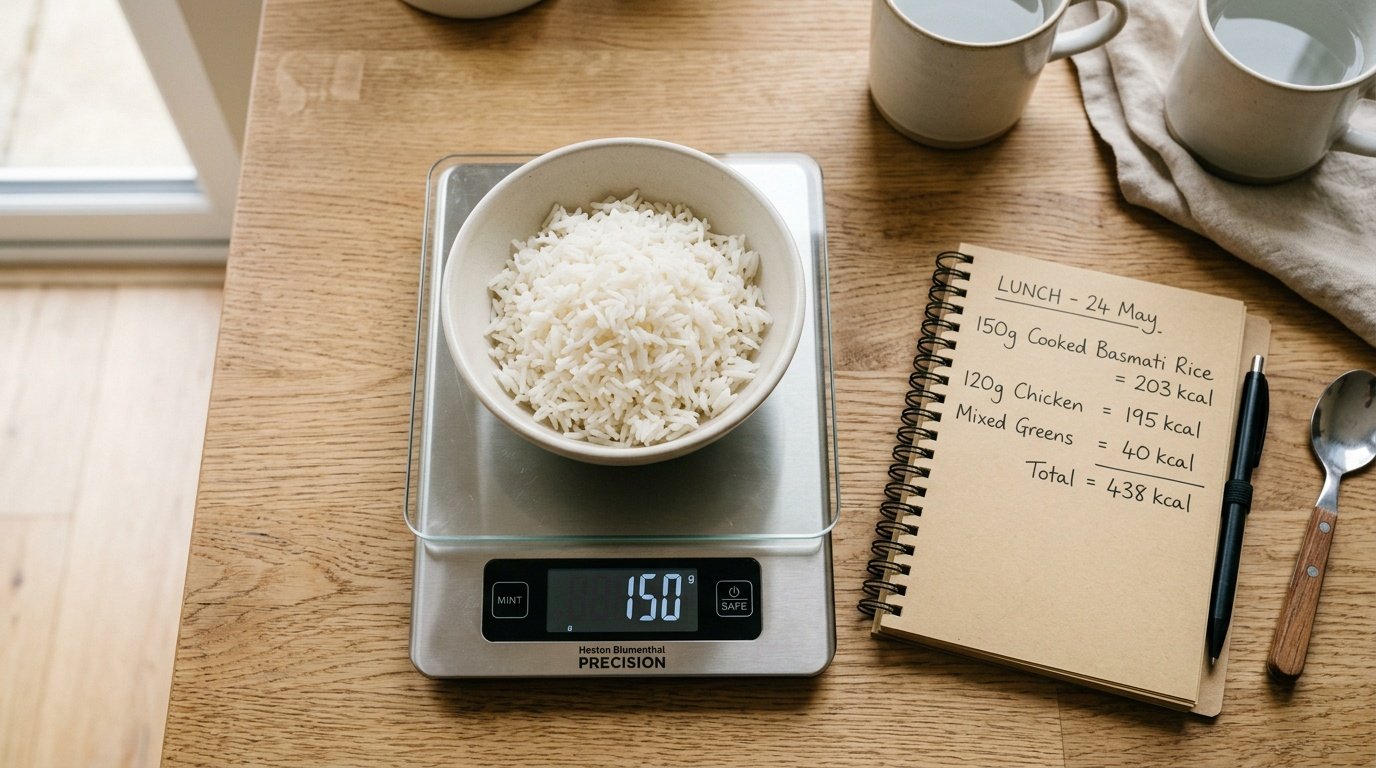
A cup of cooked medium-grain white rice runs about 242 calories, while the same serving of cooked medium-grain brown rice comes in around 218 calories, per Harvard Health Publishing's nutritional comparison cited above. Basmati typically lands somewhere in a similar 190 to 210 calorie range per cooked cup, depending on whether you're eating the white or brown variety and how it was cooked. None of these numbers are dramatically different from a cup of cooked quinoa, pasta, or oats. The calorie gap that actually swings your daily total is portion size, not which grain you picked.
Where the Actual Calorie Math Goes Wrong
Take a realistic scenario: someone eyeballs "a scoop" of basmati rice at a takeout counter and ends up with closer to two and a half cups instead of the one cup they meant to get. That single order alone can carry 500 to 600 calories of rice before protein, sauce, or anything else on the plate is factored in. That's not a basmati rice problem. That's a portion-estimation problem that would happen with literally any starchy side, and it's the actual mechanism behind most "carbs made me gain weight" stories, not something unique to this particular grain.
There's a second, quieter version of this same mistake that shows up specifically with basmati rice: because it's aromatic and genuinely more filling per spoonful than short-grain sticky rice, people sometimes assume they can eat a bigger volume of it without consequence, on the logic that "it's the healthier rice." Calories don't work that way. A cup of basmati at roughly 200 calories is still 400 calories at two cups, regardless of how virtuous the grain feels. The nutritional advantages basmati genuinely has, lower glycemic index, slightly fewer calories per cup than white rice, don't cancel out basic portion math, they just mean the same portion treats your blood sugar more gently along the way.
White Basmati vs. Brown Basmati: Which Fits a Weight Loss Goal
Once you've settled that basmati rice broadly isn't fattening, the more useful question becomes which version, white or brown, actually serves a weight management goal better. The answer depends on what you're optimizing for, and it's not as one-sided as "brown always wins" the way a lot of generic nutrition content implies.
The Fiber Difference That Actually Matters
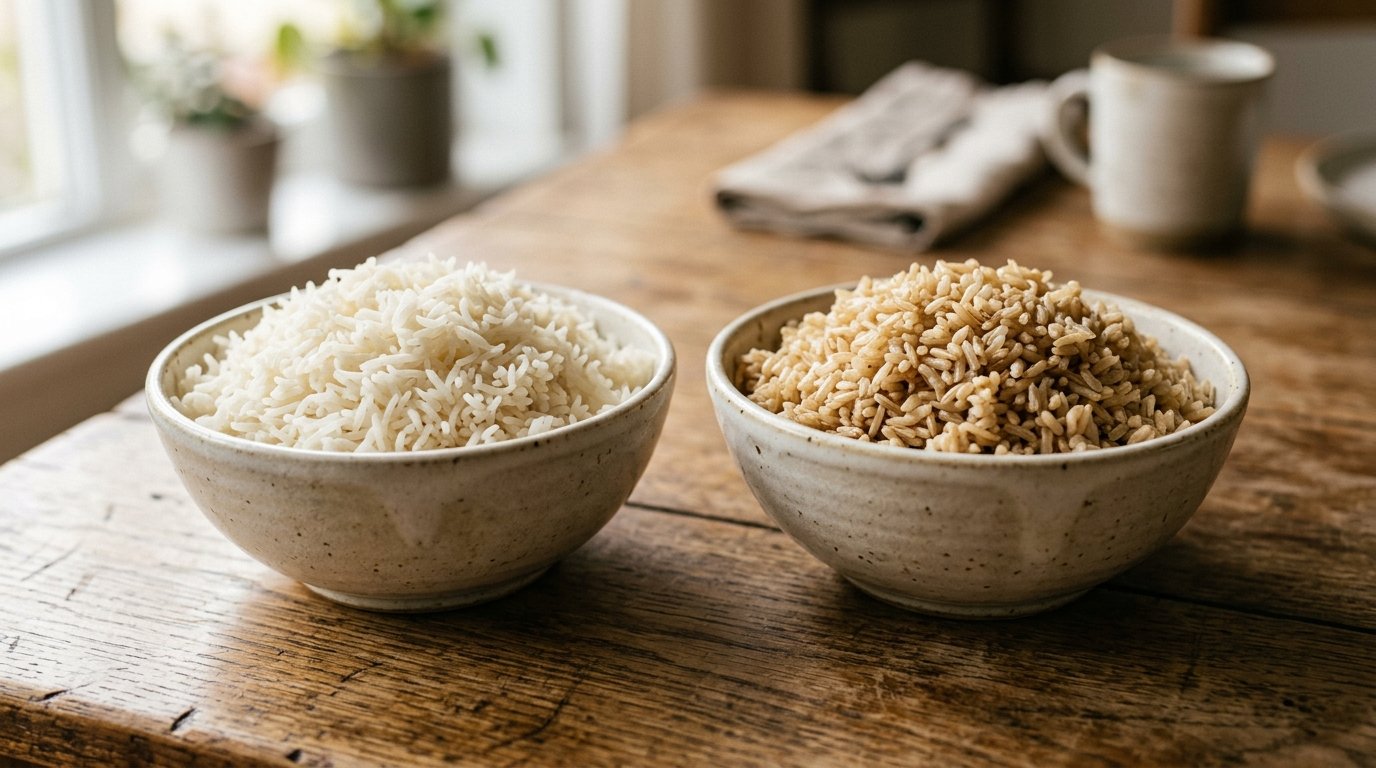
Brown basmati retains its bran and germ layer, which is where nearly all of the fiber lives. That fiber slows digestion further, which is part of why brown basmati typically tests at the lower end of the glycemic spectrum and tends to keep people full longer on the same portion size. The Academy of Nutrition and Dietetics notes that fiber slows digestion specifically because it helps people feel full for a longer stretch, and that foods higher in fiber tend to be lower in calorie density for the same volume of food, which is a genuinely useful mechanism if satiety on fewer calories is your goal.
When White Basmati Is the Smarter Pick Anyway
White basmati still has a real place, particularly for anyone dealing with a digestive flare-up where high fiber intake temporarily makes symptoms worse, or for someone who's active enough that faster-digesting carbohydrate around a workout window is actually the better tool for the job. It also, frankly, just tastes different to a lot of people, and a rice you'll actually eat consistently beats a technically-superior grain you abandon after two weeks because you don't enjoy it. Neither version needs to be eliminated. This is a "which tool for which situation" decision, not a hierarchy where one is always correct.
Portion and Pairing Rules That Decide Whether Rice Helps or Hurts
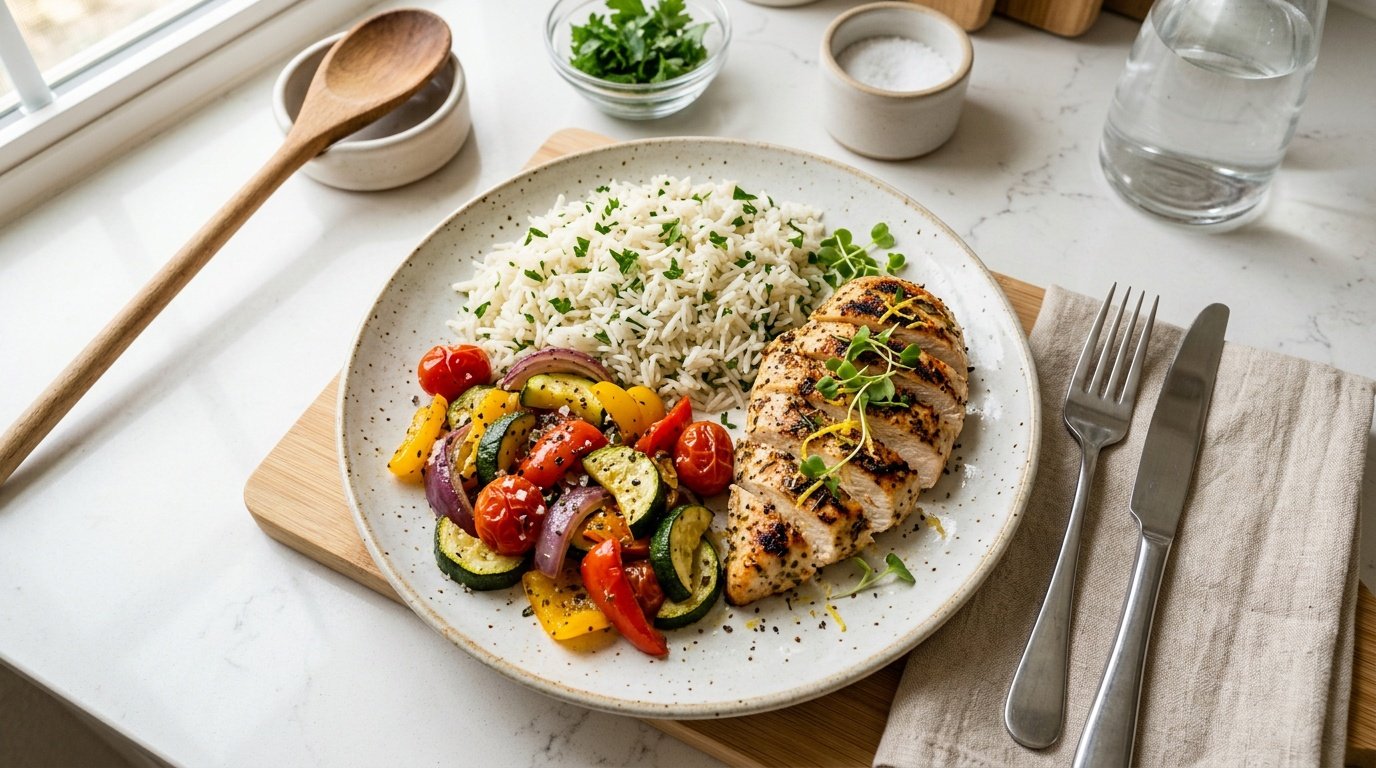
If you take one practical rule away from all of this, make it this one: what surrounds the rice on your plate changes its effect on your body more than the rice type does. Pairing rice with protein and fiber-rich vegetables slows gastric emptying, blunts the blood sugar spike, and extends fullness far longer than eating the same rice alone would.
How Much Is a Reasonable Serving
Most portion guidance settles around half a cup to one cup of cooked rice per meal as a starting point, measured rather than eyeballed for the first few weeks until you recalibrate what that actually looks like on a plate. The CDC's guidance on choosing healthy carbs frames a single carbohydrate serving as smaller than most people assume, roughly a quarter cup of a starchy food in some comparisons, which is a useful gut-check the next time you're scooping rice onto a plate without measuring.
What to Put Next to It on the Plate
A palm-sized portion of lean protein like chicken, fish, tofu, or eggs, plus a generous serving of non-starchy vegetables, turns rice from the main event into a supporting player. According to the American Diabetes Association's guidance on carbohydrates, pairing carbohydrate-containing foods with protein and healthy fat slows digestion and helps produce a steadier release of glucose into the bloodstream, rather than eating the carbohydrate source in isolation. If you're rebuilding your overall eating pattern rather than just this one meal, our guide to weight loss tips that actually work walks through the calorie deficit and protein-timing basics that this portion strategy builds on top of.
How You Cook Basmati Rice Changes Its Glycemic Impact
Here's the part most rice-and-weight-loss content skips entirely: preparation method changes the glycemic and calorie experience of basmati rice almost as much as the variety you choose.
Rinsing and the Resistant Starch Trick
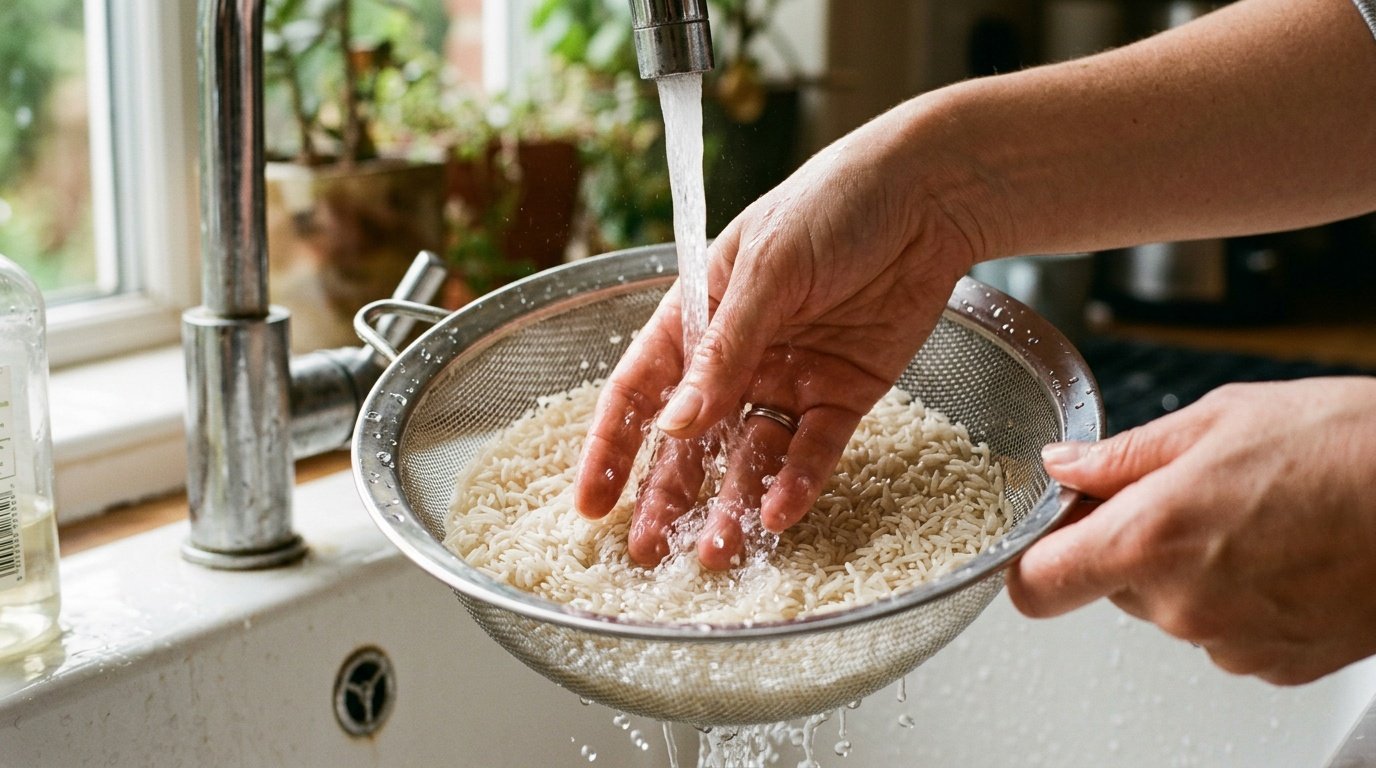
Rinsing basmati rice before cooking removes surface starch, producing separate, distinct grains instead of a sticky, clumped mass. That texture difference isn't just cosmetic. A heaping, clumped scoop reads visually as more food per spoonful than the same weight of fluffy, separated grains, which means a rinsed batch often results in a smaller self-selected portion without anyone consciously trying to eat less. Cooking rice, cooling it in the refrigerator for a few hours, and reheating it before eating also increases its resistant starch content, a change that behaves more like fiber in your gut and blunts the glycemic response compared to rice eaten immediately after cooking. It's a genuinely useful, low-effort trick if you're meal prepping basmati rice anyway.
A Simple Table of Rice Types Compared
| Rice Type | Calories (1 cup cooked) | Approx. Glycemic Index | Best Suited For |
|---|---|---|---|
| White Rice (medium-grain) | ~242 | 73 | Fast-digesting energy, digestive sensitivity |
| Brown Rice (medium-grain) | ~218 | 68 | General satiety, fiber intake |
| White Basmati Rice | ~205 | 50-58 | Steadier blood sugar without changing rice texture preferences |
| Parboiled Basmati Rice | ~195 | ~45 | Lowest measured glycemic impact in mixed-meal testing |
Source: Harvard Health Publishing, 2024; NIH/PMC continuous glucose monitor rice study (Chekima et al.), 2022
Health disclaimer: This article is for general education and isn't a substitute for personalized medical advice. If you have diabetes, prediabetes, or another condition affecting blood sugar, or if you're pregnant, breastfeeding, or under 18, talk with a doctor or registered dietitian before making meaningful changes to your carbohydrate intake or portion sizes.
None of this requires cutting rice out entirely, and it definitely doesn't require treating basmati rice as a food you have to earn through extra cardio. Sustainable results come from the boring, repeatable stuff: reasonable portions, a protein and vegetable pairing, and a preparation method you'll actually stick with, not a rulebook you white-knuckle for two weeks. If you're building out the rest of your routine around this same idea, our guide to sustainable weight loss habits that actually stick covers the habit-stacking approach that makes a portion strategy like this one easier to maintain past the first few weeks. And if you want the fuller picture across every rice variety, not just basmati, our broader breakdown of rice and weight loss is a useful next stop. So, back to the original question: is basmati rice fattening? The technical answer is no, not on its own. It's a moderate-to-low glycemic index carbohydrate with a calorie profile close to most other rice varieties, and the actual variable that determines whether it helps or hurts your goals is portion size, what's on the plate next to it, and how consistently you can stick with the pattern.
Frequently Asked Questions
Is basmati rice fattening?
No. Basmati rice isn't unusually calorie-dense compared to other rice varieties or starches, and its lower glycemic index compared to standard white rice means it produces a gentler blood sugar response. Weight outcomes come down to total portion size and overall calorie balance, not the presence of basmati rice on the plate.
Is basmati rice better than white rice for weight loss?
Basmati rice tends to have a lower glycemic index than standard short or medium-grain white rice because of its higher amylose content, which can support steadier blood sugar and longer-lasting fullness. It isn't dramatically lower in calories, though, so portion size still matters more than the choice of variety alone.
How much basmati rice can I eat per day without gaining weight?
There's no universal number, since it depends on your total daily calorie needs and activity level. A reasonable starting portion is roughly half a cup to one cup of cooked basmati rice per meal, paired with protein and vegetables, adjusted based on your overall calorie balance for the day.
Is brown basmati rice better than white basmati rice for weight loss?
Brown basmati carries more fiber, which tends to increase fullness and slightly lower its glycemic index compared to white basmati. White basmati still fits a weight loss plan with attention to portion size, and may be a better short-term choice during a digestive flare-up when high fiber intake is harder to tolerate.
Does the glycemic index of basmati rice matter if I'm not diabetic?
Yes, though the stakes are lower without diabetes. A lower glycemic index food tends to produce steadier energy and fewer hunger spikes a couple hours after eating, which can indirectly support portion control and reduce snacking, even for someone without a blood sugar condition to manage.
What's the healthiest way to cook basmati rice for weight management?
Rinsing the rice before cooking produces separated grains that tend to result in smaller self-selected portions, and cooking, cooling, then reheating the rice increases its resistant starch content, which behaves more like fiber and slightly blunts its glycemic impact compared to rice eaten immediately after cooking.
References
- Harvard Health Publishing — Brown rice versus white rice: A head-to-head comparison, 2024
- National Institutes of Health, PubMed Central (Chekima et al., published in Foods) — Use of a Continuous Glucose Monitor to Determine the Glycaemic Index of Rice-Based Mixed Meals, 2022
- Centers for Disease Control and Prevention — Choosing Healthy Carbs
- Academy of Nutrition and Dietetics — Dietary Fiber
- American Diabetes Association — Understanding Carbs