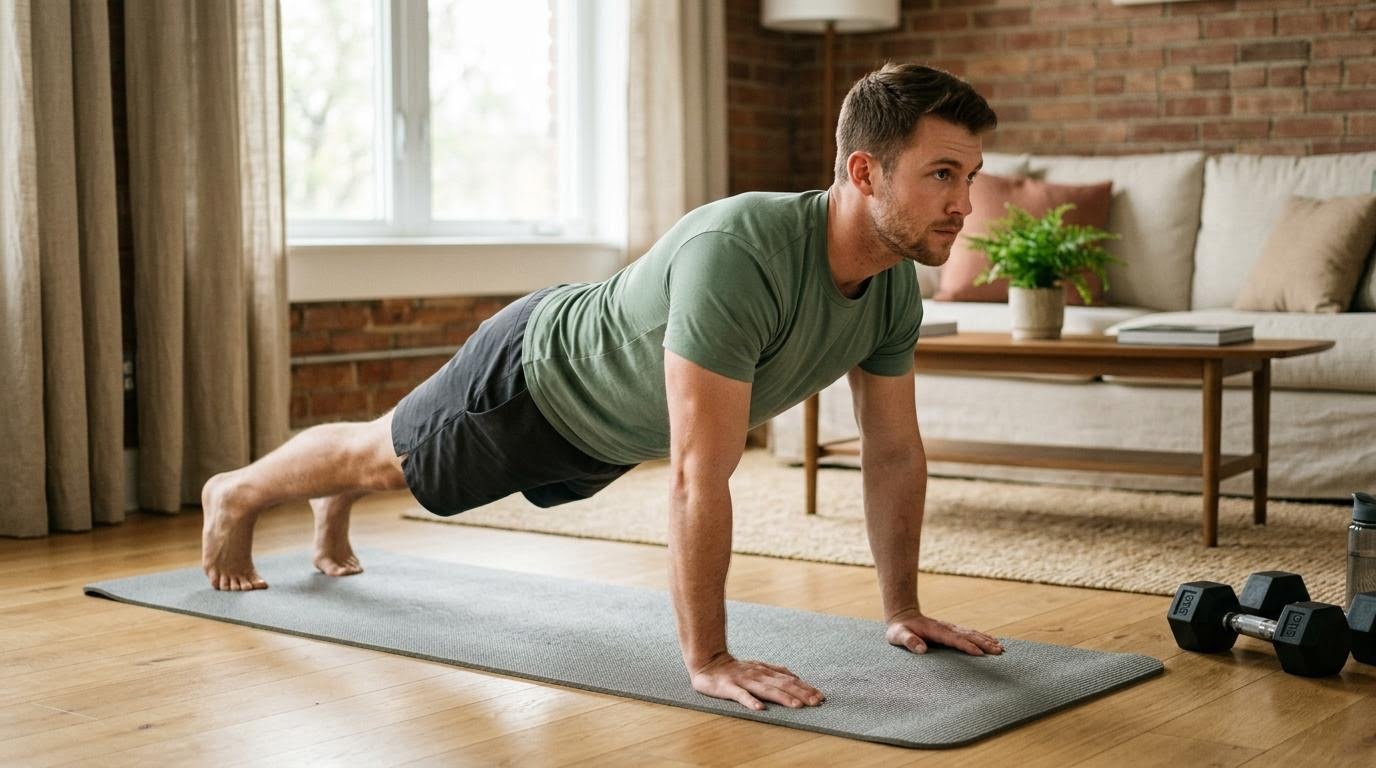


Two-fifteen in the afternoon has a way of finding you slumped over your desk, scrolling the same three apps for the fourth time, wondering how you're supposed to survive another four hours awake. Reaching for a third coffee feels like the only move left. There's a faster fix sitting in whatever floor space you've got at home: fifteen minutes of movement.
These cardio workouts at home aren't built around burning the most calories or training for a race. They're built around one specific outcome, getting your blood moving enough that the mid-afternoon crash never fully lands. No equipment, no gym membership, no video buffering while someone tries to sell you a supplement first. Five moves, one small patch of floor, and a reason behind each one that goes beyond "it's good for you."
This guide walks through the exact circuit, the research on why lower-intensity cardio can wake you up faster than an all-out sprint session, when to actually do it for the energy to stick, and the mistakes that quietly turn an energizing routine into one more thing draining you by evening.
Why a Quick Cardio Session Beats Your Second Cup of Coffee for Real Energy

Caffeine borrows energy you don't currently have and hands you a bill later. Movement works differently. Think of your energy level less like a cup that empties and more like a rechargeable battery: sitting still all day is like leaving the battery unplugged, while short bursts of activity are what actually top it back up.
The Battery Analogy Behind Your Afternoon Slump
Muscle cells that go unused lose mitochondria, the structures that produce usable energy, and that decline starts faster than most people expect. A Harvard Health Publishing review of exercise and energy notes that a sedentary person experiences more fatigue during a physically demanding task than an active person doing the identical task, along with a higher heart rate and lower oxygen consumption while doing it. Inactivity doesn't just fail to help your energy, it actively works against it.
What 15 Minutes Actually Changes In Your Body
You don't need a long session to interrupt that pattern. The CDC's current physical activity guidelines for adults set the weekly aerobic target at 150 minutes of moderate-intensity movement, and explicitly note it doesn't have to happen in one block. A student cramming for finals who trades a mid-afternoon nap attempt for one round of this circuit tends to report feeling more alert twenty minutes later than the version of themselves who napped instead, and the physiology backs that up: short bouts of movement increase blood flow and oxygen delivery almost immediately, well before any long-term fitness adaptation has had time to build.
The 5-Move No-Equipment Cardio Workouts at Home Circuit for an Energy Boost

Five moves, 40 seconds of work, 20 seconds of rest, two rounds. That lands you right around 15 minutes including a short warm-up walk in place before you start. No dumbbells, no bands, no jump rope, just your own bodyweight and roughly six feet of floor.
The Circuit, Move by Move
- Standing March With Overhead Reach. Lift your knees to hip height, alternating sides, reaching the opposite arm overhead on each lift. This is your warm-up and your fallback move any time later in the circuit feels like too much, too fast.
- Lateral Shuffle Taps. Step to the side, tap your other foot in, then reverse direction. Keep your knees soft and your steps small. This wakes up muscles a straight-ahead march never touches, without any jumping.
- Standing Torso Twist With Arm Drive. Feet planted, rotate your torso side to side while driving your bent arms with the twist, like a slow-motion running arm swing. This adds a mobility element on top of the cardio pulse.
- Heel Digs With Arm Pump. Alternate tapping one heel forward while pumping your arms, like a seated cardio move done standing. Small, quick, and surprisingly effective at raising your heart rate without any impact.
- Step-Back Lunges With Reach. Step one foot back into a lunge, then return to standing and reach both arms overhead. This pulls blood into your legs and glutes, the muscle groups that tend to stay dormant during a desk-bound morning.
Run all five, rest 20 seconds between moves, repeat the full sequence once more, and you're done. If your phone timer supports repeating intervals, set it once and don't overthink the transitions, a few seconds of imperfect footwork between moves changes nothing about the outcome.
How to Scale Every Move to Your Space, Joints, and Current Fitness Level
Nobody's first attempt at this circuit should look identical to their thirtieth. Here's exactly how to adjust it, rather than skip a move entirely.
If your joints are the concern: Every move here already keeps at least one foot on the floor, so there's no impact version to avoid. If a lateral shuffle bothers your knees, shrink the step width until it feels neutral, the cardio pulse comes from the tempo, not the distance covered.
If you're working with a small apartment or a shared space: The step-back lunge and lateral shuffle are the only two moves that need real lateral room, roughly three feet each direction. Swap them for a stationary version, alternating heel raises for the shuffle and a reverse-lunge-in-place with no travel, if your floor space is genuinely tight.
If you're starting from very little recent activity: Do one round instead of two for your first week, and slow the tempo of each move rather than skipping repetitions. Seven minutes of clean, controlled movement produces more of the alertness effect than fifteen minutes where your form falls apart by move four.
Why Low-Impact Cardio Might Wake You Up Faster Than a Sprint Session

Here's the part most cardio content skips entirely, and it runs against the instinct that harder always means better: for the specific goal of feeling sharper right afterward, an easy-to-moderate pace can outperform an all-out effort.
What the 2025 Research on Exercise Intensity and Alertness Found
A 2025 study published in Frontiers in Physiology and archived on PubMed Central compared low-intensity aerobic exercise against moderate-intensity aerobic exercise and simple stretching, then measured reaction time and brain activation on a cognitive task immediately after. The low-intensity group posted faster reaction times than both the moderate-intensity and stretching groups. The researchers' working explanation is that staying below a certain exertion threshold avoids a buildup of adenosine, a compound linked to central nervous system fatigue, that harder efforts tend to trigger. In plain terms, sprinting yourself into breathlessness can leave your brain more tired, not less, in the twenty minutes right after you finish.
When to Reach for Higher Intensity Instead
None of this means intensity is the enemy. If your goal that day is a hard training stimulus, a longer-term fitness gain, or simply a workout you find more satisfying at higher effort, go harder. But if the specific goal is walking away from the circuit feeling more awake for the next few hours, not just more tired in a virtuous way, dial the effort down to a pace where you could still hold a conversation in short sentences. That's the zone this circuit is built for.
Timing These Cardio Workouts at Home So the Energy Actually Lasts

When you do this matters almost as much as how you do it. A morning session tends to carry its energy benefit through the hours you actually need it, while a late-evening one risks working against the wind-down your body wants before bed.
Finding Your Moderate-Intensity Zone
You don't need a heart rate monitor to gauge this. The American Heart Association's target heart rate guidance places moderate-intensity exercise at roughly 50 to 70 percent of your estimated maximum heart rate, with maximum estimated as 220 minus your age. For most people in their late teens and twenties, that lands somewhere around 100 to 145 beats per minute during the working intervals, comfortably within the zone the research above associates with feeling more alert rather than more drained.
| Effort Level | Talk Test | % of Max Heart Rate | Best For |
|---|---|---|---|
| Light | Full conversation, easy | Under 50% | Warm-up march, rest intervals |
| Moderate | Talk in short sentences | 50-70% | This circuit's target zone for lasting energy |
| Vigorous | A few words at most | 70-85% | Fitness gains, not immediate alertness |
Source: American Heart Association, 2024
Not sure whether morning or evening training suits your schedule better in general, beyond this specific energy circuit? A deeper breakdown of how the time of day you train affects performance and consistency covers the fuller picture.
Common Mistakes That Turn an Energizing Workout Into an Exhausting One

A handful of patterns quietly undo the entire point of this circuit, and most people don't notice they're doing them.
Treating "energizing" as permission to go all-out. The instinct is to push harder because harder feels more productive. Based on the intensity research above, that instinct works against the specific goal here. Save the vigorous effort for a session where fitness gains, not immediate alertness, is the point.
Skipping the rest intervals because they feel like wasted time. They're not. Twenty seconds of rest is what keeps your form clean on the next move instead of degrading into sloppy movement that raises your heart rate less efficiently and increases strain risk for no real benefit.
Doing this circuit right before bed. The same mechanism that makes it energizing in the morning, a raised heart rate and faster circulation, can make falling asleep harder if you do it within an hour or two of lights out.
Treating it as your only movement of the entire day. This circuit is a energy tool, not a complete fitness plan. The Mayo Clinic's overview of regular physical activity lists better sleep and mood alongside the more commonly cited benefits, and those effects compound with consistency across the week, not from one circuit in isolation. Pairing it on alternate mornings with something like a short at-home core routine rounds out a week that's doing more than just this one thing.
Comparing your week one to someone else's month three. The people posting sweaty, high-intensity content online have usually built up to that over months. Your only useful comparison is your own session from two weeks ago.
Health disclaimer: If you have a diagnosed heart condition, are pregnant, have a joint injury, or haven't exercised in an extended period, talk with a doctor before starting this or any new exercise routine. Stop immediately and seek medical attention if you feel chest pain, dizziness, or sharp joint pain during exercise.
Building a Sustainable Weekly Energy Routine With This Circuit
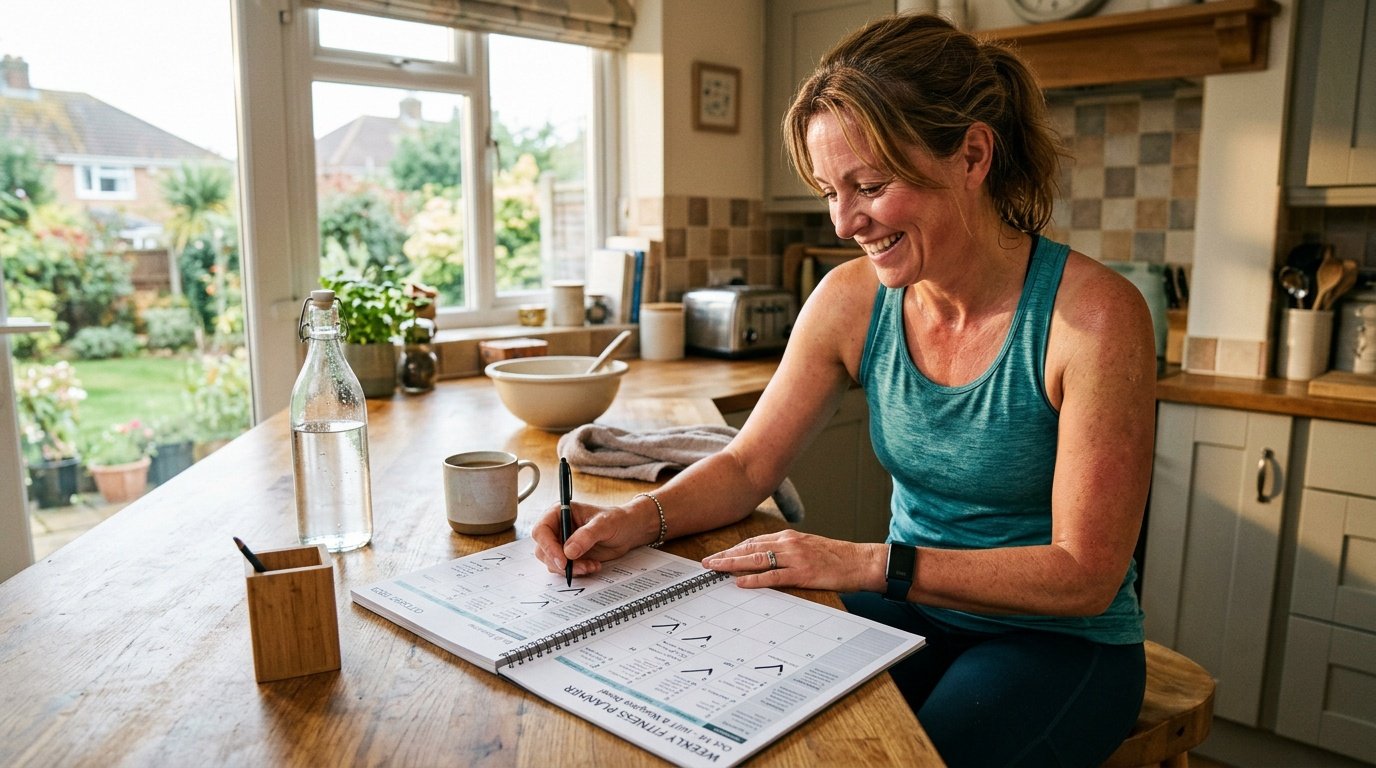
Consistency is what actually produces a reliable energy effect, not any single standout session.
Your Realistic First Two Weeks
Start with one round, three to four mornings a week, roughly seven minutes of work. That's enough to notice the alertness effect without risking the soreness that makes day three feel like a chore. If a session feels genuinely easy by day five, that's a sign of adaptation, not a reason to immediately double the volume.
Signs It's Time to Add a Second Round
Once you finish one round and feel like you could comfortably do a second, or you notice the mid-afternoon slump arriving later than it used to on workout days, move to the full two-round, 15-minute version four to five mornings a week. That's the point where most people settle into a routine that holds up long-term rather than fading out after a strong first two weeks.
Pairing This With the Rest of Your Week
This circuit works as a standalone energy tool, but it also slots naturally into a fuller weekly pattern without demanding you rebuild your whole schedule around it. Doing it on your three or four busiest mornings and swapping in a longer walk or a strength session on the days you have more time keeps the CDC's broader weekly activity target within easy reach, while this circuit specifically covers the mornings where fifteen minutes is genuinely all you have. Neither piece has to carry the whole week on its own, and trying to make it do so is usually what causes people to abandon a routine by the one-month mark rather than adjust it.
Want to see how a low-intensity approach applies more broadly, not just to a single circuit? This short segment from Mayo Clinic's Human Optimization Project talks through exercise as a practical, everyday habit rather than an all-or-nothing pursuit.
Fifteen minutes, five moves, zero equipment, and a reason for every part of it that goes beyond a vague promise of "more energy." That's the whole system behind these cardio workouts at home: the science says the easier version, done consistently and at the right time of day, beats the harder version done sporadically. Try it tomorrow morning before you reach for that second cup.
Frequently Asked Questions
How long should a beginner do cardio workouts at home before feeling more energetic?
Most people notice a same-day alertness effect after a single 10 to 15 minute session, since the boost comes from immediate blood flow and oxygen delivery rather than long-term fitness adaptation. A lasting, reliable pattern of higher daily energy typically takes two to three weeks of consistent sessions to establish.
Do I need equipment for cardio workouts at home to boost energy?
No. Every move in this circuit uses only your bodyweight and roughly six feet of floor space. A phone timer is the only tool that genuinely helps, and even that's optional if you're comfortable counting in your head.
Is low-impact cardio as effective as high-intensity cardio for energy?
For the specific goal of feeling more alert immediately afterward, research suggests low-to-moderate intensity may actually work better than an all-out effort, since it raises circulation without triggering the central fatigue that harder sessions can produce. High-intensity cardio still has its place for fitness and calorie goals, just not necessarily this one.
What time of day is best for an energizing morning workout?
Morning generally carries the energy benefit through the hours you need it most, while a session too close to bedtime can make falling asleep harder due to the same raised heart rate that makes it energizing. If mornings genuinely don't fit your schedule, an early afternoon session before the typical slump window still works nearly as well.
Can cardio workouts at home replace my morning coffee?
They work through a different mechanism, movement increases blood flow and oxygen delivery rather than blocking the adenosine receptors caffeine targets, so many people find the two complement each other rather than directly substitute. If your goal is reducing caffeine dependence specifically, a consistent morning circuit is a reasonable place to start.
How often should I do this cardio circuit for a lasting energy boost?
Three to four mornings a week is enough to notice a consistent pattern, with the CDC's broader weekly activity guidelines supporting five or more days of moderate movement for overall health benefits beyond just energy. Building up gradually from three sessions avoids the early burnout that derails most new routines by week three.
References
- Harvard Health Publishing — Does Exercise Give You Energy?, 2025
- Centers for Disease Control and Prevention — Adult Activity: An Overview
- PubMed Central (National Institutes of Health) — Acute Effect of Low-Intensity Aerobic Exercise on Eliciting Enhanced Parietal Activation and Promoting Executive Function Performance More Than Moderate-Intensity Exercise, 2025
- American Heart Association — Target Heart Rates Chart
- Mayo Clinic — Exercise: 7 Benefits of Regular Physical Activity, 2023