


You've done crunches, planked longer than your core wanted to, and still catch yourself sucking in for photos. Ab exercises were never going to fix this, and neither was "eating clean" for exactly nine days before giving up. What actually moves the needle is duller and more repeatable: aerobic exercise for belly fat works because it changes your whole-body energy balance, and your midsection happens to be one of the first places that shows it.
This isn't a 30-day flat-stomach promise. It's the real mechanism behind why cardio reduces belly fat, how much of it you actually need each week, which intensity level does what, and a routine built around a schedule you can survive past week three.

Why Aerobic Exercise For Belly Fat Works Differently Than You Think
You've probably heard that ab exercises burn belly fat directly. They don't. A stronger core is a genuinely good outcome, but the fat sitting on top of those muscles responds to a separate system entirely: total energy balance, not local muscle activity. Aerobic exercise for belly fat works by creating that energy deficit, mobilizing stored fat from across your body, including your midsection, for fuel.
Here's the part that surprises people. Mayo Clinic is direct about this: your body decides where fat comes off first, based largely on genetics and hormones, and you can't choose that location through targeted exercise. According to Mayo Clinic's guidance on belly fat, you can't precisely target where you lose weight, but reducing overall body fat through aerobic activity still lowers the fat around your waist, because that fat behaves differently than fat stored elsewhere.
That difference matters more than most explanations give it credit for. Belly fat isn't one thing. There's subcutaneous fat, the layer you can pinch, and visceral fat, which sits deeper and wraps around your organs. Cleveland Clinic explains that visceral fat drives most of the health risk tied to a larger waistline, and it also happens to be more metabolically active than fat stored on your arms or thighs, which means it tends to respond to aerobic activity earlier and more visibly. That's the non-obvious part: belly fat, specifically the visceral kind, is often one of the first places aerobic exercise shows up, not the last, even though it feels like the hardest area to change.
None of this means a flat stomach is guaranteed by any specific number of workouts. Genetics, hormones, age, and sleep quality all influence how fast this shows up and how far it goes. What's consistent across the research is direction, not speed: sustained aerobic activity reliably moves visceral fat down, even when total body weight barely shifts on the scale.
Take a realistic comparison: two people start the same 12-week aerobic routine, both lose roughly the same eight pounds on the scale. One barely trained before, carried more visceral fat to start, and sees a noticeably smaller waist by week eight. The other started leaner, with proportionally less visceral fat and more subcutaneous fat, and their waistband loosens more slowly even though the scale number matches exactly. Same routine, same weight lost, different visible timeline, because the starting mix of fat types wasn't the same. That's not a reason to compare your progress to someone else's; it's a reason to stop using the scale as the only signal that the routine is working.
How Much Aerobic Exercise For Belly Fat Actually Moves the Needle
Volume is where most people either underdo it or wildly overdo it in the first two weeks. The CDC's physical activity guidelines for adults set the baseline at 150 minutes a week of moderate-intensity aerobic activity, or 75 minutes if you're working at a vigorous pace instead. That's the floor for general health, and it's genuinely enough to start shrinking waist circumference over a few months of consistency.
If your specific goal is visible belly fat reduction rather than just general health, the bar sits higher. A 2026 statement from the American Heart Association links 200 to 300 minutes of moderate-intensity activity a week to meaningfully better outcomes for active weight management, not just maintenance. That's roughly 30 to 45 minutes most days, which sounds like a lot until you remember it doesn't need to happen in one continuous block. The CDC guidance explicitly allows it to be split into shorter sessions spread across the day.
| Intensity Level | What It Looks Like | Weekly Target | Source |
|---|---|---|---|
| Moderate | Brisk walking, cycling, swimming; can talk but not sing | 150 min/week minimum | CDC |
| Vigorous | Running, HIIT circuits, fast-paced cycling | 75 min/week minimum | CDC |
| Active fat-loss range | A mix of moderate and vigorous sessions | 200-300 min/week | American Heart Association |
Source: CDC, 2025; American Heart Association, 2026.
If 300 minutes feels unreachable from zero, it isn't meant to be a starting line. Build toward it over four to six weeks. For a full breakdown of how to split that time across strength and cardio, this fat loss exercise routine walks through a sample four-day week you can adapt directly.
The 150-minute floor also breaks down more flexibly than most people assume. Five 30-minute walks work. So does a 20-minute walk before work and a 10-minute walk after dinner, five days a week, which lands at the exact same weekly total without ever asking for a single continuous block. If your schedule genuinely doesn't have a 30-to-45-minute window most days, stacking two or three shorter sessions gets you to the same weekly minutes and the same visceral fat outcome, since the research behind these guidelines measures total weekly volume, not session length.

Which Aerobic Intensity Actually Reduces Belly Fat Faster
People love asking whether HIIT beats steady-state cardio for belly fat specifically, and the honest answer is that both work, through slightly different mechanisms, and the meaningful difference is smaller than fitness content usually suggests.
A 2017 systematic review and meta-analysis published in Diabetes & Metabolism and indexed on PubMed examined 24 randomized trials involving 1,383 participants with type 2 diabetes and found that aerobic exercise specifically reduced visceral fat, while resistance training alone did not show the same effect in that population. That's a specific population, not a universal rule, but the mechanism it points to, aerobic activity mobilizing visceral fat through calorie expenditure and improved insulin sensitivity, applies more broadly than the study group alone.
Where HIIT pulls ahead is time efficiency: shorter sessions, a bigger post-exercise calorie burn, useful if your week is genuinely short on minutes. Where steady-state cardio pulls ahead is adherence. It's easier to sustain at higher weekly volume, and higher weekly volume is what actually drives visceral fat loss over months, not which specific workout style delivered it.
I know what you're thinking: shouldn't you just do the "better" one? The honest, slightly less exciting answer is that a mix of both, built around whichever style you'll actually complete most weeks, outperforms either one done perfectly for two weeks and then abandoned.
Here's a scenario that plays out constantly. Someone commits to daily 45-minute HIIT sessions in January, feels incredible for ten days, then misses three sessions in a row once soreness and schedule conflicts pile up. Meanwhile, someone else commits to four 30-minute brisk walks and one 25-minute interval session a week, a lower peak intensity but a schedule that survives a bad week. By week eight, the second person has logged far more total minutes and, with it, more consistent visceral fat reduction, not because their individual workouts were harder, but because they actually happened.

A Realistic Weekly Aerobic Routine For Belly Fat You Can Actually Finish
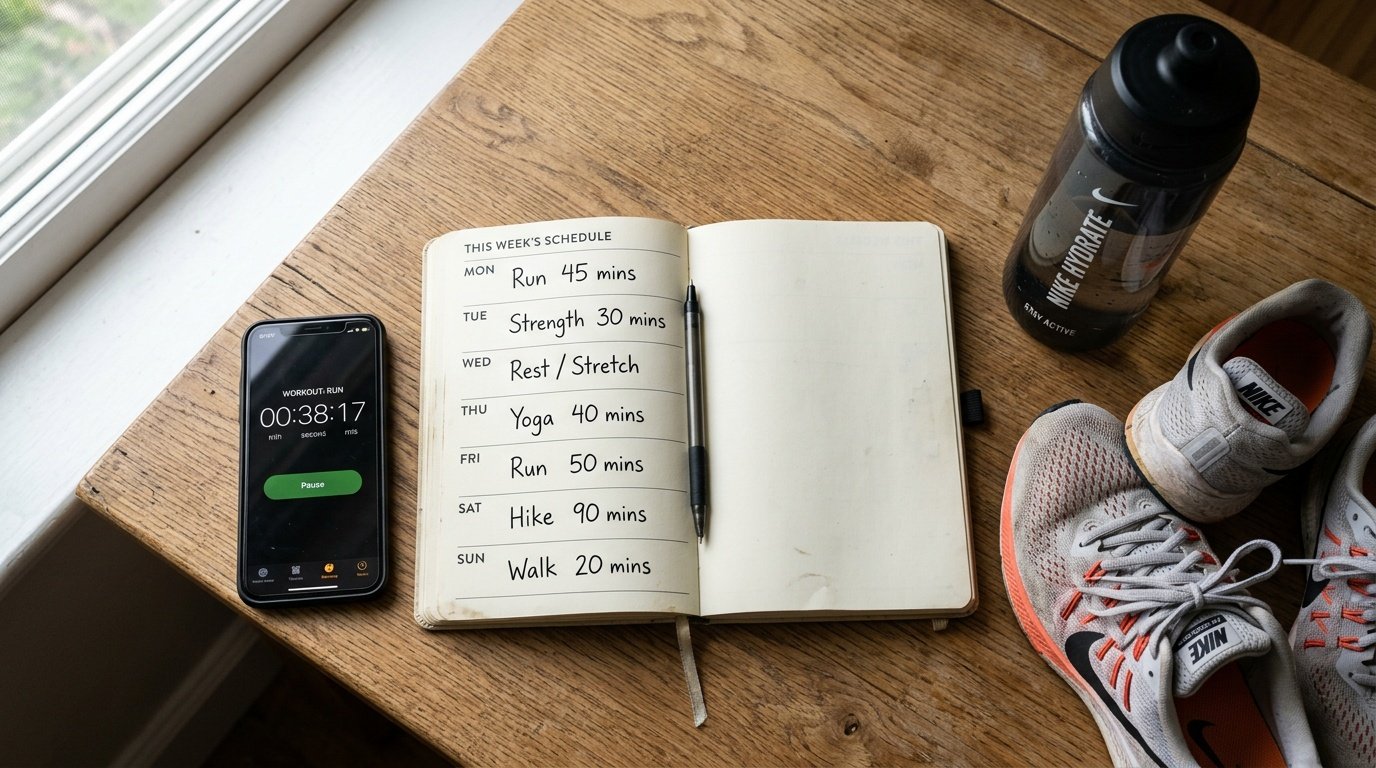
Here's a five-day structure that lands inside the 200-to-300-minute active range without requiring a gym membership or two hours a day.
Monday — Moderate steady-state (40 minutes). Brisk walk, easy jog, or a stationary bike session at a pace where you can talk in short sentences.
Tuesday — Interval-style cardio (25 minutes). Alternate one minute of hard effort with two minutes of easy recovery, repeated seven to eight times. Shorter time, comparable total impact.
Wednesday — Rest or light movement (20 minutes). A walk, easy swim, or stretching. Recovery days aren't wasted days, they're when your body actually adapts.
Thursday — Moderate steady-state (40 minutes). Repeat Monday's format, or swap in cycling or swimming for variety.
Friday — Interval-style cardio (25 minutes). Same structure as Tuesday, slightly higher effort if last week felt manageable.
Weekend — One longer, easier session (45–60 minutes). A hike, a longer bike ride, a recreational sport. This is the flexible day; move it to whichever weekend day actually fits.
That's five structured sessions totaling roughly 195 to 235 minutes, comfortably inside the active fat-loss range once you count the weekend session. If your week is shorter on time, this 15-minute no-equipment cardio routine covers an interval-day format like Tuesday and Friday above and fits into a morning before work.
Health disclaimer: This guide is general education, not personalized medical advice. If you're pregnant, breastfeeding, under 18, managing a chronic condition like diabetes or heart disease, or new to structured exercise after a long inactive period, talk with a doctor before starting a new aerobic routine, especially higher-intensity interval work.
Watch a Mayo Clinic cardiologist explain the actual mechanics behind losing belly fat, including why exercise type matters less than consistency:

Why Diet Still Decides Whether Your Belly Fat Comes Off
None of this cardio math works if your eating pattern quietly cancels it out. A single 45-minute moderate session might burn 300 to 400 calories. A drive-through combo meal or a couple of sugary drinks can erase that in less time than it took to earn it. That's not a reason to skip refueling after a workout, recovery nutrition matters, it's a reason to be honest about the actual math instead of treating cardio as a blank check for anything you eat afterward.
Aerobic exercise is one lever on a bigger equation, not the whole machine. For most people, a moderate calorie deficit combined with consistent cardio outperforms either one alone, and it outperforms extreme versions of either one by a wide margin. If your current eating pattern already runs a steep deficit, that's often the first thing to adjust before adding more cardio minutes, since an underfueled body struggles to complete hard sessions consistently, and consistency is what actually drives the visceral fat reduction covered above.
Protein intake matters here too, more than most cardio-focused guides mention. Adequate protein helps preserve the lean muscle tissue that keeps your resting metabolism from slipping while you're in a deficit, which means the same weekly aerobic routine ends up doing more of its job over months rather than fighting a slowly shrinking metabolic baseline. None of this requires precision tracking down to the gram. Roughly a palm-sized portion of protein at most meals, alongside your aerobic schedule, covers most of the benefit without turning eating into a second job.

Mistakes That Quietly Cancel Out Your Aerobic Exercise For Belly Fat Progress
A few patterns show up constantly in people who are training consistently and still not seeing the change they expect.
Doing the same session at the same pace every time. Your cardiovascular system adapts to a fixed stimulus within a few weeks. Calorie burn from an unchanged routine quietly drops as your fitness improves, even though the workout still feels just as hard.
Skipping strength work entirely. Cardio-only routines still work for fat loss, but pairing aerobic sessions with two weekly strength sessions protects the muscle tissue that keeps your metabolism from slowing as you lose weight, an effect diet or cardio alone can't fully replicate.
Judging progress by the scale alone. Water retention, hormonal shifts, and sodium intake can mask visceral fat loss for a week or two even when your routine is working exactly as intended. A tape measure around your waist, checked monthly, is a more honest progress marker than a daily scale number.
Chasing intensity while ignoring total weekly volume. A single brutal HIIT session gets more attention than five moderate 30-minute walks, but the walks usually win on total weekly calorie expenditure and are far easier to repeat without burning out.
Under-recovering. Training hard every single day without a rest day raises injury risk and can blunt the exact adaptations you're training for. Three to five sessions with at least one full rest day beats seven inconsistent ones.
None of this requires a perfect week. A realistic aerobic exercise for belly fat routine you return to after a bad stretch outperforms a flawless one you abandon by week four.
Frequently Asked Questions
Does aerobic exercise actually burn belly fat, or just calories overall?
Aerobic exercise burns calories overall, and a large share of that comes from stored fat, including the fat around your midsection. It doesn't burn fat from one specific spot on demand, but research indexed on PubMed found aerobic exercise specifically reduced visceral fat, the deep abdominal fat linked to the most health risk, more consistently than resistance training alone.
How much aerobic exercise for belly fat do you need each week to see a difference?
The CDC's baseline is 150 minutes a week of moderate-intensity aerobic activity, enough to start shrinking waist circumference over a few months. For a faster, more visible change, aim closer to 200 to 300 minutes a week, the range the American Heart Association associates with active weight management rather than just general health maintenance.
Which type of aerobic exercise is best for reducing belly fat: walking, running, or HIIT?
No single mode wins outright. HIIT produces a bigger post-workout calorie burn per minute, moderate steady-state cardio like brisk walking is easier to sustain at high weekly volume, and both reduce visceral fat when done consistently. The best one is whichever you'll actually do four or five times a week without dreading it.
Can you target belly fat specifically with cardio, or is spot reduction a myth?
Spot reduction is a myth. Mayo Clinic is explicit that you can't choose which part of your body loses fat first through exercise alone; your body decides that based on genetics and hormones. Aerobic exercise reduces total body fat, and belly fat, which tends to be more metabolically responsive than fat elsewhere, often shows change early even without being targeted directly.
How soon will aerobic exercise start to reduce belly fat?
Most people notice their waistband loosening before the scale reflects much change, often within four to six weeks of consistent aerobic exercise. Visible reduction in belly fat specifically tends to take eight to twelve weeks of sustained weekly volume, since visceral fat responds to a cumulative calorie deficit rather than any single workout.
Is it safe to do aerobic exercise every day to lose belly fat faster?
Daily moderate-intensity aerobic activity, like brisk walking, is safe for most healthy adults and is explicitly supported by CDC guidance. Daily high-intensity sessions are a different story; they raise injury and burnout risk without producing meaningfully faster belly fat loss than four or five well-recovered sessions a week.
References
- CDC — Adding Physical Activity as an Adult, 2025
- Mayo Clinic — Belly Fat in Men: Why Weight Loss Matters
- Cleveland Clinic — Tips for Losing Belly Fat, 2024
- American Heart Association — Move More for Your Health, Not Just for the Scale, 2026
- PubMed (NIH) — Exercise and Ectopic Fat in Type 2 Diabetes: A Systematic Review and Meta-Analysis, 2017