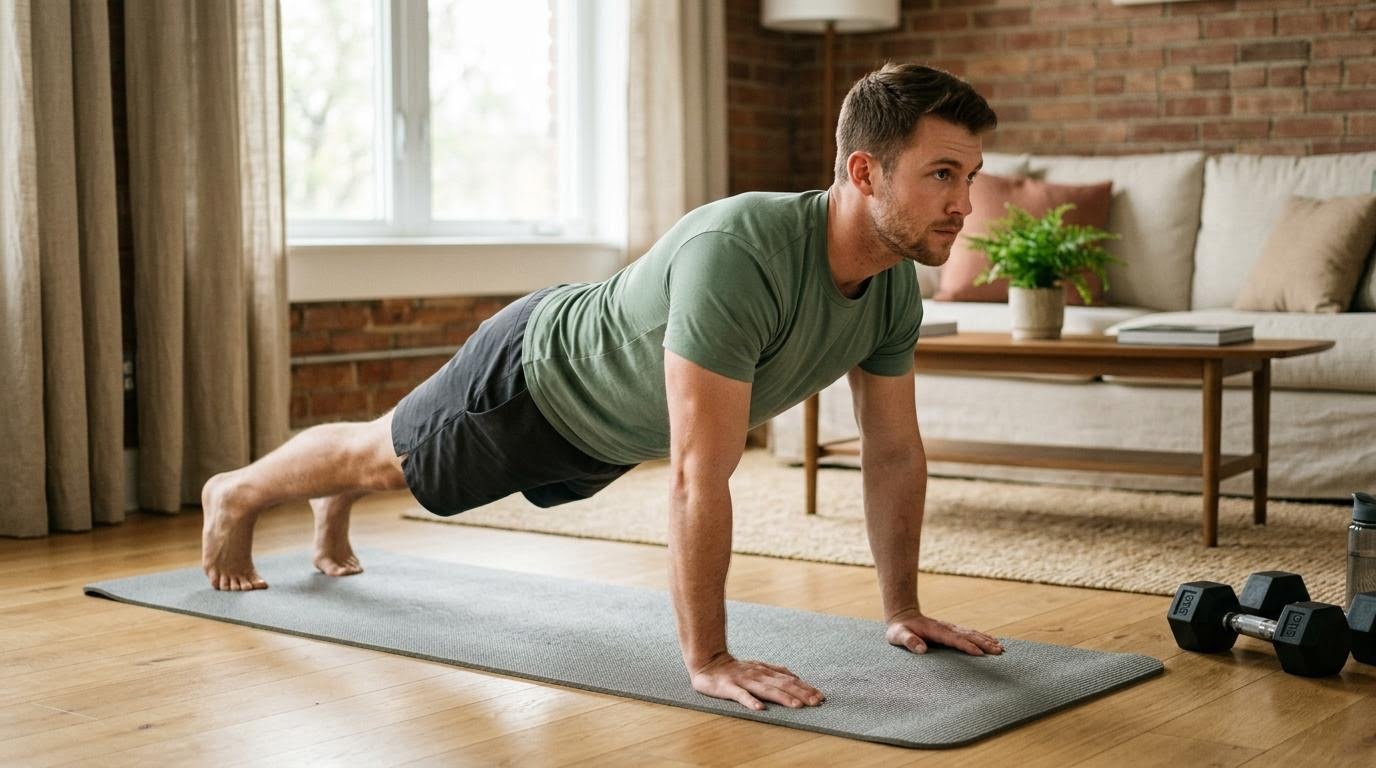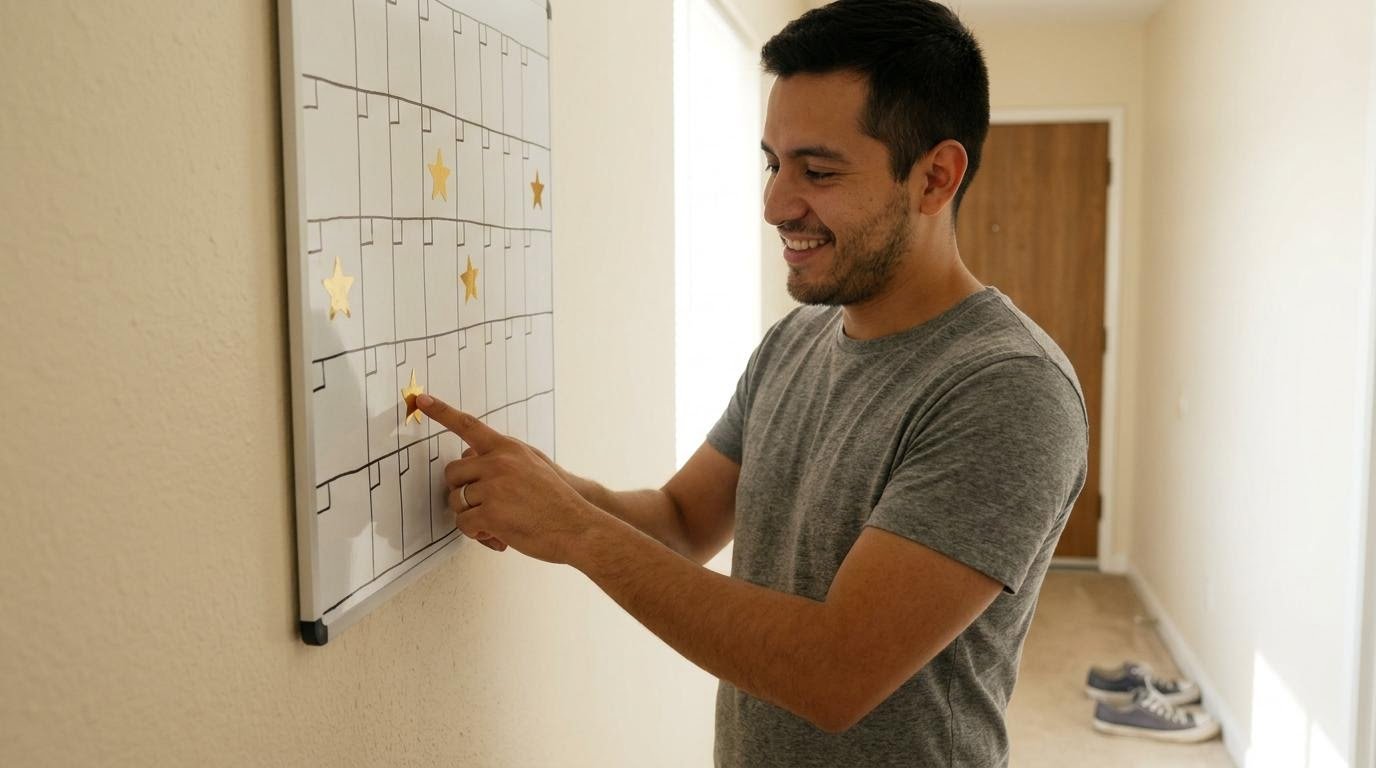


Plenty of people stall on their fitness goals in week three, and willpower is rarely the reason. The goal was fuzzy on day one. "Get fit" has no finish line, no schedule, and no way to tell whether Tuesday's workout counted. If you have restarted a plan more than once and quit again, the plan is the likely culprit, not you.
This guide walks you through setting targets that fit your real week, checking them against public health guidance, and keeping them alive when work, classes, or a bad night of sleep get in the way. No miracle timelines. Just a method you can run for months.

Why Fitness Goals Fall Apart in the First Month
Here is a number worth sitting with. In 2022, only 22.5% of U.S. adults aged 25 and older met the federal guidelines for both aerobic and muscle-strengthening activity, according to a CDC MMWR QuickStats report published in 2024. Roughly three in four adults land short on at least one of the two. If you feel behind, you are in very large company.
That figure covers adults 25 and up, so it is not a perfect picture of your age group. Still, it points at a pattern you have probably lived. Starting is easy. Sustaining is where plans break.
A vague target gives you nothing to measure
"I want to get in shape" feels motivating on January 1 and useless on a rainy Wednesday. A goal needs to answer three questions: what will you do, how often, and how will you know it happened? If you cannot answer all three in one sentence, the goal is still a wish.
Outcome goals hide the work that matters
Here is the non-obvious part. Most people write goals about results: lose a set amount, reach a certain body shape, hit a number on the scale. Those results depend on sleep, stress, genetics, hormones, and plain luck. You control none of them directly. What you do control is behavior: three workouts this week, a 20-minute walk after lunch, an early night before leg day.
The strongest plans pair one outcome you care about with several behavior targets you fully control. You still aim at the result. You just judge each week by whether you did the work.
If you want a companion read on locking down your aims early, try our piece on how to get your fitness targets clear before you start.

Realistic Fitness Goals Start With a Baseline, Not a Body-Shape Dream
Before you set a single target, you need to know where you are standing. Mayo Clinic's guidance on starting a fitness program says to record baseline measures such as pulse rate, walking time, pushups, flexibility, and waist circumference before you begin. The same page notes that clear goals help you measure progress and stay motivated.
That is the quiet secret behind realistic fitness goals. They are realistic because they are built from your own starting numbers, not from a stranger's transformation photo.
Run a ten-minute baseline check
You do not need a lab. Pick four simple tests and write the results in a notes app:
- Walking test: time how long a flat one-mile walk takes at a brisk pace.
- Pushup test: count clean pushups until your form breaks. Knee pushups count.
- Flexibility test: sit on the floor, legs straight, and note how close your hands get to your toes.
- Waist measure: measure once, at the same spot, and leave it alone for weeks.
Notice what is missing: a "before" photo you hate and a scale you step on daily. Photos and weights can sit in the mix if they help you. They just should not be the only scoreboard.
Match the goal to your real schedule
Picture a 22-year-old with three evening classes and a part-time job. A plan for six gym sessions a week looks impressive on paper and collapses by the second Thursday. A plan for three 35-minute sessions, scheduled in the calendar like a class, survives. The smaller plan wins because it still exists in week ten.
Mayo Clinic's own advice backs the cautious route: start slowly, and raise your activity level by no more than 10% a week. Ambition belongs in the long-term goal. Your weekly plan should feel almost too easy at first.
A short video from the Mayo Clinic Minute series makes the same point about starting with a goal you can actually keep. A wellness physical therapist in the clip suggests picking activities you enjoy and treating even 20 to 30 minutes, three days a week, as a solid start.
An Example of Fitness Goals You Can Copy and Adjust
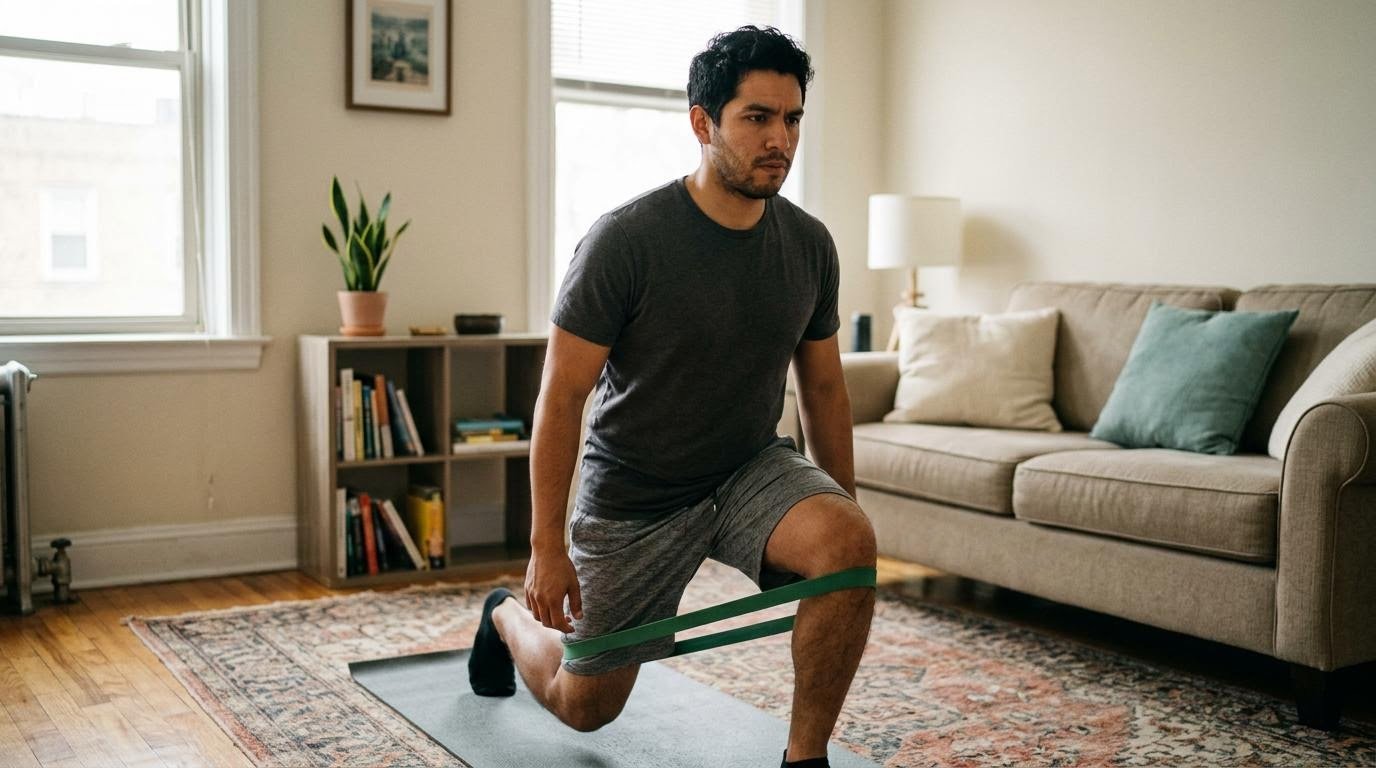
Abstract advice only goes so far. Below are goals written in the "what, how often, how will I know" format. Treat them as templates. Change the numbers until they fit your week.
Short-term fitness goals (next four to six weeks)
Short-term goals are behavior goals. They build the routine that long-term goals depend on.
- "I will walk briskly for 30 minutes on Monday, Wednesday, and Friday and log each walk in my phone."
- "I will do a 20-minute bodyweight session on Tuesday and Saturday, and write down how many reps I finished."
- "I will stretch for 10 minutes after each workout so I can touch closer to my toes at my next check-in."
Long-term fitness goals (three to twelve months)
Long-term goals can be outcome goals, as long as the short-term goals feed them.
- "I will build up to walking or jogging for 30 minutes without stopping, five days a week."
- "I will add reps and weight over time until I can complete 15 clean pushups."
- "I will meet the weekly activity guidelines for adults, including two strength sessions, for eight weeks in a row."
Habit goals that have nothing to do with your body
Some of the most useful targets never mention weight or size. Consider "I will lay out my workout clothes the night before," "I will move for ten minutes before checking social media," or "I will book my sessions for the week every Sunday evening." These are tiny, fully in your control, and they remove the friction that usually kills a routine. Stack two or three of them under any larger goal and the bigger target starts to feel less like a mountain and more like a to-do list.
Fitness goals for women: same method, different pressure points
People searching for fitness goals for women often run into advice that centers on shrinking, not on strength or stamina. The method does not change with gender. What changes is how the plan fits your life, including cycle-related energy shifts, caregiving, or work hours. Write goals around what your body can do. Lifting a heavier weight, finishing a hilly walk, or sleeping better after training are all legitimate targets. For a parent-focused plan, see our workout plan for busy moms.

How to Achieve Your Fitness Goals: Turn Each One Into a Weekly Schedule
A goal without a calendar slot is a hope. The step that actually moves you forward is translating every target into a specific day, time, and duration. This is where the CDC's adult guidelines become a handy ruler.
The CDC says adults need 150 minutes of moderate-intensity activity a week, or 75 minutes of vigorous-intensity activity, plus muscle-strengthening on 2 days each week. The page also notes that going beyond those amounts brings extra benefits, and that you can spread the minutes across the week instead of doing them in one block.
| Activity type | CDC weekly target for adults | One way to split it |
|---|---|---|
| Moderate-intensity aerobic | 150 minutes | 30 minutes a day, 5 days a week |
| Vigorous-intensity aerobic | 75 minutes | 25 minutes a day, 3 days a week |
| Muscle-strengthening | 2 or more days, all major muscle groups | Two full-body sessions, such as Tuesday and Saturday |
Source: CDC, Adult Activity: An Overview, last reviewed 2023
Those targets describe where healthy adults can aim over time. They are not your week-one assignment. If you currently move twice a week for ten minutes, jumping to 150 minutes is exactly the overreach Mayo Clinic warns about.
Build the schedule backward from the goal
Take one long-term goal and work backward. Say your target is walking 30 minutes, five days a week. Week one might be 10 minutes on three days. Week two adds a few minutes. Each step stays inside that 10% guardrail, and each step is small enough to repeat even on a bad week.
Choose a structure for your strength days
If strength training is part of your plan, a simple structure removes daily decision-making. Our workout split guide explains how to organize muscle groups across the week. Beginners usually do fine with two full-body sessions before they bother with anything fancier.
Protect your recovery
Mayo Clinic's guidance also tells you to allow time for recovery between sessions so your body can rest and rebuild. Rest days are part of the schedule, not a gap in it. Pencil them in the same way you pencil in workouts.
Check Your Progress Every Six Weeks, Not Every Morning
Daily weigh-ins and constant comparison create noise. Your body fluctuates with water, sleep, food timing, and stress, so a single reading rarely tells the truth. A slower rhythm of check-ins gives the real signal time to show up.
Mayo Clinic suggests you reassess your fitness about six weeks after you start, then again every few months. Repeat the same four baseline tests and compare. Did the mile get faster, or did the pushup count go up? Did you hit more of your scheduled sessions than you missed?
Track the behavior weekly and the results every six weeks
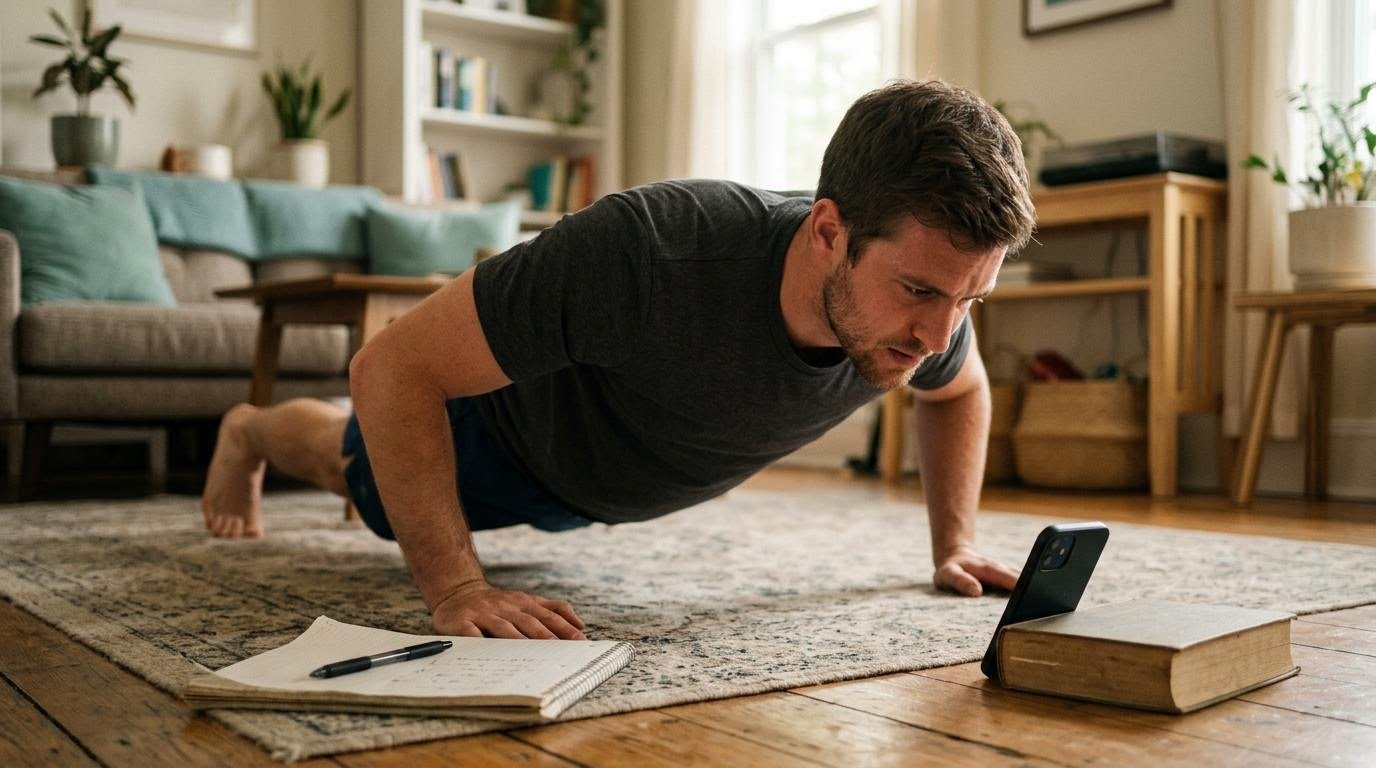
Seeing progress on paper helps. The National Institute of Diabetes and Digestive and Kidney Diseases says you can track progress on paper, online, or with a phone app to help you keep at it. Pick whichever method you will actually open.
A weekly check takes two minutes. Count how many planned sessions you completed. Aim for a high completion rate over a perfect one. Eight out of ten sessions done is a good week.
What to do when your numbers do not move
Say your six-week check-in shows the same pushup count and the same mile time. That is information, not a verdict. Ask three questions before you change anything. Did you complete most of your planned sessions? Did you sleep reasonably well on training weeks? Did the plan ask for something your body had no way to build yet? If sessions were skipped, fix the schedule first. If you hit the sessions and nothing changed, adjust one variable, such as adding a few minutes or one extra set, and test it for another few weeks. Changing everything at once makes it impossible to know what worked.
A flat stretch also happens to people who are doing everything right, so resist the urge to punish yourself with harder workouts. Recovery, sleep, and stress all shape what your body adapts to, and Mayo Clinic's advice to allow recovery time exists for exactly this reason.
Use rewards that do not involve food
The same NIDDK page recommends a nonfood reward for meeting your goals. That might be new running socks, a movie night, or a day trip somewhere you wanted to visit. The reward should celebrate the consistency you showed, not just the number on a scale.
A Missed Week Does Not Reset Your Fitness Goals
Every long plan hits a rough patch. A cold, a deadline, a family trip, a stretch of bad sleep. The question is not whether you will miss sessions. The question is what you do on the Monday after.
The most useful rule is simple. Never miss twice if you can help it. One skipped session is a blip. Two in a row starts to look like a new habit, and not the one you wanted. After a missed week, return to the last level you handled comfortably, not the level you planned to reach. Restarting a notch lower is not failure. It is how you avoid the injury or burnout that comes from trying to make up for lost time.
The NIDDK page agrees on the starting-point idea: if you are beginning a new program, go slowly at first, even with an activity you once did well, to lower your chance of injury or burnout.
Have a backup version of every workout
Write a "minimum viable session" for each routine. If your plan is a 40-minute workout, the backup is 10 minutes. On the days when everything goes wrong, you do the 10-minute version and keep the streak alive. Ten minutes done beats forty minutes skipped.
Start this week, not next Monday
You now have the pieces. Here is a three-step start you can finish tonight:
- Run the four-test baseline and write down the results.
- Choose one long-term goal and two short-term behavior goals that support it.
- Put the first three sessions into your calendar with a day, time, and duration.
Your fitness goals do not need to be big. They need to be specific, scheduled, and small enough to survive a rough week. Build that foundation first and raise the difficulty only when the routine feels easy.
Health disclaimer: This article offers general education, not personal medical advice. Talk with a doctor or other healthcare professional before you start a new exercise program, especially if you have a medical condition, an injury, take medication, are pregnant or postpartum, or have not exercised for some time. The NHS also advises speaking to a GP first if you have not exercised for some time or have medical conditions or concerns. Stop and seek medical care if you feel chest pain, dizziness, or unusual shortness of breath during exercise.

Frequently Asked Questions About Fitness Goals
What are some good fitness goals for beginners?
Good beginner goals focus on behavior, not body shape. Examples include walking briskly for 20 to 30 minutes three days a week, completing two short strength sessions a week, or adding a ten-minute stretch after every workout. Pick one or two, run them for four to six weeks, then reassess.
How do you set realistic fitness goals?
Start with a baseline of simple measures such as a timed walk, a pushup count, and a waist measurement. Write each goal so it answers three questions: what you will do, how often, and how you will know it happened. Then keep weekly increases small. Mayo Clinic advises raising activity by no more than 10% a week.
What is an example of a SMART fitness goal?
"I will walk briskly for 30 minutes on Monday, Wednesday, and Friday for the next six weeks, and log each walk in my phone." It is specific (brisk walking), measurable (30 minutes, logged), achievable (three days), relevant (builds aerobic base), and time-bound (six weeks).
How long does it take to reach your fitness goals?
It depends on the goal, your starting point, sleep, stress, and consistency, so no honest timeline fits everyone. A practical checkpoint comes from Mayo Clinic, which suggests reassessing about six weeks after you start and again every few months. Judge early progress by how many planned sessions you completed.
What are good fitness goals for women?
The same principles apply: specific, scheduled, and sized to your week. Strong options include meeting the CDC's weekly guidelines for aerobic activity and two strength days, lifting a slightly heavier weight over time, or walking a hilly route without stopping. Choose goals around what your body can do rather than how it looks.
How often should you change your fitness goals?
Review them at each six-week check-in. If you hit your targets with ease, raise the difficulty a little. If you missed most sessions, shrink the plan instead of quitting. Treat goals as a draft you keep editing, not a contract you either keep or break.
References
- CDC, MMWR: QuickStats: Percentage of Adults Aged 25 Years and Older Who Met the 2018 Federal Physical Activity Guidelines for Both Muscle-Strengthening and Aerobic Physical Activity, by Educational Attainment, United States, 2022, 2024
- Mayo Clinic: Fitness program: 5 steps to get started, 2023
- CDC: Adult Activity: An Overview, 2023
- National Institute of Diabetes and Digestive and Kidney Diseases (NIDDK): Tips to Keep Moving, 2017
- NHS: Physical activity guidelines for adults aged 19 to 64, 2024
- Mayo Clinic News Network: Mayo Clinic Minute: Be realistic with your New Year's health resolution, 2023