
You've cut sugar, added steps to your walk, maybe even tried a 30-day core challenge, and the number on the scale barely moved while your waistband still feels the same. If you're wondering how to lose belly fat without surgery, you're not alone, and the good news is that the research backs a slower, less dramatic path than CoolSculpting ads suggest. Doctors at Mayo Clinic and Harvard Medical School have spent years studying exactly this question, and their answer isn't a device or a procedure. It's a specific combination of diet, movement, sleep, and stress management that targets the fat sitting deepest in your abdomen.
That deep fat has a name: visceral fat. It behaves differently from the fat you can pinch, and it responds to different strategies than a generic "eat less, move more" plan. This guide walks through what actually moves the needle, in the order doctors say matters most, plus the narrow set of cases where a medical procedure genuinely is the right call.

Why Belly Fat Doesn't Respond to Willpower Alone
Here's the thing most fitness content skips: not all belly fat is the same fat. About 90% of the fat on your body is subcutaneous, the soft layer just under your skin that you can grab between two fingers. The other 10% is visceral fat, and it's a different creature entirely. It packs in around your liver, intestines, and other organs, out of reach of a pinch test, according to Harvard Health's research on abdominal fat.
Visceral fat is metabolically active in a way subcutaneous fat isn't. It produces inflammatory compounds and hormones that interfere with insulin sensitivity, which is part of why a flat-ish stomach can still carry real health risk if the fat underneath is visceral rather than subcutaneous. Harvard's research found that women with the largest waists had more than double the risk of developing heart disease compared to those with the smallest waists, a risk that held even after researchers adjusted for other factors like smoking and overall weight.
The dementia numbers are just as striking. People in their early 40s carrying the highest levels of abdominal fat were nearly three times more likely to develop dementia by their mid-70s to early 80s than people with less abdominal fat at the same age. None of that is about how your stomach looks in a mirror. It's about what that fat is doing internally, which is exactly why "just do more crunches" was never going to work: spot-reduction exercises tone the muscle underneath, they don't touch the visceral fat sitting behind the abdominal wall.
The one piece of real news here is that visceral fat is actually easier to lose than the fat on your hips and thighs. It responds more efficiently to diet and exercise changes than subcutaneous fat does, which means the plan below isn't a slow grind against your biology. It's working with a type of fat that's unusually responsive once you target it correctly.
There's a practical reason this matters beyond the mirror. A person can be at a technically healthy BMI and still carry a meaningful amount of visceral fat, a pattern researchers call "skinny fat" or normal-weight obesity. The scale and the BMI chart simply don't measure where fat is stored, only how much of it there is relative to height. That's part of why doctors increasingly lean on waist circumference as a second data point alongside weight: a tape measure around your natural waist, taken standing up after exhaling, tells you something a bathroom scale can't. It's not about vanity math, it's about catching a risk factor that BMI alone can miss entirely.
Here's the non-obvious part most people never hear: the same amount of total fat loss produces very different visceral fat results depending on how you lose it. Losing 10 pounds through a combination of diet and resistance training tends to strip a disproportionate share of that weight from visceral stores specifically, compared to losing the same 10 pounds through diet restriction alone. This is the actual mechanism behind why two people who lose identical amounts of weight can end up with very different-looking midsections and very different health-risk profiles.

The Diet Shift That Helps You Lose Belly Fat Without Surgery Faster Than Calorie Counting
Calorie counting isn't wrong, but it's incomplete for visceral fat specifically. Mayo Clinic's research on belly fat in women found that the strategy that actually reduces visceral fat is built around what you eat, not just how much: focusing on plant-based foods like fruits, vegetables, and whole grains, choosing lean proteins, limiting saturated fat, and swapping sugary drinks for water.
That last swap matters more than it sounds. A can of soda a day adds roughly 150 calories of pure sugar with zero fiber or protein to slow the spike, and fructose-heavy drinks are specifically linked to visceral fat accumulation in a way that calories from whole food generally aren't, per Harvard Health's findings on abdominal fat.
What a realistic weekly food shift looks like
- Replace one sugary drink a day with water or unsweetened sparkling water first, before touching anything else. It's the single easiest swap with the clearest link to visceral fat specifically.
- Build half your plate from vegetables at lunch and dinner, not as a rule to follow perfectly, but as a default that crowds out refined carbs without you having to think about it every meal.
- Pick a lean protein source at each meal (eggs, beans, fish, poultry, tofu). Protein keeps you fuller longer, which does more for adherence than any specific "fat-burning" food ever will.
The Academy of Nutrition and Dietetics puts it plainly: the most successful weight loss plans combine healthful eating, physical activity, and behavior change, not restriction alone, and people who self-monitor their meals, even with something as simple as a notes app, lose more weight and keep it off longer than people who don't track anything. If you've tried and abandoned food tracking before, that's a real data point worth revisiting, not a personal failure to write off.

Strength Training Burns Visceral Fat Faster Than Cardio Alone
If your current routine is cardio-only, this is the section to actually change something. Mayo Clinic's guidance is specific here: strength training exercises are recommended at least twice a week, and there's real evidence that high-intensity interval training (HIIT) helps reduce belly fat, the same way strength training does.
This isn't an argument against cardio. The Department of Health and Human Services' baseline recommendation, cited by Mayo Clinic, is 150 minutes a week of moderate aerobic activity like brisk walking, or 75 minutes of something more vigorous like jogging. The American Heart Association's own analysis found that 150 minutes of physical activity a week is enough to meaningfully reduce abdominal fat, with no extra benefit from pushing much further past that.
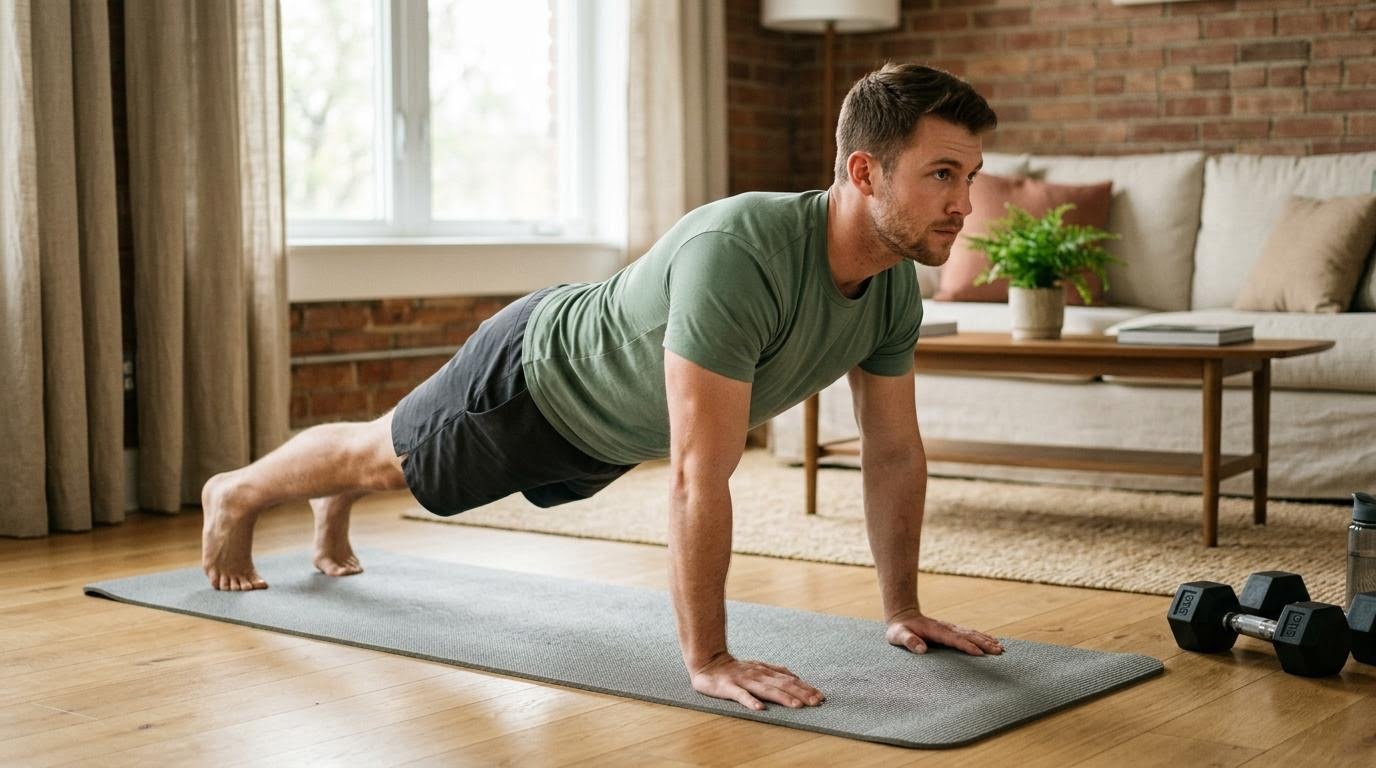
The practical takeaway: cardio gets you to the recommended activity floor, but strength training is what specifically targets the visceral layer on top of that. A realistic week might look like three 30-minute walks or jogs, plus two 20 to 30-minute strength sessions hitting major muscle groups (legs, back, chest, core). You don't need a gym membership or a trainer to start. Bodyweight squats, push-ups, rows with a resistance band, and planks cover the basics.
One caveat worth saying directly, since it undercuts a claim you'll see everywhere: doing ab exercises alone won't get rid of belly fat. Crunches build the muscle underneath your visceral and subcutaneous fat, they don't burn either one. If your only "belly fat" exercise is core work, you're training a muscle that's already there, not touching the fat covering it.
If you're starting from zero, a realistic first month looks less impressive than a fitness influencer's before-and-after and more like this: week one, two 20-minute bodyweight sessions plus three walks; week two, add a third strength session and a set of resistance band rows; weeks three and four, start adding light dumbbells and increase walk duration to 30 minutes. Nobody needs a personal trainer to follow that progression, and it already meets both the cardio and strength thresholds doctors cite. The mistake most people make isn't picking the wrong exercises, it's trying to start at the intensity they imagine an "ideal" program requires and burning out inside of two weeks.

Sleep and Stress Are Quietly Sabotaging Your Midsection
This is the piece most belly fat advice skips entirely, and it's arguably the one doctors bring up first once diet and exercise are already dialed in. Harvard Health's research on visceral fat specifically lists sleeping five to eight hours a night, for people under 40, among its core recommendations for reducing abdominal fat, alongside diet and exercise, not as an afterthought.
The mechanism runs through cortisol, your primary stress hormone. Chronic short sleep and chronic stress both keep cortisol elevated for longer than your body is built to handle, and elevated cortisol is specifically linked to fat storage in the abdominal region rather than evenly across the body. This is why two people eating identical diets and doing identical workouts can see different results around the midsection if one of them is running on five hours of sleep and a high-stress job and the other isn't.
You don't need a perfect sleep routine to see a difference, you need a consistent floor. Going to bed and waking up within the same 30 to 60-minute window most nights, keeping your bedroom dark and cool, and cutting caffeine after early afternoon are the three changes with the most evidence behind them, and none of them require buying anything.
Stress management deserves the same practical treatment, not a vague "relax more" instruction that's impossible to act on. A 10-minute walk without your phone, five minutes of slow breathing before a stressful meeting, or simply naming what's stressing you out to a friend all measurably lower circulating cortisol in the short term. None of these are a substitute for addressing a genuinely overwhelming schedule or an unmanageable job, but as a daily practice alongside diet and exercise, they close a gap that no amount of extra cardio can close on its own. If you've optimized your workouts and your meals and still aren't seeing the midsection change you expect, this is the section worth revisiting before assuming you need to eat even less or train even harder.

When Doctors Actually Recommend Surgery (And When They Don't)
Given how many med-spa ads promise a "fix" for stubborn belly fat, it's worth being direct about what surgery is actually for. Procedures like liposuction, CoolSculpting, or bariatric surgery are not first-line treatments for visceral fat in someone at a healthy or moderately overweight BMI. They're tools for specific, narrower situations: liposuction and non-invasive fat-reduction devices mainly address stubborn subcutaneous fat pockets that don't respond to diet and exercise, and they don't remove visceral fat at all, since it sits behind the abdominal wall where these tools can't reach.
Bariatric surgery is a different category entirely, reserved for people with a BMI generally at or above 35 to 40, or above 30 with serious weight-related health conditions, and even then, the American Heart Association's own scientific report found something counterintuitive: while bariatric surgery showed better results for reducing coronary artery disease risk than lifestyle changes alone in that specific population, calorie reduction combined with aerobic exercise was the most effective approach for managing abdominal obesity broadly across the population studied. Surgery isn't being positioned as the superior default, it's a tool for a specific risk profile.
If you've been eyeing a non-invasive device at a med spa, it's worth understanding what it's actually treating before you spend the money. These treatments freeze, heat, or otherwise disrupt fat cells in a specific, targetable pocket just under the skin, which is precisely why they can't reach visceral fat behind the abdominal wall. They're a reasonable option for a genuinely stubborn subcutaneous pocket that hasn't responded to months of consistent diet and exercise, not a shortcut around doing the diet and exercise in the first place. A useful filter before booking a consultation: has this area actually changed at all with 8 to 12 weeks of the diet, training, and sleep changes above? If the honest answer is no, that's the conversation to have with a board-certified provider. If the honest answer is you haven't really tried yet, that's worth doing first, since it's free and it's what the evidence says works for the deeper, riskier fat regardless.
Health disclaimer: This article is educational and not a substitute for personalized medical advice. Talk to your doctor before starting a new exercise program if you have a heart condition, joint issues, or haven't exercised regularly in a while, and consult a registered dietitian before making major diet changes if you're managing diabetes, are pregnant or breastfeeding, or are under 18. If you're considering a surgical or non-surgical fat-reduction procedure, discuss the risks and realistic outcomes with a board-certified physician first.
| Fat Type | Location | Share of Total Body Fat | Health Risk Profile |
|---|---|---|---|
| Subcutaneous fat | Just beneath the skin, can be pinched | ~90% | Lower metabolic risk |
| Visceral fat | Around organs, behind the abdominal wall | ~10% | Linked to heart disease, dementia, and metabolic syndrome |
Source: Harvard Health Publishing, 2024
How to Lose Belly Fat Without Surgery: The Daily Checklist
Put together, the doctors cited throughout this guide point to the same short list, not a dozen competing rules: swap one sugary drink a day for water, build half your plate from vegetables and lean protein, train each major muscle group at least twice a week with a rest day between, walk or move for 30 minutes most days, and protect 5 to 8 hours of sleep a night. None of that requires a procedure, a device, or a subscription. If you're serious about how to lose belly fat without surgery, this combination, done consistently for 8 to 12 weeks, is what the research above actually supports, not a shortcut, but a realistic one.
If walking and jogging alone haven't moved the needle, it's worth reading up on the specific type of aerobic exercise most people skip for belly fat, and pairing it with sustainable weight loss habits that actually stick past the first month. If tracking intake still feels confusing, this breakdown of how calorie science actually works for optimum results fills in the gap left by generic "eat less" advice.
Mayo Clinic's own team breaks down why belly fat matters medically in this short explainer:
References
- Mayo Clinic — Belly fat in women: Taking — and keeping — it off, 2026
- Harvard Health Publishing — Taking Aim at Belly Fat, 2024
- American Heart Association — Too much belly fat, even for people with a healthy BMI, raises heart risks, 2021
- Academy of Nutrition and Dietetics — What a Healthy Weight Loss Plan Really Looks Like, 2024
- Centers for Disease Control and Prevention — Healthy Weight
Frequently Asked Questions
Can you really lose belly fat without surgery?
Yes. Visceral fat, the deeper, riskier type of belly fat, responds more efficiently to diet and exercise than fat elsewhere on the body, according to Harvard Health. Surgery isn't the default treatment for visceral fat in people at a healthy or moderately overweight BMI; it's a narrower option for specific cases like stubborn subcutaneous pockets or severe obesity.
What's the fastest non-surgical way to lose belly fat?
There's no single fastest method, but the combination with the strongest evidence is 150 minutes a week of moderate cardio, strength training at least twice a week, a diet built around whole foods and lean protein, and 5 to 8 hours of sleep a night. Doctors consistently point to this combination rather than any single "fastest" trick.
Does strength training beat cardio for belly fat?
They work differently rather than one simply beating the other. Cardio at the recommended 150 minutes a week helps reduce overall abdominal fat, while strength training and HIIT specifically add to that effect on visceral fat. Mayo Clinic recommends both, not one instead of the other.
How long does it realistically take to lose belly fat?
Sustainable visceral fat loss typically shows up over 8 to 12 weeks of consistent diet and exercise changes, not days or a couple of weeks. The Academy of Nutrition and Dietetics specifically warns against rapid, very low-calorie approaches, since slower, steadier loss holds up better long-term.
When do doctors actually recommend surgery for belly fat?
Bariatric surgery is generally considered for a BMI at or above 35 to 40, or above 30 with serious weight-related conditions like type 2 diabetes. Non-invasive procedures like CoolSculpting target small, stubborn subcutaneous fat pockets that haven't responded to diet and exercise, not visceral fat, which sits too deep for these devices to reach.